

Chayote, also known as Sechium edule, is a versatile, nutrient-rich vegetable that is widely used in culinary dishes across the world. With its mild taste, high water content, and rich nutritional profile, chayote is ideal for salads, soups, stir-fries, and pickles. The good news is that growing chayote at home is not complicated. Even if you have limited space, a balcony, or a small garden, you can cultivate this hardy plant successfully. This guide provides a step-by-step approach to easy chayote cultivation at home, from planting to harvesting.
Why Grow Chayote at Home?
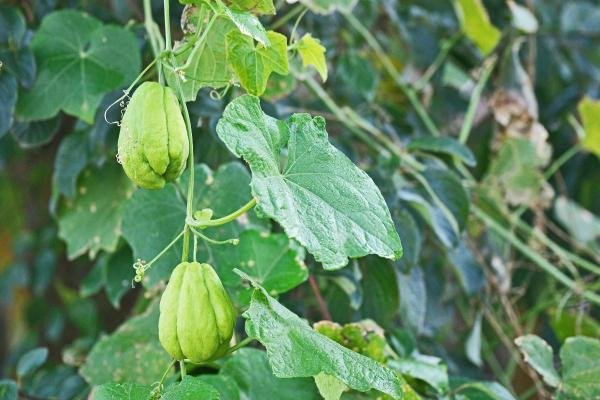
- Nutritional Benefits: Chayote is low in calories but rich in fiber, vitamin C, folate, and antioxidants.
- Easy to Grow: It adapts well to various soil types and requires minimal care once established.
- Cost-Effective: Growing chayote at home saves money and ensures fresh, chemical-free produce.
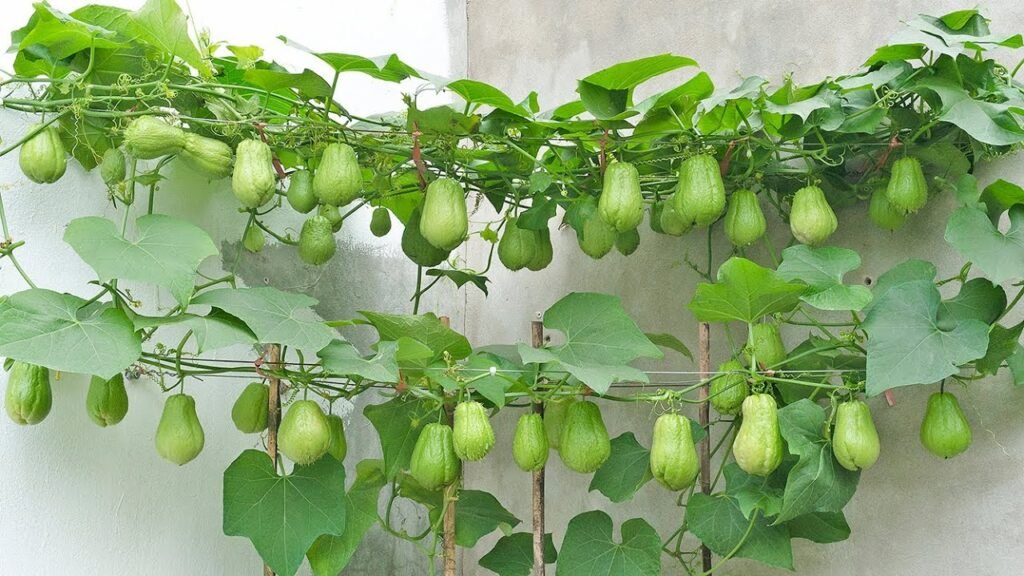
- Space-Efficient: Chayote vines can be trained on trellises, walls, or fences, making it suitable for small spaces.
- Continuous Harvest: With proper care, chayote can provide a continuous supply of fruits over several months.
Choosing the Right Spot for Cultivation
Chayote is a climbing vine that thrives in warm, sunny conditions. Here’s what to consider when selecting a location:
- Sunlight: Choose a spot that receives at least 6–8 hours of direct sunlight daily.
- Soil: Chayote prefers well-drained, fertile soil with a pH of 6.0–7.5. Enrich the soil with compost or organic matter to promote healthy growth.
- Support: As a climbing plant, chayote needs a trellis, fence, or support structure to grow vertically and save space.
Planting Chayote at Home
Chayote is typically grown from the whole fruit rather than seeds. Here’s a step-by-step guide:
1. Selecting the Fruit
- Choose a mature, firm, and healthy chayote fruit.
- Avoid fruits that are soft, shriveled, or damaged.
2. Preparing the Fruit for Planting
- Cut the chayote fruit in half. You can either plant the whole fruit or cut a piece with the growing tip intact.
- Soak the fruit in water for 24 hours to encourage sprouting.
3. Planting in Soil
- Use a large pot, container, or garden bed with well-draining soil.
- Plant the chayote horizontally, burying half of the fruit in the soil with the sprouting tip facing upward.
- Water lightly after planting.
4. Spacing
- If planting multiple chayote fruits, maintain at least 3–4 feet of spacing between plants to allow proper vine growth.
Caring for Chayote Plants
1. Watering
- Chayote requires consistent moisture, especially during the initial growth stage.
- Water the plant regularly, keeping the soil moist but not waterlogged.
- Reduce watering slightly once the plant is established to prevent root rot.
2. Fertilizing
- Apply organic compost or a balanced NPK fertilizer every 3–4 weeks to encourage healthy growth and fruiting.
- Avoid over-fertilization, as it can promote excessive foliage with fewer fruits.
3. Sunlight and Temperature
- Chayote thrives in warm conditions (65°F–85°F).
- Protect young plants from frost or extreme cold, as they are sensitive to low temperatures.
4. Pruning and Training
- Train vines along trellises or supports to encourage vertical growth.
- Prune lateral shoots occasionally to prevent overcrowding and ensure proper air circulation.
Pest and Disease Management
Chayote is generally hardy, but some pests and diseases can affect the plants:
- Aphids and Whiteflies: Spray neem oil or insecticidal soap to manage infestations.
- Powdery Mildew: Maintain good air circulation and avoid overhead watering to prevent fungal infections.
- Root Rot: Ensure proper drainage and avoid waterlogging.
Regular monitoring and timely action will help keep your plants healthy and productive.
Harvesting Chayote
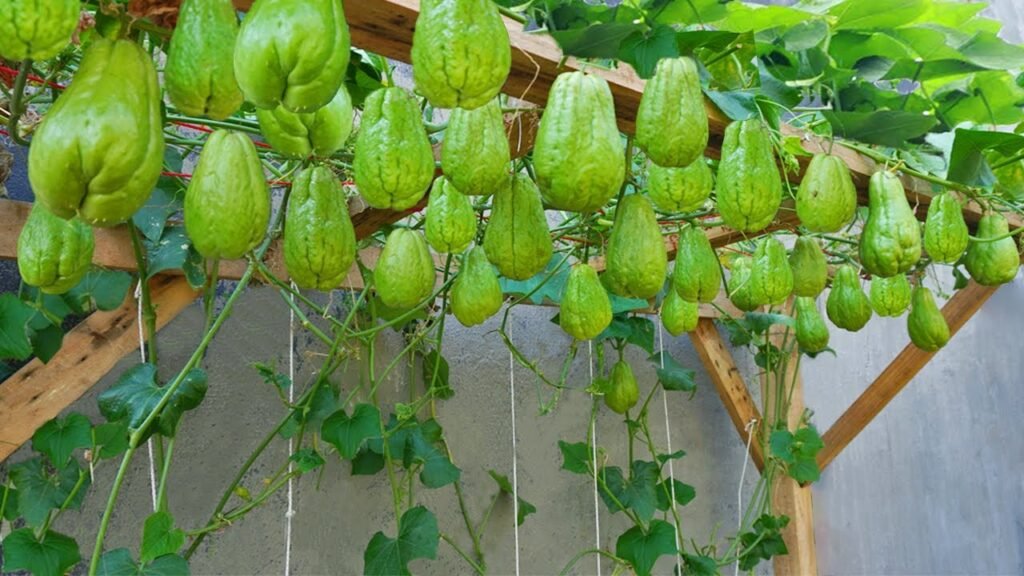
Chayote fruits are typically ready for harvest 3–4 months after planting. Here’s how to harvest properly:
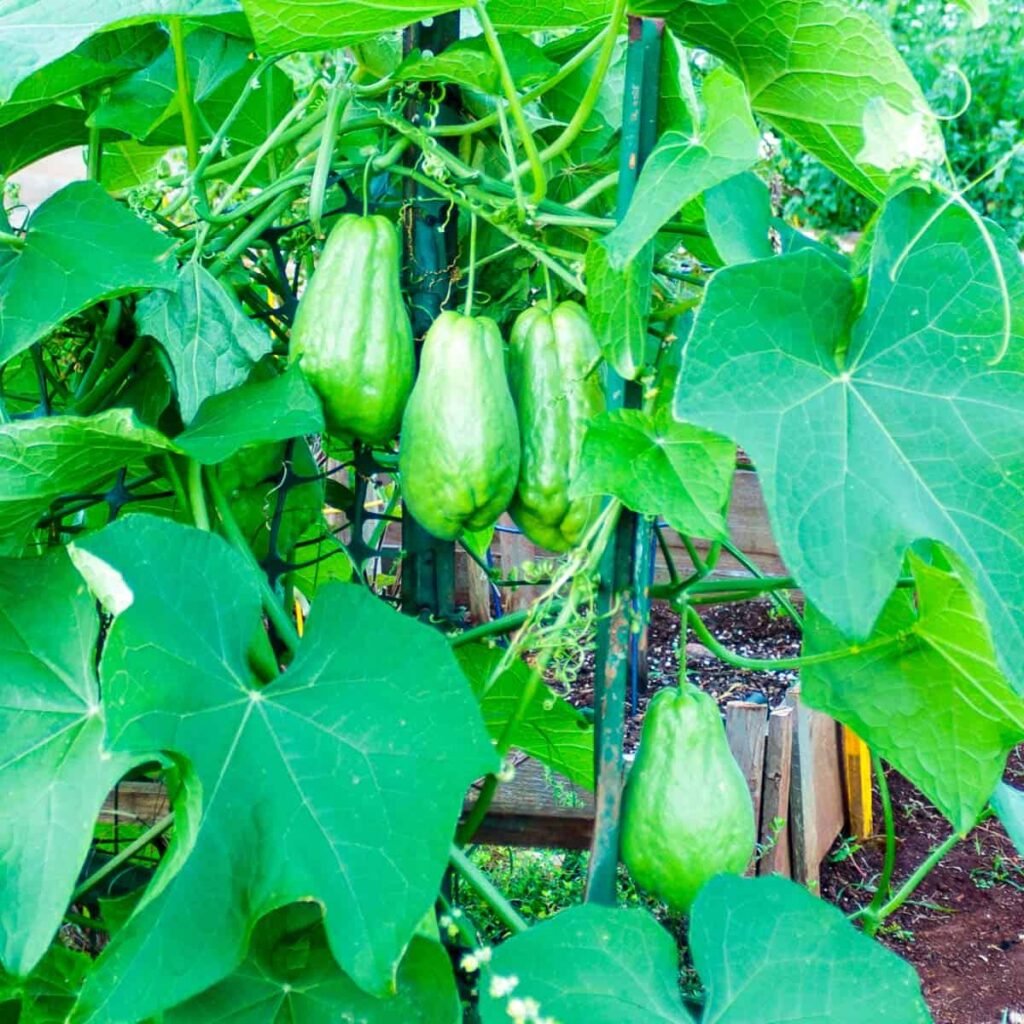
- Fruits should be firm, light green, and medium-sized (around 4–6 inches).
- Use a sharp knife or scissors to cut the fruit from the vine, leaving a small stem attached.
- Avoid overripe fruits, as they may have a tougher texture and less flavor.
Harvesting regularly encourages the plant to produce more fruits. With proper care, a single chayote plant can yield multiple fruits throughout the growing season.
Creative Gardening Ideas for Chayote
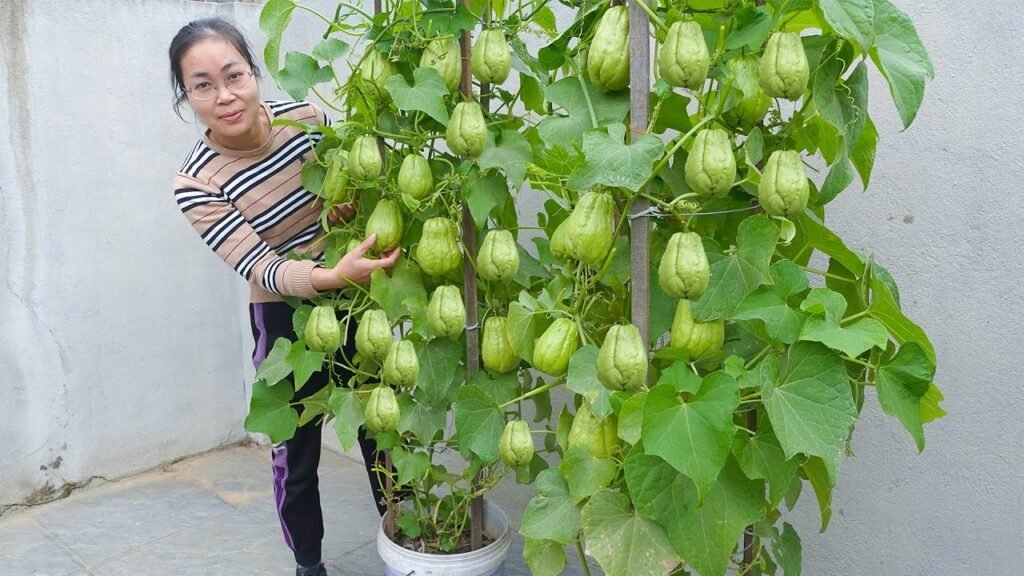
- Vertical Gardening: Use trellises, walls, or fences to grow chayote vertically. This saves space and creates a lush, green backdrop for your garden.
- Container Gardening: Chayote can be grown in large containers on balconies or terraces. Ensure the container is at least 15–20 inches deep to accommodate root growth.
- Mixed Gardens: Combine chayote with flowering vines or climbers to enhance garden aesthetics while maximizing vertical space.
- Indoor/Patio Gardening: Small chayote plants can thrive near sunny windows or patios if provided with proper support and care.
Tips for a Successful Chayote Garden
- Rotate Planting Locations: If planting multiple seasons, rotate locations to prevent soil-borne diseases.
- Mulching: Apply mulch around the base to retain soil moisture and suppress weeds.
- Companion Planting: Plant chayote alongside nitrogen-fixing plants like beans to improve soil fertility.
- Regular Inspection: Check plants weekly for pests, diseases, or nutrient deficiencies. Early detection ensures healthy growth.
Benefits of Home-Grown Chayote
- Fresh and Organic: Home-grown chayote is free from harmful chemicals and pesticides.
- Nutritional Value: Rich in fiber, vitamins, and antioxidants, it supports digestion, immunity, and overall health.
- Cost Savings: Growing chayote at home reduces grocery expenses and ensures a continuous supply of fresh vegetables.
- Aesthetic Appeal: The lush vines and vibrant green fruits enhance garden beauty and provide a refreshing ambiance.
Conclusion
Chayote is a remarkable plant that is easy to grow, nutritious, and visually appealing. Its climbing nature allows for creative gardening in both small and large spaces, while its fruits provide a continuous supply of healthy vegetables. By following proper planting, care, and harvesting techniques, even beginners can enjoy the rewards of home-grown chayote.
With minimal effort, patience, and a bit of creativity, you can transform your garden, balcony, or terrace into a thriving chayote haven. Whether for culinary use, ornamental purposes, or eco-friendly gardening, chayote cultivation at home is a fulfilling and productive endeavor. Start planting today and experience the joy of growing your own nutritious, delicious, and vibrant chayote fruits!