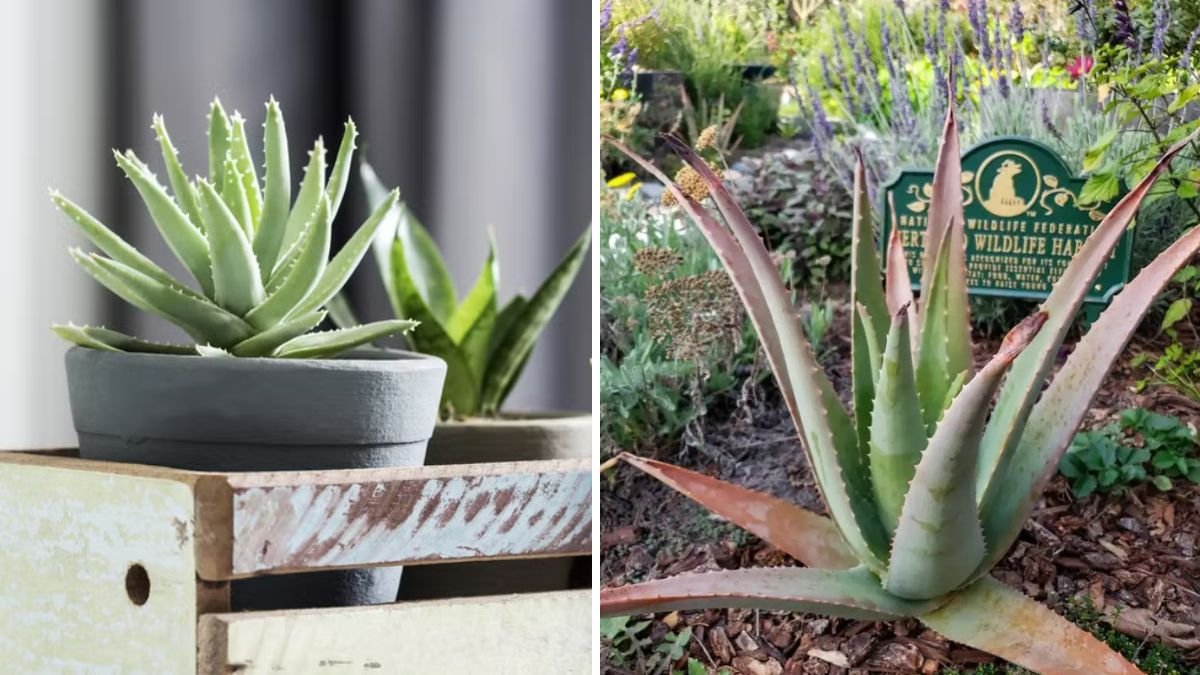

Aloe vera, also lovingly referred to as “Elovera” in some circles, is one of the most versatile and resilient plants you can grow at home. Famous for its medicinal properties, air-purifying qualities, and minimal care requirements, aloe vera has become a staple in both gardens and indoor plant collections. If you’ve been thinking about adding this green powerhouse to your home, this ultimate guide will walk you through everything you need to know—from planting and care to harvesting its beneficial gel.
Why Choose Aloe Vera (Elovera)?
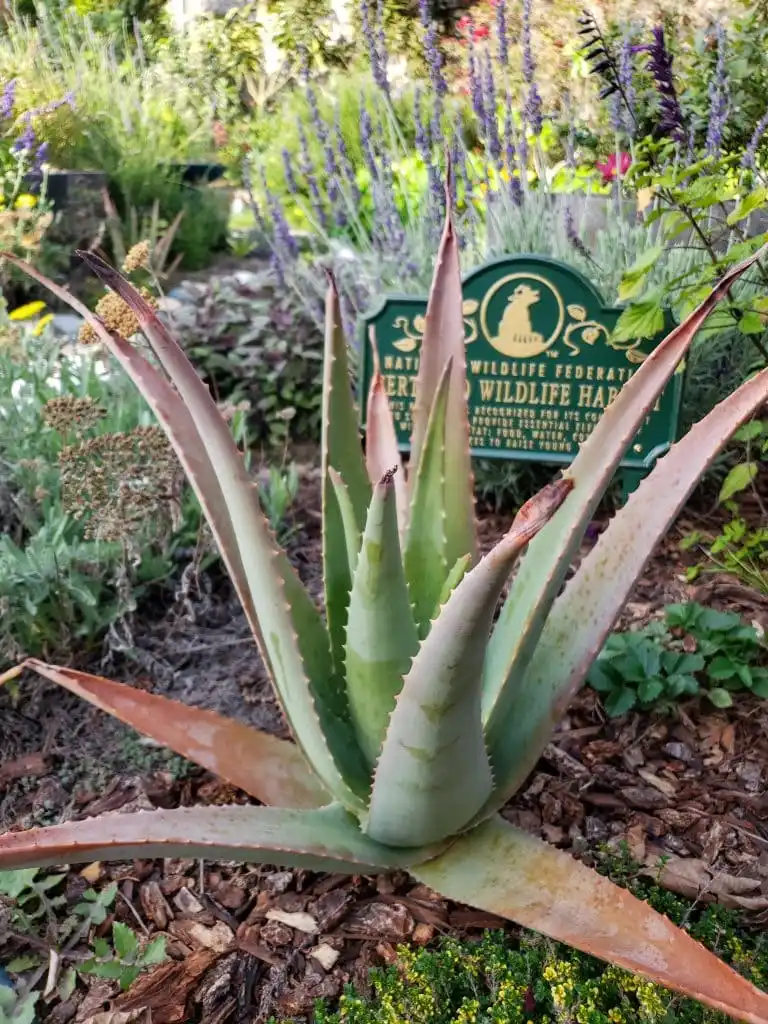
Aloe vera is more than just a decorative plant. Here’s why it deserves a place in your home:
- Health Benefits: Aloe vera gel is renowned for its healing properties, especially for burns, cuts, and skin hydration. Its antioxidant and anti-inflammatory compounds make it a natural remedy for many minor ailments.
- Air Purification: Like many succulents, aloe vera helps cleanse the air by removing toxins and increasing oxygen levels.
- Low Maintenance: It’s a hardy plant that thrives with minimal attention, making it perfect for beginners.
- Aesthetic Appeal: With its thick, fleshy leaves and vibrant green color, aloe vera can enhance the look of any room or garden.
Choosing the Right Aloe Vera Variety
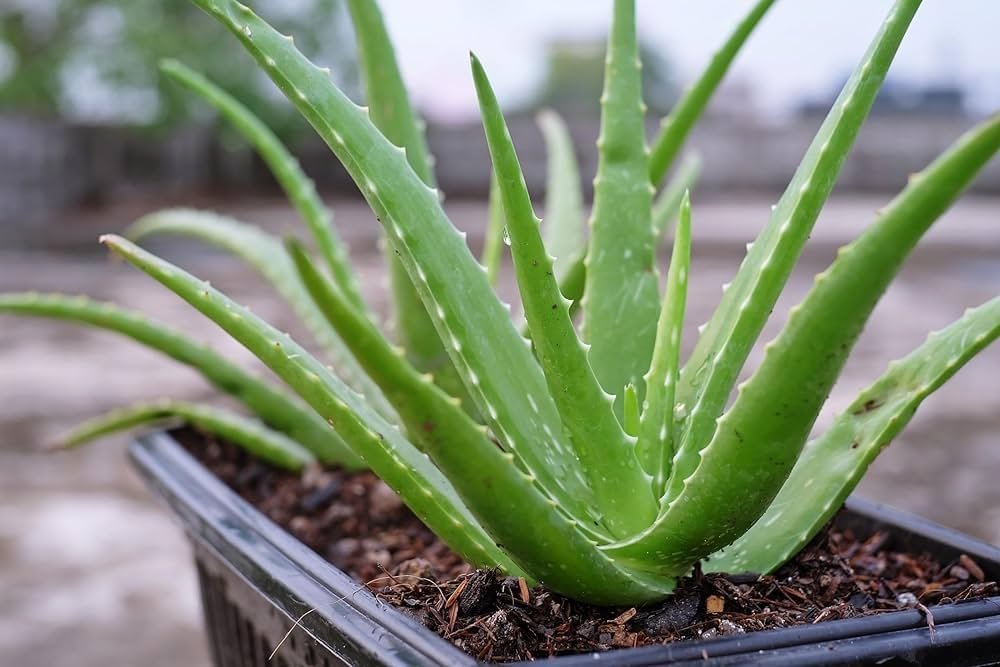
Before you start planting, it’s important to select the right type of aloe vera. The most common variety for home use is Aloe barbadensis miller, known for its medicinal qualities. Other varieties include Aloe arborescens and Aloe ferox, which are often used for decorative purposes and traditional remedies.
How to Plant Aloe Vera
1. Choosing the Container or Garden Spot
Aloe vera can be grown both indoors and outdoors.
- Indoors: Use a pot with good drainage holes to prevent waterlogging, which can lead to root rot. Terracotta pots are ideal because they allow soil to breathe.
- Outdoors: Plant aloe vera in a sunny spot with well-draining soil. Avoid low-lying areas where water can accumulate.
2. Selecting the Soil
Aloe vera thrives in sandy or gritty soil with excellent drainage. You can use a cactus or succulent potting mix. If planting in a garden bed, mix sand or perlite with regular garden soil to improve drainage.
3. Planting the Aloe Vera
- Gently remove the aloe plant from its nursery pot.
- Check the roots for any signs of rot or damage and trim if necessary.
- Place the plant in the new pot or garden bed. Ensure the base of the leaves is just above the soil line.
- Fill around the roots with soil and press lightly to secure the plant.
- Avoid watering immediately after planting. Wait 2–3 days to allow any root injuries to heal.
Caring for Aloe Vera
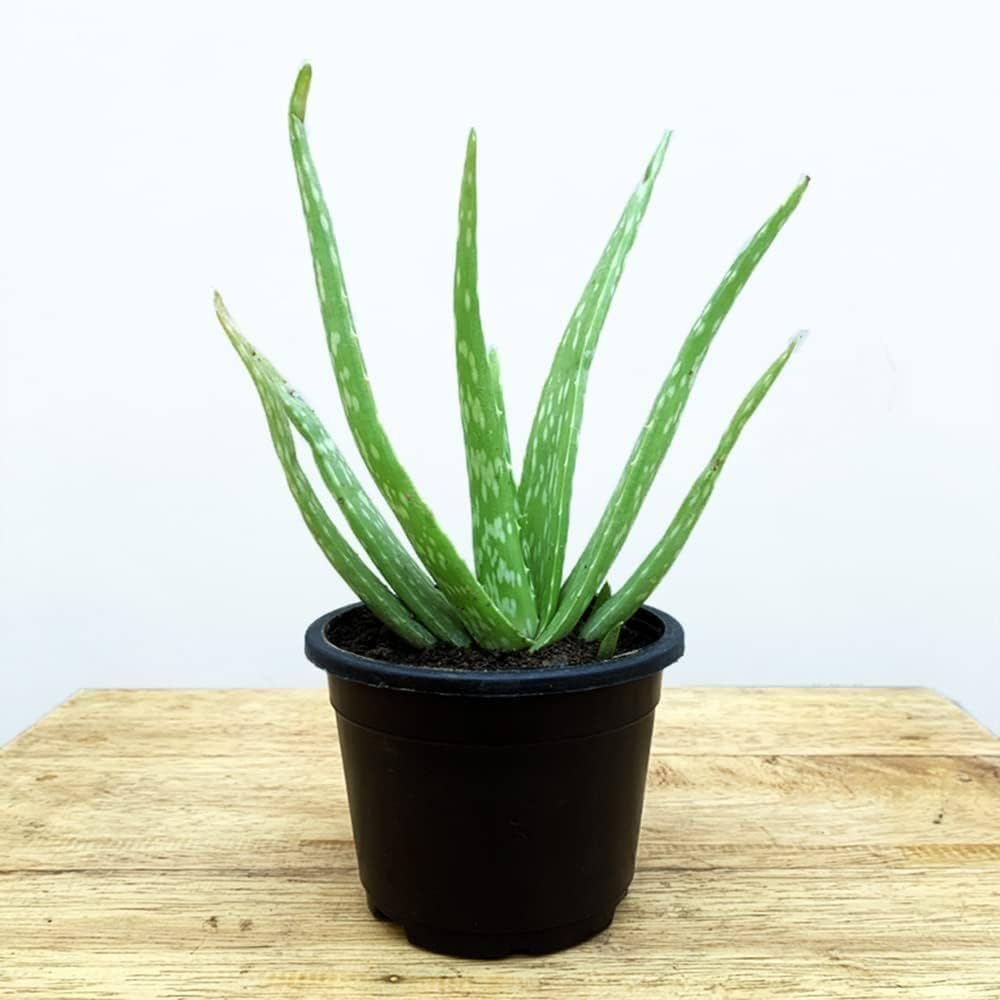
1. Watering
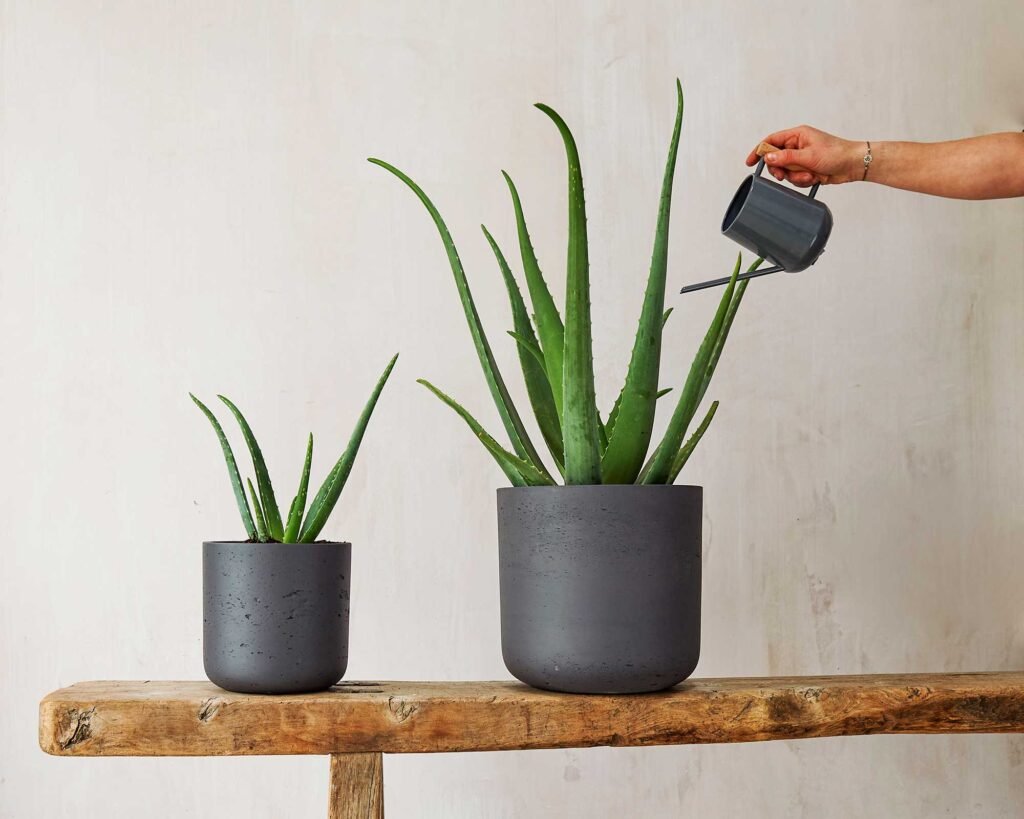
Aloe vera is drought-tolerant and prefers dry conditions. Overwatering is the most common mistake made by beginners.
- Water your aloe vera deeply but infrequently.
- Allow the soil to dry completely between waterings.
- In winter, reduce watering even further.
2. Sunlight
Aloe vera loves sunlight but can suffer from sunburn in extremely harsh, direct sunlight.
- Indoors: Place near a south-facing window where it receives 6–8 hours of indirect sunlight.
- Outdoors: Partial shade during the hottest part of the day is ideal.
3. Temperature and Climate
Aloe vera thrives in temperatures between 55°F and 80°F (13°C to 27°C). It can tolerate short periods of cold but should be protected from frost.
4. Fertilizing
Aloe vera doesn’t require heavy feeding. Use a balanced, water-soluble fertilizer diluted to half-strength during the growing season (spring and summer). Avoid fertilizing in winter when the plant is dormant.
Propagation: Growing More Aloe Vera Plants
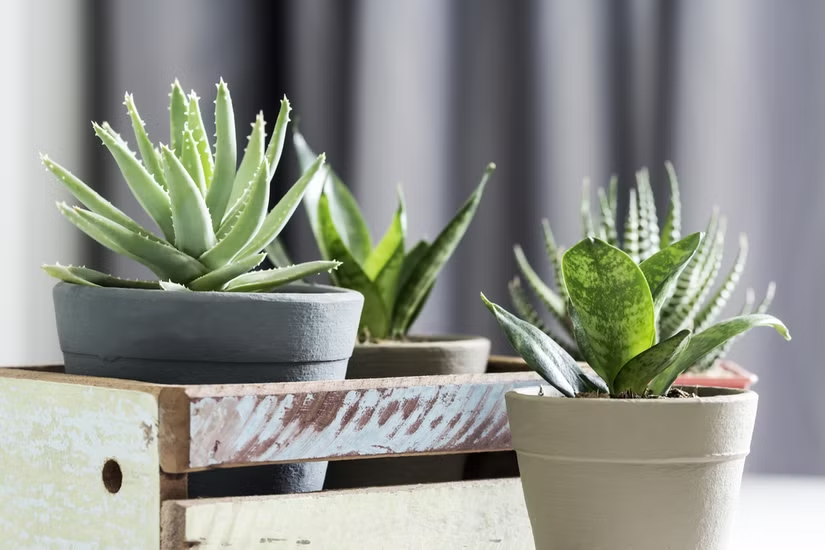
One of the exciting aspects of aloe vera is how easily it can be propagated:
1. Offsets (Pups)
- Aloe vera produces small offshoots called “pups” at the base of the mother plant.
- Wait until the pup has grown at least 2–3 inches and has a few roots.
- Gently separate the pup from the mother plant and plant it in its own pot.
2. Leaf Cuttings (Less Recommended)
While possible, leaf cuttings are less reliable and often fail to develop roots. Propagation through pups is the preferred method.
Common Issues and How to Fix Them
Even though aloe vera is low-maintenance, it can encounter a few problems:
- Overwatering: Yellowing or mushy leaves indicate too much water. Reduce watering and allow the soil to dry.
- Underwatering: Dry, shriveled leaves mean the plant needs more water.
- Pests: Aloe vera can attract pests like aphids, mealybugs, and scale. Use neem oil or insecticidal soap to treat infestations.
- Sunburn: Brown or reddish leaves can indicate excessive direct sunlight. Move the plant to a slightly shaded area.
Harvesting Aloe Vera Gel
Aloe vera gel can be harvested from mature leaves. Follow these steps:
- Choose thick, healthy outer leaves.
- Cut the leaf at the base using a sharp knife.
- Wash the leaf and drain any yellow sap (aloin) as it can be irritating to the skin.
- Slice the leaf open and scoop out the gel.
- Store the gel in an airtight container in the refrigerator for up to a week.
Creative Uses of Aloe Vera
- Skincare: Apply directly to burns, cuts, or dry skin for soothing relief.
- Haircare: Use aloe vera gel as a natural conditioner to reduce dandruff and improve hair strength.
- Juice: Aloe vera juice can aid digestion, but always consume in moderation and ensure it’s properly prepared.
- Decor: Aloe vera plants add a modern, green touch to any indoor space or garden.
Tips for Thriving Aloe Vera
- Rotate the pot occasionally so all sides receive sunlight.
- Remove dead or damaged leaves to promote healthy growth.
- Repot the plant every 2–3 years to refresh soil and encourage root development.
- Keep pets away from aloe vera as it can be toxic if ingested.
Conclusion
Aloe vera, or Elovera, is an ideal plant for both beginners and experienced gardeners. Its resilience, health benefits, and aesthetic appeal make it a must-have in any home. With the right soil, proper watering, and a sunny spot, you can grow your own thriving aloe vera plants and enjoy their countless uses for years to come. Whether you’re using it for skincare, health, or decoration, aloe vera proves that sometimes, the simplest plants offer the greatest rewards.