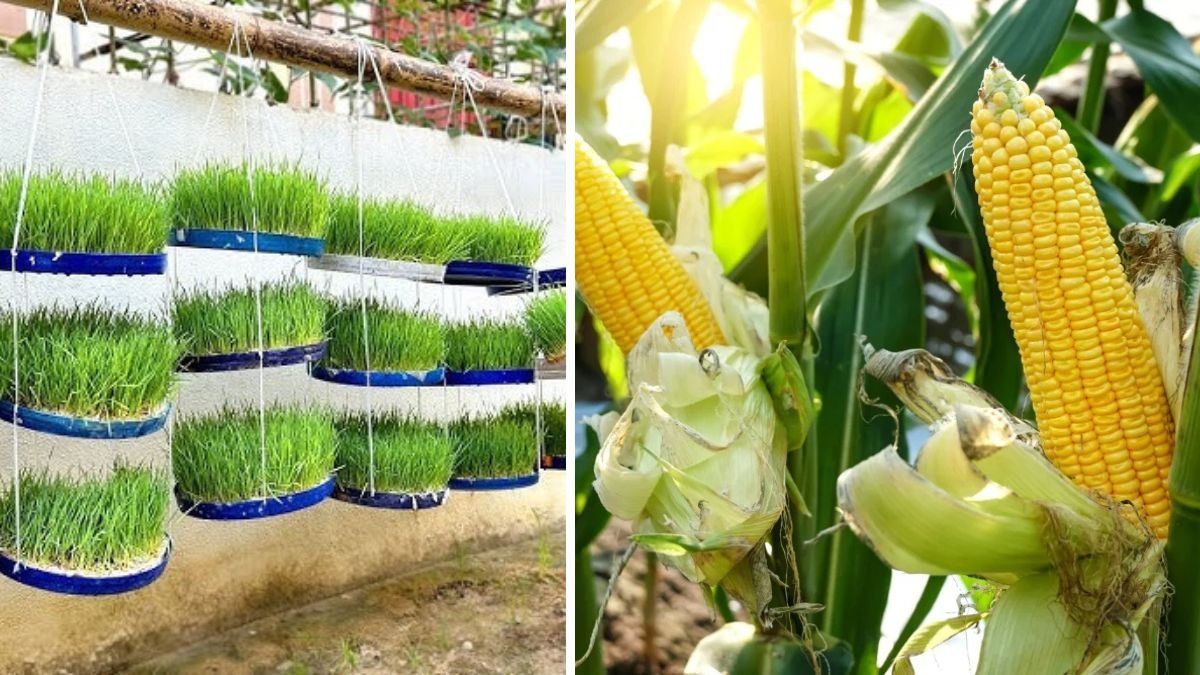
Why Growing Corn on Concrete is a Surprising Success
Corn is usually grown in rich, well-draining soil because it relies on deep roots and nutrient availability for healthy growth. However, gardeners and urban experimenters have noticed corn emerging in surprising locations: cracks in concrete, abandoned paved lots, and other seemingly inhospitable areas.
The key takeaway is that corn is remarkably resilient. Even minimal soil trapped in cracks or along edges of concrete, combined with moisture, sunlight, and organic matter, can create microhabitats sufficient for seeds to germinate. While these conditions do not replace optimal soil management, they demonstrate the plant’s ability to adapt.
Social media and gardening forums are full of stories showing corn thriving in urban spaces, capturing attention for its unexpected success. Some of these cases even report producing edible ears, proving that under the right microconditions, corn growth on concrete is more than just a novelty.
Understanding the Challenges
While corn’s adaptability is impressive, growing it on a concrete yard presents several challenges:
- Limited Soil Depth: Corn roots need space to expand and access nutrients. Concrete limits root growth unless cracks are filled with soil or containers are used.
- Nutrient Deficiency: Standard concrete lacks organic matter. Without supplemental fertilizer or compost, corn growth may be stunted.
- Temperature Extremes: Concrete surfaces heat up quickly in the sun, potentially stressing plants, and cool rapidly at night.
- Pollination Concerns: Corn is wind-pollinated and requires proximity to other plants to produce ears effectively. Single plants on isolated concrete may fail to pollinate properly.
Despite these obstacles, with creativity and careful management, gardeners can overcome these limitations.
How Corn Survives in Unlikely Environments
The ability of corn to grow on a concrete yard comes down to a few critical factors:
1. Micro-Soil Pockets
Cracks, edges, and depressions in concrete often collect dust, organic debris, and small amounts of soil. These tiny soil pockets can retain moisture long enough for corn seeds to germinate.
2. Sunlight Exposure
Corn is a full-sun plant, needing at least 6–8 hours of direct sunlight per day. Concrete areas often provide open, unobstructed sun exposure, which supports photosynthesis and stalk growth.
3. Moisture Retention
Areas near downspouts or shaded corners can trap water, offering sufficient hydration for young plants. Consistent moisture, even in small amounts, can sustain corn seedlings until they establish roots.
4. Temperature and Microclimate
Concrete can create a warmer microclimate, absorbing heat during the day and slowly releasing it at night. This warmth can promote faster germination and growth compared to exposed soil in cooler climates.
Practical [FOCUS KEYWORD] for Growing Corn on Concrete
If you want to experiment with corn on hard surfaces or maximize success in urban environments, consider these expert-backed [FOCUS KEYWORD]:
1. Create Grow Pockets or Raised Beds
Break up small areas of concrete where possible, or place containers filled with nutrient-rich soil directly on hard surfaces. Raised beds provide depth and nutrients while keeping the convenience of a concrete yard.
2. Add Organic Matter
Incorporate compost, aged manure, or peat moss into your growing medium. These materials supply essential nutrients and improve soil structure, which corn relies on heavily during rapid growth phases.
3. Ensure Full Sun Exposure
Select a location that receives at least 6–8 hours of direct sunlight daily. If sunlight is limited, consider using reflective surfaces or repositioning containers to maximize light.
4. Water Consistently
Young corn seedlings require steady moisture. Water deeply when the top inch of soil feels dry and avoid overwatering, which can promote root rot in shallow soil pockets.
5. Plant in Blocks for Better Pollination
Corn is wind-pollinated. Planting in clusters or blocks instead of single rows increases pollination efficiency and helps ensure full ear development.
6. Monitor Nutrients and Fertilize
Corn consumes large amounts of nitrogen, phosphorus, and potassium. Use a balanced fertilizer according to growth stage, and consider periodic supplementation for plants in limited soil.
7. Support Plants if Needed
Tall corn varieties may require stakes or cages if roots are restricted by shallow pockets. Supporting stalks prevents bending and improves air circulation.
Lessons from Urban Gardening Experiments
While controlled scientific studies on corn growth on concrete are limited, urban gardening experiments provide valuable insights:
- Resilience Matters: Corn can germinate and grow in minimal soil if basic environmental needs are met.
- Micro-Habitats are Key: Moisture, sunlight, and soil-like debris trapped in cracks can sustain growth temporarily.
- Supplemental Care Improves Yields: Adding compost, fertilizer, and containers can transform a marginal situation into a viable growing opportunity.
- Community Knowledge is Valuable: Social media platforms and urban gardening forums showcase successful strategies and innovative solutions.
These lessons show that even unconventional locations can support productive gardening with proper planning.
Expert Guidance
While growing corn directly on concrete is unconventional, mainstream agricultural resources offer principles that can improve success in challenging environments:
- University of Massachusetts Amherst Sweet Corn Guide: Provides comprehensive advice on soil, spacing, fertilization, and planting techniques. (umass.edu)
- Purdue University Corn Germination Requirements: Offers insights into ideal seed-to-soil contact, soil temperature, and germination conditions. (agry.purdue.edu)
- Corn Nutrient Management Guides: Explain nitrogen, phosphorus, and potassium needs for optimal growth. (syfert.net)
These authoritative sources help translate the lessons from urban experiments into scientifically supported practices.
Final Thoughts
Growing corn on a concrete yard may seem impossible at first, but both anecdotal evidence and urban gardening experiments prove that corn can survive, adapt, and sometimes even produce surprisingly good yields in unconventional spaces. Key factors include micro-soil pockets, sunlight, moisture, temperature, and supplemental nutrients.
For gardeners looking to push the boundaries of urban agriculture, experimenting with corn on hard surfaces provides an opportunity to innovate and explore. While conventional soil preparation remains the most reliable method for maximum yield, creative strategies allow corn to thrive where it was once thought impossible.
By combining traditional corn cultivation principles with creative urban gardening techniques, anyone can achieve [FOCUS KEYWORD] and enjoy fresh, homegrown corn — even in the heart of a concrete yard.