
Introduction
For decades, growing tomatoes was closely tied to having a backyard garden, fertile soil, and favorable weather. But times have changed. Today, you no longer need a garden to grow tomatoes, and in many cases, you can achieve even higher yields without one. Thanks to modern growing techniques such as vertical farming, hydroponics, and controlled indoor systems, tomatoes can thrive in apartments, balconies, patios, and even small indoor spaces.
This article explores how [FOCUS KEYWORD] is reshaping home food production, why these methods work so well, and how anyone—from beginners to experienced growers—can grow abundant, healthy tomatoes without touching traditional garden soil.
Why Traditional Gardens Are No Longer Necessary
Traditional gardening depends heavily on external factors like soil quality, rainfall, temperature swings, and seasonal limitations. For urban dwellers or people living in extreme climates, these challenges often make tomato growing frustrating or impossible.
Garden-free growing methods solve these problems by placing tomatoes in controlled environments where light, water, nutrients, and temperature are optimized. Instead of competing with weeds or battling soil-borne diseases, plants receive exactly what they need to grow efficiently. This precision leads to faster growth, healthier plants, and consistently higher yields.
Additionally, modern systems dramatically reduce water usage and space requirements, making them ideal for sustainable food production in small areas.
Vertical Growing: Big Yields in Small Spaces
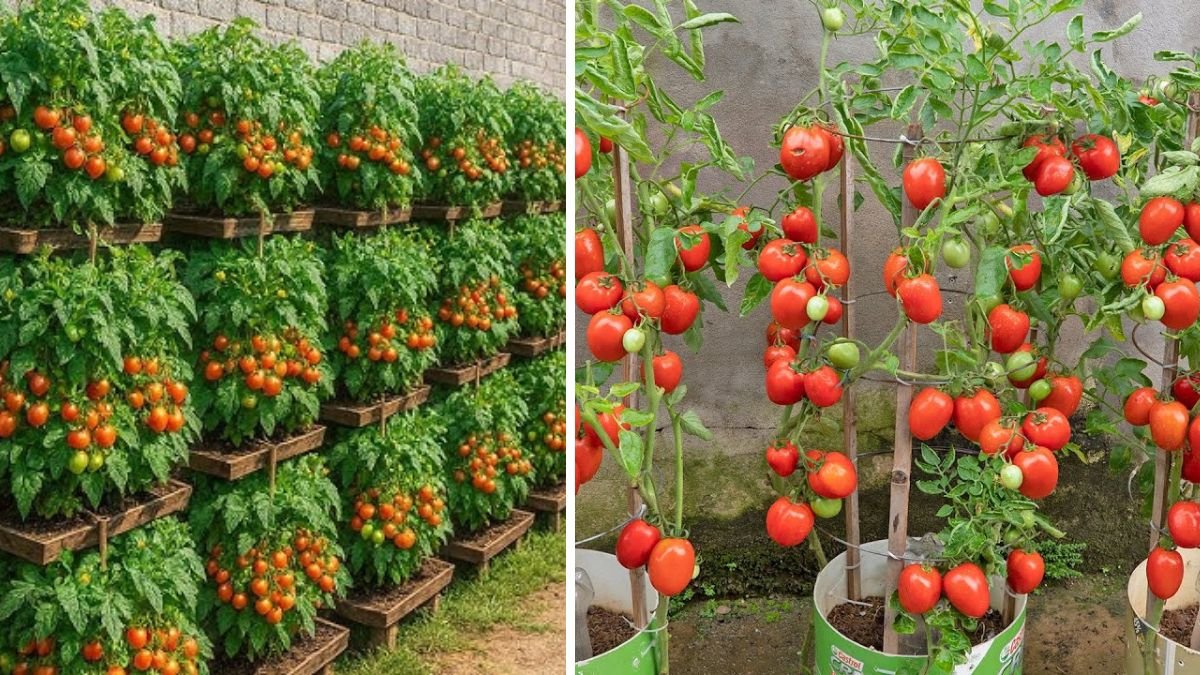
One of the most effective ways to grow tomatoes without a garden is vertical farming. Rather than spreading plants horizontally across garden beds, vertical systems stack plants upward, allowing dozens of tomato plants to grow in just a few square feet.
Vertical tomato towers often use hydroponic or aeroponic techniques, delivering nutrients directly to plant roots. Because nutrients are precisely controlled, tomatoes grow faster and more vigorously than in soil. Many growers report two to four times higher yields per square foot compared to traditional gardens.
Vertical systems are especially well-suited for:
- Balconies and patios
- Garages or spare rooms
- Greenhouses and indoor grow rooms
They also reduce pest problems since plants are elevated and isolated from ground-level insects.
Hydroponic Tomato Growing: No Soil, No Problem
Hydroponics is another powerful method behind [FOCUS KEYWORD]. In hydroponic systems, tomatoes grow in water enriched with nutrients rather than soil. The roots are supported by inert materials like clay pebbles or rock wool, allowing maximum oxygen absorption.
Because nutrients are immediately available to plants, hydroponic tomatoes often:
- Grow faster than soil-grown plants
- Produce larger and more uniform fruit
- Use up to 90% less water
Hydroponic containers can be placed indoors or outdoors and are perfect for cherry, grape, and vine tomato varieties. Since there is no soil involved, common problems like root rot, fungal infections, and nutrient lockout are significantly reduced.
Controlled Environment Agriculture: Growing Tomatoes Year-Round
Controlled Environment Agriculture (CEA) takes garden-free tomato growing to the next level. These systems rely on technology such as sensors, timers, and automated nutrient delivery to maintain ideal growing conditions at all times.
In CEA systems, temperature, humidity, light intensity, and nutrient levels are monitored and adjusted automatically. This precision ensures tomatoes grow in optimal conditions regardless of the weather outside. As a result, growers can harvest tomatoes year-round—even in winter.
CEA methods are becoming increasingly popular among home growers who want reliable results without guesswork. They are especially useful for people living in regions with short growing seasons or unpredictable climates.
Indoor Grow Kits: Perfect for Beginners
For those new to tomato growing, compact indoor grow kits provide an easy entry point. These all-in-one systems include built-in LED grow lights, water reservoirs, and nutrient systems. Many are small enough to sit on kitchen counters or shelves.
Indoor kits are designed to create a stable microclimate, eliminating common beginner mistakes such as overwatering or insufficient light. While they may not produce commercial-scale yields, they are perfect for growing fresh tomatoes consistently without outdoor space.
These kits prove that [FOCUS KEYWORD] isn’t just for advanced growers—it’s accessible to anyone.
Tomato Varieties That Thrive Without a Garden
Choosing the right tomato variety is critical when growing without a garden. Compact, high-yield varieties perform best in vertical and container systems.
Some ideal options include:
- Cherry tomatoes for fast harvests and heavy fruiting
- Grape tomatoes for compact growth and strong disease resistance
- Determinate varieties that stop growing at a manageable height
Many modern tomato hybrids are now bred specifically for indoor and vertical farming environments, making them more productive and resilient in soil-free systems.
Pollination Without Nature’s Help
One challenge of indoor or garden-free growing is pollination. Without bees and wind, tomatoes may need a little assistance. Fortunately, this is simple.
Lightly shaking the plant stems, using a soft brush, or running a small fan nearby can help pollen move between flowers. These techniques dramatically improve fruit set and ensure high yields even indoors.
Sustainability Benefits of Garden-Free Tomato Growing
Beyond convenience and productivity, growing tomatoes without a garden offers significant environmental benefits. Hydroponic and vertical systems use far less water than traditional gardening and eliminate runoff that can pollute waterways.
Because these systems are compact and efficient, they also reduce land use and allow food to be grown closer to where people live. This decreases transportation emissions and supports more sustainable, local food production.
For eco-conscious growers, [FOCUS KEYWORD] aligns perfectly with sustainable living goals.
Common Mistakes to Avoid
While garden-free tomato growing is efficient, it still requires attention. Common mistakes include:
- Inadequate lighting, especially indoors
- Incorrect nutrient balance in hydroponic systems
- Overcrowding plants in vertical setups
- Neglecting air circulation
Avoiding these pitfalls ensures plants remain healthy and productive throughout the growing cycle.
The Future of Tomato Growing
The popularity of garden-free tomato growing continues to rise as urbanization increases and technology improves. New vertical systems, smart sensors, and tomato hybrids are constantly being developed to push yields even higher.
What was once considered experimental is now becoming mainstream. Growing tomatoes without a garden is no longer a workaround—it’s often the better option.
Conclusion
You no longer need soil, land, or perfect weather to grow abundant tomatoes. With vertical farming, hydroponics, controlled environments, and indoor grow kits, [FOCUS KEYWORD] has become a practical and highly productive solution for modern growers.
Whether you live in an apartment, have limited outdoor space, or simply want better yields with less effort, garden-free tomato growing offers a smarter, more sustainable way to enjoy fresh tomatoes year-round.