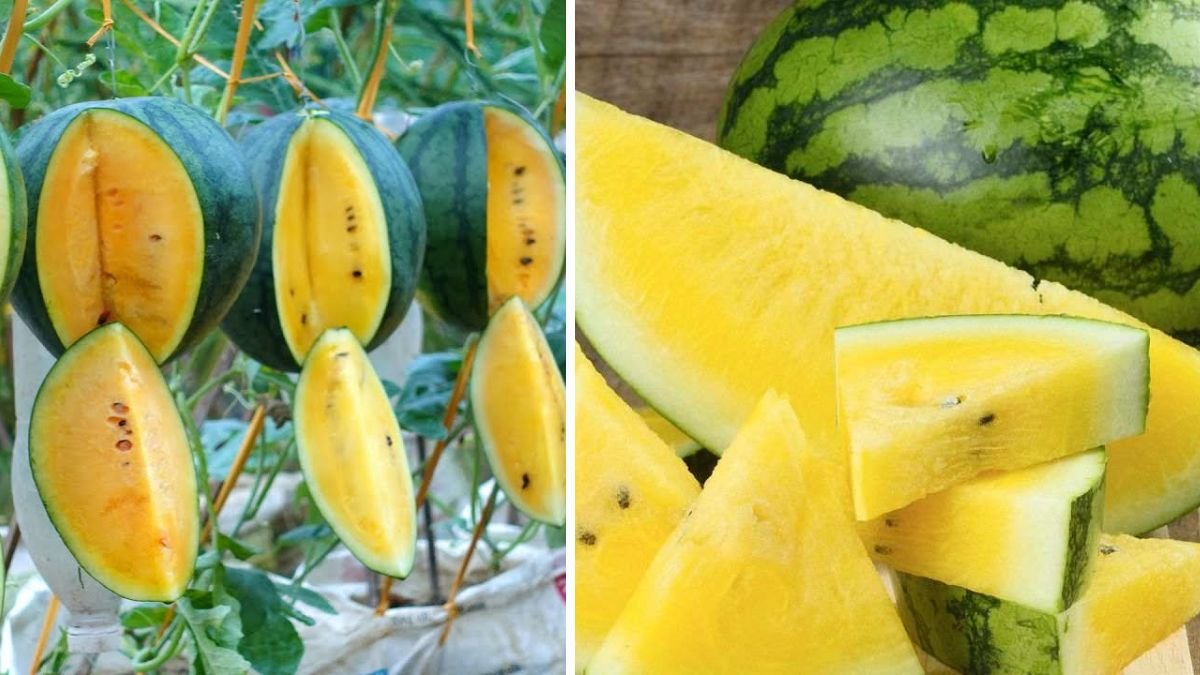

Growing your own fruit at home is one of the most satisfying gardening experiences, and growing super delicious yellow watermelon at home is quickly becoming a favorite among home gardeners. With its vibrant yellow flesh, naturally sweet flavor, and refreshing texture, yellow watermelon stands out as a unique and rewarding crop. While it may look exotic, it is surprisingly easy to grow if you understand its basic needs.
This comprehensive guide walks you through everything you need to know—from understanding yellow watermelon and preparing the soil to planting, care, harvesting, and expert tips—so you can enjoy a successful harvest at home. (FOCUS KEYWORD)
What Is Yellow Watermelon?
Yellow watermelon (Citrullus lanatus) is a naturally occurring watermelon variety that lacks lycopene, the compound responsible for red flesh. Instead, it contains beta-carotene, which gives it its bright yellow color and contributes to its sweet, honey-like taste.
Compared to red watermelon, yellow watermelon is often described as:
- Sweeter and less acidic
- More tropical in flavor
- Slightly firmer in texture
Once considered rare, yellow watermelon has gained popularity due to improved seed varieties and increased interest in home gardening. Today, growing super delicious yellow watermelon at home is achievable even for beginner gardeners. (FOCUS KEYWORD)
Ideal Climate and Growing Conditions
Yellow watermelon thrives in warm conditions and requires a long growing season to produce high-quality fruit.
Sunlight Requirements
Yellow watermelon plants need 6 to 8 hours of direct sunlight daily. Full sun is essential for vine growth, flower production, and sugar development in the fruit.
Temperature Needs
- Ideal daytime temperature: 24–32°C (75–90°F)
- Soil temperature for planting: at least 21°C (70°F)
In cooler regions, seeds can be started indoors and transplanted once temperatures stabilize.
Soil Preparation for Healthy Growth
Soil quality plays a critical role in growing super delicious yellow watermelon at home. (FOCUS KEYWORD)
Best Soil Type
- Loose, well-draining soil
- Rich in organic matter
- Sandy loam is ideal
Soil pH
The optimal soil pH range is 6.0 to 7.0. Conduct a soil test if possible and amend accordingly using lime or sulfur.
Soil Enrichment
Before planting:
- Mix in compost or well-rotted manure
- Remove rocks and debris
- Create raised mounds or hills for better drainage
Healthy soil promotes strong root systems and supports consistent fruit development.
Planting Yellow Watermelon Seeds
When to Plant
Plant seeds only after the risk of frost has passed and soil temperatures are warm. In regions with short summers, start seeds indoors 3–4 weeks early.
How to Plant
- Sow seeds 1 inch deep
- Space plants 3–6 feet apart
- Plant 2–3 seeds per hill
- Thin to the strongest seedling after germination
Water gently after planting to avoid displacing seeds.
Watering and Moisture Management
Watering is one of the most important factors in producing sweet, juicy watermelon.
Early Growth Stage
- Keep soil consistently moist
- Avoid waterlogging
Flowering and Fruiting Stage
- Water deeply once or twice per week
- Focus watering at the base of the plant
- Reduce watering slightly as fruit matures to improve sweetness
Inconsistent watering can cause fruit cracking or bland flavor, so regular moisture is key when growing super delicious yellow watermelon at home. (FOCUS KEYWORD)
Fertilization for Maximum Yield
Yellow watermelon is a heavy feeder and benefits from balanced nutrition throughout the season.
Fertilizer Schedule
- At planting: Use a balanced fertilizer (e.g., 10-10-10)
- After flowering: Switch to fertilizer higher in phosphorus and potassium
- Avoid excessive nitrogen, which promotes leaves over fruit
Organic options such as compost tea or fish emulsion also work well.
Managing Pests and Diseases
Common Pests
- Aphids
- Cucumber beetles
- Spider mites
Organic control methods include neem oil, insecticidal soap, and companion planting with marigolds or basil.
Common Diseases
- Powdery mildew
- Downy mildew
- Root rot
Prevent disease by:
- Spacing plants properly
- Avoiding overhead watering
- Ensuring good air circulation
Healthy plants are far more productive and resilient.
Supporting Vines and Saving Space
Yellow watermelon vines can spread extensively. If space is limited, consider alternative growing methods.
Ground Growing
Allow vines to sprawl naturally, placing straw or cardboard under fruits to prevent rot.
Vertical Growing
- Use strong trellises
- Support fruits with cloth slings
- Best suited for smaller varieties
Vertical growing improves air circulation and makes pest monitoring easier.
Flowering and Pollination
Yellow watermelon plants produce both male and female flowers. Bees and other pollinators are essential for fruit set.
If pollination is poor:
- Avoid pesticides during flowering
- Hand-pollinate by transferring pollen from male to female flowers
Good pollination directly impacts fruit size and shape when growing super delicious yellow watermelon at home. (FOCUS KEYWORD)
When and How to Harvest Yellow Watermelon
Harvesting at the right time ensures peak flavor and sweetness.
Signs of Ripeness
- The tendril nearest the fruit turns brown
- The underside (ground spot) turns creamy yellow
- The rind becomes dull, not shiny
- A hollow sound when tapped
Use a sharp knife or garden shears to cut the fruit from the vine.
Important: Watermelons do not ripen after harvest, so timing is crucial.
Taste, Storage, and Use
Freshly harvested yellow watermelon has a crisp texture and naturally sweet flavor.
Storage Tips
- Store whole watermelon at room temperature for a few days
- Refrigerate after cutting
- Consume within 3–5 days for best taste
Yellow watermelon is perfect for:
- Fresh slices
- Smoothies
- Fruit salads
- Summer desserts
Expert Tips for Better Results
- Use black plastic mulch to warm soil and control weeds
- Rotate crops annually to prevent soil-borne diseases
- Keep a gardening log to track planting and harvest dates
- Choose improved hybrid seeds for better disease resistance
These small steps can make a big difference when growing super delicious yellow watermelon at home. (FOCUS KEYWORD)
Authoritative Sources for Further Learning
For gardeners who want deeper, research-backed information, consult:
- Planet Natural – Watermelon growing guides
- Garden Guides – Seed starting and care
- Gardenia – Plant profiles and maintenance
- TreeCareZone – Fertilizing and pest management
These sources provide reliable, horticulture-based insights.
Final Thoughts
Growing your own yellow watermelon is a rewarding experience that combines visual beauty with outstanding flavor. With proper sunlight, fertile soil, consistent watering, and timely harvesting, anyone can succeed at growing super delicious yellow watermelon at home. Whether you’re a beginner or an experienced gardener, this vibrant fruit is a standout addition to any home garden. (FOCUS KEYWORD)