
Introduction
Urban living no longer means giving up fresh, home-grown vegetables. With growing awareness about healthy food, sustainability, and mindful living, balcony gardening has emerged as a powerful trend worldwide. An amazing vegetable garden on the balcony allows apartment dwellers to grow fresh produce, beautify their living space, and reconnect with nature — even with limited square footage.
Thanks to innovative planters, vertical systems, and hanging garden designs, balconies are being transformed into productive mini-farms. This article explores the latest trends, practical design strategies, and expert insights to help you build the perfect hanging vegetable garden on your balcony, regardless of size.
Background: The Rise of Balcony Vegetable Gardening
Balcony vegetable gardening has seen rapid growth in recent years, especially in urban areas where access to outdoor land is limited. Lifestyle changes, increased work-from-home culture, and a growing interest in organic food have fueled this movement.
Urban gardening experts highlight that balcony gardens are not just decorative — they contribute to food security, mental well-being, and environmental sustainability. Reports from global lifestyle and gardening publications show that city residents are increasingly turning balconies into functional green spaces that combine beauty with productivity.
The concept of vertical and hanging gardens has played a major role in this shift. By using walls, railings, and overhead space, gardeners can grow more vegetables without crowding the floor.
Why a Balcony Vegetable Garden Is Worth It
Creating an amazing vegetable garden on the balcony offers multiple benefits:
1. Fresh and Healthy Produce
Home-grown vegetables are free from harmful chemicals and preservatives. Even a small balcony garden can supply herbs, greens, and seasonal vegetables regularly.
2. Efficient Use of Space
Vertical planters, hanging baskets, and railing containers make it possible to grow a surprising amount of food in limited areas.
3. Mental and Emotional Well-Being
Gardening has proven therapeutic benefits. Tending plants reduces stress, improves focus, and brings a sense of accomplishment.
4. Eco-Friendly Lifestyle
Balcony gardens help reduce carbon footprint, support pollinators, and improve air quality in dense urban environments.
Planning Your Balcony Garden
Assess Sunlight and Weather
Sunlight is the most important factor for a successful balcony vegetable garden. Observe your balcony for a few days to understand:
- Hours of direct sunlight
- Direction (north, south, east, or west facing)
- Exposure to wind or heavy rain
Most vegetables require 4–6 hours of sunlight daily. Leafy greens and herbs tolerate partial shade, while fruiting vegetables need more sun.
Choose the Right Containers
Containers should be lightweight, durable, and well-drained. Popular choices include:
- Fabric grow bags
- Plastic or fiberglass pots
- Self-watering containers
- Recycled buckets or crates (with drainage holes)
Ensure containers are deep enough for root development, especially for tomatoes, peppers, and cucumbers.
Perfect Hanging Garden Ideas for Balconies
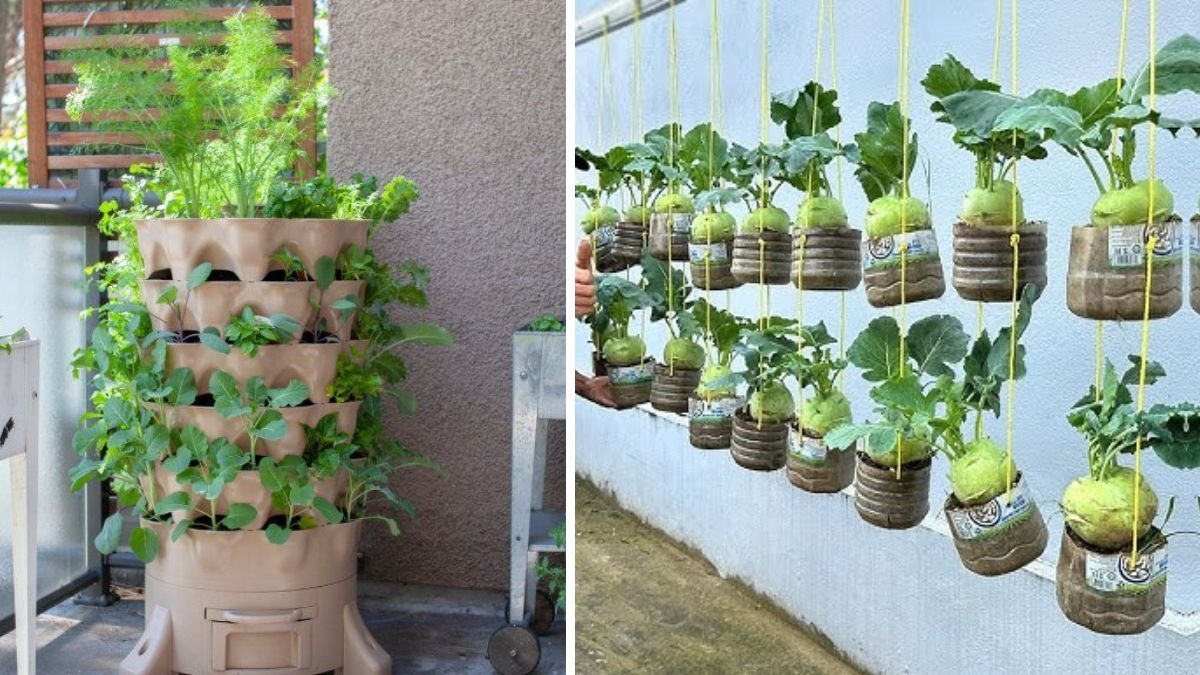
Hanging gardens are the secret to maximizing space while enhancing visual appeal.
1. Hanging Pots and Baskets
Suspended pots are ideal for herbs, strawberries, cherry tomatoes, and trailing vegetables. They free up floor space and create a lush, layered look.
2. Vertical Wall Planters
Wall-mounted pocket planters or modular vertical systems allow you to grow multiple plants in a compact area.
3. Railing Planters
Balcony railings are perfect for growing herbs and shallow-root vegetables. They are easy to access and receive ample sunlight.
4. Trellises and Climbers
Use trellises or nets to support climbing vegetables like beans, peas, and cucumbers. This method boosts yield while keeping plants healthy.
Best Vegetables for a Balcony Garden
Choosing the right plants is crucial for success. The following vegetables are well-suited for balconies and hanging gardens:
Leafy Greens
- Lettuce
- Spinach
- Swiss chard
- Fenugreek
These grow quickly and perform well in partial shade.
Fruiting Vegetables
- Cherry tomatoes
- Bell peppers
- Chili peppers
- Eggplants (compact varieties)
They require good sunlight and consistent care.
Root and Fast-Growing Crops
- Radishes
- Beets (small varieties)
- Green onions
These are beginner-friendly and ideal for containers.
Herbs
- Basil
- Mint
- Coriander
- Parsley
- Thyme
Herbs are perfect for hanging planters and railing pots.
Soil, Watering, and Nutrition
Soil Mix
Use a light, well-draining soil mix. A good container soil includes:
- Garden soil or coco peat
- Compost or vermicompost
- Sand or perlite for aeration
Healthy soil leads to strong roots and better yields.
Watering Tips
- Water early morning or evening
- Avoid overwatering; ensure proper drainage
- Hanging pots dry faster and may need frequent watering
Fertilization
Use organic fertilizers such as compost tea, liquid seaweed, or homemade kitchen compost to maintain soil nutrients.
Pest Control and Plant Care
Balcony gardens are less prone to pests, but issues can still arise.
Natural Pest Management
- Neem oil spray
- Soap water solution
- Companion planting (marigold, basil)
Regular Maintenance
- Remove yellow or diseased leaves
- Rotate crops seasonally
- Check plants weekly for pests or nutrient deficiency
Consistent care ensures long-lasting productivity.
Seasonal Balcony Gardening Tips
- Grow leafy greens in cooler months
- Plant tomatoes and peppers during warm seasons
- Protect plants during extreme heat or cold
- Adjust watering frequency with weather changes
Understanding seasonal cycles helps maximize harvests throughout the year.
Suggested Authoritative Sources
For reliable and expert guidance, explore:
- University agricultural extension services
- Renowned lifestyle and gardening publications
- Urban farming research articles
- Government horticulture departments
These sources provide science-based advice and region-specific recommendations.
Conclusion
An amazing vegetable garden on the balcony is more than a trend — it’s a sustainable lifestyle choice. With smart planning, perfect hanging garden designs, and the right plant selection, even the smallest balcony can become a thriving green space.
By embracing vertical gardening, choosing suitable vegetables, and maintaining proper care, you can enjoy fresh produce, improved well-being, and a beautiful urban oasis right outside your door. Balcony gardening proves that you don’t need land to grow food — just creativity, care, and a little sunshine.