
Introduction
In today’s environmentally conscious world, transforming waste into something useful and beautiful is more than a trend — it’s a necessity. One inspiring initiative is creating a vertical garden from plastic bottles. This DIY project is a perfect example of Great Idea | How to Create a Vertical Garden from Plastic Bottles, allowing anyone, from beginners to experienced gardeners, to grow plants while repurposing waste.
Whether you live in a small apartment, want to teach sustainability to students, or simply wish to add greenery to your balcony, a vertical bottle garden is versatile, eco-friendly, and visually appealing. It’s a project that combines creativity, practicality, and environmental consciousness.
Why Plastic Bottle Vertical Gardens Matter
Plastic pollution is one of the most pressing environmental challenges of our time. PET bottles, commonly used for beverages, can take hundreds of years to decompose, contaminating soil and water in the process. By repurposing these bottles into vertical gardens, we address two major issues simultaneously: reducing plastic waste and greening urban spaces.
Vertical gardens are especially suitable for urban dwellers, as they maximize the use of limited spaces. They also provide opportunities for educational projects in schools and community spaces, showing how small, creative steps can make a positive environmental impact. Experts and eco-enthusiasts have praised this method for its sustainability, accessibility, and adaptability (The Better India).
Materials Needed
To start your vertical garden project, you’ll need a few basic materials:
- Empty plastic bottles (1–2 liters work best)
- Scissors or a utility knife
- Drill or hot needle (for drainage holes)
- Rope, twine, or hooks for hanging
- Potting soil and compost
- Plants of your choice: herbs, leafy greens, flowers, or succulents
- Optional: paint for decoration
Repurposing readily available materials keeps costs low and encourages a sustainable approach to gardening (eHow).
Step-by-Step Guide to Creating Your Vertical Garden
Creating a vertical garden from plastic bottles is straightforward and enjoyable. Here’s a simple step-by-step guide:
Step 1: Prepare the Bottles
- Wash the bottles thoroughly and remove labels.
- Cut off the base or slice the bottles lengthwise to create openings for soil and plants.
- Drill small holes at the bottom or near the cap to ensure proper drainage.
This ensures that your plants have enough room to grow while preventing waterlogging. You can also paint or decorate the bottles to add a personal touch and protect them from UV damage (The Better India).
Step 2: Choose Your Design and Layout
There are several ways to arrange your vertical garden:
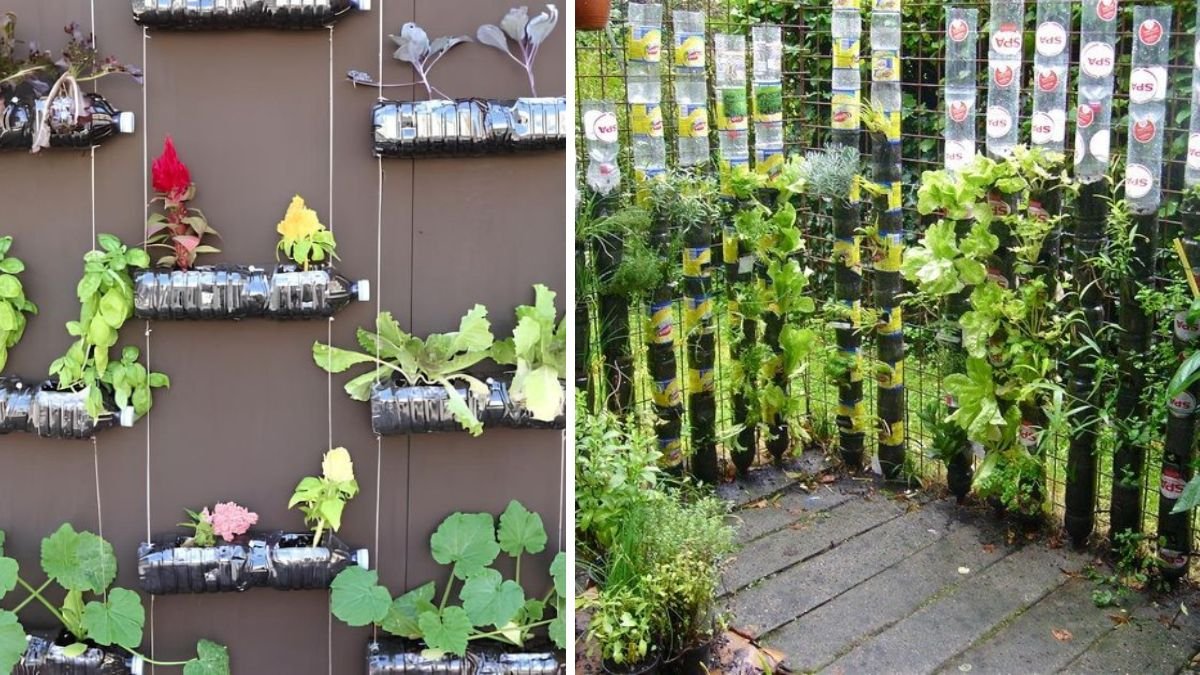
- Vertical Hanging: Thread rope through holes near the top and hang bottles in a straight line or staggered formation.
- Railing Attachments: Secure bottles horizontally along balcony or stair railings.
- Frame or Trellis: Attach bottles to a wooden frame or metal grid for a wall feature.
The choice of layout depends on the available space, sunlight exposure, and aesthetic preference. Staggered layouts maximize sunlight for each plant and create a visually dynamic display (AgriFarming).
Step 3: Fill the Bottles and Plant
- Fill each bottle with a high-quality mix of potting soil and compost.
- Plant your chosen herbs, leafy greens, or flowers. Popular options include coriander, basil, mint, lettuce, and small flowering plants.
- Water gently and monitor soil moisture to avoid overwatering.
Herbs and leafy greens are particularly well-suited for bottle gardens, as they require minimal soil depth and grow quickly, providing fresh produce within weeks (The Better India).
Step 4: Maintain Your Vertical Garden
Vertical gardens require consistent care to thrive:
- Sunlight: Ensure plants receive adequate light; most herbs need 4–6 hours daily.
- Watering: Check moisture regularly, as bottles dry faster than traditional pots.
- Fertilizing: Use organic liquid fertilizer once a month to maintain soil nutrients.
- Monitoring Pests: Vertical setups are less prone to pests but keep an eye out for aphids or fungus.
Regular maintenance ensures a healthy, thriving garden and maximizes the yield of edible plants (ABC Australia).
Advantages of Plastic Bottle Vertical Gardens
- Sustainability: Reduces plastic waste while creating green spaces.
- Space Efficiency: Ideal for apartments, balconies, and small yards.
- Educational Value: Great for teaching kids or communities about recycling and gardening.
- Cost-Effective: Uses readily available materials, minimizing expenses.
- Aesthetic Appeal: Enhances home or community spaces with creative arrangements and plant colors.
By embracing vertical gardening, households contribute to a cleaner, greener urban environment while enjoying fresh herbs and vegetables at minimal cost.
Tips for Best Results
- Select Suitable Plants: Herbs and leafy greens are excellent for limited soil volume. Tomatoes and small peppers also work with slightly larger bottles.
- Decorate Your Bottles: Spray paint or eco-friendly paints enhance aesthetics and protect bottles from sunlight.
- Rotate Plants Seasonally: Some plants perform better in specific seasons; consider swapping herbs and flowers accordingly.
- Safety Precautions: If growing edible plants, replace plastic bottles periodically to reduce the risk of chemical leaching.
These tips ensure longevity, productivity, and safety in your vertical garden (Reddit – Agriculture Discussions).
Real-World Applications
Around the world, schools, community centers, and urban initiatives use vertical bottle gardens to teach sustainability and promote local food production. Large-scale projects demonstrate that even small recycled bottles can contribute meaningfully to environmental awareness and urban greenery.
Educational programs often build walls of PET bottles, allowing students to participate in planting and caring for plants. This hands-on approach fosters environmental stewardship and inspires creativity, showing that eco-friendly solutions are accessible to everyone (Natural Building Blog).
Authoritative Resources
To deepen your understanding and gain practical insights, refer to these sources:
- The Better India – Vertical Garden DIY with Plastic Bottles – Practical inspiration and step-by-step guidance.
- eHow – How to Make Hanging Plant Holders From Plastic Bottles – DIY techniques for home projects.
- AgriFarming – Balcony Gardening – Growing vegetables and herbs in small spaces.
These resources offer reliable instructions, tips, and real-life examples to enhance your DIY vertical garden.
Conclusion
Creating a vertical garden from plastic bottles is more than just a DIY craft—it’s a statement of sustainable living. By repurposing waste, maximizing space, and growing your own plants, you embrace a practical, eco-friendly lifestyle that benefits both the environment and your daily life.
Whether you’re seeking fresh herbs for your kitchen, a visually appealing balcony, or an educational project for kids, this project is versatile and impactful. The Great Idea | How to Create a Vertical Garden from Plastic Bottles is proof that creativity, sustainability, and practicality can coexist beautifully in any urban setting.
Start your vertical garden today and take a step toward a greener, cleaner, and more sustainable future.