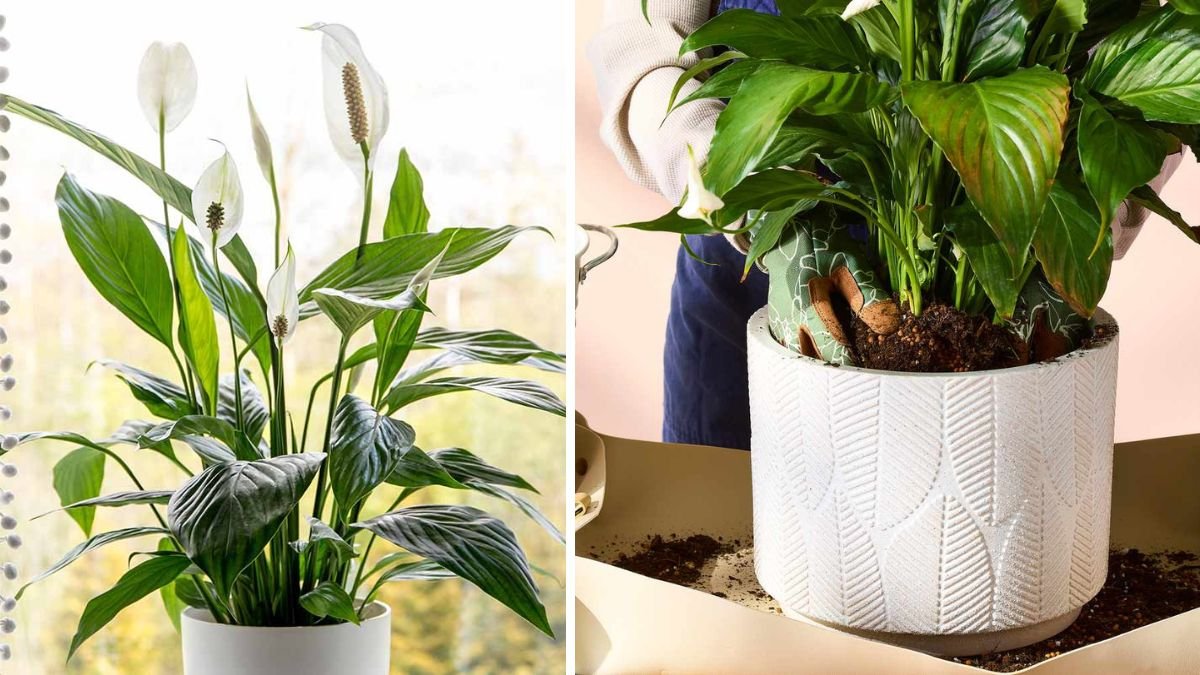

Peace lilies (Spathiphyllum spp.) are among the most popular houseplants worldwide, prized for their glossy green leaves and elegant white blooms. They are relatively low-maintenance and excellent at purifying indoor air. However, even the hardiest peace lily can outgrow its pot. When that happens, rootbound conditions may develop, preventing the plant from absorbing water and nutrients efficiently. Over time, this can lead to stunted growth, yellowing leaves, and reduced blooms.
Knowing when and how to repot your peace lily is essential for maintaining its health. This article explores the signs your plant has outgrown its pot, the best time to repot, and step-by-step guidance to do it successfully, ensuring your peace lily thrives for years to come.
How to Tell Your Peace Lily Has Outgrown Its Pot
Peace lilies communicate through their leaves and roots. Here are reliable signs that it’s time to repot:
- Roots Emerging from Drainage Holes
If you see roots poking out from the bottom, it’s a clear indication the plant is rootbound. This overcrowding can limit nutrient absorption and lead to water stress. (Tom’s Guide) - Circling Roots at the Soil Surface
When you remove the plant from its pot and notice roots tightly circling the soil, it’s a strong signal that the plant needs more space. Circling roots can eventually strangle themselves, further restricting growth. - Wilting Despite Regular Watering
If your peace lily wilts even though the soil is moist, overcrowded roots may be preventing water uptake, stressing the plant. - Slowed Growth or Smaller Leaves
A peace lily that is not producing new leaves or the leaves are smaller than usual may be constrained by a pot that is too small. - Soil Dries Too Quickly
When roots dominate a pot, there is less soil to retain moisture. If your plant’s soil dries out unusually fast, it might be time for a larger container.
Peace lilies generally benefit from repotting every 1–2 years, even if no dramatic signs appear, as this refreshes the soil, replenishes nutrients, and promotes vigorous growth. (Botanic Home)
Best Time to Repot Your Peace Lily
Timing is critical for successful repotting.
- Spring or Early Summer: This is ideal since the plant is entering its active growing season. Repotting now ensures quick recovery and encourages strong root and leaf development. (Take Care Plant)
- Anytime Signs of Stress Appear: If your plant is showing rootbound symptoms, don’t wait for the perfect season. Addressing root overcrowding promptly prevents long-term damage.
- Avoid Winter or Dormancy: During colder months, peace lilies grow slowly, and repotting can cause additional stress and slower recovery.
Step-by-Step Guide to Repotting a Peace Lily
Follow these steps to repot your peace lily safely:
1. Choose the Right Pot
Select a pot that is 1–2 inches larger in diameter than the current container. Ensure it has drainage holes to prevent waterlogging, which can cause root rot. A slightly larger pot gives roots room to expand without overwhelming them. (Better Homes & Gardens)
2. Prepare Fresh, Well-Draining Soil
Peace lilies prefer a light, well-aerated potting mix. A standard houseplant mix with added perlite or orchid bark works well to improve drainage. Avoid heavy garden soils, which can compact and suffocate the roots.
3. Water Before Repotting
Water the plant lightly a day before repotting. Moist soil helps the root ball hold together, making removal from the pot easier and less stressful for the plant.
4. Remove the Plant from Its Old Pot
Gently turn the pot on its side and ease the plant out. Loosen any tightly wound roots by teasing them apart carefully. Trim any damaged, brown, or mushy roots with clean scissors.
5. Place the Plant in the New Pot
Position the peace lily in the center of the new pot at the same soil depth as before. Fill around the roots with fresh soil and firm gently. Avoid burying the plant deeper than its original depth, which can encourage stem rot.
6. Water Thoroughly
After repotting, water the plant thoroughly to help settle the soil around the roots. The soil should be evenly moist but not soggy.
7. Provide Indirect Light
Place your peace lily in bright, indirect light. Avoid direct sunlight, which can scorch the leaves. Slight wilting may occur for a few days as the plant acclimates to its new pot.
Aftercare Tips for a Healthy Peace Lily
Proper care after repotting is essential for recovery:
- Watering: Keep the soil consistently moist but allow the top inch to dry slightly between waterings.
- Light: Ensure the plant receives bright, indirect sunlight. Peace lilies tolerate low light but thrive with moderate indirect light.
- Fertilizing: Wait a few weeks before applying fertilizer after repotting. Once established, feed monthly during the growing season with a balanced houseplant fertilizer.
- Humidity: Peace lilies enjoy high humidity. Mist occasionally or place near a humidity tray for optimal leaf health.
Common Mistakes to Avoid
- Using a Too-Large Pot:
Oversized pots retain excess water, increasing the risk of root rot. Always choose a pot only slightly larger than the previous one. - Repotting Too Frequently:
Peace lilies do not like constant disturbance. Stick to the 1–2 year schedule unless the plant is clearly rootbound. - Neglecting Soil Quality:
Fresh, well-draining soil is critical. Old, compacted soil can suffocate roots and reduce oxygen exchange. - Overwatering After Repotting:
Roots need time to adapt. Overwatering can cause root rot in newly disturbed plants.
Why Repotting Matters for Your Peace Lily
Repotting is more than just a maintenance task; it directly affects your plant’s health, growth, and longevity. When done correctly, it helps:
- Encourage new root and leaf growth
- Maintain nutrient-rich soil
- Improve water absorption and retention
- Prevent disease from compacted or stagnant soil
- Promote fuller, more vibrant blooms
Regular repotting ensures your peace lily continues to flourish, bringing both aesthetic beauty and air-purifying benefits to your home.
Authoritative Sources for Reference
For further reading and trusted guidance, consider these authoritative sources:
- Tom’s Guide — Peace Lily Repotting Tips
- Better Homes & Gardens — Step-by-Step Repotting
- Flying Flowers — Plant Care Guide: Peace Lily
- Botanic Home — Peace Lily Care Tips
These sources provide expert-backed advice to ensure your repotting process is safe, effective, and stress-free for your plant.
Conclusion
Knowing when and how to repot your peace lily is critical for keeping it healthy, vibrant, and thriving. Watch for key signs like roots emerging from drainage holes, circling roots, wilting, and slowed growth. Repot during spring or early summer for optimal recovery, use a slightly larger pot, and provide fresh, well-draining soil. With proper aftercare, your peace lily will reward you with lush foliage, graceful blooms, and improved indoor air quality for years to come.
By following these expert tips, you can ensure your peace lily continues to grow comfortably, avoiding stress and promoting long-term health. Repotting is not just a maintenance chore—it’s a crucial step in nurturing a happy, thriving plant.