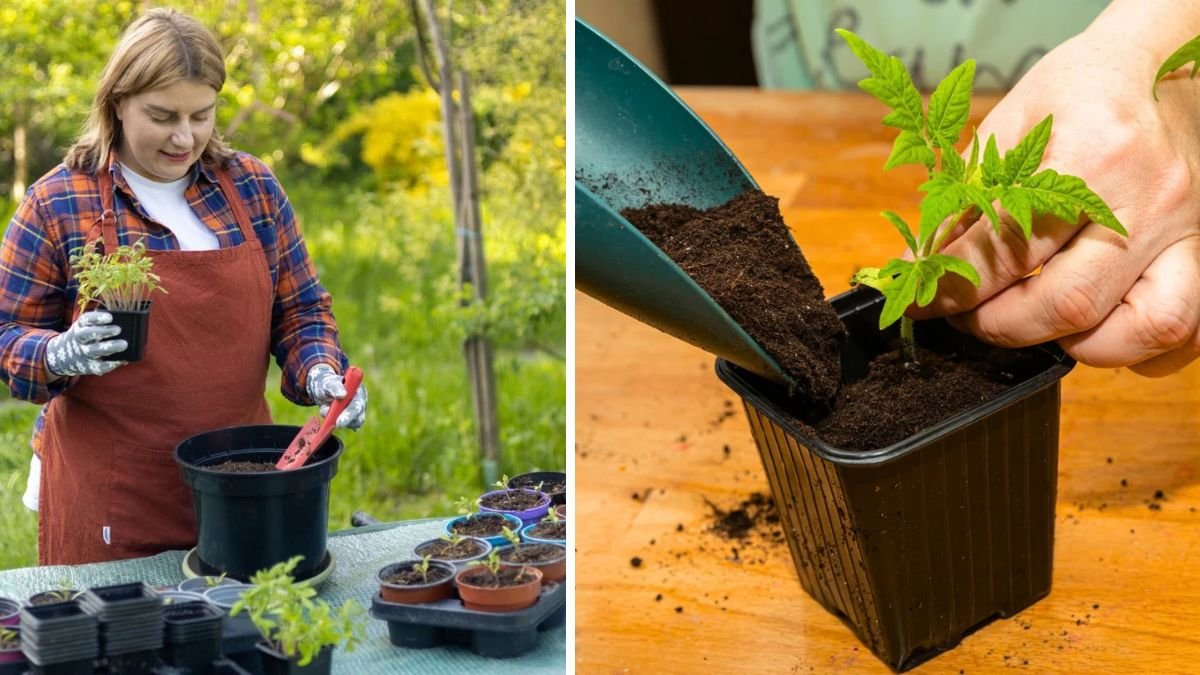

Starting tomatoes from seed is rewarding, but one of the most delicate moments in the process is knowing exactly when—and how—to move young seedlings into larger pots. Transplanting too early can stress fragile roots, while waiting too long can stunt growth and reduce future yields. According to gardening experts, timing and technique matter just as much as the pot size itself.
If you want strong stems, healthy roots, and productive tomato plants, here’s how to recognize the right moment to pot up your tomato seedlings—and how to do it without damage.
Why Potting Up Tomato Seedlings Matters
Tomatoes grow quickly. In their early stages, seedlings rely on a limited amount of soil and nutrients. Once roots fill their starter cells or small pots, growth slows, moisture becomes inconsistent, and plants become vulnerable to stress.
Experts say transplanting seedlings into larger containers:
- Encourages deep, healthy root systems
- Prevents nutrient deficiencies
- Reduces competition for water and oxygen
- Builds stronger stems before outdoor planting
Potting up isn’t optional—it’s a critical step toward vigorous plants.
The Ideal Time to Move Tomato Seedlings
The most reliable indicator isn’t the calendar—it’s the plant itself.
Experts agree tomato seedlings are ready to move when:
- They have 2–3 sets of true leaves (not counting the first seed leaves)
- Roots are visible at the drainage holes
- Growth appears to slow despite adequate light and water
This usually happens 2–4 weeks after germination, depending on temperature and light.
Understanding True Leaves vs. Seed Leaves
Seed leaves, or cotyledons, are the first smooth leaves to emerge. True leaves appear next and resemble mature tomato foliage with serrated edges.
According to horticulturists, true leaves indicate that the seedling has begun photosynthesis independently and can handle transplanting better.
Never transplant based solely on height—leggy seedlings may look ready but lack root strength.
Signs You’ve Waited Too Long
Delayed transplanting can cause lasting problems. Experts warn to watch for:
- Roots circling tightly at the pot’s edge
- Yellowing lower leaves
- Stunted or uneven growth
- Seedlings drying out quickly after watering
Once root-bound, tomatoes struggle to recover fully, even after transplanting.
Choosing the Right Pot Size
When potting up, bigger isn’t always better.
Recommended pot sizes:
- From seed tray → 3–4 inch pots
- From 4-inch pots → 1-gallon containers
Gradual increases allow roots to colonize soil efficiently without sitting in excess moisture.
The Best Soil for Transplanting
Experts recommend a light, well-draining potting mix—not garden soil.
Look for soil that:
- Contains compost or organic matter
- Drains freely while retaining moisture
- Is sterile or labeled for seed starting
Avoid heavy mixes that compact easily, which can suffocate young roots.
Preparing Seedlings Before Transplanting
Preparation reduces transplant shock.
The day before transplanting:
- Water seedlings thoroughly
- Ensure soil is evenly moist
- Avoid fertilizing
Moist soil holds together better and protects delicate roots during handling.
How to Transplant Tomato Seedlings Safely
Tomatoes are unique—they can grow roots along buried stems. Experts use this to their advantage.
Step-by-step expert method:
- Fill new pot partially with moistened soil
- Gently loosen seedling from its container
- Handle by leaves, not the stem
- Plant deeply, burying part of the stem
- Firm soil lightly—don’t compress
- Water gently to settle soil
Deep planting creates stronger, more resilient plants.
Why Handling Matters So Much
Seedling stems are fragile and easily crushed. Experts stress:
- Never pull seedlings by the stem
- Avoid shaking soil off roots
- Keep roots exposed for as little time as possible
Even brief root damage can slow growth for weeks.
Aftercare: The First 48 Hours
Post-transplant care is critical.
Experts recommend:
- Keeping seedlings out of direct sun for 24 hours
- Maintaining consistent moisture
- Avoiding fertilizer for at least one week
This recovery period allows roots to reestablish without stress.
When to Fertilize After Potting Up
Once seedlings resume active growth, light feeding supports development.
Expert guidelines:
- Wait 7–10 days after transplanting
- Use diluted, balanced fertilizer
- Feed lightly every 2–3 weeks
Overfeeding early on leads to weak stems and excess foliage.
Common Mistakes to Avoid
Even experienced gardeners slip up. Experts caution against:
- Transplanting dry seedlings
- Using oversized pots too early
- Compacting soil around roots
- Exposing roots to wind or sun
Small mistakes at this stage can affect the entire season.
Potting Up More Than Once
For long indoor growing periods, tomatoes may need multiple pot-ups.
Experts say this is normal when:
- Starting seeds very early
- Growing indeterminate varieties
- Waiting for outdoor conditions to improve
Each transplant strengthens the root system when done correctly.
How Potting Up Prepares Tomatoes for the Garden
Properly potted seedlings:
- Develop thicker stems
- Handle wind better outdoors
- Establish faster in the ground
- Produce earlier and more consistently
Experts agree that strong early roots lead to higher yields later.
Final Thoughts
Knowing when to move tomato seedlings into larger pots—and doing it gently—sets the foundation for a successful growing season. According to gardening experts, the sweet spot is when seedlings have several true leaves, healthy roots, and steady growth. Pair that timing with careful handling, deep planting, and proper aftercare, and you’ll avoid damage while building stronger, more productive plants.
Taking the extra time during this early stage pays off all summer long in healthier vines and better harvests.