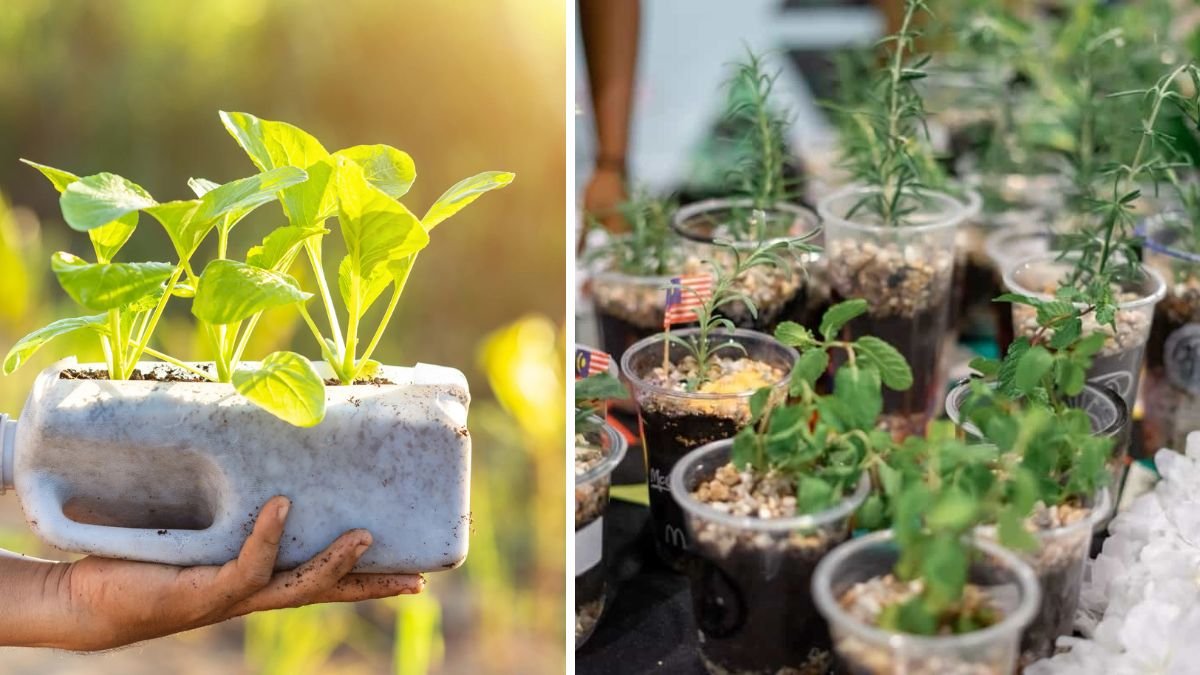

Plastic bottles are one of the most common household wastes—but they can also become powerful gardening tools. With a little creativity, plastic bottles can be transformed into productive containers for growing vegetables, even in the smallest spaces.
This beginner-friendly guide will show you how to turn plastic bottles into a thriving vegetable garden, saving money, reducing waste, and growing fresh food at home.
Why Use Plastic Bottles for Gardening?
Plastic bottle gardening offers many benefits:
- Reuses household waste
- Ideal for balconies, patios, and windowsills
- Low-cost and beginner-friendly
- Easy to move and rearrange
- Perfect for small-space gardening
It’s an excellent solution for urban and eco-conscious gardeners.
Choosing the Right Plastic Bottles
Not all bottles work equally well.
Best options:
- 1–2 liter soda bottles
- Large water bottles
- Clear or semi-clear plastic
- Thick, sturdy plastic
Avoid bottles that previously held chemicals.
Basic Plastic Bottle Garden Designs
1. Horizontal Bottle Planters
- Cut lengthwise
- Ideal for leafy greens and herbs
2. Vertical Hanging Bottles
- Hang using rope or wire
- Perfect for strawberries and lettuce
3. Self-Watering Bottle Planters
- Cut in half
- Invert top into bottom
- Great for beginners
Each design suits different plants and spaces.
Preparing Bottles for Planting
Steps:
- Wash bottles thoroughly
- Remove labels
- Cut openings carefully
- Poke drainage holes
- Smooth sharp edges
Proper drainage is essential for healthy roots.
Best Vegetables for Plastic Bottle Gardening
Choose plants with shallow roots.
Ideal vegetables:
- Lettuce
- Spinach
- Arugula
- Green onions
- Radishes
- Cherry tomatoes
- Peppers
- Herbs like basil and parsley
Avoid large root vegetables.
Soil Mix for Bottle Gardens
Plastic containers need light, airy soil.
Recommended mix:
- Potting soil
- Compost
- Coconut coir or perlite
This combination retains moisture while preventing waterlogging.
Planting in Plastic Bottles
- Fill bottle with soil
- Plant seeds or seedlings
- Water gently
- Place in a sunny spot
Most vegetables need 4–6 hours of sunlight daily.
Watering and Drainage Tips
Bottle gardens dry out faster.
Watering tips:
- Check soil daily
- Water slowly
- Avoid flooding
- Use self-watering systems when possible
Consistent moisture keeps plants healthy.
Vertical Bottle Gardens for Small Spaces
Vertical setups maximize production.
How to build:
- Attach bottles to walls or fences
- Stack bottles on wooden frames
- Hang from balconies or railings
Vertical gardening improves airflow and accessibility.
Fertilizing Bottle-Grown Vegetables
Nutrients leach quickly in small containers.
Feeding tips:
- Use diluted liquid fertilizer
- Feed every 2–3 weeks
- Compost tea works well
Avoid overfeeding—it causes weak growth.
Common Problems and Solutions
Wilting Plants
- Cause: Underwatering
- Fix: Increase watering frequency
Yellow Leaves
- Cause: Nutrient deficiency
- Fix: Light fertilizer boost
Root Rot
- Cause: Poor drainage
- Fix: Add holes and reduce watering
Harvesting and Replanting
Harvest frequently to encourage growth.
- Cut leafy greens regularly
- Replant after harvest
- Rotate crops to maintain soil health
Continuous planting ensures steady production.
Environmental Benefits of Bottle Gardening
- Reduces plastic waste
- Saves water
- Promotes sustainable food production
- Encourages eco-friendly habits
It’s gardening with a purpose.
Final Thoughts
Turning plastic bottles into a vegetable garden is an easy, affordable, and eco-friendly way to grow food at home. Whether you’re working with a balcony, wall, or windowsill, bottle gardening proves that fresh vegetables don’t require large spaces or expensive supplies—just creativity and care.