
An easy way to embrace more of that “Martha aesthetic” in your day-to-day? Moreover, something that can wholly benefit your body and mind? “Embrace a hobby—or a few,” Martha says in Living the Good Long Life: A Practical Guide to Caring for Yourself and Others. “Research shows that pursuing your passion can add eight hours of joy, defined as a deep sense of satisfaction, gratification, and accomplishment, to your week,” she says, noting that evidence also suggests that hobbies can support better moods, stress management, and even immune function.
Want to reap the benefits? To get started, consider choosing a hobby with a low-cost point of entry. Often, the most satisfying pursuits—and the ones you’re most likely to keep up with—are the ones that fit easily into your life and budget.
Below, see some low-cost hobbies definitely worth a try.
10 Hobbies for Older Adults That Improve Brain and Body Health
Origami
Origami is proof that beauty often emerges from the simplest materials—all it truly requires is paper. Full-time artisan Christina Argonish suggests starting with scrap paper or inexpensive origami sheets and following simple diagrams or online tutorials. Over time, patterns will become more intuitive. Finished pieces can be used as party decorations, bookmarks, or gift toppers.
Thrifting Revamps and Upcycling
Upcycling low-cost thrifted items, such as lamps, vases, trays, and frames, is a hobby that encourages both creativity and sustainability. Set a price limit (perhaps $5 to $10) before heading to the thrift store, and then see what you can transform with some paint, hardware, and thoughtful embellishment.
Try this decoupage vase craft if you need some inspiration.
Puzzling
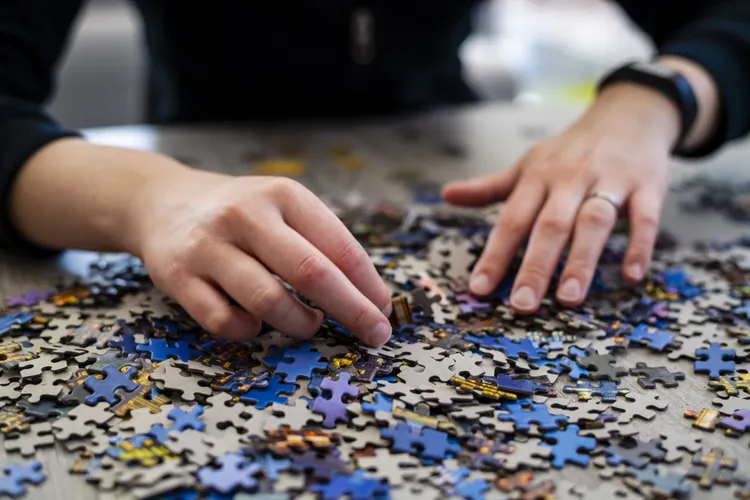
Puzzles offer a gentle but engaging mental workout. Whether it’s a 500-piece seasonal landscape or a challenging 1,000+-piece illustration, puzzles can be borrowed, swapped with friends, or found secondhand, keeping costs minimal while enjoyment and the (many) benefits remain high.
Tabletop Games
Tabletop games remain a timeless, low-cost way to have fun and stay socially connected. Sitting down to play bridge, Mahjong, chess, poker, or checkers “engages your brain and keeps you socially connected,” Martha says, explaining that, besides being a good time, can stimulate memory, strategy, and communication.
“Picking up a new hobby needn’t be a solo act,” she adds. “Research shows that you’ll gain added benefits by bringing along a friend.” If you want to expand your circle, many communities host free game nights at libraries, bars, and cafés.
Don’t Miss
9 Social Hobbies That’ll Earn You New Skills—and New Friends
The Best Hobbies for Your Personality Type, According to Mental Health Experts
Journaling and Junk Journaling
Journaling, in all its forms, is one of the most easily accessible hobbies you can pick up. Trendy junk journaling adds an extra layer of creativity, incorporating ticket stubs, fabric scraps, magazine clippings, handwritten notes, and found ephemera into layered, tactile pages. “These are ideally all items you have found and already have,” says Argonish, which will help keep material costs low.
Pressed Floral Artwork
A hobby with minimal supplies and abundant inspiration, pressed floral art encourages the use and preservation of the natural world around you. “Flowers, leaves, petals, and other natural elements can be collected on walks, pressed between books, and then used in stationery artwork,” says Argonish.
Learn how to best dry and preserve flowers here. Once dried, botanicals can be mounted in frames, turned into greeting cards, or pasted into scrapbooks and journals.
14 Crafts to Make With Your Favorite Flowers
Learning a New Language
Learning a new language is a long-term hobby that opens doors to new cultures, connections, and experiences—and it doesn’t require formal classes or costly materials. “Consider learning something new, studying the language your grandparents spoke, tuning in to a foreign radio station, or giving sign language a try,” says Martha.
Free apps, library resources, and online videos make it easy to practice at your own pace. Even short, consistent sessions build confidence and skills over time. This hobby pairs well with others, too. You can likely find practice partners in your community or online.
Hiking
Hiking is a hobby that adapts easily to different energy levels, abilities, and seasons. It can also be solitary or social, structured or spontaneous. Explore local trails first and then branch out. “Find like-minded adventurers through Sierra Club’s local outings,” suggests Martha, “or if your interest leans toward outdoor photography, gardening, or bird-watching, consider starting your own group.”