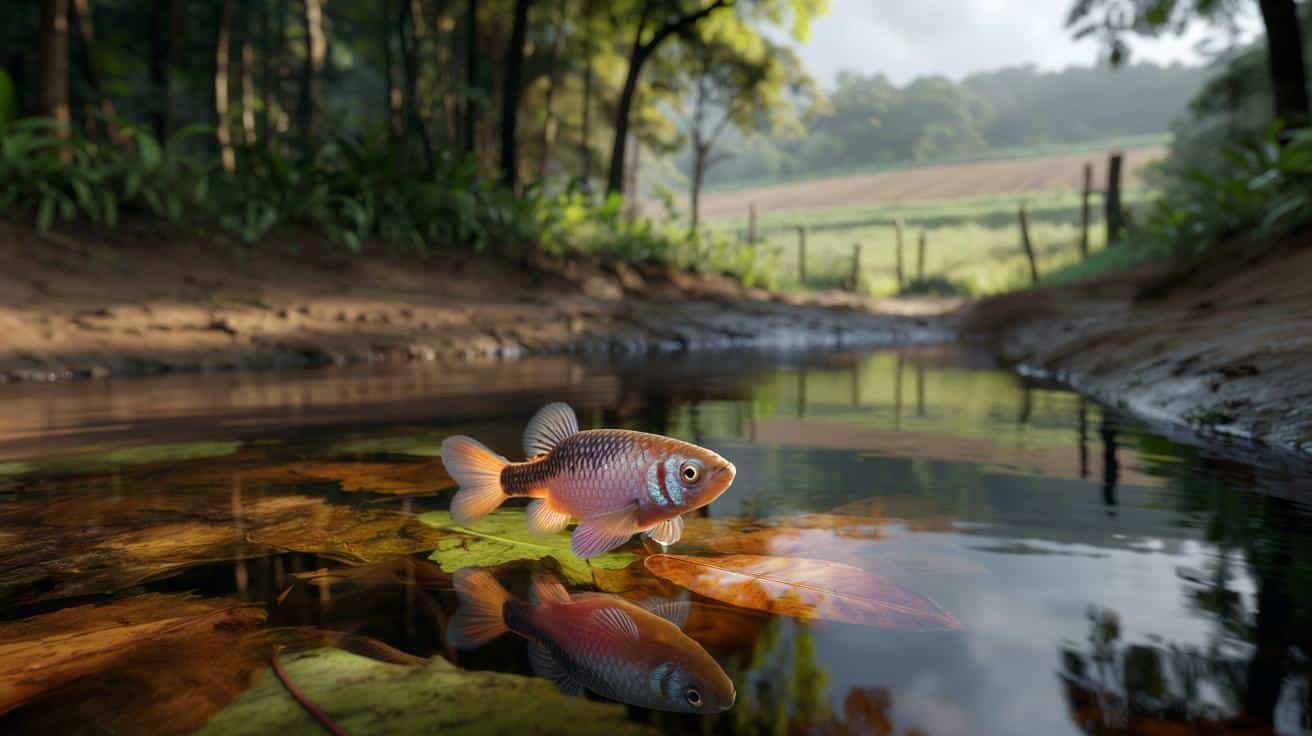

For more than two decades, scientists believed a unique species native to Bolivia had vanished forever. Its name slowly disappeared from field surveys, conservation plans, and academic discussions, joining the long and tragic list of plants and animals labeled “presumed extinct.” Yet, against the odds, hope has returned. Deep within a remote region of Bolivia, researchers have confirmed the rediscovery of this long-lost species, reminding the world that nature still holds surprises—and that extinction is not always the final chapter.
This extraordinary finding has sparked excitement across the global scientific community. Rediscoveries like this are rare, emotional, and profoundly important, not just for biodiversity research but also for conservation efforts worldwide. They offer a second chance—for a species, for ecosystems, and for humanity’s relationship with the natural world.
A Disappearance That Lasted Two Decades
The species was last officially recorded over 20 years ago, during a period when habitat loss, climate shifts, and human activity were accelerating across South America. Bolivia, despite being one of the most biodiverse countries on Earth, has faced intense environmental pressure from deforestation, mining, agriculture expansion, and infrastructure development.
When repeated surveys failed to locate the species, scientists reluctantly concluded that it had likely gone extinct. Over time, research funding was redirected, conservation priorities shifted, and the species became a footnote in scientific literature—an example of how quickly fragile life forms can vanish.
Yet some researchers never fully gave up hope. Local knowledge, unconfirmed sightings, and unexplored habitats suggested that the species might still persist in isolated pockets, hidden from human view.
The Moment of Rediscovery
The rediscovery occurred during a recent biodiversity survey led by a team of Bolivian and international scientists. Exploring a remote and challenging environment—one rarely visited due to difficult terrain and limited access—the researchers encountered what initially seemed impossible.
There it was.
Careful observation, documentation, and subsequent analysis confirmed the truth: the species was alive.
Photos, recordings, and physical evidence left no doubt. After more than 20 years of silence, the species had re-emerged, surviving unnoticed in a natural refuge. The announcement quickly spread through scientific circles, sparking both celebration and reflection.
For many involved, the moment was deeply emotional. Rediscoveries are not just scientific events; they are powerful reminders of why conservation work matters.
Why This Rediscovery Matters
The rediscovery of a species thought extinct carries significance far beyond a single animal or plant. It reshapes our understanding of ecosystems, extinction processes, and conservation priorities.
First, it highlights how limited our knowledge still is. Even in the 21st century, vast regions of the planet remain underexplored. Species can persist in small, isolated populations, evading detection for decades.
Second, it offers hope. At a time when biodiversity loss dominates headlines, rediscoveries serve as rare positive stories. They show that nature can be resilient, even under intense pressure.
Third, it provides an urgent conservation opportunity. Once a species is rediscovered, the clock starts ticking. Without swift action, the second chance could be lost forever.
Bolivia: A Biodiversity Hotspot Under Pressure
Bolivia is home to an astonishing range of ecosystems, from Amazonian rainforests and Andean mountains to wetlands and dry forests. This diversity supports thousands of species found nowhere else on Earth.
However, biodiversity richness does not guarantee safety. Many Bolivian ecosystems are increasingly fragmented. Climate change is altering rainfall patterns, while deforestation continues to reduce and degrade habitats.
The rediscovered species survived precisely because it occupied a hard-to-reach or overlooked area. This underscores the importance of protecting not only famous national parks but also lesser-known habitats that quietly shelter rare life forms.
The Role of Local Communities
Local communities often play a crucial role in rediscoveries like this. Indigenous knowledge, long-term observation, and respect for nature frequently guide scientists toward hidden populations.
In Bolivia, community members have historically lived alongside wildlife, understanding seasonal patterns and subtle environmental changes. Their involvement can be the difference between failure and success in conservation efforts.
Going forward, collaboration with local people will be essential. Protecting the rediscovered species will require sustainable land-use practices, education, and economic alternatives that align conservation with community well-being.
Conservation Challenges Ahead
Rediscovery is only the beginning. The species now faces a fragile future.
Its population size is likely very small, making it vulnerable to disease, environmental changes, and human disturbance. A single extreme event—such as drought, fire, or habitat destruction—could wipe it out.
Scientists must now assess the species’ population, genetic diversity, and habitat requirements. Conservationists will need to determine whether protected areas are sufficient or if new measures are required.
Funding is another challenge. Rediscovered species often struggle to attract long-term financial support, especially when competing with well-known endangered animals.
Lessons from “Lazarus Species”
Species that reappear after being declared extinct are often called “Lazarus species.” History shows that while some have recovered with proper protection, others vanished again due to delayed or insufficient action.
The key lesson is speed. Immediate conservation planning, legal protection, and habitat preservation can mean the difference between recovery and permanent extinction.
This rediscovery in Bolivia adds to a growing list of Lazarus species worldwide, reinforcing the need for caution when declaring extinction—and determination when life is rediscovered.
A Symbol of Hope in a Time of Loss
Global biodiversity is declining at an alarming rate. Scientists warn that Earth is experiencing a mass extinction driven largely by human activity. Against this backdrop, the rediscovery of a species thought extinct for over 20 years feels almost miraculous.
It reminds us that extinction is sometimes a story we write too soon. Nature, when given space and time, can persist in remarkable ways.
Yet hope should not lead to complacency. This species survived despite us, not because of us. Its future now depends on human choices.
What Comes Next
Researchers are continuing field studies to learn more about the species’ behavior, habitat, and threats. Conservation organizations are working with Bolivian authorities to explore protective measures.
Public awareness will also play a role. Stories like this can inspire support for conservation, funding for research, and stronger environmental policies.
Most importantly, the rediscovery challenges us to rethink how we value the natural world. Every species, no matter how small or obscure, plays a role in the delicate balance of ecosystems.
Conclusion
The rediscovery of a species thought extinct for over 20 years in Bolivia is more than a scientific milestone—it is a powerful reminder of resilience, mystery, and responsibility. It shows that even in an age of environmental crisis, nature can still surprise us.
But rediscovery is not a happy ending. It is a second chance.
Whether this species thrives or disappears once more will depend on the actions taken now. Bolivia’s rediscovered survivor stands as a symbol of hope—and a warning—that the line between extinction and survival is often thinner than we realize.