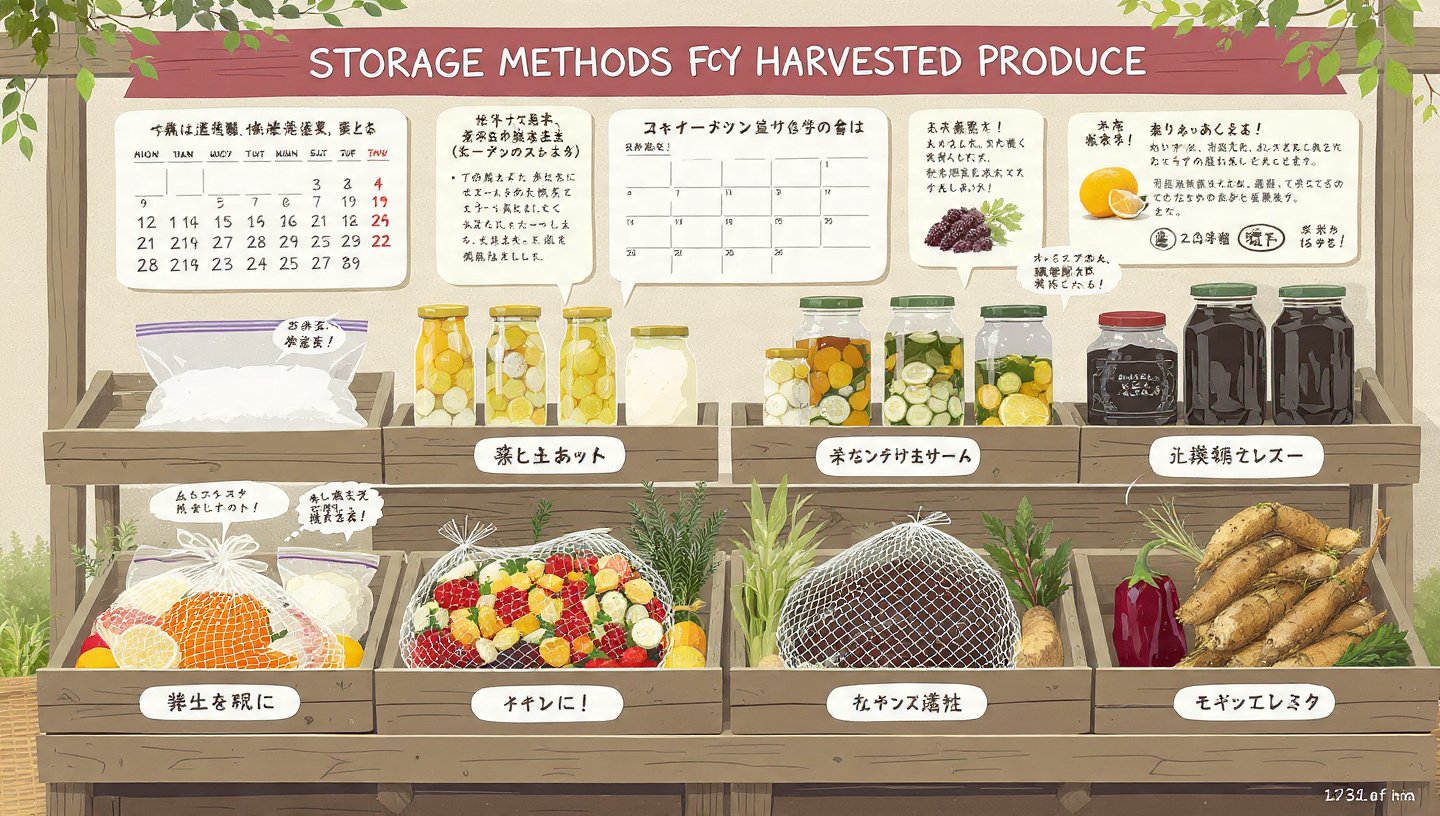

After the satisfying labor of harvesting your crops, the next challenge is ensuring your bounty stays fresh for as long as possible. Proper storage methods can significantly extend the shelf life of fruits, vegetables, and herbs. This article will explore effective techniques and tips to keep your harvest fresh for months, so you can enjoy it year-round.
Understanding the Basics of Storage
Before diving into specific methods, it’s essential to understand some basic principles that affect the freshness of harvested produce.
- Temperature: The temperature at which you store your produce is crucial. Most fruits and vegetables prefer cooler temperatures, while some, like tomatoes and bananas, are sensitive to cold.
- Humidity: The moisture level in the storage environment can either promote freshness or cause spoilage. Leafy greens, for instance, require high humidity, while root vegetables prefer drier conditions.
- Light: Exposure to light can lead to the degradation of some vegetables’ vitamins and nutrients. Store produce in dark places to preserve their quality.
Best Storage Methods for Various Types of Produce
1. Root Vegetables
Root vegetables like carrots, potatoes, and turnips can be stored in a cool, dark, and dry place. Here are the steps:
- Remove any visible dirt, but avoid washing them until ready to use.
- Store in wooden crates or cardboard boxes for better air circulation.
- Maintain a temperature between 32°F and 40°F (0°C to 4°C) for optimal longevity.
2. Leafy Greens
To keep leafy greens like spinach and lettuce fresh:
- Wash the greens and dry them completely; moisture can lead to rot.
- Wrap in a slightly damp paper towel and store in a breathable container in the refrigerator.
- Maintain humidity by placing a small dish of water in the refrigerator if possible.
3. Fruits
Fruits can vary widely in their storage needs:
- Apples: Can be stored in a cooler environment (around 32°F, or 0°C) and should be kept away from other fruits.
- Berries: Wash just before consumption to protect from mold. Store in a single layer, if possible.
- Bananas: Should be stored at room temperature, away from direct sunlight.
4. Herbs
Fresh herbs should be treated delicately:
- Store in the refrigerator in a glass of water covered loosely with a bag for freshness.
- Alternatively, herbs can be dried or frozen for long-term use. Consider simply chopping and mixing with olive oil, then freezing in ice cube trays.
Advanced Storage Techniques
If you have a large harvest or want to keep your produce fresh for even longer, consider these advanced storage techniques.
1. Canning
Canning is an excellent method for preserving fruits and vegetables. Here’s how:
- Use clean, sterilized jars and lids.
- Process the produce in boiling water or pressure canner according to appropriate guidelines.
- Label jars with dates and contents for easy identification.
2. Freezing
Freezing retains the nutrients in your produce and can significantly extend shelf life:
- Blanch vegetables quickly in boiling water, cool them in ice water, then freeze.
- Flash freeze fruits on a baking sheet before transferring to bags to keep them from sticking together.
3. Dehydrating
Dehydrating removes moisture content, which extends shelf life:
- Use a food dehydrator or oven set to a low temperature.
- Store dehydrated produce in airtight containers in a dark, cool place.
Common Mistakes to Avoid
Even with the best intentions, common errors can lead to spoilage. Here are a few pitfalls to avoid:
- Storing fruits and vegetables together, as some fruits release ethylene gas, which can speed up spoilage in vegetables.
- Not checking on stored produce regularly; be vigilant for signs of decay or spoilage.
- Ignoring storage temperatures and humidity levels; keeping produce in unsuitable conditions can drastically reduce shelf life.
Conclusion
Keeping your harvest fresh for months isn’t merely about good luck; it involves understanding the nature of each type of produce and how to provide optimal storage conditions. By employing the right methods for your fruits, vegetables, and herbs, you can enjoy your bounty throughout the seasons, reducing waste and enhancing your culinary experiences. Remember, a little preparation goes a long way in preserving the flavors and nutritional quality of your hard-earned harvest.
Frequently Asked Questions (FAQs)
1. How can I tell if my produce has spoiled?
Look for signs such as mold, unusual softness, unpleasant smells, or discoloration. If in doubt, it’s best to err on the side of caution and discard any questionable produce.
2. Can I store everything in the refrigerator?
No, not all produce benefits from refrigeration. Items like tomatoes, bananas, and potatoes should be stored at room temperature.
3. What is the best temperature to store fruits?
Most fruits prefer a storage temperature between 32°F (0°C) and 40°F (4°C). However, some fruits, like bananas and avocados, do better at room temperature.
4. Is canning a safe way to store food?
Yes, as long as you follow proper canning guidelines and use sterilized jars, canning can be a safe and effective way to preserve food.
5. How long can I expect my frozen fruits and vegetables to last?
Typically, frozen fruits and vegetables can last between 8 to 12 months if stored at 0°F (-18°C) in airtight containers.