
Introduction: Growing Cucumbers Without Land
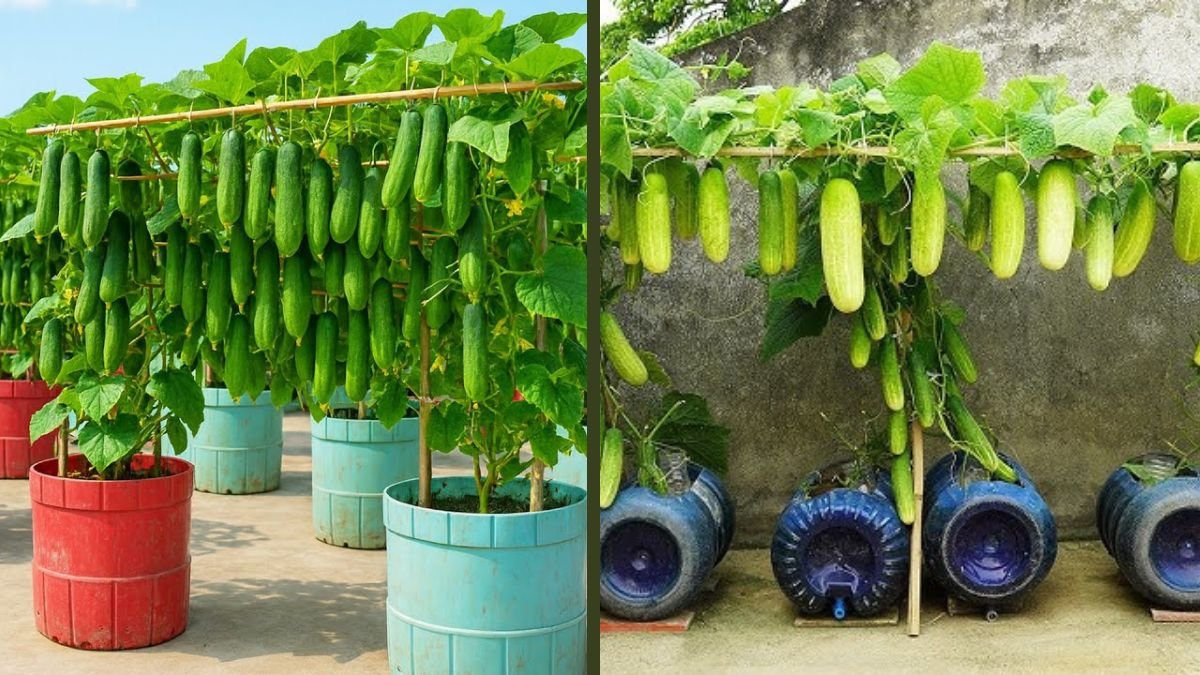
Many people believe cucumbers need large garden beds and open land. In reality, cucumbers grow exceptionally well in recycled plastic bottles. Rooftops, balconies, and terraces are perfect for this method. Bottle gardening saves space and reduces waste. Cucumbers climb upward, making vertical growing ideal. With proper care, yields are surprisingly high. This method suits urban homes perfectly. Fresh cucumbers become easily accessible.
Why Bottle Gardening Works for Cucumbers
Cucumbers have shallow roots and fast growth. Plastic bottles provide enough space when prepared correctly. Bottles warm the soil quickly, promoting growth. Water and nutrients stay concentrated. This reduces waste and improves efficiency. Bottle gardening also prevents soil-borne diseases. It is inexpensive and beginner-friendly. The results are impressive.
Choosing the Right Cucumber Variety
Bush or hybrid climbing cucumbers work best. Choose heat-tolerant varieties for rooftops. Local seeds adapt better to climate. Disease-resistant varieties reduce maintenance. Small-fruited cucumbers suit containers well. Seed quality affects productivity. Selecting the right type ensures success. Good varieties mean higher yield.
Selecting and Preparing Plastic Bottles
Use large plastic water bottles. Cut an opening on the side. Make drainage holes at the bottom. Clean bottles thoroughly before use. Bottles should hold enough soil depth. Strong bottles last multiple seasons. Secure placement prevents tipping. Proper preparation is essential.
Soil Mix for Bottle-Grown Cucumbers
Cucumbers need fertile, loose soil. Mix garden soil, compost, and cocopeat. Soil should drain well while holding moisture. Organic matter boosts growth. Avoid heavy clay soil. Healthy soil supports strong vines. Good soil ensures better fruiting. Preparation determines yield.
Seed Sowing Technique
Sow seeds directly into bottles. Place two seeds per bottle. Cover lightly with soil. Water gently after sowing. Germination occurs within one week. Thin seedlings after sprouting. Strong seedlings grow faster. Proper sowing ensures success.
Supporting Vertical Growth
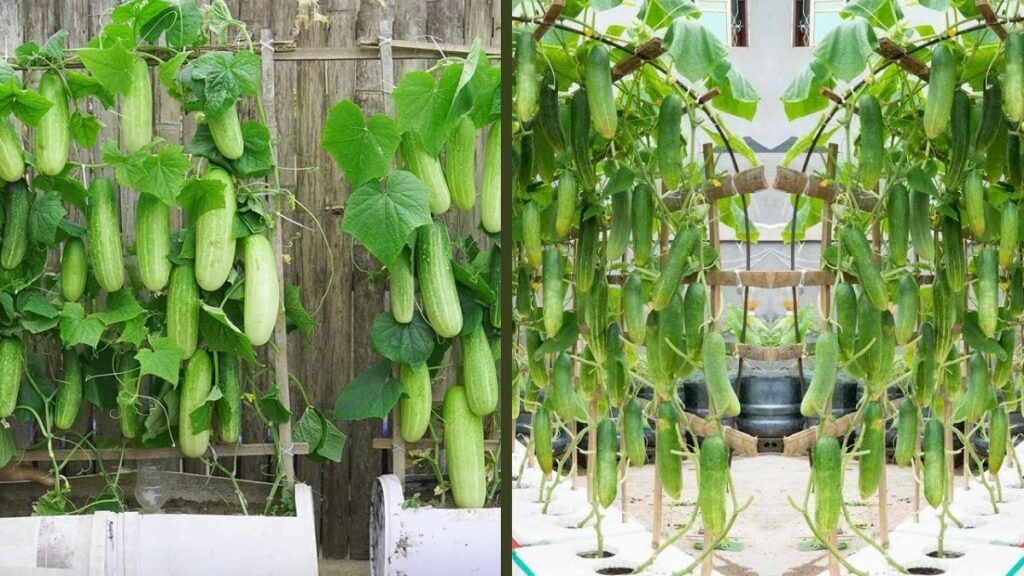
Cucumbers need support to climb. Install strings or trellis from bottles. Vertical growth saves space. It improves airflow and sunlight exposure. Fruits grow straighter and cleaner. Support prevents vine damage. Proper training increases yield. Vertical gardening is essential.
Sunlight Requirements on Rooftops
Cucumbers need full sunlight. Place bottles where they receive six to eight hours of sun. Morning sunlight is ideal. Avoid extreme afternoon heat if possible. Rotate bottles occasionally. Proper light ensures flowering. Sun exposure affects fruit quality. Placement is crucial.
Watering Bottle-Grown Cucumbers
Cucumbers need consistent watering. Bottles dry faster than ground soil. Water daily in warm weather. Avoid waterlogging. Ensure drainage holes work properly. Morning watering is best. Consistent moisture prevents bitterness. Proper watering improves fruit size.
Feeding for Maximum Yield
Cucumbers are heavy feeders. Use compost tea every ten days. Vermicompost improves flowering. Potassium supports fruit development. Avoid chemical fertilizers. Organic feeding enhances taste. Balanced nutrition increases yield. Healthy plants produce more cucumbers.
Pollination in Container Gardening
Cucumbers require pollination. Bees often visit rooftop gardens. Hand pollination helps if needed. Use a soft brush. Pollination ensures fruit set. Poor pollination reduces yield. Awareness improves production. Simple steps make a difference.
Pest Control Naturally
Aphids and mites may appear. Neem oil works effectively. Hand removal helps early. Healthy plants resist pests. Avoid chemical sprays. Regular inspection prevents infestation. Organic methods keep produce safe. Prevention is key.
Disease Prevention
Ensure good airflow. Avoid wet leaves at night. Remove diseased leaves promptly. Clean bottles regularly. Healthy soil prevents problems. Preventive care saves effort. Simple hygiene works well. Disease control is manageable.
Flowering and Fruit Formation
Flowers appear within one month. Male flowers appear first. Female flowers develop fruits. Proper feeding encourages flowering. Avoid stress during flowering. Consistent care ensures fruit set. Healthy vines flower abundantly. Observation helps timing.
Harvesting Cucumbers Correctly
Harvest when cucumbers are tender. Do not allow over-ripening. Use scissors to cut fruits. Regular harvesting promotes more fruits. Morning harvest keeps freshness. Proper timing improves taste. Gentle handling prevents damage. Frequent harvest increases yield.
Expected Yield from Bottle Gardening
Each bottle can produce multiple cucumbers. Vertical growth increases yield per area. Consistent care boosts production. Small spaces become productive. Rooftops transform into gardens. Yield surprises many gardeners. Effort brings reward. Results are satisfying.
Comparison Table: Ground vs Bottle Cucumbers
| Aspect | Ground Growing | Bottle Gardening |
|---|---|---|
| Space needed | Large | Very small |
| Water efficiency | Moderate | High |
| Pest issues | Higher | Lower |
| Maintenance | Heavy | Easy |
| Urban suitability | Low | Very high |
Sustainability Benefits
Reuses plastic waste. Reduces food miles. Saves water. Encourages home food production. Eco-friendly gardening method. Long-term cost savings. Sustainable lifestyle choice. Environment benefits greatly.
Common Mistakes to Avoid
Overcrowding seedlings. Poor drainage. Inconsistent watering. Lack of support. Overfertilizing. Ignoring pests early. Avoiding these ensures success. Learning improves results.
Conclusion
Bottle-grown cucumbers prove that no yard is needed for fresh harvests. With simple materials and care, rooftops can become productive gardens. This method is perfect for urban living. Fresh cucumbers are always within reach. Consistency ensures success.