
Introduction to Bottle-Grown Eggplants
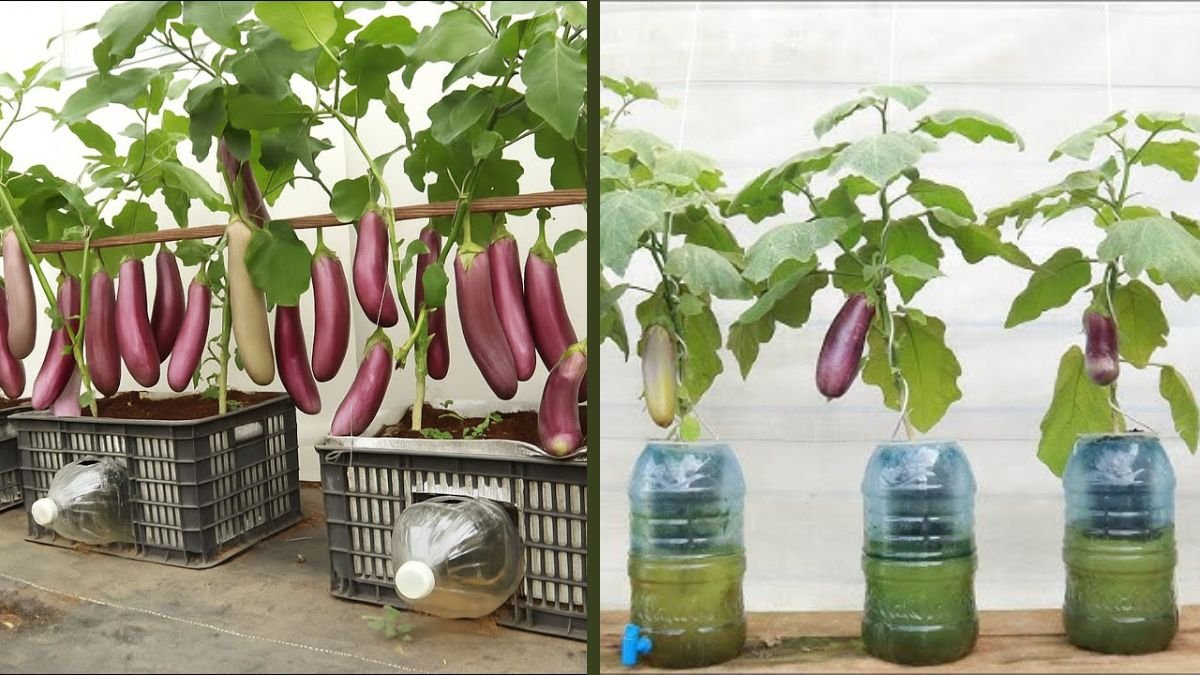
Eggplants are versatile vegetables used in many cuisines. Many people believe eggplants need large garden beds. However, plastic bottles can be used effectively to grow eggplants. This method is perfect for small spaces like balconies and rooftops. Bottle gardening reduces waste and saves money. Eggplants grow well with proper care. Vertical bottle systems improve airflow and sunlight exposure. This guide explains how to grow eggplants successfully using old plastic bottles.
Why Plastic Bottles Work for Eggplants
Plastic bottles control root growth efficiently. They retain moisture while allowing drainage. Bottles are easy to place vertically. This reduces soil-borne diseases. Eggplants benefit from warm root zones. Bottles heat up quickly in sunlight. Recycling bottles supports sustainability. This method is simple and effective.
Selecting the Right Eggplant Variety
Choose compact or hybrid eggplant varieties. Avoid large bushy types. Disease-resistant seeds perform better. Fast-growing varieties give quicker harvests. Medium-sized fruits suit bottle gardening. Proper variety selection improves yield. Healthy plants produce consistent fruits.
Preparing Bottles for Eggplant Growing
Use large plastic bottles with drainage holes. Cut side openings carefully. Clean bottles thoroughly. Place gravel at the bottom. Secure bottles firmly to prevent falling. Proper preparation prevents root issues. Stability is important for eggplants. Good setup ensures healthy growth.
Soil Mix for Strong Eggplants
Eggplants need rich, well-drained soil. Mix garden soil, compost, and cocopeat. Add vermicompost for nutrients. Soil should be loose and airy. Avoid heavy soil. Good soil supports strong roots. Proper nutrition improves fruit quality.
Seed Germination and Seedling Care
Start seeds in small containers. Maintain warm conditions. Keep soil moist. Germination takes seven to ten days. Provide indirect sunlight initially. Healthy seedlings grow faster. Proper care improves transplant success. Strong seedlings are essential.
Transplanting into Bottles
Transplant when seedlings have four leaves. Handle roots gently. Place one plant per bottle. Water lightly after transplanting. Protect from direct sun initially. Reduce stress during transplanting. Healthy plants adapt quickly.
Sunlight Requirements
Eggplants need six to eight hours of sunlight. Place bottles in sunny locations. Rotate bottles for even exposure. Insufficient light reduces flowering. Sunlight improves fruit development. Rooftops provide ideal conditions. Proper light increases yield.
Watering Practices
Water regularly but avoid excess. Bottles dry quickly. Check soil moisture daily. Morning watering is best. Avoid wetting leaves excessively. Consistent watering prevents fruit bitterness. Balanced moisture supports growth.
Fertilization Schedule
Eggplants are heavy feeders. Apply organic fertilizer every two weeks. Potassium boosts fruit size. Avoid excess nitrogen. Balanced feeding improves yield. Compost tea works well. Nutrition management is key.
Supporting Eggplant Plants
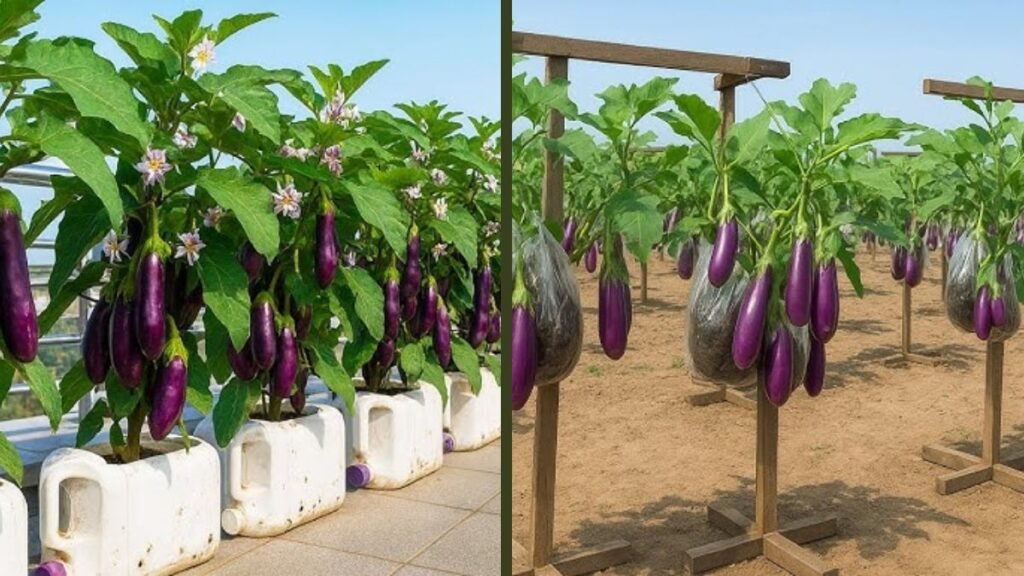
Eggplants need support as fruits develop. Use sticks or strings. Tie stems gently. Support prevents bending or breaking. Vertical growth saves space. Proper support improves airflow. Healthy plants bear more fruits.
Pruning and Growth Control
Remove excess side shoots. Pruning improves airflow. Focus energy on fruiting branches. Remove damaged leaves. Controlled growth prevents overcrowding. Proper pruning increases fruit size. Plant management is important.
Pollination and Flower Care
Eggplants are self-pollinating. Gentle shaking improves pollination. Wind helps on rooftops. Hand pollination increases fruit set. Morning pollination works best. Proper pollination ensures uniform fruits.
Pest and Disease Management
Common pests include aphids and mites. Neem oil is effective. Remove infected leaves early. Maintain cleanliness. Good airflow prevents fungal diseases. Organic methods keep produce safe.
Flowering and Fruiting Stage
Flowers appear after healthy growth. Maintain steady watering. Avoid stress during fruit set. Nutrients are crucial at this stage. Healthy flowers produce quality fruits. Proper care ensures continuous harvest.
Harvesting Eggplants
Harvest when fruits are shiny and firm. Do not over-ripen. Cut fruits with scissors. Regular harvesting encourages new flowers. Morning harvest is ideal. Fresh eggplants taste best.
Post-Harvest Handling
Wash gently after harvest. Store in a cool place. Avoid stacking. Proper handling prevents bruising. Homegrown eggplants last longer. Use fresh for best flavor.
Eggplant Growth Monitoring Table
| Factor | Ideal Condition | Benefit |
|---|---|---|
| Soil | Rich and loose | Strong growth |
| Water | Consistent | Healthy fruits |
| Sunlight | Full sun | High yield |
| Support | Vertical | Plant safety |
Common Mistakes to Avoid
Overwatering causes root rot. Poor sunlight reduces yield. Skipping fertilization limits growth. Weak bottle support damages plants. Avoid overcrowding. Awareness improves success.
Final Conclusion
Growing eggplants in plastic bottles is an easy and sustainable method. With proper soil, sunlight, watering, and care, anyone can enjoy fresh eggplants at home. This technique saves space, reduces waste, and delivers high yields. Old bottles can become productive mini gardens with great results.