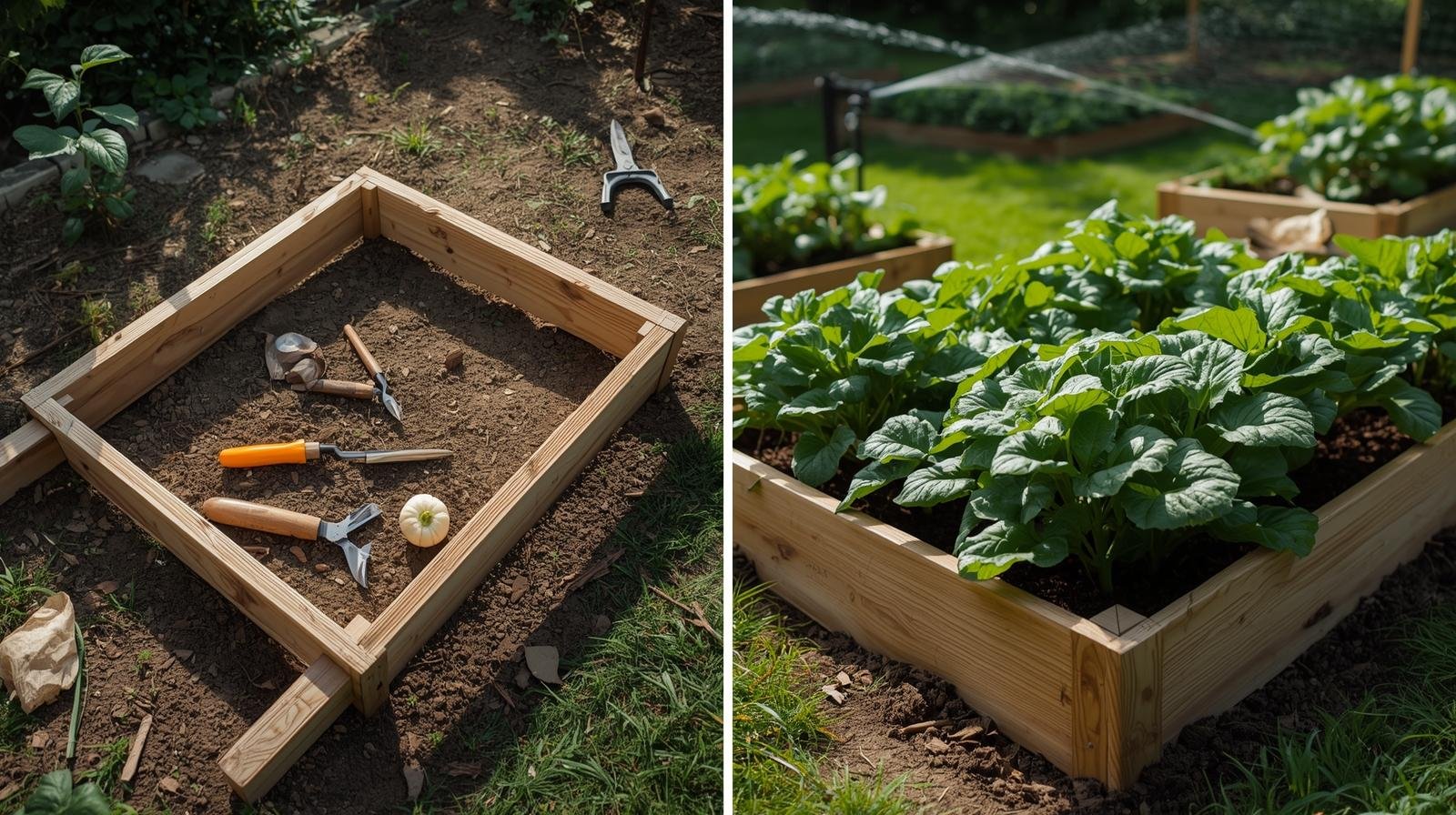

Introduction: Why Raised Bed Gardening Increases Yields
Raised bed gardening is popular among home gardeners. It improves soil quality and drainage. Raised beds warm faster in spring. Plants grow healthier and stronger. Weeds are easier to control. Soil compaction is reduced. Raised beds suit all garden sizes. Harvests are larger and cleaner. Gardening becomes more efficient.
Benefits of Raised Bed Gardens
Raised beds improve root development. Soil quality is fully controlled. Drainage problems are minimized. Gardening becomes accessible and organized. Raised beds reduce bending strain. They extend growing seasons. Pest control becomes easier. Plants grow more productively. Yields increase significantly.
Choosing the Right Location for a Raised Bed
Sunlight is crucial for success. Choose an area with full sun. Good airflow prevents disease. Avoid low-lying areas. Proximity to water source helps. Flat ground improves stability. Accessibility matters for maintenance. Planning location improves outcomes.
Selecting Materials for Raised Bed Construction
Wood is the most popular choice. Untreated wood is safest. Metal beds last long. Stone beds add durability. Composite materials resist rot. Avoid toxic materials. Durability matters long-term. Material choice affects cost and lifespan.
Ideal Size and Height for Raised Beds
Standard width allows easy reach. Height affects root depth. Deeper beds support vegetables. Narrow beds improve access. Length depends on space. Taller beds improve drainage. Size affects productivity. Balanced dimensions work best.
Tools Needed to Build a Raised Bed
Basic tools are sufficient. Measuring tape ensures accuracy. Drill helps assembly. Screws secure structure. Level keeps bed even. Gloves improve safety. Simple tools save effort. Preparation speeds construction.
Step One: Preparing the Ground
Clear weeds and debris. Level the ground properly. Remove rocks and roots. Mark bed outline clearly. Loosen soil beneath bed. Ground preparation improves drainage. Proper base supports structure. Good preparation prevents problems.
Step Two: Assembling the Raised Bed Frame
Cut materials to size. Assemble corners securely. Ensure frame is square. Use strong fasteners. Check alignment carefully. Stability is essential. Proper assembly ensures longevity. Solid frames support soil weight.
Step Three: Adding Drainage and Base Layer
Drainage prevents root rot. Cardboard suppresses weeds. Gravel improves airflow. Organic matter enriches soil. Layering improves structure. Avoid blocking drainage. Proper base supports plants. Drainage ensures healthy roots.
Step Four: Filling the Raised Bed with Soil
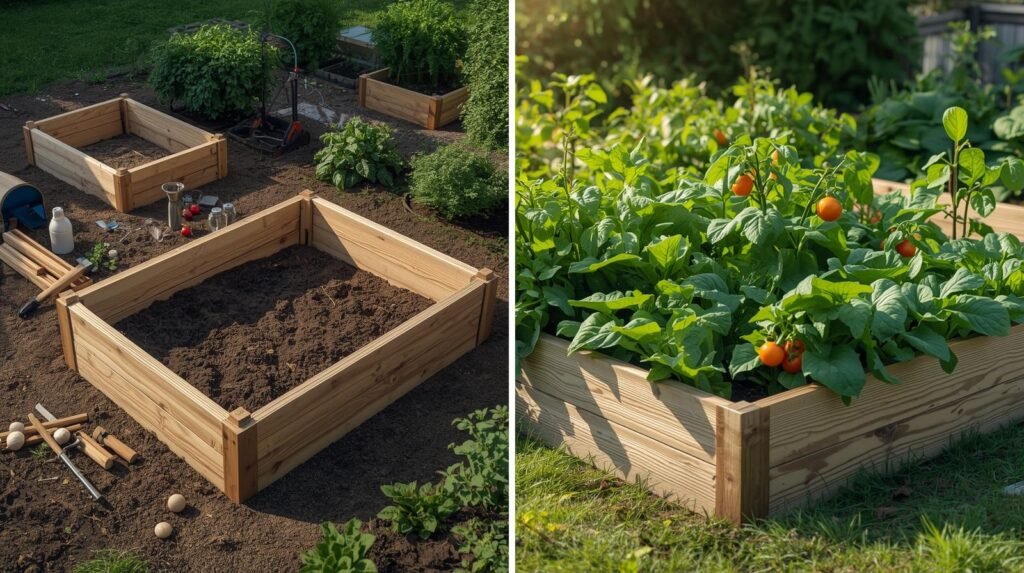
Use high-quality soil mix. Compost adds nutrients. Topsoil provides structure. Organic matter improves fertility. Mix components evenly. Avoid compacting soil. Soil depth supports roots. Good soil ensures success.
Step Five: Planting Your Raised Bed Garden
Plan plant spacing carefully. Group compatible plants. Follow planting depth guidelines. Water after planting. Mulch to retain moisture. Label plants clearly. Proper planting ensures growth. Organization improves yields.
Watering Raised Bed Gardens Effectively
Raised beds drain faster. Water more frequently. Deep watering encourages roots. Avoid surface watering only. Mulching reduces evaporation. Morning watering is best. Monitor moisture regularly. Proper watering boosts harvests.
Fertilizing Raised Beds for Bigger Harvests
Nutrients are used quickly. Compost replenishes soil. Organic fertilizers work best. Avoid overfertilization. Feed during growing season. Balanced nutrition improves yield. Healthy soil supports plants. Fertilization increases productivity.
Mulching to Protect Raised Bed Soil
Mulch conserves moisture. It suppresses weeds. Mulch improves soil health. Organic mulch decomposes naturally. Avoid piling mulch against stems. Refresh mulch regularly. Mulching reduces maintenance. Soil stays productive.
Seasonal Care for Raised Bed Gardens
Spring preparation boosts growth. Summer watering is crucial. Fall cleanup improves next season. Winter protection prevents erosion. Crop rotation maintains soil health. Seasonal adjustments improve yields. Planning ensures longevity. Care changes with seasons.
Common Mistakes When Building Raised Beds
Using treated wood can be harmful. Poor drainage damages roots. Incorrect placement limits sun. Overcrowding reduces yields. Ignoring soil quality affects growth. Skipping maintenance causes decline. Awareness prevents mistakes. Knowledge improves success.
How Raised Beds Improve Vegetable Production
Soil warms faster. Roots grow deeper. Water management improves. Nutrients remain accessible. Plants experience less stress. Growth becomes uniform. Harvests increase noticeably. Raised beds enhance productivity.
Long-Term Maintenance of Raised Bed Gardens
Soil needs renewal yearly. Compost maintains fertility. Inspect frames regularly. Repair damage promptly. Rotate crops annually. Weed control remains important. Maintenance ensures longevity. Raised beds improve over time.
Table: Raised Bed Gardening Essentials
Category
Raised bed improves soil drainage
Category
Full sun location boosts yields
Category
High quality soil increases productivity
Category
Mulching reduces water loss