
Introduction
Raised garden beds are a popular way to enhance the aesthetic and functionality of outdoor spaces. Using natural stone adds a rustic charm, longevity, and structural integrity to your garden beds. They provide better drainage, prevent soil compaction, and can be designed in creative shapes and styles. Incorporating natural stone into raised beds complements cottage gardens, herb patches, and vegetable plots. This article explores five unique ideas for creating raised beds using natural stone, along with tips for planning, building, and maintaining them. Rustic garden designs using stone can transform any outdoor space into a serene retreat.
Benefits of Raised Stone Beds
Raised beds made of natural stone offer durability and natural appeal. They resist weathering and require minimal maintenance. Stone beds regulate soil temperature, protecting plant roots. They enhance drainage and prevent waterlogging, especially in heavy rainfall areas. Raised stone beds can be designed to match garden themes, whether rustic, modern, or traditional. They also create defined spaces for planting, reducing soil erosion. Stones retain moisture while maintaining aeration. Such beds combine function, style, and ecological benefits in your garden.
Choosing the Right Stone
Selecting the right type of stone is essential for longevity and aesthetics. Granite, limestone, sandstone, and fieldstone are popular choices for rustic raised beds. Consider size, texture, and natural color variations. Heavier stones provide stability, while flatter stones allow easier stacking. Ensure stones are untreated and free of contaminants. Local stones reduce cost and carbon footprint. The stone should complement your garden’s existing landscape. Proper selection ensures durability, beauty, and integration with surrounding plantings.
Idea 1: Circular Stone Beds
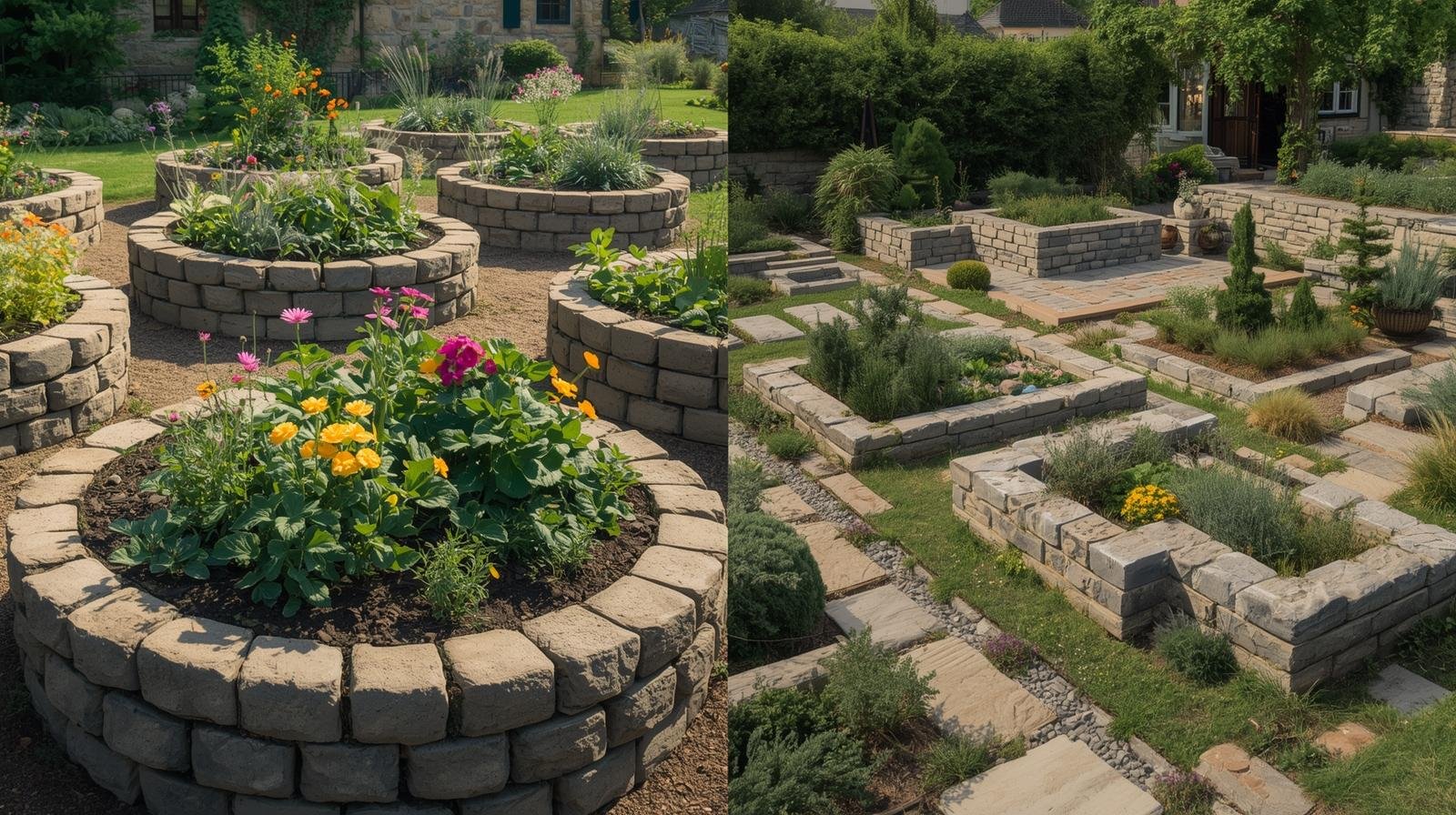
Circular raised beds create a focal point in gardens. Stones can be stacked to form concentric circles, with taller layers in the center. Ideal for ornamental flowers, herbs, or small shrubs. Center space can feature a small tree or decorative element. Circular beds allow easy access from all sides. Stones can be dry-stacked or mortared for stability. Incorporating climbing plants around the edges adds vertical interest. Lighting or garden sculptures enhance the rustic charm of circular stone beds.
Construction Tips for Circular Beds
Excavate the planting area slightly deeper than stone height. Lay a stable base of gravel for drainage. Place the largest stones at the bottom for a sturdy foundation. Stack stones in layers, ensuring level alignment. Fill gaps with soil, sand, or smaller stones for stability. Mulch the planting area to retain moisture. Consider adding irrigation tubing for water efficiency. Circular beds can be enhanced with stone pathways connecting to other garden areas.
Idea 2: Tiered Stone Beds
Tiered raised beds maximize vertical space and create dramatic visual effects. They are ideal for sloped gardens or spaces with limited ground area. Multiple layers allow different plants to occupy each tier based on sunlight needs. Herbs, vegetables, and flowers can be organized efficiently. Stones are stacked to create sturdy tiers, with wider bases for stability. Each tier should have sufficient soil depth for root growth. Incorporating drainage pipes or perforated tubing ensures proper water distribution. Tiered beds reduce maintenance and improve harvest accessibility.
Idea 3: Rustic Stone Wall Beds
A rustic stone wall garden combines raised bed functionality with boundary definition. Stones are stacked to form a low wall, enclosing a planting area. These beds can follow garden edges, paths, or patios. Ideal for perennial flowers, vegetables, or climbing vines. Incorporate gaps between stones for moss or small plants to grow naturally. Walls can serve as seating areas or support garden art. Mortar or dry-stacking methods can be used depending on style. Stone wall beds blend structure, style, and rustic aesthetics seamlessly.
Idea 4: Geometric Stone Beds
Geometric stone beds use rectangular, square, or polygonal layouts for a modern rustic look. Clean lines and angles contrast natural stone texture beautifully. These beds are suitable for vegetables, herbs, or ornamental plants. Stones are cut or selected to match geometric shapes. Soil and irrigation are easier to manage with uniform beds. Patterns can include triangles, hexagons, or interlocking rectangles. Pathways between beds improve access and garden flow. Geometric designs provide visual interest while maintaining rustic charm.
Idea 5: Naturalistic or Freeform Stone Beds
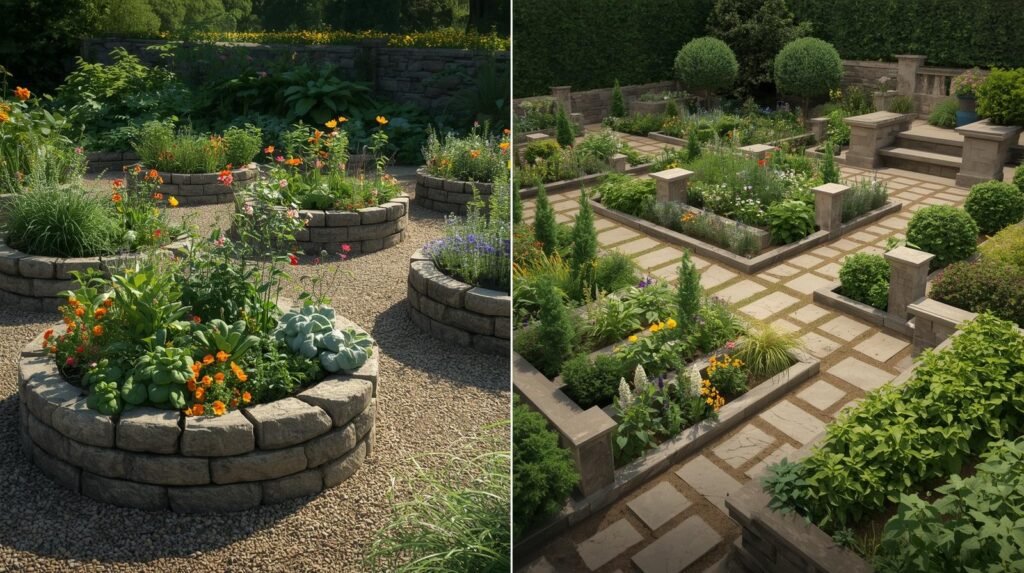
Freeform stone beds mimic natural landscapes for an organic garden feel. Stones are arranged irregularly, following natural curves and slopes. Suitable for rock gardens, wildflowers, or low-maintenance perennials. Incorporate small boulders, gravel, and soil pockets for plant diversity. Naturalistic beds encourage wildlife such as birds, bees, and butterflies. Mulch and ground cover enhance the natural look. Water features, logs, or garden statues can integrate into the design. Freeform beds suit gardeners seeking a relaxed, rustic atmosphere.
Table: Comparison of Stone Bed Designs
| Design Type | Soil Depth | Ideal Plants | Maintenance Level |
|---|---|---|---|
| Circular | Medium | Herbs, flowers, small shrubs | Moderate |
| Tiered | High | Vegetables, herbs | Low |
| Stone Wall | Medium to High | Perennials, climbers | Moderate |
| Geometric | Medium | Vegetables, ornamental plants | Low |
| Freeform | Medium | Rock garden plants, wildflowers | Low |
Soil Preparation for Stone Beds
Proper soil preparation ensures plant health and bed longevity. Remove weeds, rocks, and debris before filling beds. Mix compost, organic matter, and sand for aeration and fertility. Soil depth should accommodate plant root systems. Consider layering gravel at the bottom for drainage. Mulching helps retain moisture and control weeds. Rotate plants or amend soil regularly to maintain nutrients. Proper preparation supports optimal growth in stone-raised beds. Healthy soil enhances both aesthetics and productivity.
Plant Selection Tips
Choose plants based on bed design, sunlight, and soil depth. Herbs, vegetables, perennials, and ornamental flowers thrive in raised stone beds. Consider root system size and growth rate. Companion planting improves yield and prevents disease. Seasonal rotation maintains soil fertility. Incorporate drought-tolerant or native species for low maintenance. Flowering plants enhance color and pollinator activity. Proper plant selection maximizes visual impact and functional benefits.
Irrigation Techniques
Stone beds require effective watering strategies. Drip irrigation ensures deep soil moisture without overwatering. Manual watering with hose or watering can works for smaller beds. Mulching reduces evaporation and conserves water. Water early in the morning to prevent disease. Ensure tiers and circular beds receive uniform moisture. Monitor soil moisture regularly. Efficient irrigation supports healthy plant growth and reduces maintenance. Sustainable watering practices complement rustic stone designs.
Mulching and Fertilization
Mulch preserves moisture, suppresses weeds, and stabilizes soil temperature. Organic mulches like straw, bark, or leaf compost work well. Fertilize using balanced nutrients suitable for plant types. Slow-release fertilizers support long-term growth. Adjust fertilization for flowering or fruiting plants. Avoid over-fertilizing to prevent leaf burn. Mulch and fertilizer together improve soil health. Well-nourished plants thrive in rustic stone beds, enhancing beauty and productivity.
Maintenance and Longevity
Stone beds are low-maintenance but require periodic upkeep. Inspect stones for stability and reposition if necessary. Refill soil in sunken areas due to settling. Prune plants to maintain shape and prevent overcrowding. Clean debris and fallen leaves regularly. Replace mulch annually to maintain soil health. Repair stone walls or tiers as needed. Regular care prolongs the lifespan and visual appeal of raised beds. Consistent maintenance ensures both function and rustic aesthetics.
Seasonal Adaptations
Adjust plant selection according to seasonal changes. Summer vegetables and herbs thrive in warm months. Spring and autumn flowers add color during cooler periods. Use frost protection or covers for sensitive plants in winter. Watering schedules may need adjustment during rainy or dry seasons. Seasonal adaptation prevents crop loss and maintains aesthetic appeal. Stone beds retain soil warmth, extending the growing season. Planning for seasons ensures continuous productivity and garden charm.
Wildlife and Biodiversity
Stone beds attract pollinators, birds, and beneficial insects. Bees and butterflies are drawn to flowering plants. Birds may feed on seeds or insects, supporting natural pest control. Small mammals can use stone gaps for shelter. Encourage biodiversity by planting diverse species. Native plants enhance wildlife support. Stone beds provide habitats while maintaining beauty. A garden ecosystem thrives alongside rustic raised bed design.
Accessibility and Pathways
Raised beds improve accessibility, especially for gardeners with limited mobility. Design pathways between beds for easy movement. Consider stepping stones or gravel paths. Height of beds can be adjusted for comfort during planting or harvesting. Pathways reduce soil compaction and maintain bed structure. Wide spacing supports wheelbarrows or garden carts. Accessibility enhances functionality and enjoyment. Pathways integrate seamlessly with rustic stone aesthetics.
Integrating Decorative Features
Add decorative elements such as garden lights, statues, or water features. Combine stone beds with benches or seating areas. Use climbing trellises for vertical interest. Incorporate seasonal décor for added charm. Decorative features complement rustic stone textures. They enhance outdoor experiences and garden ambiance. Creative integration elevates garden design. Personal touches make stone beds visually striking and functional.
Sustainable Practices
Use local stones to reduce transportation impact. Recycle stones from old projects or demolished walls. Implement organic fertilizers and mulches. Incorporate rainwater harvesting for irrigation. Plant native species to reduce water and maintenance needs. Avoid synthetic chemicals to protect soil and wildlife. Sustainable practices increase eco-friendliness and longevity. Stone beds are environmentally responsible while providing rustic beauty.
Conclusion
Raised stone beds offer endless creative possibilities, combining beauty, durability, and functionality. From circular to tiered, wall, geometric, and freeform designs, natural stone enhances rustic charm. Proper soil, irrigation, and plant selection ensure thriving gardens. Integrating decorative features, biodiversity, and sustainable practices enriches the outdoor experience. Rustic stone beds are both practical and aesthetic, transforming any yard into a charming retreat. Creativity, planning, and maintenance make raised stone beds a rewarding addition to gardens.