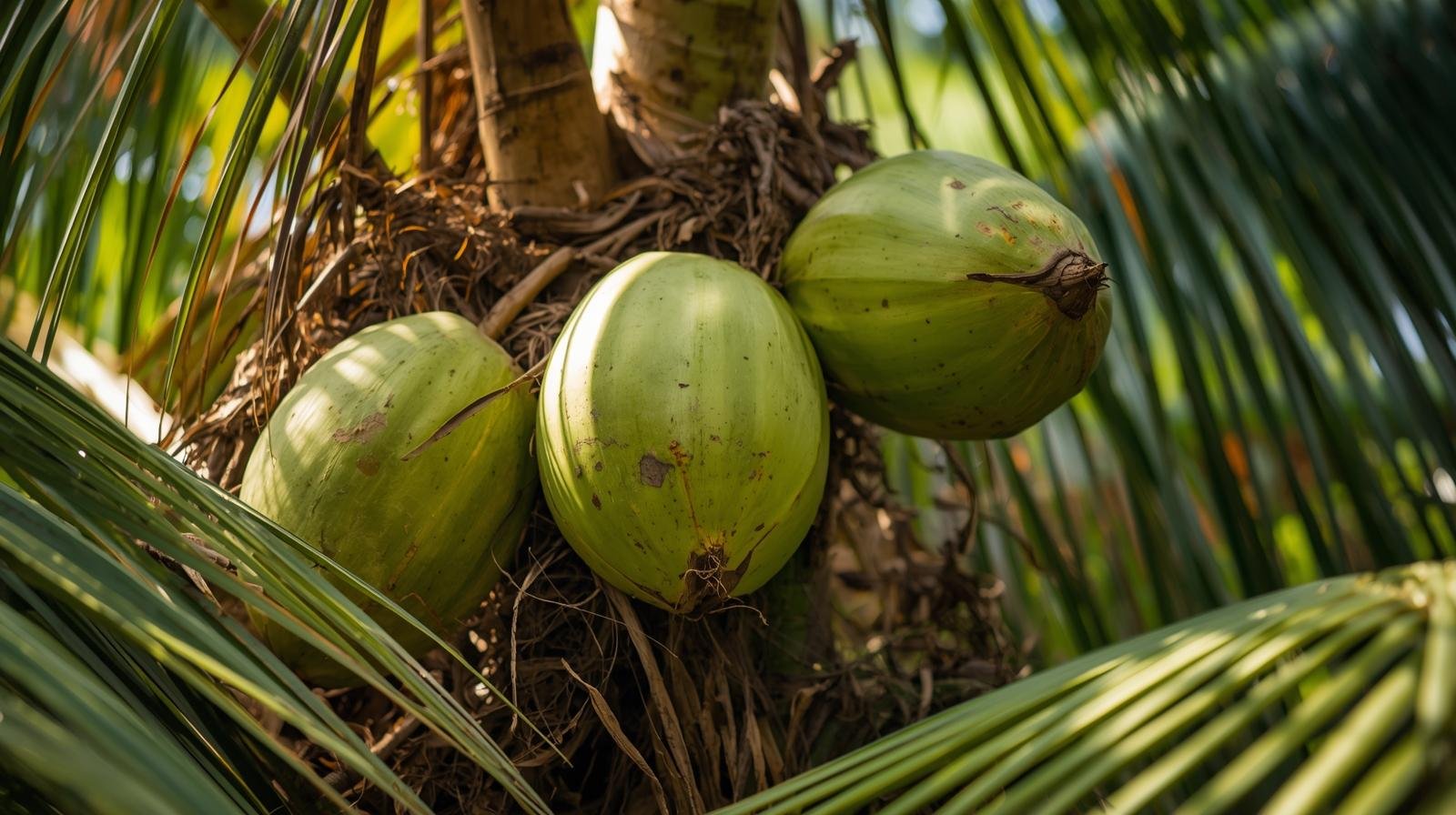

Introduction to Home Coconut Cultivation
Coconut palms are a tropical favorite valued for their water, flesh, and oil. Home cultivation is possible with proper planting, soil preparation, and care.
Selecting the Right Coconut Variety
Dwarf and hybrid coconut varieties are best suited for home gardens. They fruit earlier and remain manageable in height.
Climate and Location Requirements
Coconuts require warm, humid climates with full sunlight. A sunny and open location promotes strong growth and nut production.
Container or Ground Planting
Coconut seedlings can grow in large containers or open soil. Containers are ideal for urban gardens and terraces.
Soil Preparation for Strong Roots
A sandy-loam soil mix enriched with compost ensures proper drainage and supports healthy root development.
Preparing the Seedling for Planting
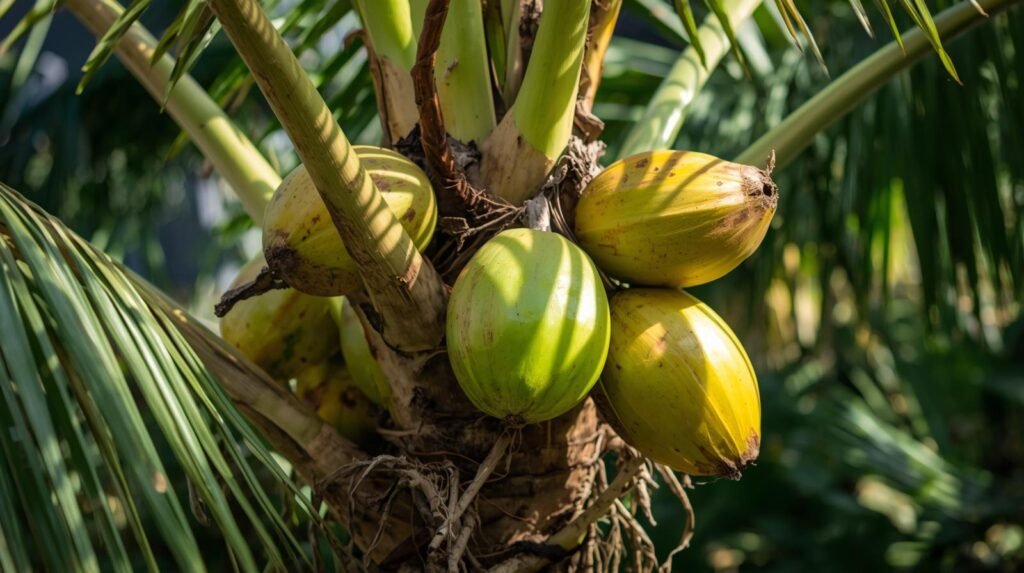
Choose healthy seedlings with robust shoots and no signs of disease. Plant upright, leaving part of the nut above soil to prevent rot.
Watering Practices for Young and Mature Plants
Young coconuts require regular watering to establish roots. Mature palms benefit from deep watering during flowering and fruit development.
Nutrient Management for Growth
Organic compost and balanced fertilization promote healthy leaves, trunk growth, and nut formation.
Mulching and Weed Control
Mulching helps retain soil moisture and reduce weed competition, supporting steady growth.
Pest and Disease Control
Regular monitoring and organic sprays prevent pests like rhinoceros beetles and fungal infections.
Flowering and Fruit Set Enhancement
Consistent care and proper nutrition ensure successful flowering and fruit formation.
Harvesting and Long-Term Care
Coconuts are harvested when mature. Seasonal pruning and feeding ensure long-term productivity.
Coconut Growing Method Comparison Table
| Method | Fruiting Time | Plant Size Control | Yield |
|---|---|---|---|
| Traditional Method | Slow | Large | Average |
| Modern Home Technique | Faster | Manageable | High |