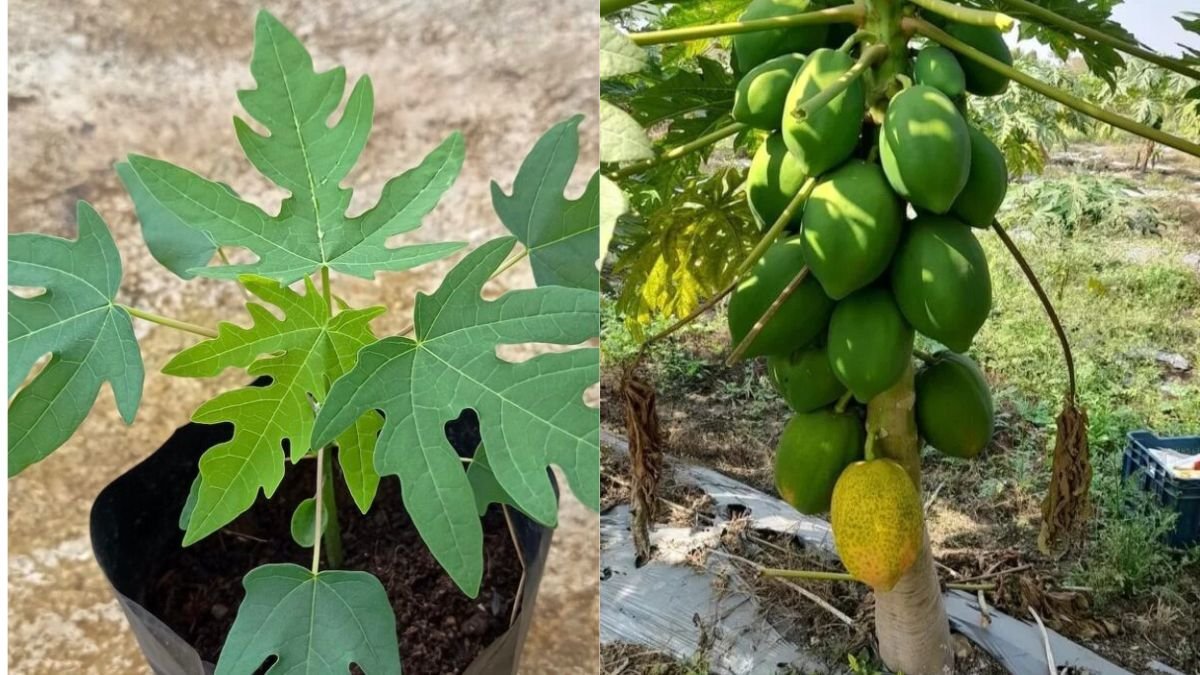

Papaya is a tropical fruit loved for its sweet taste, rich nutrients, and digestive benefits. Packed with vitamins A, C, and E, antioxidants, and digestive enzymes like papain, it’s no wonder papaya is a staple in many homes. The exciting news is that you can grow a papaya plant easily at home, whether in a backyard garden, terrace, or even in large pots. This comprehensive 1200-word guide will teach you how to grow a papaya plant from seeds or seedlings quickly, care for it, and enjoy a healthy, high-yielding plant in your own space.
🥭 Why Grow Papaya at Home?
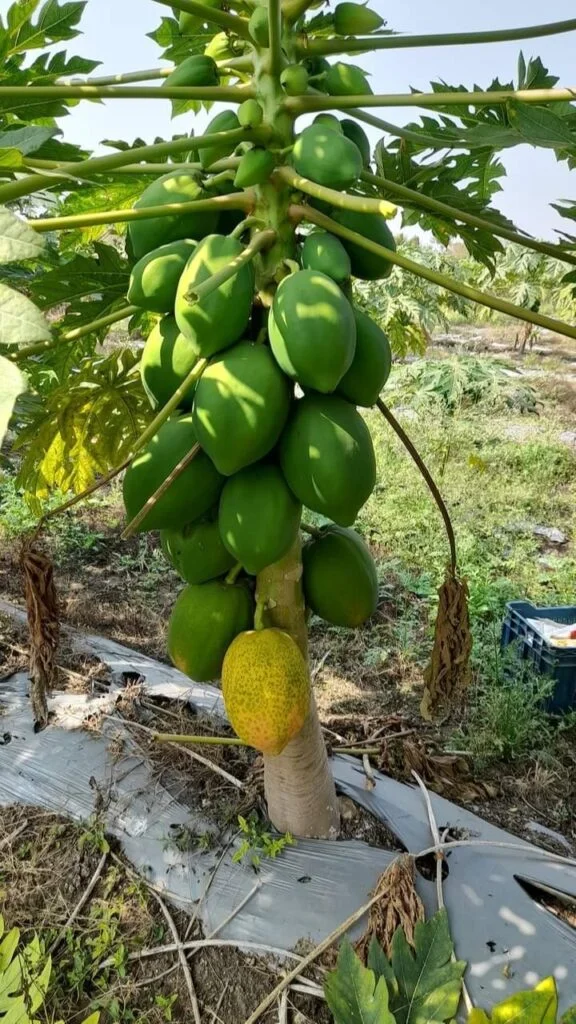
Homegrown papaya offers many benefits:
- Fresh and chemical-free fruit
- Fast-growing plant that produces fruit within a year
- Easy care, even for beginners
- Adds greenery and tropical charm to your garden or balcony
- Space-efficient: Grows well in pots and small garden plots
Unlike other fruit trees, papaya grows quickly and requires minimal maintenance, making it ideal for home gardeners.
🥭 Understanding the Papaya Plant
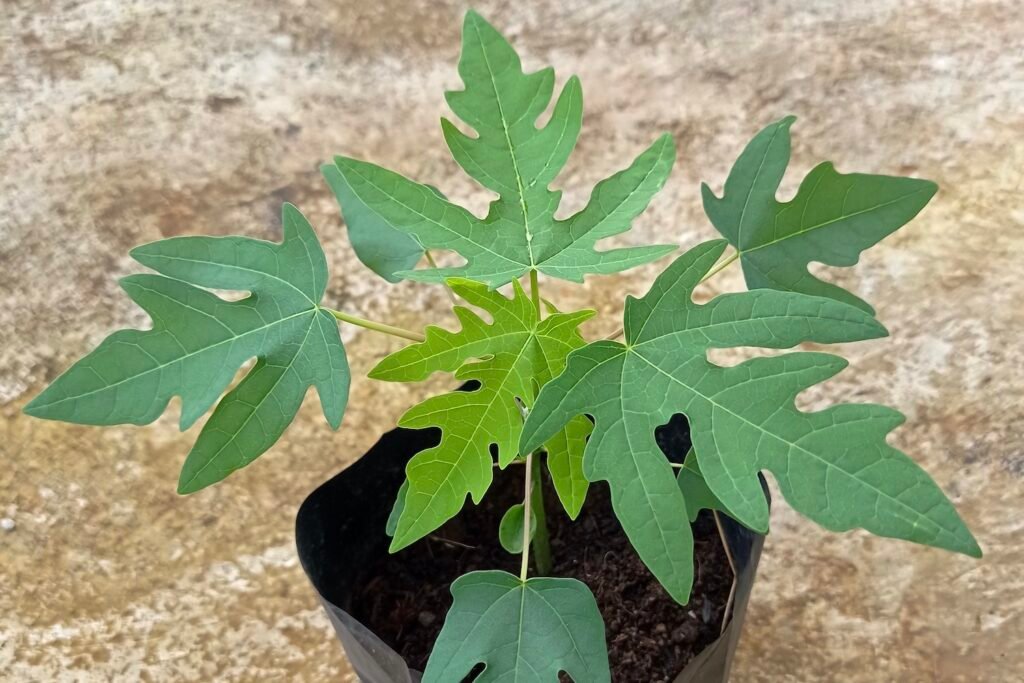
Botanical Name: Carica papaya
Plant Type: Perennial tropical herb (often called a tree)
Growth Habit: Upright, single-stemmed, fast-growing
Sunlight Requirement: Full sun
Soil Preference: Well-draining, fertile, slightly acidic to neutral (pH 6–7)
Papaya plants can grow 6–10 feet tall in containers and much taller in open soil. They produce fruit within 6–12 months under optimal conditions.
🥭 Step 1: Choosing the Right Seeds or Seedlings
Seeds:
- Extract seeds from ripe papaya fruits.
- Wash thoroughly to remove pulp and prevent fungal growth.
- Dry seeds in the shade for 1–2 days.
Seedlings:
- Use grafted seedlings from a nursery for faster fruiting.
- Look for healthy, pest-free plants with a strong stem.
Optional Pre-soaking:
- Soak seeds in warm water for 24 hours before planting to soften the seed coat and improve germination.
🥭 Step 2: Selecting Containers and Soil
Papaya can grow in pots or directly in the ground. Proper soil and container selection is crucial for fast growth.
Container Guidelines:
- Minimum depth: 18–24 inches
- Material: Plastic, ceramic, or clay pots
- Must have drainage holes
Soil Mix for Papaya:
- 40% garden soil
- 30% compost or cow dung
- 20% cocopeat or vermicompost
- 10% sand for drainage
This mix ensures proper root growth, aeration, and nutrient availability.
🥭 Step 3: Planting the Seeds
Papaya seeds are easy to plant:
- Fill a small pot with the prepared soil mix.
- Plant seeds ½–1 inch deep.
- Cover lightly with soil and water gently.
- Keep the pot in warm, sunny conditions.
Germination Time:
- Seeds typically sprout within 2–3 weeks under optimal conditions.
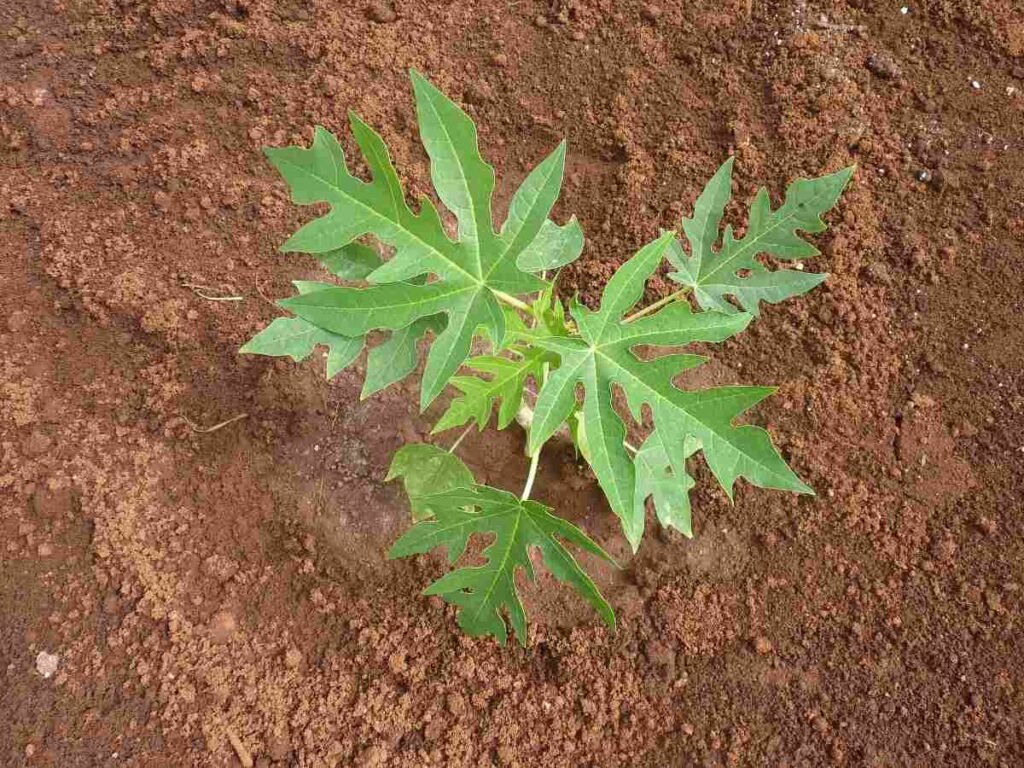
Once seedlings have 2–3 true leaves, they can be transplanted into larger containers or garden soil.
🥭 Step 4: Transplanting Papaya Seedlings
When seedlings reach 6–12 inches tall, they are ready for transplantation.
Steps:
- Choose a sunny location or larger pot.
- Dig a hole twice the size of the root ball.
- Place the seedling carefully, ensuring the stem is upright.
- Fill with soil and water gently.
Spacing:
- If planting multiple plants in the garden: 6–8 feet apart
- In containers: one plant per large pot
🥭 Step 5: Watering Your Papaya Plant
Papaya plants need consistent moisture, but waterlogging must be avoided.
Watering Guidelines:
- Water young plants daily or every other day during hot weather
- Reduce watering in rainy or cold seasons
- Mulch around the base to retain moisture and prevent weeds
Proper watering ensures faster growth, lush leaves, and better fruit production.
🥭 Step 6: Sunlight and Temperature Requirements
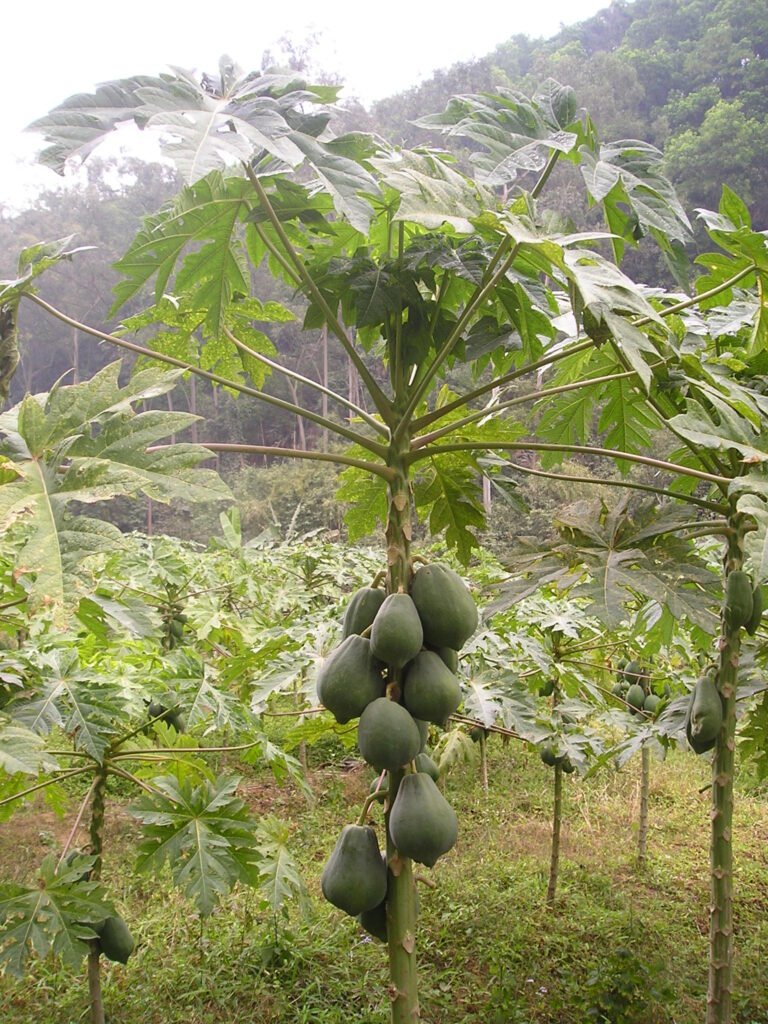
Papaya plants thrive in tropical and subtropical climates.
- Sunlight: Full sun for 6–8 hours per day
- Temperature: 21–33°C ideal for growth
- Protect young seedlings from frost and extreme winds
Placing papaya in a sunny, sheltered spot maximizes photosynthesis and growth.
🥭 Step 7: Fertilizing for Fast Growth and Fruit Production
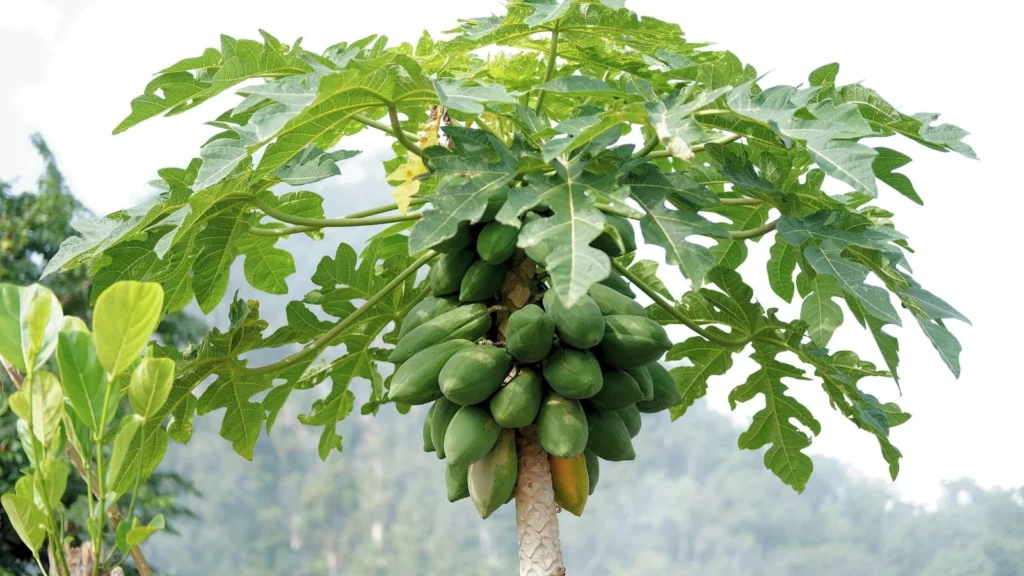
Papaya is a heavy feeder. Regular fertilization ensures strong growth and early fruiting.
Organic Fertilizers:
- Vermicompost or cow dung every 3–4 weeks
- Liquid seaweed or compost tea every 15 days
- Banana peel fertilizer for potassium to encourage flowering
Optional Mineral Fertilizers:
- Balanced NPK (10:10:10) once a month
- Avoid excessive nitrogen—it promotes leaf growth over fruiting
🥭 Step 8: Supporting the Plant
Papaya has a single, soft stem that can topple under strong winds or heavy fruits.
- Stake young plants with bamboo sticks or wooden supports
- Tie the stem loosely to prevent bending
- Once the stem thickens, reduce staking
Proper support reduces the risk of stem breakage and promotes upright growth.
🥭 Step 9: Flowering and Fruit Setting
Papaya plants are dioecious: male and female flowers grow on separate plants.
- Female plants: Produce fruit
- Male plants: Needed for pollination
- Some plants are hermaphrodite, bearing both male and female flowers
Pollination Tips:
- Bees, butterflies, and hand pollination improve fruit set
- Flowering occurs 6–8 months after planting with proper care
Regular monitoring ensures better fruit yield.
🥭 Step 10: Pruning and Maintenance
Pruning keeps the papaya plant healthy and productive.
Pruning Tips:
- Remove dead or yellow leaves
- Trim lateral shoots to focus energy on main growth
- Harvest fruits promptly to encourage continuous flowering
Maintaining plant health reduces pest problems and increases yield.
🥭 Step 11: Pest and Disease Management
Papaya is generally hardy but can face pests like:
- Aphids
- Fruit flies
- Spider mites
Organic Solutions:
- Neem oil spray every 2–3 weeks
- Garlic or chili water sprays
- Remove affected fruits and leaves
Common Diseases:
- Papaya ring spot virus
- Powdery mildew
Healthy plants with good sunlight, drainage, and regular care are less prone to disease.
🥭 Step 12: Harvesting Papaya Fruits
Papaya fruits grow rapidly. Harvesting at the right time is crucial.
Harvesting Tips:
- Fruits are ready when they turn slightly yellow at the base
- Cut with a sharp knife, leaving a small portion of the stem attached
- Fruits ripen fully off the plant within a few days
Regular harvesting encourages new flower formation and continuous fruiting.
🥭 Why This Method Works Well at Home
This home-growing method is effective because it:
✔ Works in pots, terraces, and gardens
✔ Produces fruit within 6–12 months
✔ Uses organic, easily available fertilizers
✔ Minimizes maintenance with proper staking and care
✔ Is beginner-friendly and space-efficient
Even with limited space, you can enjoy fresh, homegrown papayas using this method.
🥭 Final Thoughts
Growing a papaya plant at home is surprisingly easy and rewarding. From sowing seeds to caring for seedlings, providing sunlight, regular watering, fertilization, and proper support, this guide ensures that anyone—even beginners—can cultivate a healthy, fast-growing papaya plant.
With patience and consistent care, your plant will thrive, producing delicious, nutrient-rich fruits that are fresher and safer than store-bought papayas. Start today, and in just a few months, your home or balcony will be filled with lush papaya leaves and sweet tropical fruits!