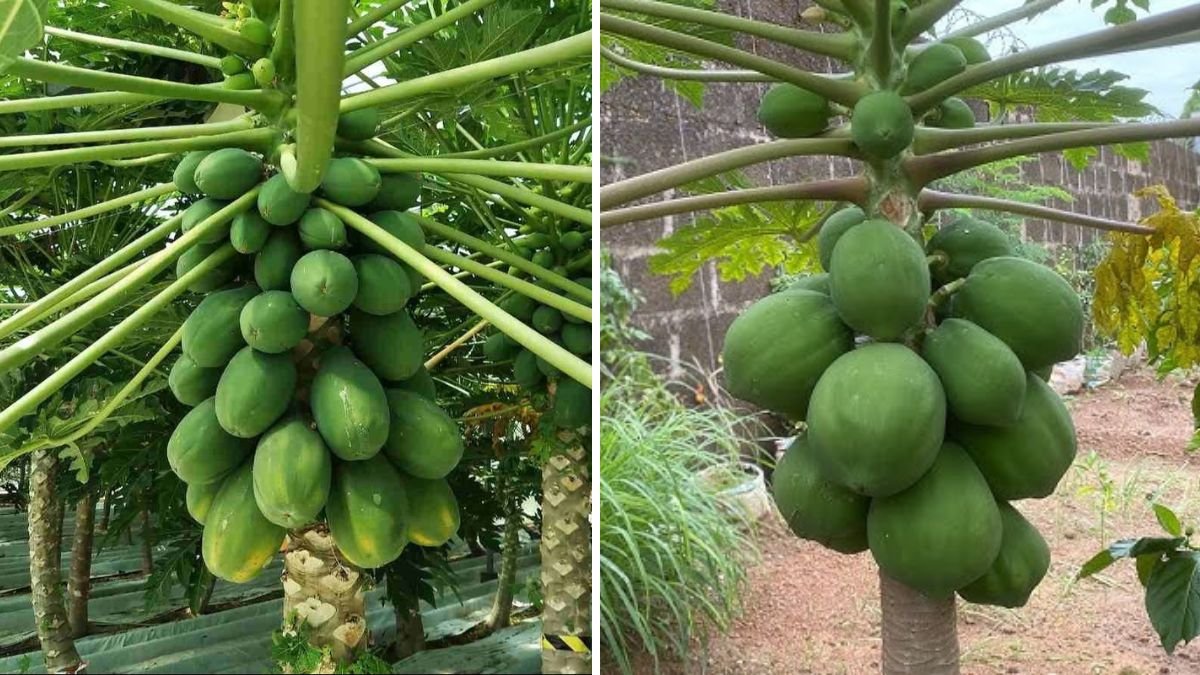

Papaya, also known as pawpaw in some regions, is one of the fastest-growing and most popular tropical fruits. Its sweet, juicy flesh is rich in vitamins, antioxidants, and digestive enzymes, making it a favorite in homes and markets alike. While papaya is easy to grow from seeds, seed-grown trees often have drawbacks: uneven growth, late fruiting, and unpredictable fruit quality.
Fortunately, grafting papaya is an easy and highly effective solution to overcome these challenges. By grafting, you can produce stronger, faster-growing plants that bear bigger, high-quality fruits sooner. In this article, we will guide you step by step through an easy papaya grafting technique, perfect for beginners and commercial growers.
🌿 Why Grafting Papaya Is Beneficial
Papaya grafting is the process of joining a fruit-bearing scion (top part of a mature papaya) onto a healthy rootstock (seedling or young plant). This method offers several advantages:
1. Faster Fruit Production
- Seed-grown papaya may take 9–12 months to start fruiting.
- Grafted papaya can produce flowers and fruits in 6–8 months, saving time and effort.
2. True-to-Type Fruits
- The scion determines the fruit quality, size, and taste.
- Grafted plants produce fruits identical to the parent tree.
3. Disease Resistance
- Using a healthy rootstock can make the plant resistant to soil-borne diseases and pests.
4. Higher Yield
- Grafted papaya plants produce more fruits per plant due to stronger growth and better nutrient absorption.
5. Space Efficiency
- Trees remain compact and manageable for small farms or home gardens.
With these benefits, grafting has become an essential technique for anyone serious about growing papaya efficiently.
✂️ Materials Needed for Easy Papaya Grafting
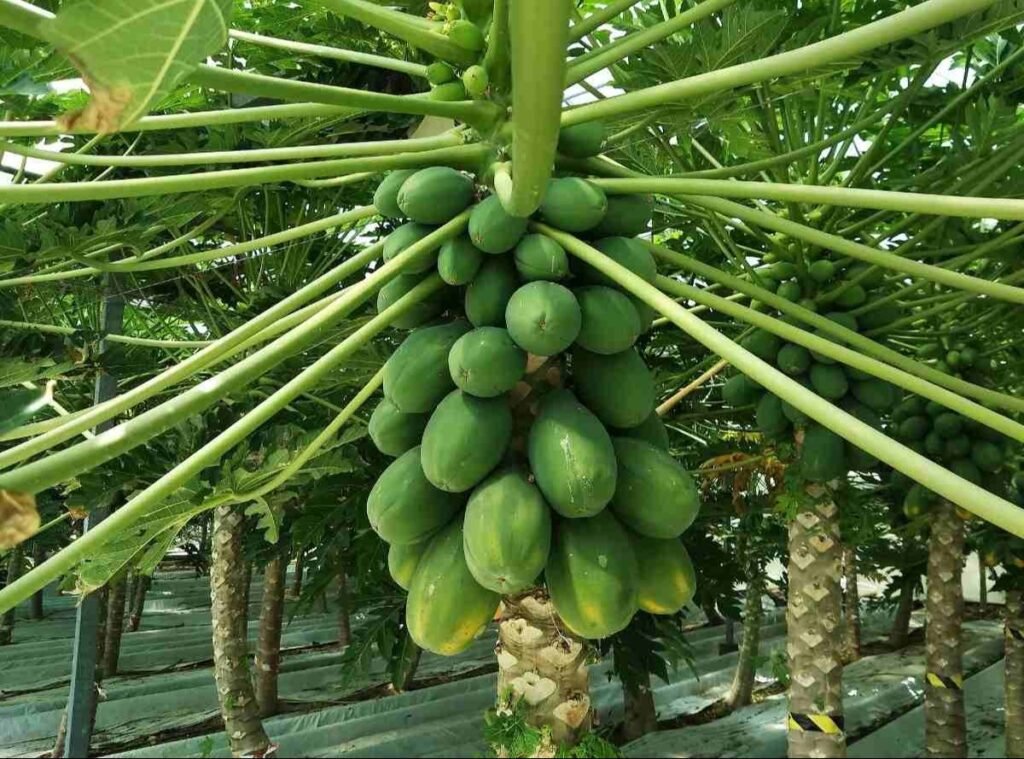
Before you begin, gather the following items:
- Healthy papaya rootstock (6–8 months old, disease-free)
- Scion from a mature, high-yielding papaya tree
- Sharp grafting knife
- Grafting tape or cling film
- Clean cloth or tissue
- Optional: hormone powder or Aloe vera gel for faster healing
🌱 Step-by-Step Guide: Easy Papaya Grafting
The cleft grafting method is the easiest and most successful for papaya. Here’s how to do it:
1. Select Healthy Rootstock
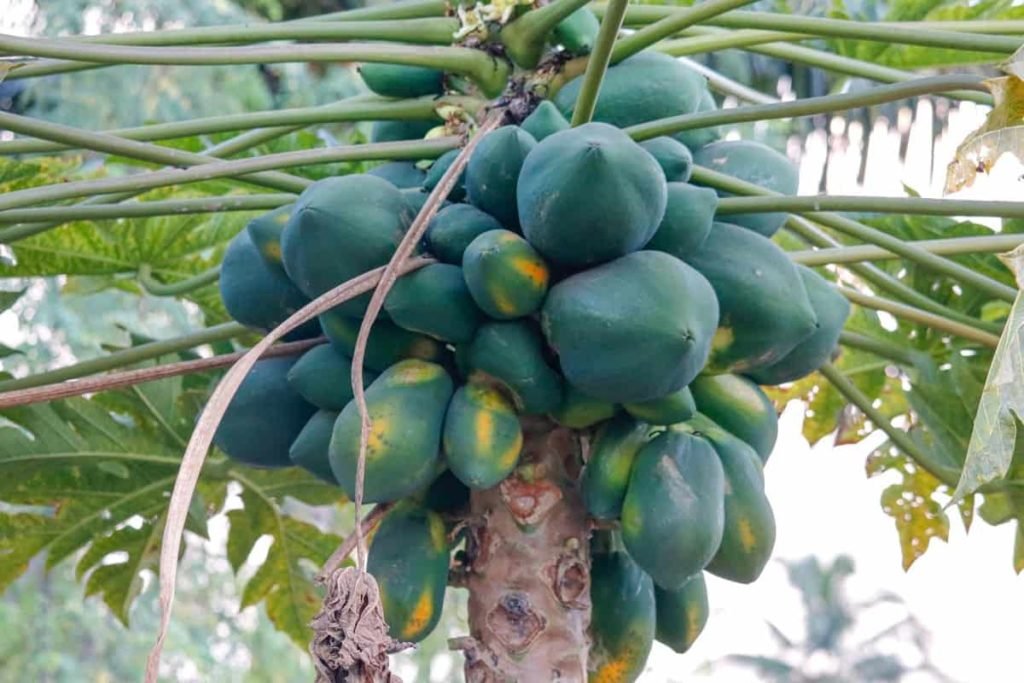
- Choose a vigorously growing papaya seedling.
- Stem thickness should be similar to the scion, around 1–2 cm.
- Ensure the plant is disease-free and well-watered.
2. Prepare the Scion
- Take a scion from a fruit-bearing, healthy papaya tree.
- Length: 8–10 cm
- Contains 2–3 nodes
- Use semi-hardwood sections for better grafting success.
3. Prepare the Rootstock
- Make a horizontal cut at the top of the rootstock.
- Using a sharp knife, create a vertical slit about 2–3 cm deep.
This slit will hold the scion securely.
4. Cut the Scion into a Wedge
- Shape the bottom of the scion into a sharp wedge.
- Smooth the cuts to prevent damage.
- The wedge should fit snugly into the rootstock slit.
5. Insert the Scion
- Place the wedge-shaped scion into the slit on the rootstock.
- Ensure cambium layers align perfectly (the green layer just beneath the bark).
- Alignment is key for the graft to take successfully.
6. Apply Grafting Tape
- Wrap the graft joint tightly with grafting tape or cling film.
- This prevents moisture loss and protects the graft from infection.
- Optional: apply Aloe vera gel or rooting hormone to boost healing.
7. Keep the Plant in Shade
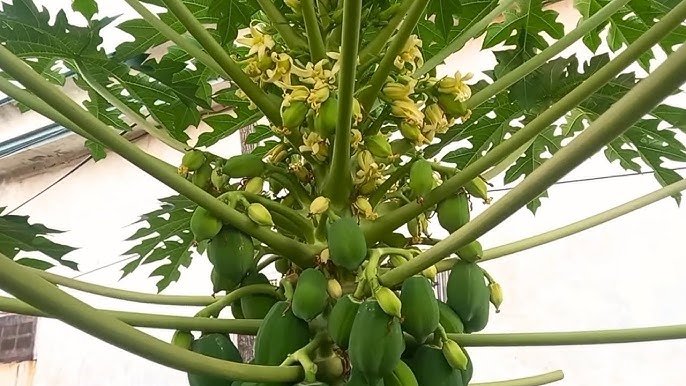
- Newly grafted plants are sensitive.
- Keep them in indirect sunlight for 7–10 days.
- Maintain moderate soil moisture; avoid waterlogging.
8. Monitor for Success
- Signs of successful grafting:
- Leaves stay green
- Buds sprout from the scion
- Scion remains firm and upright
- Usually, new growth appears 2–3 weeks after grafting.
🌿 Why This Method Works
Papaya grafting using the cleft method works well because:
- Simple and easy for beginners
- High success rate (up to 85–90%)
- Faster union due to cambium alignment
- Works well in home gardens and farms
- Ensures uniform fruit quality
🌞 Caring for Grafted Papaya Plants
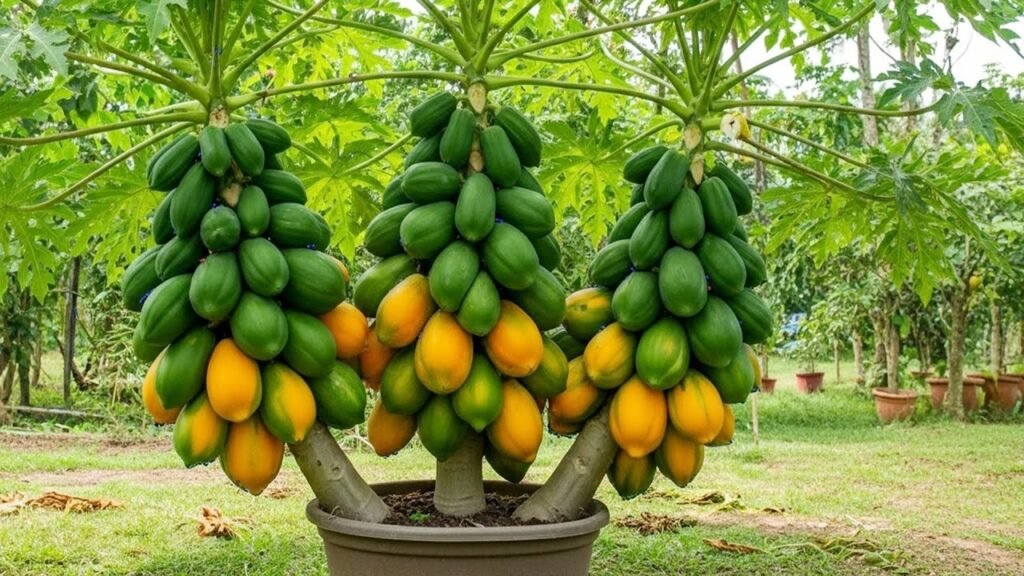
To ensure your grafted papaya grows into a strong, productive tree, follow these care tips:
1. Watering
- Keep soil evenly moist, especially in the first month.
- Avoid overwatering, which may rot the graft.
- Water at the base, not on leaves or the graft joint.
2. Fertilizing
- Use organic compost, cow dung, or vermicompost every 2 months.
- Apply potash-rich fertilizer during flowering and fruiting to improve fruit size and sweetness.
- Avoid excessive nitrogen fertilizer, which favors leaves over fruit.
3. Sunlight
- Gradually expose the grafted plant to full sunlight after 10 days.
- Papaya requires 6–8 hours of sunlight per day.
4. Pruning
- Remove weak or damaged branches to encourage stronger growth.
- Trim shoots below the graft to ensure energy goes to the scion.
5. Pest and Disease Management
Common papaya pests include:
- Aphids
- Mealybugs
- Fruit flies
Control tips:
- Spray neem oil every 10–15 days
- Remove infected leaves
- Keep the area clean and well-drained
🍈 Advantages of Easy Papaya Grafting
- Faster Fruiting: Grafted trees produce flowers and fruits earlier than seed-grown trees.
- True-to-Type Fruits: Fruits retain the characteristics of the parent tree.
- Higher Yield: Stronger roots and scion growth increase overall production.
- Disease Resistance: Healthy rootstock helps prevent soil-borne diseases.
- Space Efficiency: Trees are compact and manageable for home gardens.
- Beginner-Friendly: Simple steps ensure high success rates even for new gardeners.
🌱 When to Expect Your First Fruits
- Grafted papaya can flower in 6–8 months.
- Fruits can be harvested 8–10 months after grafting, depending on care and climate.
- Seed-grown papaya usually takes 12–18 months to bear fruit.
🌟 Tips for Maximum Success
- Use healthy, disease-free scions and rootstocks.
- Align cambium layers carefully for the graft union.
- Maintain moderate soil moisture and avoid overwatering.
- Protect the graft from direct sunlight during the first 7–10 days.
- Optionally, use Aloe vera gel or rooting hormone to speed healing.
🍊 Conclusion
Grafting papaya using this easy method is a reliable way to grow high-yielding, strong, and fast-fruiting trees. By combining a quality scion with a healthy rootstock, and following simple steps like using Aloe vera or grafting tape, even beginners can enjoy early and abundant papaya harvests.
This technique is perfect for:
- Home gardeners
- Small-scale farmers
- Commercial papaya growers
With proper care, grafted papaya trees will provide delicious fruits consistently for years, transforming your garden into a thriving tropical oasis.