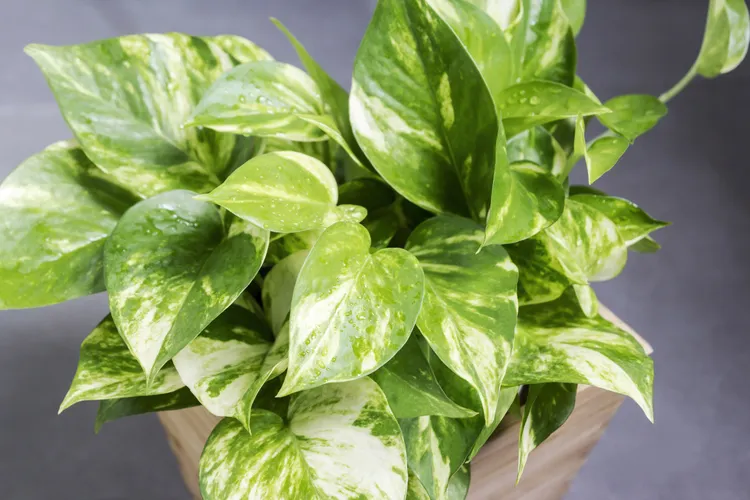

Pothos is a popular houseplant, beloved for its glossy green leaves and beautiful vining growth habit. This tropical plant is resilient, thriving in a range of indoor conditions, including low-light environments and periods of drought. While pothos is easy to care for and will thrive with minimal attention, houseplant parents can improve vigor by fertilizing their pothos throughout the growing season. Fertilizer ensures pothos receives the nutrients it needs to flourish year-round, and continue producing the beautiful, glossy green leaves it’s known for. To help you do so the right way, we consulted gardening experts who shared their tips for when and how to fertilize pothos.
- Justin Hancock, horticulturist for Costa Farms
- Lisa Eldred Steinkopf, founder of The Houseplant Guru
When to Fertilize Pothos
The best time to fertilize pothos depends on the growing conditions in your home. “In the average home, spring and summer are the best times because the light coming in our windows is generally more intense and the days are longer—so plants have more fuel for growth and more greatly benefit from the additional nutrients fertilizer provides,” says Justin Hancock, horticulturist for Costa Farms. “If you have a bright spot, a large sunny window, for instance, or you augment or grow under plant lights, then you can fertilize all year long.” If your plants don’t receive a lot of light during autumn and winter, they’re not utilizing the nutrients fertilize provides, so it’s not as beneficial to them.
How to Fertilize Pothos
How you fertilize pothos may vary depending on the type of product you use. Our experts recommend using either a slow-release or water-soluble fertilizer. The one you choose comes down to personal preference and how often you want to fertilize your plant. For pothos plants, look for a product with a balanced nitrogen-phosphorus-potassium (NPK) nutrient ratio, such as a 10-10-10 or 20-20-20.
Slow-Release Fertilizer
A slow-release fertilizer, also called time-release, is a common option for fertilizing houseplants. “This type often comes as granules (or pills) that slowly release nutrients to your plants over the course of weeks,” says Hancock. “I personally prefer this type because you need to use it less frequently, it provides a steady supply of nutrients to your plants (unlike some of the other types), and there’s less chance of accidentally hurting your plants through over-fertilization.”
Slow-release fertilizers are typically applied by sprinkling the granules over the soil surface or mixing them into the top inch of soil, and gently watering. Over time, the granules will break down, and the plant absorbs the nutrients. Always consult the product label for the specific dosage.
Water-Soluble Fertilizer
Lisa Steinkopf, founder of The Houseplant Guru, uses a water-soluble fertilizer when fertilizing her pothos. Water-soluble fertilizers are the most common option and often come in a form with a texture similar to salt or sugar. It’s mixed with water and then applied to your plant’s soil. “Unlike time-release fertilizers, you need to reapply water-soluble fertilizers frequently,” notes Hancock.
As with slow-release fertilizers, you should always check the product instructions for correct dosage and application frequency, but Steinkopf recommends using almost full strength every fourth watering or 1/4-strength every time you water. The strength of water-soluble fertilizers varies depending on how much water they are mixed with. Pour the solution over the soil to administer it to your plants.
Don’t Miss
Signs of Over-Fertilizing
Fertilizer is a great way to improve the vigor of pothos, but too much can do more harm than good. “The most important thing when fertilizing a pothos is to never over-fertilize. Nutrients are typically delivered in the form of nutrient salts—and over-fertilization (either too much at one time or too frequently) causes a buildup of these salts in the soil,” says Hancock. “Excess salts in the soil harm plant roots—so too much fertilizer can stunt or even kill your plant.” Signs of an over-fertilized pothos include drooping plants, yellowing leaves, brown tips or edges on the leaves, and possibly complete collapse, says Steinkopf.
Signs of Under-Fertilizing
Slow or stunted growth is the most common sign your pothos is hungry for nutrients. You may also notice that your plant looks less vibrant, with weak stems and discolored leaves. “The leaves may look more pale green than rich green (though in selections like Neon, that can be hard to detect because it’s already a light-green color),” Hancock says. A well-fertilized plant is able to fend off pests and diseases more effectively, and helps keep the plant vigorous, says Steinkopf.