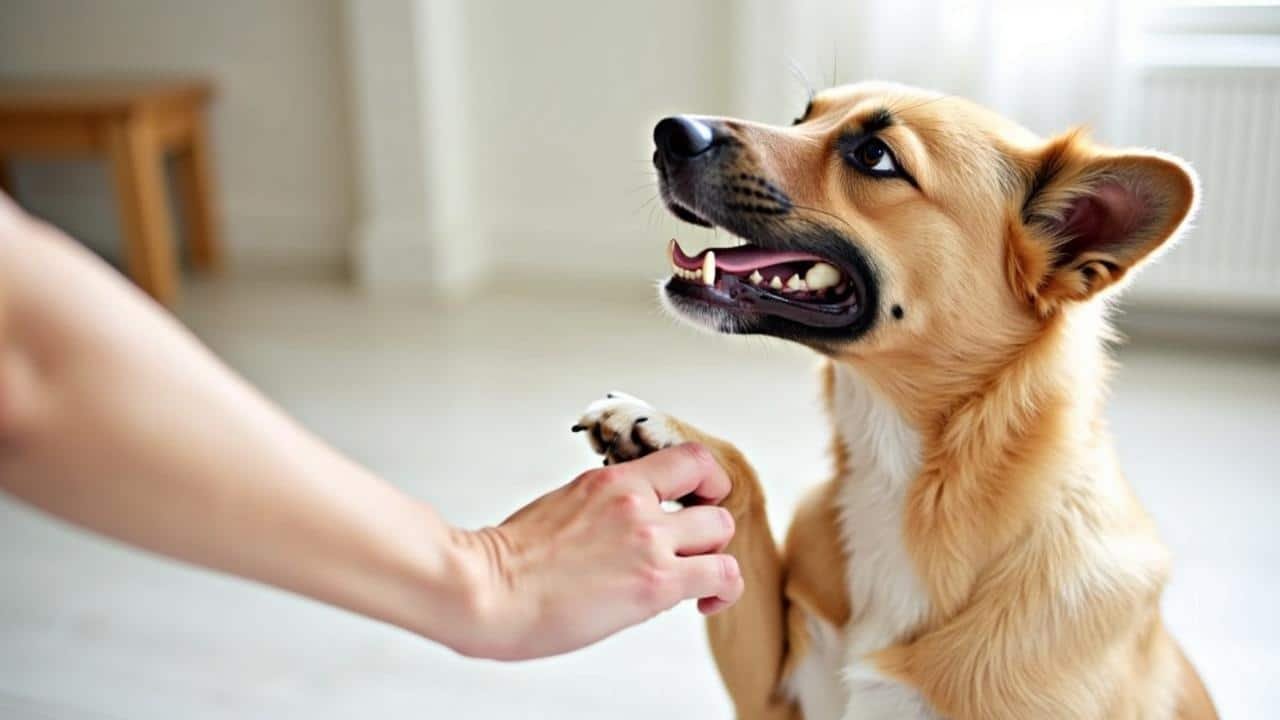

Many dog owners smile when their pet gently places a paw on their leg or hand. It’s often interpreted as a cute greeting, a playful gesture, or even a canine version of a handshake. But according to animal behavior experts, when a dog gives you its paw, it’s rarely just to play or say hello. In fact, this simple action can reveal a lot about what your dog is thinking, feeling, and trying to communicate.
Dogs rely heavily on body language to express themselves, and pawing is one of their most meaningful gestures. Understanding the real reasons behind it can help strengthen your bond with your dog and improve communication between you.
Dogs Communicate Differently Than Humans
Unlike humans, dogs don’t use words to express emotions. Instead, they rely on a complex system of body language, facial expressions, vocal sounds, and physical contact. While barking and tail wagging are commonly understood, pawing is often overlooked or misunderstood.
Animal behaviorists explain that pawing is a deliberate form of communication, not a random or meaningless action. When your dog places a paw on you, it is actively trying to send a message.
Seeking Attention Is the Most Common Reason
One of the most common reasons dogs give their paw is to get your attention. If your dog wants food, affection, playtime, or simply your focus, placing a paw on you is an effective way to interrupt whatever you’re doing.
Experts say dogs quickly learn that pawing works. If you respond by petting them, talking to them, or even looking at them, the behavior is reinforced. Over time, the dog associates pawing with success.
This is especially common in dogs that feel emotionally connected to their owners and want regular interaction.
A Sign of Affection and Emotional Bonding
Contrary to popular belief, dogs don’t always show affection the same way humans do. When a dog gently places its paw on you, it can be a sign of trust and emotional closeness.
Animal experts explain that physical contact plays a major role in canine bonding. Just as humans hug or hold hands, dogs may use their paw to maintain contact with someone they feel safe with.
In this context, the pawing gesture is similar to your dog saying, “I’m here with you.”
Your Dog May Be Feeling Anxious or Insecure
Another important reason dogs give their paw is emotional discomfort. Dogs that feel anxious, stressed, or unsure of a situation may paw at their owners as a form of reassurance-seeking.
This often happens during:
- Loud noises like thunderstorms or fireworks
- Visits from strangers
- Changes in routine
- Veterinary visits
By placing a paw on you, your dog is asking for comfort and security. Experts emphasize that this behavior should not be ignored, as it may signal emotional distress.
Pawing Can Be a Calming Signal
In canine behavior studies, pawing is sometimes classified as a calming or appeasement signal. Dogs use these signals to reduce tension in themselves or others.
If your dog paws at you during an intense moment—such as raised voices or unfamiliar environments—it may be trying to calm the situation. This behavior is rooted in a dog’s instinct to maintain harmony within its social group.
Animal experts suggest responding calmly and reassuringly when this happens.
A Learned Behavior from Training
Many dogs are taught to “shake hands” or “give paw” as a trick. Over time, some dogs generalize this behavior beyond training sessions.
If your dog frequently offers its paw without being asked, it may be because it has learned that this action leads to rewards or praise. The dog isn’t necessarily greeting you—it’s initiating a behavior it believes will bring a positive response.
Experts recommend observing the context. If pawing happens repeatedly around meal times or when treats are nearby, it’s likely a learned behavior.
Dogs Use Their Paws to Explore and Interact
Dogs don’t have hands like humans, so they use their paws to interact with the world. Pawing allows them to:
- Test reactions
- Explore surfaces
- Engage socially
When a dog paws at you, it’s a way of physically interacting and checking your response. This is particularly common in puppies, who are still learning how to communicate effectively.
Health-Related Reasons Should Not Be Ignored
In some cases, pawing may indicate physical discomfort or pain. Dogs may use their paw to alert owners when something feels wrong.
If pawing is accompanied by:
- Whining
- Lethargy
- Changes in appetite
- Limping
experts advise consulting a veterinarian. Repeated or sudden pawing can sometimes be a subtle request for help.
Why Dogs Prefer Pawing Over Barking
Animal behaviorists note that dogs often choose pawing because it is quiet and effective. Barking can attract unwanted attention or scolding, while pawing is subtle and often rewarded.
This makes pawing an intelligent choice for dogs that have learned how to communicate successfully with humans.
How You Should Respond When Your Dog Gives You Its Paw
Understanding the reason behind pawing helps determine the right response:
- For attention-seeking: Offer attention at appropriate times, not immediately, to avoid reinforcing the behavior
- For anxiety: Provide comfort, calm reassurance, and a safe environment
- For affection: Gently pet or speak to your dog to strengthen bonding
- For training habits: Redirect behavior if it becomes excessive
Experts stress that consistency is key. Mixed responses can confuse your dog and increase unwanted behaviors.
When Pawing Becomes Excessive
While occasional pawing is normal, excessive or obsessive pawing may indicate:
- Anxiety disorders
- Lack of stimulation
- Overdependence
In such cases, increased exercise, mental stimulation, and structured routines can help. Consulting a professional dog trainer or behaviorist may also be beneficial.
The Deeper Meaning Behind a Simple Gesture
What looks like a small, innocent gesture actually carries deep emotional and behavioral significance. When your dog gives you its paw, it’s communicating—not greeting. It may be asking for attention, comfort, reassurance, or simply connection.
Animal experts agree that recognizing and respecting these signals strengthens the human–dog relationship. The more you understand your dog’s language, the better you can meet its emotional and physical needs.
Final Thoughts
The next time your dog places a paw on you, pause before assuming it’s just playful behavior. Observe the situation, your dog’s body language, and emotional state. That gentle paw may be saying far more than you realize.
Understanding these subtle signals transforms everyday interactions into meaningful communication—and helps you become the kind of owner your dog truly trusts.