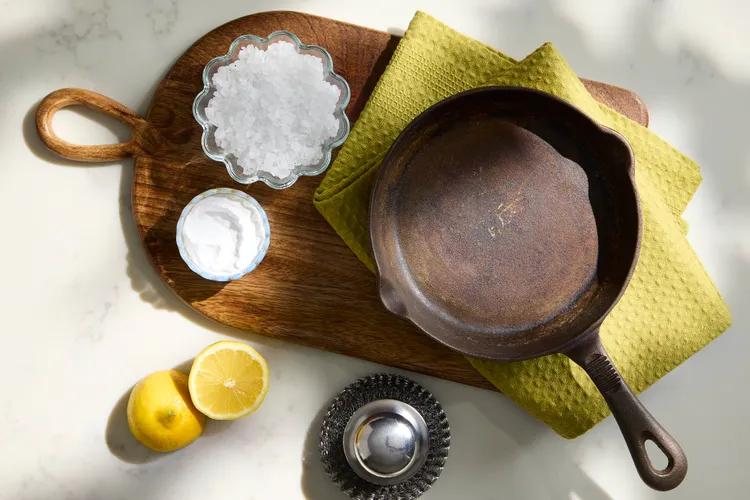

A cast iron skillet is a cooking staple in many households. However, cast iron cookware can quickly tarnish and accumulate rust if not used and cared for properly. Often, the cause of a rusty cast iron is too much moisture and not enough seasoning built up on the pan.
You can restore your rusty cast iron to as good as new with a little elbow grease and a few household ingredients. Learn how to clean rust off cast iron with these tried-true methods.
Scrub With Steel Wool
This method is the first line of defense when you see rust starting to creep onto your cast iron skillet. If you don’t have steel wool on hand, aluminum foil also works in a pinch.
- Scrub at the rust with steel wool.
- Wash the pan in warm, soapy water.
- Dry the pan thoroughly with a lint-free cloth.
- Re-season the cast iron. Cover your cast iron in a thin layer of cooking oil using a paper towel. Then, bake the pan upside down in an oven at 350°F for one hour.
If your cast iron has particularly tough spots, try one of the following methods to break down the rust.
Want more cleaning and organizing tips? Sign up for our free daily newsletter for the latest hacks, expert advice, and more!
Soak In Vinegar
While the general rule is to avoid soaking a cast iron pan, soaking it in vinegar and water for a short time is safe since it completely removes rust and any remaining seasoning layers of your pan. Just remember to re-season it to add that protective layer back on.
- Fill a bucket or sink with equal parts white vinegar and warm water.
- Soak the cast iron in the vinegar solution for 30-60 minutes or whenever rust starts to flake off.
- Remove the pan from the vinegar solution and scrub the rust sections with steel wool until they’re removed.
- Rinse the pan with water and dry it with a lint-free cloth.
- Re-season the pan.
Apply a Baking Soda Paste
- In a small bowl, mix baking soda with water to create a paste.
- Apply the paste to the pan’s rusted areas. Scrub with steel wool or cast iron brush.
- Rinse the cast iron with water to remove baking soda and dry thoroughly with a lint-free cloth.
- Re-season the pan.
Rub With Coarse Salt
Ensure you’re using coarse salt for this method, not fine table salt, as only coarse salt is gritty enough to cut through and remove the rust.
- Pour 2 to 3 tablespoons of coarse kosher salt into your cast iron.
- Rub the salt in circular motions around the pan using a damp paper towel, potato half, or lemon half. Give the rust spots an extra amount of pressure. Continue to add more salt and scrub until all rust is gone.
- Rinse the pan thoroughly with water and dry with a lint-free cloth.
- Re-season the pan.
How to Clean Cast Iron After Cooking
To maintain your cast iron cookware, clean it promptly and correctly after each use.
- While the pan is still warm, remove food bits with a paper towel. If food is stuck, loosen it up first with room-temperature water over medium heat on the stove.
- Wash with a cloth, warm water, and a tiny amount of dish soap.
- Rinse well with warm water and dry thoroughly with a lint-free cloth.
How to Keep Cast Iron From Rusting
While it’s possible to remove rust from your cast iron cookware, it’s better to avoid it in the first place. Follow these practices to keep your cast iron in prime, rust-free condition:
- Avoid soaking cast iron. Limit water exposure as much as possible in your pan.
- Clean it correctly. Clean immediately after use and avoid using too much dish soap when washing.
- Keep the pan dry. After washing, wipe it down with a lint-free cloth. You can even put the pan over the stove on low heat for a few minutes to remove any remaining moisture.
- Oil after each use. Once the pan is dry, apply a light layer of cooking oil to the pan. This builds up layers of seasoning to protect the pan from rust.
- Avoid acidic foods. Highly acidic foods, like tomatoes and vinegar, can eat away at the skillet’s seasoning. Ensure your pan has multiple layers of seasoning before cooking recipes that contain acidic foods.
- Use it often. The more cast iron cookware is used, the better it cooks. Cook with it regularly to keep up the protective oil layer and prevent rust.
- Store in a dry place. Avoid keeping your cast iron in areas with high humidity, such as the basement.