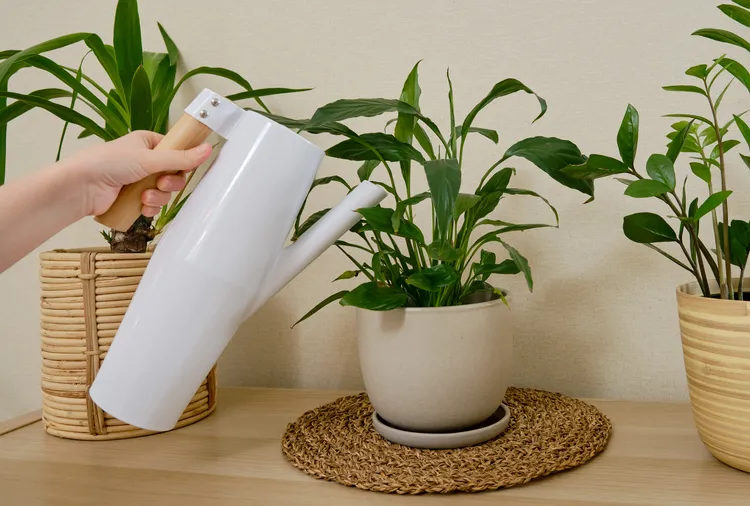

Peace lilies are popular houseplants for good reason: The tropical, white-flowering plant does well in the low light and low humidity most of us have in our homes. Knowing how often to water a peace lily, however, can be the challenging part of caring for the plant. The trick is to be a careful observer of your peace lily, changing up your watering approach as needed. Here’s what you need to know to give your plant the right amount of water it needs to thrive.
Peace Lilies’ Water Needs
Peace lilies are not true lilies. They’re members of the Arum family, making them relative of pothos, philodendron, and monstera. All of these plants are native to tropical regions of Central and South America where they grow on the floor of jungles and get dappled sunlight and consistent moisture and humidity. To make your peace lily thrive at home, mimic these conditions it would get in nature. That means a peace lily does best when its soil is consistently damp soil.
How Often to Water a Peace Lily
Think of this as your peace lily action plan: Everything you need to understand to meet your peace lilies’ watering needs throughout the year.
1. Monitor Soil Moisture
There’s no simple rule like “Water a peace lily once a week” that we can pass along to you as gospel. The amount and frequency of watering your peace lily needs depend on factors like air temperature, humidity, the amount of light it gets, and the type of soil it’s planted in.
Here’s how to get it right: Pay attention to the dryness of the soil in which your peace lily is planted, not the number of times a week you water the peace lily. Keep the soil moist to the touch. Don’t let the soil get sodden. Don’t let the soil dry out to crumbling dust. Use a soil moisture meter if you like precision, or just stick your fingers into the soil if you like hands-on gardening. If the top two inches of the soil is dry, your peace lily needs water.
2. Watch the Plant
Your peace lily will tell you when it’s thirsty. When it’s too dry, the plant’s leaves will droop and it can look wilted. When you see droopy, un-perky leaves on your peace lily, poke your finger in the soil. If the dirt is dry, it’s time to water your peace lily. Make a mental note about how long it takes for your peace lily to dry out between waterings. This will help you develop a watering schedule that will give your plant the consistent moisture it needs. Pay attention to your houseplants and they’ll tell you what care they need.
Related
Brown Tips on Your Peace Lily? Here Are 9 Causes and Easy Fixes
Don’t Waste That Dry Potting Soil—These Easy Tricks Restore It Fast
3. Make Seasonal Adjustments
When a peace lily is in peak growing season in the summer, it will need more water than it does in the winter when its growth slows. In the summer when air temperature is higher, your peace lily may dry out faster. In the winter when indoor air is drier, the soil may dry out faster. Check your plant’s soil at least once a week to test for dryness and keep an eye on the plant’s appearance. Water accordingly.
A peace lily can tolerate short periods of dry soil, but their leaf tips will turn brown if you let the plant get thirsty too often.
4. Avoid Overwatering
Yes, you can overwater a peace lily. If a peace lily sits in sodden soil, it can develop root rot. This means the roots drown and are unable to absorb the nutrients and moisture from the soil the peace lily needs to thrive. An overwatered peace lily will starve to death.
To prevent drowning your peace lily, use a chunky potting mix that is fast-draining. Be sure your container has a drainage hole in the bottom to allows excess water to run out. But most importantly, keep sticking your fingers in the soil and only water when the top inch or two of dirt is dry.