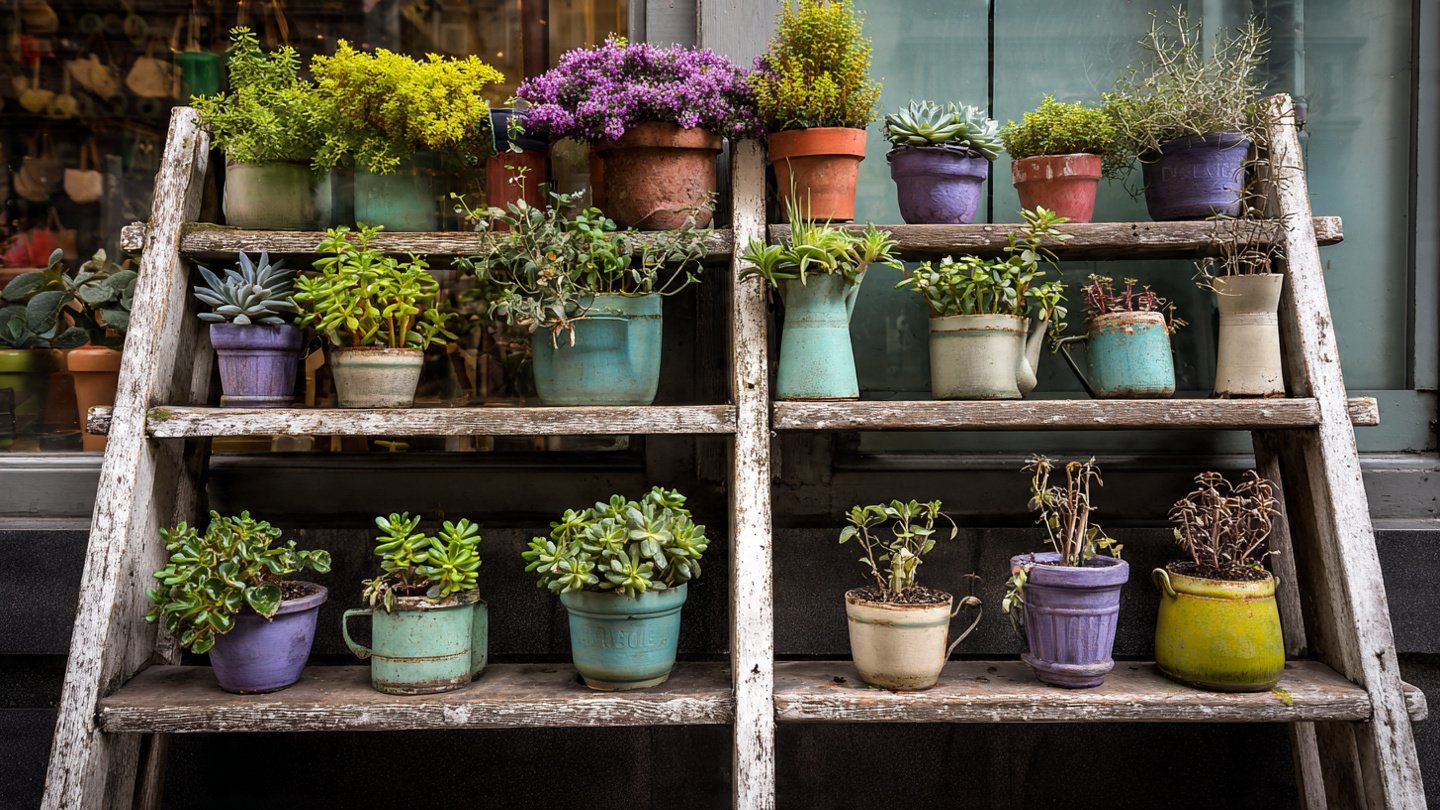

In the world of gardening, creativity knows no bounds. One of the most innovative and charming ways to display your plants is by repurposing old ladders into delightful vertical gardens. This trend not only adds a rustic touch to your decor but also helps you maximize space in your garden or home. This article will explore how to transform old ladders into stunning vertical garden displays, with a focus on materials, design ideas, plant selection, and maintenance tips.
Why Choose a Ladder for Vertical Gardening?
Space-Saving Solution
In urban environments where square footage comes at a premium, vertical gardening provides an effective solution. Utilizing a ladder allows you to grow plants upward, saving valuable floor space. This is particularly advantageous for those with limited yard or balcony space.
Aesthetic Appeal
Old ladders possess a rustic charm that can enhance the overall ambiance of your garden or home. Whether painted in bold colors or left in their natural state, they serve as eye-catching elements that draw attention to your green haven.
Sustainability
Repurposing materials is an eco-friendly approach that reduces waste and promotes sustainability. Giving a second life to an old ladder not only benefits your garden but also contributes positively to the environment.
Finding the Right Ladder
Before diving into your project, it’s essential to select the right type of ladder. Here are some factors to consider:
Material
Ladders can be made of wood, metal, or fiberglass, with wood being the most popular choice for aesthetic reasons. Wooden ladders can be stained, painted, or left to weather naturally, whereas metal ladders may require rust treatment before being used outdoors.
Condition
Ensure your ladder is structurally sound. Even if it’s well-weathered, check for stability and potential breakage. If the ladder shows signs of significant damage, it may be better suited for smaller projects or decorative purposes.
Size
The size of the ladder will determine how many plants you can incorporate. A tall, slim ladder can perfectly fit into tight spaces, while a wider ladder offers more room for various plants.
Preparing the Ladder
Once you’ve chosen your ladder, preparation is key. Here are some steps to ensure it’s ready for transformation:
Cleaning
Start by cleaning the ladder to remove any dirt, dust, or mildew. Use a mixture of soap and water, scrubbing with a brush if necessary. Rinse and let it dry completely before proceeding.
Sanding
If you’re working with a wooden ladder, sand down any rough spots or splinters. This not only improves aesthetics but also ensures the safety of handling.
Treating
For wooden ladders, apply a wood preservative to protect against moisture and insects. If you opt for a painted finish, ensure you select a paint suited for outdoor conditions.
Design Ideas for Ladder Vertical Gardens
The true charm of your vertical garden display lies in the design. Here are a few creative ideas to spark your imagination:
Traditional Ladder Display
Position your ladder horizontally against a wall or fence. Use shelves or rungs to hold pots of various sizes. This simple approach allows you to create a cascading effect with trailing plants on the sides and taller plants positioned towards the top.
Leaning Ladder Planter
For a more casual look, lean the ladder against a wall at a slight angle. Secure it if necessary and then use various rungs to place pots or containers. You can also hang small potted plants or baskets on the rungs for a whimsical touch.
Ladder Wall Garden
If you want to make a statement, consider mounting the ladder vertically on a garden wall. This horizontal approach turns your ladder into a living wall, where you can fill each rung with a different plant or cluster of plants for a full-bodied look.
Ladder Stacked Vertical Garden
For those with multiple ladders, consider stacking them. Place one ladder atop another, filling each with plants for a multi-tiered garden display. This design is eye-catching and can host a variety of plant species.
Hanging Plants
Utilize the top rungs to hang planters, creating a unique ceiling garden. Hanging pots can include ferns or spider plants, creating a lush, cascading effect.
Selecting Plants for Your Ladder Garden
Choosing the right plants is crucial to the success of your ladder garden. Consider the following factors: sunlight, temperature, and care requirements.
Herbs
Herbs are a fantastic choice as they often thrive in containers and can be used in cooking, making them both practical and beautiful. Consider basil, rosemary, thyme, or mint, which can grow well on a ladder display.
Succulents
These plants are low maintenance and ideal for vertical displays. Their varied shapes and colors can add visual interest without requiring much water or care.
Flowering Plants
Bright, flowering plants like petunias, geraniums, or marigolds can bring color to your ladder garden. Ensure they receive adequate sunlight, adjusting placement based on their light requirements.
Trailing Plants
Choose plants that will drape elegantly over the sides of the ladder. Good options include ivy, trailing lobelia, or creeping thyme, which add dimension and movement to your display.
Seasonal Plants
Consider changing plants seasonally to keep your display fresh. Spring bulbs, summer petunias, or autumn chrysanthemums can be rotated based on the time of year.
Installation Tips
Securing the Ladder
Make sure your ladder is secured in place to prevent it from tipping. You can use brackets or screws to attach it to a wall for added stability. If it’s freestanding, ensure the base is sturdy.
Using Containers
Select lightweight containers to reduce weight. You can use traditional pots, hanging baskets, or upcycled materials such as mason jars or tin cans. Ensure there’s adequate drainage to keep plants healthy.
Arranging Your Plants
When arranging your plants, think in terms of height and color. Taller plants should go on the upper rungs, while trailing plants are best suited for the lower ones. This ensures that each plant gets adequate sunlight and visibility.
Maintenance of Your Ladder Vertical Garden
Once your ladder garden is installed, regular maintenance is key:
Watering
Ensure to water your plants adequately. Check the moisture level in the soil, particularly during hot weather when containers can dry out quickly.
Fertilizing
Feed your plants according to their specific needs. Use organic fertilizers or slow-release granules to ensure they receive appropriate nutrients.
Pruning
Regularly prune dead leaves and spent flowers to encourage growth. This not only keeps your garden looking tidy but also promotes overall health.
Monitoring for Pests
Keep an eye out for pests, particularly aphids or spider mites, which can affect container plants. Address any infestations promptly using natural pest control methods.
Conclusion
Transforming an old ladder into a charming vertical garden display is not only a creative way to enhance your gardening experience but also a sustainable method of decorating your space. By carefully selecting your ladder, preparing it appropriately, designing an eye-catching layout, and choosing the right plants, you can create a unique garden that is both beautiful and functional.
As you embark on this project, remember that gardening is a journey. Your vertical garden may evolve over time as you experiment with different plant combinations and designs. Embrace the process, enjoy your efforts, and watch as your stunning ladder garden becomes a focal point in your outdoor or indoor space. Happy gardening!