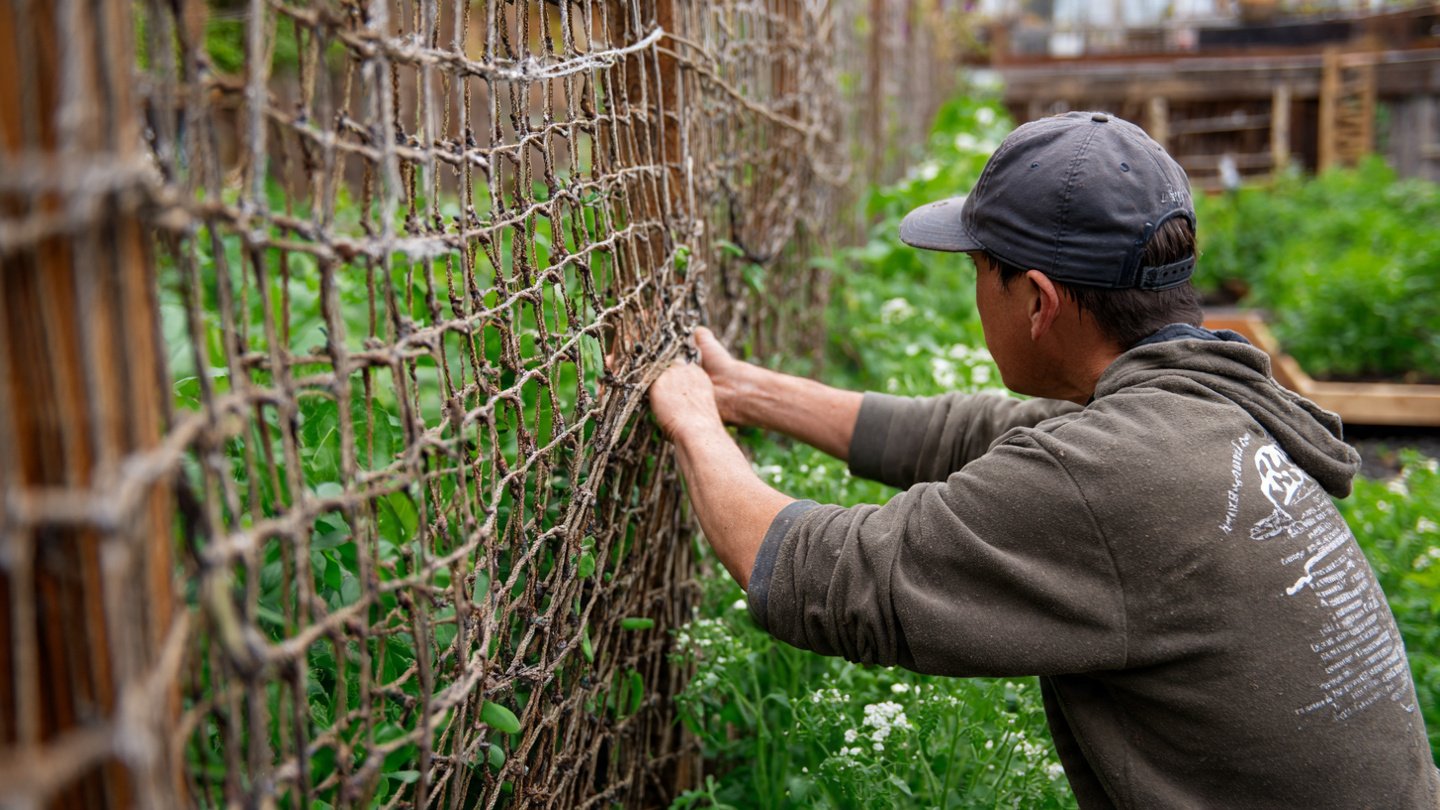

As the world grapples with the dual challenges of environmental sustainability and food security, innovative gardening techniques have emerged as solutions that marry both concerns. One such technique involves repurposing old fishing nets into a vertical wall for growing sugar snap peas. This approach not only promotes recycling efforts but also maximizes space in urban gardens and offers an effective method for cultivating crops that thrive in vertical environments. This article explores the concept, benefits, steps to create a vertical wall using fishing nets, and the broader implications of sustainable gardening practices.
Fishing nets are ubiquitous in our oceans and waterways. After their life cycle, they often end up in landfills or, worse, contribute to oceanic pollution, becoming a major hazard to marine life. The United Nations Environment Programme has raised particular concern over “ghost nets,” which are abandoned and lost fishing gear. By repurposing these nets, we not only tackle waste management issues but also bring a unique structural element to gardening.
Vertical gardening is an innovative method that uses vertical space to grow plants. This is particularly beneficial in urban environments where ground space is limited. By growing vertically, gardeners can maximize their yields, improve air circulation around plants, and reduce the risk of pests. Sugar snap peas, with their climbing habits, are ideal candidates for vertical gardening because they naturally latch onto supports as they grow, allowing them to thrive in confined spaces.
Transforming old fishing nets into a vertical wall for growing sugar snap peas is a creative project that reflects the essence of sustainability. By reusing an item that might otherwise be discarded, we contribute to circular economy principles, reducing our carbon footprint and conserving resources. The process involves several steps, including sourcing materials, designing the structure, and planting the crops.
To begin the transformation, you first need to source old fishing nets. While individual fishing nets may be challenging to find, many local fishermen, marine organizations, or fishing communities may have old nets they are willing to part with. It’s important to ensure that the nets are clean and free of any harmful substances. Once you have your fishing nets, inspect them for any extensive wear or damage; the nets should be strong enough to support the weight of growing plants.
Next, consider the design of your vertical wall. A simple frame structure can be built using reclaimed wood, metal posts, or PVC pipes. The frame needs to be sturdy enough to support the fishing nets and the growth of the sugar snap peas. Once the frame is constructed, you can attach the fishing nets securely. Ensure that there is enough tension to create a taut surface for the plants to climb on while maintaining a slight give for airflow and sunlight penetration. The nets can be attached at various heights to create a multi-tiered growing system, emphasizing vertical growth.
After setting up the frame and attaching the nets, you can start preparing for planting. Sugar snap peas thrive in soil that is rich in organic matter and well-draining. Before planting, consider enriching your soil with compost or other organic fertilizers to improve its nutrient profile. This will encourage healthy growth and bountiful yields. When planting sugar snap peas, it’s advisable to space the seeds about two inches apart and plant them about one-inch deep. As they sprout, they will naturally tend to climb the nets, which will support them throughout their growth cycle.
Watering, weeding, and pest management remain crucial aspects of tending to your vertical wall garden. Regular monitoring will ensure that the peas receive adequate moisture, especially during dry spells. It’s also essential to keep an eye out for pests, such as aphids or beetles, which may be attracted to your plants. Employing natural pest-control methods, such as introducing beneficial insects or using organic sprays, can help maintain a healthy garden.
As the sugar snap peas begin to grow and climb, gardeners will witness the magic of nature as the vibrant green vines spiral around the nets, creating a stunning vertical tapestry. This not only adds aesthetic value to your garden but also enhances the biodiversity of the surrounding area. Vertical gardens can attract beneficial pollinators like bees and butterflies, leading to better pollination and healthier plants.
Beyond the immediate benefits of growing sugar snap peas on a vertical wall made from fishing nets, this practice also opens conversations about sustainable living, environmental responsibility, and food justice. By showcasing resourcefulness and creativity in gardening, individuals can inspire community members to reconsider their use of materials and foster a culture of recycling and upcycling.
Moreover, this method of gardening can become a model for community initiatives focused on both beautifying urban spaces and addressing food scarcity. Teaching workshops on this subject can empower more people to transform waste into productive resources, enhancing food sovereignty in their neighborhoods. This engagement can lead to community gardens, where groups come together to grow their own food and share knowledge about sustainable practices.
The ability to produce food in urban environments speaks directly to the global issue of food security. With skyrocketing populations and ever-increasing urbanization, the potential for local production is vital. Vertical gardening provides a practical solution, enabling city dwellers to grow food in limited spaces, thereby reducing reliance on commercially grown produce that may have traveled long distances, contributing to greenhouse gas emissions.
On a larger scale, the movement towards vertical gardening also aligns with practices like permaculture and regenerative agriculture, which focus on creating sustainable systems that contribute positively to the land and local ecosystems. By combining old fishing nets with vertical gardening, individuals are not only inspired to rethink waste but also encouraged to adopt practices that nurture the environment while enhancing food production.
In conclusion, transforming old fishing nets into a vertical wall for sugar snap peas encapsulates a beautiful fusion of creativity, sustainability, and practicality. This innovative approach highlights the importance of rethinking waste, optimizing urban spaces, and fostering community involvement in food production. As gardeners embrace these methods, they contribute to larger conversations about environmental stewardship and local food systems, illustrating that with a little imagination, even discarded materials can play a vital role in nurturing our planet. With each climb of the sugar snap peas, the message is clear: small actions can lead to significant changes, both in our gardens and beyond.