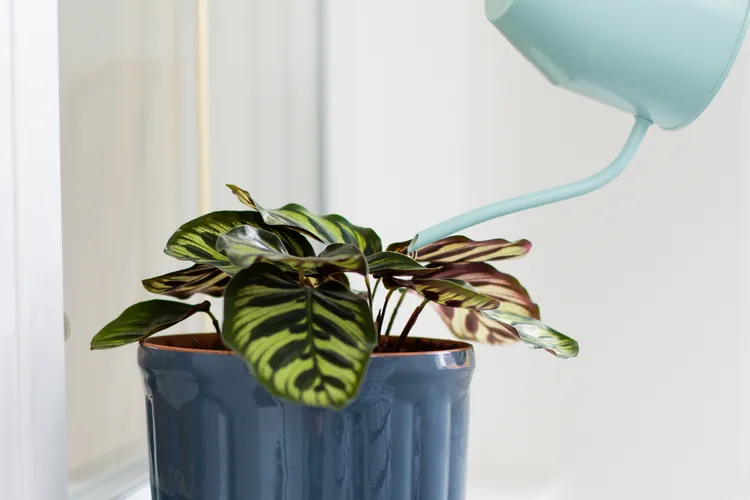

Houseplants can be picky about their growing environment, with many varieties having specific soil, sunlight, temperature, and water quantity requirements. But did you know that some species are even particular about the type of water they receive? Municipal tap water typically contains certain minerals, such as chlorine and fluoride, that some plants are sensitive to. In these instances, filtered water, distilled water, or rainwater are better options for watering.
While these sensitivities may cause certain plants to develop brown leaves or crispy edges, they likely won’t kill your plants, and tap water can be used if it’s your only option. But if you want to maintain the beauty of your plants and ensure they remain in peak condition, we spoke to a houseplant expert who warns against watering the following plants with tap water.
- Lisa Eldred Steinkopf, founder of the Houseplant Guru and author of Houseplants
The Best Water for Houseplants (Hint: It Isn’t Tap Water)
Peace Lily
Peace lilies (Spathiphyllum) are beloved for their glossy green leaves and elegant white blooms. To maintain their vibrant foliage, aim to water these tropical plants with distilled, rainwater, or reverse osmosis water, says Steinkopf. “If watered with municipal tap water, which may include chlorine and fluoride, the leaf tips will turn brown,” she says.
02of 05
Calathea
Calatheas are sensitive to the fluoride and chlorine in tap water and may develop brown tips and leaf edges. “If the water is left to sit overnight, the chlorine will dissipate, but the fluoride will not,” says Steinkopf. “It is better for calatheas if they are watered with distilled or rainwater, or reverse osmosis water.”
03of 05
Venus Flytrap
The Venus flytrap (Dionaea muscipula) is a native plant that grows in North and South Carolina, but it is often grown as a houseplant. “It is carnivorous and lives in nutrient-starved bogs,” says Steinkopf. “They do not react well to tap water and so must be watered with rainwater, preferably, or distilled water.”
Dracaenas
Certain plants in the dracaena family, such as D. marginata or D. warneckii have strappy leaves, unlike D. trifasciata. “Those strappy leaves do not like tap water, as they do not like chlorine or fluoride,” says Steinkopf. “The ends will brown and possibly the edges. These plants should be watered with distilled or rainwater.”
05of 05
Prayer Plant
Prayer plants are in the same family as the calatheas and prefer not to be watered with municipal tap water, says Steinkopf. These plants have sensitivities to fluoride, which is often found in municipal tap water. She recommends watering with distilled, rainwater, or reverse osmosis water.