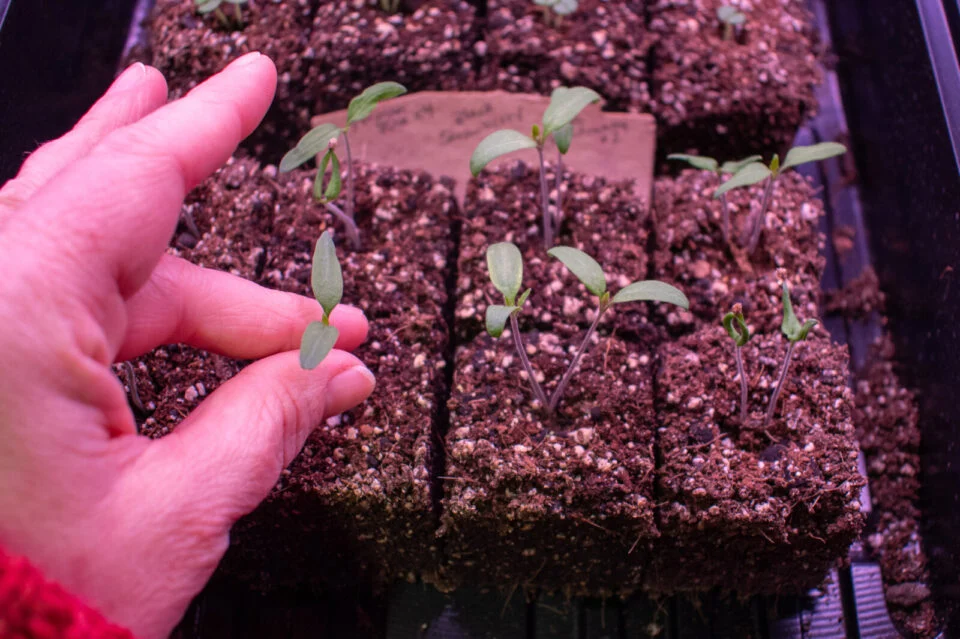

It’s that weird time of year when gardeners everywhere hear the siren song of seed packets. But it’s a strange call to heed because your particular growing zone dictates which seeds you get to work with in January & February.
Whether you’re starting seeds indoors or in the garden, there are at least a few on this list that you need to get started now for a successful growing season.
Growing Zones Rule
These month-specific planting articles always make me nervous despite their popularity.
It’s hard to give specific planting advice in a country as big as the United States.
Some gardeners will read this and already have seedlings growing to be planted outdoors as early as February. At the same time, many others won’t start sowing the majority of their seeds indoors until February or March.
It all comes down to your growing zone.
Your zip code dictates your growing zone and thus, your last frost date. (If you don’t already know yours, you can find your USDA hardiness zone here.)
For example, our gardening friends down in Pensacola, FL (hardiness zone 9a) are looking at a final frost date at the end of February. For me, in the middle of Pennsylvania (hardiness zone 6b), my final frost date is at the end of April. Then there’s my aunt in Ladysmith, WI (hardiness zone 4a). She’s not done with winter until the very beginning of June.
So, you can understand my hesitation in doling out seed-starting advice in hard and fast dates.
Sure, we could all just start our seedlings indoors right after the new year, but I’ve written about why starting seeds indoors extra early isn’t all it’s cracked up to be. In the end, it’s not always the head start you expect.
It’s best for you and your garden if you sow seeds for indoor seedlings at the right time for your hardiness zone.
In general, we’re talking about sowing seeds, either indoors or outdoors, in mid to late winter. Keep your growing zone in mind while reading. For warmer growing zones, you’re going to be leaning more towards January, for those in the coldest areas of the country, you’ll be leaning more towards the later end of February. For those of us in the middle of the hardiness zone, we’ll be aiming for late January/early February for most of these vegetables.
Are you missing out?
Join the 54,391 other gardeners who get timely gardening tips, tutorials and tasks from Rural Sprout delivered right to their inbox.We use your personal data for interest-based advertising, as outlined in our Privacy Notice.Subscribe
18 Vegetables to Sow in Mid to Late Winter
First up, we’re going to talk about vegetables that need to be started indoors, from seed, this time of year. These guys will need to get started in the shelter of your home before being moved out to the garden.
When they go outdoors will depend on that final frost date and whether it’s a frost-hardy vegetable or not.
We’ll get started with all those tasty brassicas that do so well in the cold weather, but need quite a long time to grow. (80 to 100 days)
These brassicas bookend the growing season, thriving in cooler weather. Once the heat of summer arrives, they quickly bolt, and you won’t be able to grow them again until the fall. We start them indoors in the winter to ensure your plants have enough time to grow (both indoors and out in the garden) before things heat up.
And the other advantage to starting these guys extra early is that you can hopefully get them harvested before the first round of cabbage worms show up! I battle those fuzzy, green menaces every single year.
1. Cabbage
Keep in mind that the larger the cabbage, the longer it takes to mature, so plan accordingly when starting seeds indoors. Here in Pennsylvania, we are big fans of the Pennsylvania Dutch flat head cabbage. I can almost taste the sauerkraut.
2. Kale
I know it’s not for everybody, but for those of us who enjoy kale, we know it tastes best when it’s grown in cooler weather. Start kale indoors and enjoy this hearty leafy green this spring. Chop up mature leaves to add to soups and stews, or plant them closer together and harvest the tender, baby leaves to bulk up salads.
3. & 4. Cauliflower & Broccoli
The same rules apply to both of these. You’ll have an easier time growing large, full heads in cooler weather. That means getting it started early so it has plenty of time to grow before warmer weather sets in.
Broccoli won’t form heads in warm weather, so again, the same rules apply to broccoli as with cauliflower. Get it going now, so that you can get healthy, established seedlings out in the garden as soon as possible this spring.
5. Romanesco
Romanesco, known for its shapely head, isn’t necessarily difficult to grow, it just doesn’t play well with warm temperatures. So this one is especially important to start indoors early, so you can get it in the garden with plenty of time in those cool spring temperatures for it to mature.
6. Bok Choy
Bok Choy is another brassica that does best in the cooler temperatures of spring. To enjoy full, mature heads of bok choy, get it started indoors now. Unless you are growing the mini or milk variety, which is a tiny, fast-maturing baby bok choy, you can usually direct sow those when you can work the soil.
7. Mustard Greens
Mustard greens are another excellent spring vegetable offering a punch of spice and crunch to your plate. But they don’t tolerate heat well at all. Starting them indoors in mid-winter assures you get to enjoy them well before the summer heat takes them away.
Slow Poke Summer Vegetables
This next group of vegetables is either notorious for slow germination or is relatively slow-growing as seedlings. Or, as in the case of peppers, both. We’ll get these started in mid to late winter to give them the time they need to develop.
8. Peppers, Hot & Sweet
For years, I struggled to get my pepper seeds to germinate. Then I bought a heat mat and everything changed. Peppers, both hot and sweet, are notorious for being a pain to germinate. They need exceptionally warm soil temperatures, ideally between 75°F and up to 90°F, for hot peppers.
Once you do get them to germinate (even with proper heat, they take a long time), they are slow growing, as in S-L-O-W. If you are growing peppers, get them started as early as possible, heck, you could even start them in late December if you wanted.
9. Eggplant
Eggplants can be tricky to germinate. They need warm soil in the same way peppers do, which makes sense; they’re in the same family. I recommend using a good heating mat to help them germinate. Again, like peppers, they grow pretty slowly, so you can give them a little extra time to get established by starting them in mid-winter.
10. Tomatoes
I’m only putting tomatoes on this list for those in warmer climates, mainly because you can move yours outdoors much earlier than the rest of us. Tomatoes are quick to germinate and grow quite quickly, so don’t start them any earlier than you need to; you’re not doing yourself any favors. Generally speaking, tomatoes should be started 6-8 weeks before your last spring frost date.
If you’re growing a variety with low germination rates, you can stretch that out to ten weeks to give yourself time to start again if the first set of seeds doesn’t germinate. But beyond that, you’re really not gaining much if you start them extra early.
Alliums
Growing alliums from seed often means you need to start them indoors earlier than most of your veggies.
11. Onions
If you’re bored with onion sets and want to have access to more varieties of onions, then I heartily recommend growing onions from seed. It’s the only way I grow onions anymore. It also means I need to start them in mid-winter so they are large enough to plant outside when spring rolls around.
If you’ve never grown onions from seed before, I highly recommend giving it a try this year. It’s easy to do and opens up a lot more choices in what you grow. (I’m growing cippolinis this year!)
12. Scallions
Scallions or spring onions are a garden staple for most of us. They’re vibrant, spicy flavor and bright green stalks are just the ticket after a winter of heavy food.
Depending on what part of the country you live in, you may need to grow them under cover if you start them in January or February, but doing so means you’ll have fresh green onions on the table sooner rather than later.
13. Leeks
Leeks don’t get the love they deserve, which is a shame because they’re such a wonderful vegetable. Make this the year you jump on the leek bandwagon. And you can do that by starting them indoors from seed.
Leeks take 100+ days to mature, so you’ll definitely want to get them started in midwinter, before transplanting them in the spring.
Once you grow your own leeks, you’ll never want to go back to the ones in the grocery store. My favorite way to use them is to make leek and potato soup. It’s so comforting!
A Couple of Outliers
These two vegetables benefit from being started indoors extra early.
14. Asparagus
Asparagus is a perennial vegetable. You plant it once, and then once it’s established, you’ll be enjoying it for years to come.
Many gardeners choose to plant bare-root asparagus plants to start their asparagus beds. However, you can also start it from seed.
While it does take a while longer this way, it’s worth it as you’ll have total control over your plants. You don’t have to worry about accidentally adding any soil-borne diseases to your soil from bare root plants that you have no idea where they came from or how they were grown.
If you choose to go this route, you’ll want to start your asparagus seeds indoors as early as you can (no matter your hardiness zone) before moving them outdoors in the spring.
15. Artichokes
Artichokes can be grown as a perennial in zones 7-11; however, for the rest of us, we have to grow artichokes as an annual. That means we need to start them indoors, and we need to start them extra early if we want to enjoy stuffed artichokes this growing season.
Start artichokes in January, the earlier the better. While they need to be started early and can be a little difficult to germinate (I recommend using a heating mat), they are definitely worth the effort.
‘As Soon as the Soil Can Be Worked’
We’ve all heard this incredibly vague gardening advice. What it means is that your soil has reached the point where it has thawed and dried out enough to work in it.
There’s a super easy test I use to tell when my soil “can be worked.”
I grab a handful and give it a squeeze. I’m not trying to Hulk-smash it here, just a good, quick squeeze. If it’s sticky and muddy, it’s not ready. If it holds together but crumbles easily when I break it apart, I’m good to go.
For the warmer regions of the country, you’ll likely reach this point sometime in January or February. For those of us in the rest of the country, we can cheat a little bit by covering our garden with row covers to help hold in heat and warm the soil faster. Many of us can reach this coveted stage toward the end of February this way.
These vegetables are your classic ‘as soon as the soil can be worked’ veggies.
16. Lettuce
Nothing says buh-bye to winter more than a bowl full of fresh lettuce from your garden. And with most varieties germinating in soil temps as low as 35°F, you can definitely get them in the ground in mid to late winter, even if that means covering them while they get established.
The Little Gem varieties (mini lettuce heads) are an excellent choice, as each one is a personal salad. We’ve also got a few varieties we can recommend that do well in the colder months of the year.
17. Peas
Peas germinate in soil temps from 40°F to 75°F, so some of us will need to warm the soil by covering it for a few weeks first and then starting our peas under cover. Soaking your seeds before you plant them can definitely help.
I love freshly-shelled peas from the garden. They are one of my favorite spring vegetables. So, I’m more than willing to start them outdoors under cover here in my 6b growing zone if it means I get to eat them sooner.
If you’re relatively new to gardening, peas are a great first spring vegetable to grow. They’re easy and delicious. Not to mention the plants are lovely. Be sure to plant enough peas so you can enjoy pea shoots as well as mature peas.
18. Spinach
Spinach can be especially finicky as spring temperatures start to warm up. If you live where you get the occasional few days of spring that are in the 80s, your spinach will call it quits and bolt. Spinach prefers cool weather, so it makes sense to get it in the ground as early as you can to enjoy it for as long as you can.
You may need to start spinach under cover and prewarm the soil a little, depending on where you live. Spinach germinates in soil temperatures as low as 35°F, but most do better around 45°F.