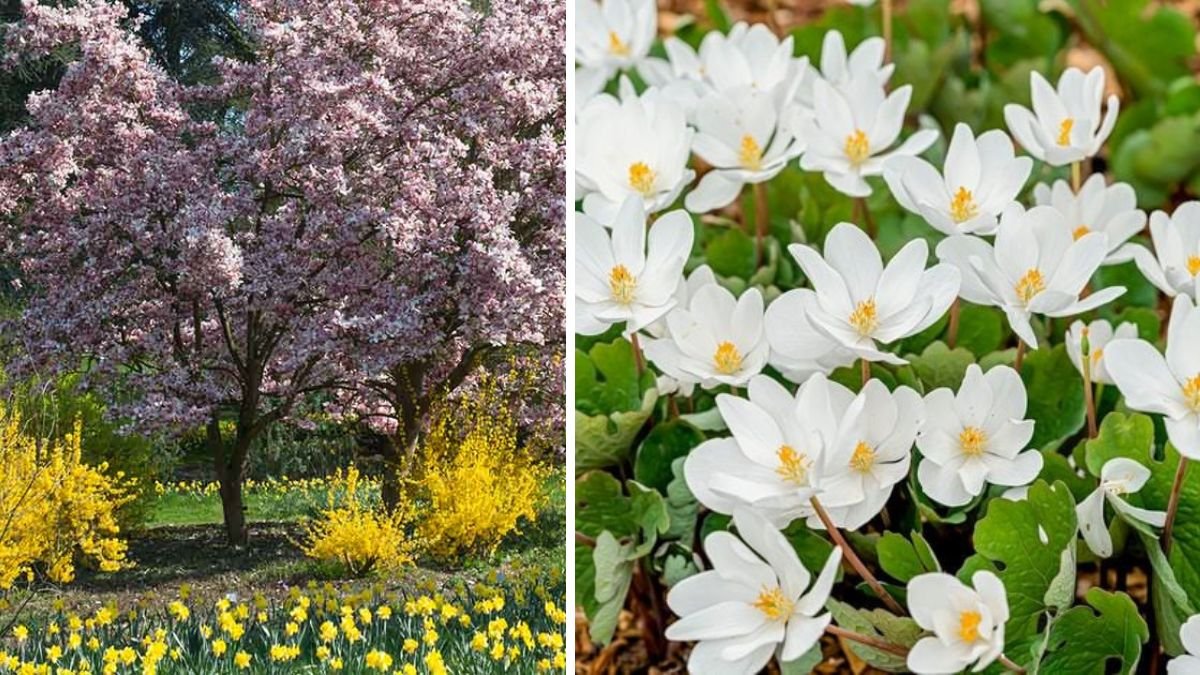

Spring ephemerals are some of the most enchanting plants in the garden. They appear just as winter loosens its grip, bloom brilliantly for a short time, and then disappear—often by early summer—leaving little trace behind. According to horticulture experts, these fleeting plants play a crucial ecological role while offering an early burst of color when the landscape is still waking up.
If you’re looking to celebrate the earliest days of spring, these top 10 early-blooming spring ephemerals are among the first to emerge and thrive before trees leaf out and shade the forest floor.
What Are Spring Ephemerals?
Spring ephemerals are woodland plants that:
- Emerge in late winter or early spring
- Bloom quickly while sunlight reaches the ground
- Go dormant by early summer
Experts explain that this growth cycle allows ephemerals to take advantage of light, moisture, and nutrients before larger plants dominate.
Why Spring Ephemerals Matter
Beyond their beauty, spring ephemerals provide:
- Critical early nectar for pollinators
- Ground cover that reduces erosion
- Biodiversity in woodland ecosystems
They are especially important for native bees and insects emerging from winter dormancy.
1. Snowdrops (Galanthus)
Snowdrops are often the very first flowers to bloom.
Bloom time: Late winter to early spring
Why they stand out:
Delicate white nodding flowers often push through snow and frozen soil.
Expert tip:
Plant bulbs in the fall in moist, well-drained soil for naturalized drifts.
2. Crocus (Crocus spp.)
Crocus adds early color in shades of purple, yellow, and white.
Bloom time: Late winter
Why they stand out:
They open on sunny days and close at night or during cold weather.
Pollinator value:
A vital nectar source for early bees.
3. Winter Aconite (Eranthis hyemalis)
Winter aconite produces bright yellow blooms surrounded by ruffled foliage.
Bloom time: Late winter
Why they stand out:
Their cheerful color contrasts beautifully with bare ground.
Growing conditions:
Partial shade and moist soil.
4. Bloodroot (Sanguinaria canadensis)
Bloodroot is a native woodland favorite.
Bloom time: Early spring
Why it stands out:
Pure white flowers with golden centers open briefly in sunlight.
Expert insight:
Each flower lasts only a few days, making timing everything.
5. Trout Lily (Erythronium)
Trout lily features mottled leaves and nodding yellow flowers.
Bloom time: Early spring
Why it stands out:
Leaves resemble trout markings, adding interest even before bloom.
Garden role:
Spreads slowly to form colonies over time.
6. Dutchman’s Breeches (Dicentra cucullaria)
This plant is named for its unique flower shape.
Bloom time: Early spring
Why it stands out:
White, pantaloon-shaped flowers hang delicately from arching stems.
Ecological value:
Specialized pollinators depend on it.
7. Virginia Bluebells (Mertensia virginica)
Virginia bluebells create stunning blue carpets.
Bloom time: Mid-spring
Why they stand out:
Pink buds open into trumpet-shaped blue flowers.
Expert tip:
Plant in moist, rich soil for best performance.
8. Hepatica (Hepatica spp.)
Hepatica blooms in shades of blue, purple, and pink.
Bloom time: Early spring
Why it stands out:
One of the earliest woodland flowers, often blooming before leaves emerge.
Bonus:
Evergreen foliage adds year-round interest.
9. Spring Beauty (Claytonia virginica)
Spring beauty produces soft pink or white blooms with darker stripes.
Bloom time: Early spring
Why it stands out:
Forms delicate groundcover in woodland settings.
Expert insight:
Extremely hardy and long-lived once established.
10. Rue Anemone (Thalictrum thalictroides)
Rue anemone offers star-shaped white or pink flowers.
Bloom time: Early spring
Why it stands out:
Light, airy appearance pairs well with ferns and hostas.
Garden use:
Ideal for naturalized woodland gardens.
Where to Plant Spring Ephemerals
Experts recommend planting ephemerals:
- Under deciduous trees
- In woodland or shade gardens
- Along naturalized borders
They thrive where sunlight is abundant in early spring and shade follows later.
Soil and Water Needs
Spring ephemerals prefer:
- Rich, organic soil
- Consistent moisture in spring
- Good drainage
Avoid disturbing soil during summer dormancy.
Designing With Ephemerals in Mind
Because ephemerals disappear by summer, experts suggest:
- Pairing with later-emerging perennials
- Marking planting locations
- Allowing leaves to die back naturally
This ensures continuity and prevents accidental damage.
Protecting Ephemerals
Avoid heavy foot traffic and soil compaction. Many ephemerals take years to establish but can live for decades once settled.
Final Thoughts
Early-blooming spring ephemerals remind us that spring begins long before trees leaf out and summer flowers appear. From snowdrops and crocus to native woodland treasures like bloodroot and Virginia bluebells, these fleeting plants bring beauty, ecological value, and a sense of anticipation to the garden.
By planting and protecting spring ephemerals, you create a living calendar of the season’s earliest days—one that returns year after year, right on time.
If you’d like, I can also: