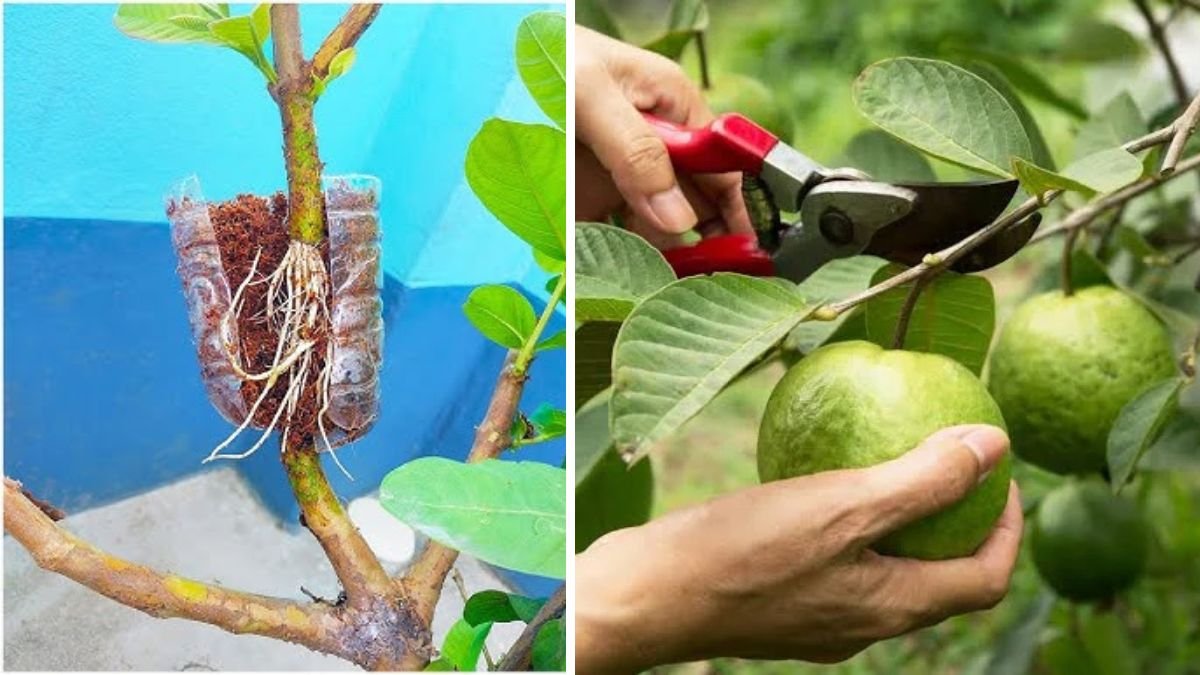

Guava trees are fast-growing, highly productive, and incredibly rewarding. However, left untrained, they can quickly become large and unmanageable. The good news is that guava plants respond extremely well to pruning and training, making them perfect candidates for compact, dwarf-style growth.
This guide explains how to train a guava plant into a compact dwarf tree, ideal for small gardens, patios, and even large containers.
Why Train a Guava Tree to Stay Dwarf?
Training guava trees offers many advantages:
- Saves space
- Easier harvesting
- Better airflow and sunlight
- Higher fruit quality
- Reduced disease risk
- Suitable for pots and small yards
A well-trained guava tree can produce abundant fruit while staying under 6–8 feet tall.
Best Guava Varieties for Dwarf Training
Most guava varieties respond well to pruning, but some are especially suitable.
Good choices include:
- Apple guava
- Strawberry guava
- Thai guava
- Mexican cream guava
Even standard guava trees can be maintained as dwarfs with proper training.
When to Start Training a Guava Plant
The earlier you begin, the better.
Ideal timing:
- Start training when the plant reaches 12–18 inches tall
- Early pruning encourages branching
- Avoid heavy pruning during extreme heat or cold
Young plants adapt more easily to shaping.
Step 1: Establishing the Main Framework
Choose a strong central stem and remove weak side shoots.
Training goals:
- Strong trunk
- 3–4 evenly spaced main branches
- Open center for airflow
This structure supports fruit weight and promotes balanced growth.
Step 2: Topping the Plant
Topping controls height and encourages branching.
How to top:
- Cut the main stem at 2–3 feet tall
- Make clean cuts above a leaf node
- New branches will form below the cut
This step is essential for dwarfing.
Step 3: Regular Pruning for Size Control
Guava fruits on new growth.
Pruning tips:
- Prune lightly every 2–3 months
- Remove vertical shoots
- Shorten long branches
- Remove crossing or inward-growing branches
Frequent light pruning is better than heavy cuts.
Step 4: Training in Containers
Guava adapts well to pots.
Container tips:
- Use 15–25 gallon pots
- Ensure excellent drainage
- Repot every 2–3 years
- Root pruning helps limit size
Container growing naturally keeps guava trees compact.
Watering and Feeding a Dwarf Guava Tree
Watering
- Water deeply but infrequently
- Allow topsoil to dry between watering
- Avoid waterlogging
Fertilizing
- Balanced fertilizer every 4–6 weeks
- Reduce nitrogen once flowering begins
- Add potassium for fruit development
Balanced nutrition prevents excessive leafy growth.
Encouraging Flowering and Fruit Production
Guava flowers form on new shoots.
To increase fruiting:
- Prune lightly before flowering season
- Ensure full sun (6–8 hours daily)
- Avoid excessive nitrogen
- Maintain consistent watering
Healthy stress encourages flowering.
Pollination Tips
Most guava trees are self-pollinating, but pollination improves yields.
Ways to help:
- Encourage pollinators
- Hand-pollinate with a soft brush
- Avoid pesticides during flowering
Better pollination means larger fruits.
Common Problems and Solutions
Too Much Leaf Growth
- Cause: Excess nitrogen
- Fix: Reduce fertilizer
Few Flowers
- Cause: Insufficient pruning or light
- Fix: Improve sunlight and pruning routine
Pests
- Fruit flies, aphids
- Use neem oil and fruit covers
Harvesting Dwarf Guava Trees
Guava fruit ripens 3–5 months after flowering.
Signs of ripeness:
- Slight softness
- Strong aroma
- Color change depending on variety
Harvest gently to avoid damaging branches.
Final Thoughts
Training a guava plant into a compact dwarf tree is one of the smartest ways to enjoy abundant fruit in limited space. With consistent pruning, proper feeding, and sunlight, your guava tree can remain small, productive, and easy to manage for many years. A dwarf guava tree proves that big harvests don’t require big gardens.