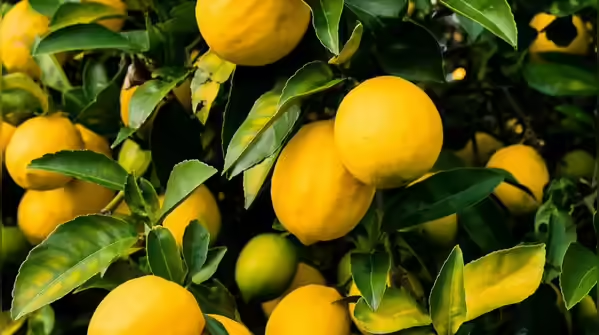

Growing lemons in containers is an excellent option for urban gardeners with limited space. Lemon trees grow well in pots, perform well in a balcony with plenty of sunlight, and provide gardeners with sweet-smelling flowers as well as fresh lemons. If proper attention and conditions in a container are provided, a healthy lemon plant can be grown even indoors.
Choosing the right lemon variety
In container gardening for balconies, the most preferred lemons would be the dwarf ones. Varieties of lemons like Eureka, lemons would be preferred for container gardening since they thrive well in containers. The reason for preferring dwarf lemon trees would be that they handle pruning much better and are less likely to overgrow the container.
Selecting the ideal container
Select a container that has drainage holes and preferably 12-16 inches wide and deep. Lemon trees have a strong root system and require ample space to grow. Terracotta, ceramic, and thick plastic containers are suitable for this purpose. This is because waterlogged soil may lead to root rot of the tree.
Using the right soil mix
Lemon plants love well-drained and richly fertilised soil. Garden soil, compost, and sand or perlite can be mixed to create better aeration within the soil. Citrus trees don’t like compacted soil, so it’s important to make the texture loose. Adding organic compost helps retain nutrients while ensuring roots get enough oxygen for healthy growth.
Sunlight requirements
Lemon plants require a minimum of 6-8 hours of direct sunlight per day. Locate the pot on a balcony where plenty of sunlight is available. Adequate sunlight will be helpful for blooming, fruiting, and overall health of the plant. The plant may grow leaves yet fail to give lemons when there is not enough light.
Watering properly
Water the lemon plant deeply but only when the topsoil is dry. Underwatering will make the leaves drop, while overwatering might be harmful for the roots. In summer, it may be necessary to water more often, and in winter, it should be less frequent. The soil must be kept consistently moist, but never soggy.
Feeding and fertilisation
Lemon trees are considered heavy feeders and thus require occasional fertilisation. An organic citrus fertiliser should be used every 4-6 weeks in the growing season, or compost. Nutrients such as nitrogen, phosphorus, potassium, and trace minerals will help promote leaf growth, flowering, and fruit development. Avoid over-fertilising as it will damage your plant.
Pruning and shaping
Pruning helps with the upkeeping of size and encourages healthy branching. Dead, weak, or overcrowded branches need to be taken off to improve airflow and sunlight penetration. Regular light pruning keeps the plant compact; this is highly important in balcony spaces. Pruning also allows the tree to focus on fruit production rather than excess foliage.
Pest and disease care
Pests commonly found on them include aphids, spider mites, and mealybugs. Infestations are usually controlled by regularly looking at the leaves and spraying them with neem oil or mild soap sprays if necessary. Good air circulation and cleanliness prevent fungal diseases. Plants that are healthy and grown under good conditions have a natural resistance against pests.
Pollination and fruit setting
Most lemon varieties are self-pollinating, so you don’t need multiple plants. However, gently shaking the plant or hand-pollinating flowers with a soft brush can improve fruit set, especially on balconies where insects may be limited. Flowers usually appear before fruit develops, followed by slow but rewarding growth.
It is also convenient and satisfying to cultivate lemons on a balcony. If you choose the right type of lemons, give them sufficient sunlight, appropriate soil, and care, you would be surprised to see how well they will grow. In addition to giving you fresh lemons, it will also bring greenery to your home.