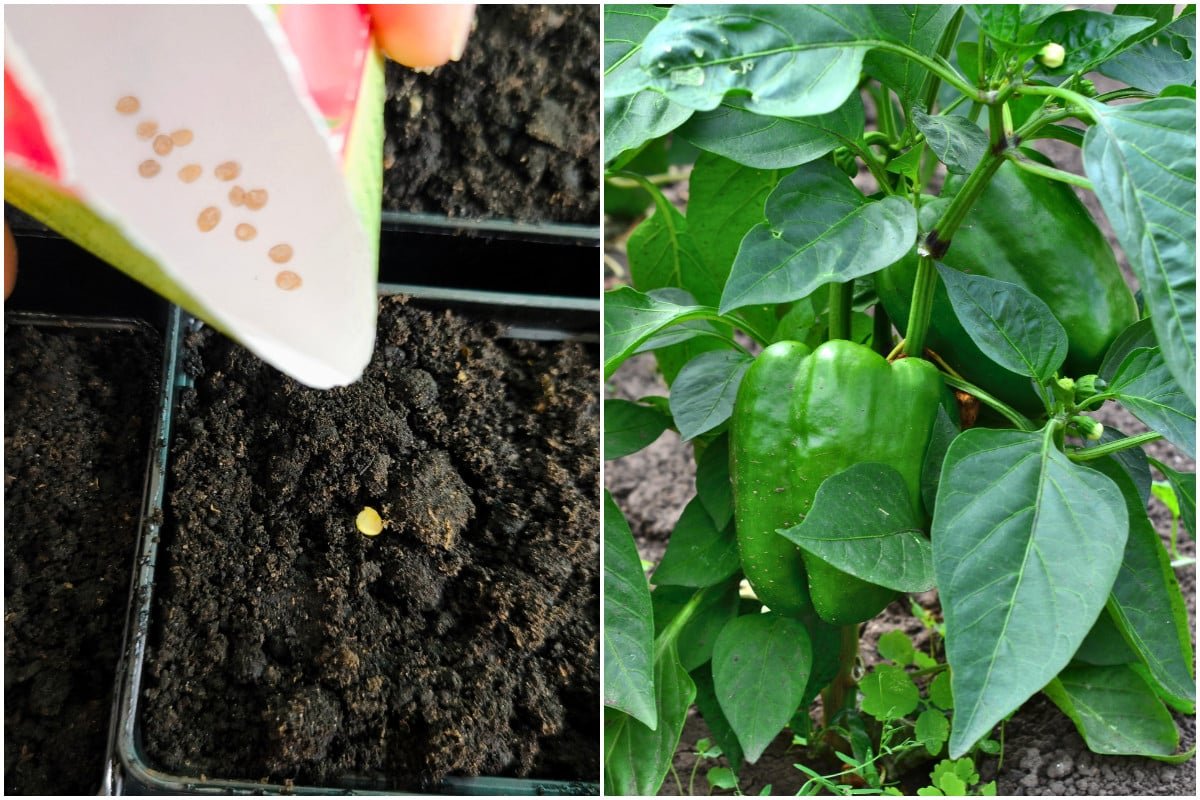

Peppers are a popular choice for home gardeners to start from seed. Whether you’re a fan of sweet peppers or you love the heat of a good hot pepper, there are a few things you need to know about these popular nightshades. Get to know them a little better, and it will be that much easier to grow a peck of pickled peppers.
Peppers Can Be a Little Tricky
Peppers can be a little tricky to get the hang of. It took me a few years to figure out how to grow them well enough to make it worth my time. The first time I tried to grow bell peppers, I ended up with two or three tiny, thin-walled, bitter peppers and nearly gave up.
But after picking my dad’s brain and asking a neighbor who always grew massive glossy green bell peppers and jalapenos, I started to have better results. Then it was a matter of tweaking a few things here and there. Now peppers are a regular part of my garden, and more importantly, part of my kitchen.
If this is your first time growing peppers or you’ve been struggling, hopefully, we can get you sorted.
1. Peppers Require Patience
Many gardeners get into starting their own seeds indoors to save money and have more options. And it makes sense for peppers. If you were to buy your peppers from a nursery, you might find a dozen different varieties of sweet and hot peppers. But when you grow peppers from seed, the variety is endless.
Seriously, it’s worth it just to try new peppers. I’ve always thought peppers, as a veggie, were kind of boring. But that’s because I was basing my opinion on what you can find at the store.
Are you missing out?
Join the 54,391 other gardeners who get timely gardening tips, tutorials and tasks from Rural Sprout delivered right to their inbox.We use your personal data for interest-based advertising, as outlined in our Privacy Notice.Subscribe
When I started growing them for myself, I was introduced to so many different types and flavors. And as I started to experiment with hot peppers, I realized there’s a “hot” pepper out there for everyone, whether you want the mildest of “Oh!” or a nuclear-level event that takes days for your mouth to cool off.
There are thousands of cultivated pepper varieties to try, with new ones being introduced every year.
However, something that no one warns you about is the patience required. Starting peppers from seed requires a bit more patience, and if you truly want to do the job right, it requires some extra equipment. Peppers take longer to germinate than most of the other popular vegetables to start from seeds. They’re on my list of slow-germinating plants.
This long germination period can leave many gardeners scratching their heads, wondering if they’ve done something wrong. So before you grab that seed packet, ready to start over keep this in mind:
Sweet peppers will germinate as soon as seven days, but you’re often looking at closer to two weeks. Hot peppers can take anywhere from two weeks to a month, keeping in mind that the hotter the pepper, the longer it takes to germinate.
2. They Like it Hot
The most important factor in getting peppers to germinate successfully is soil temperature. Again, unlike so many of the other seeds we start indoors, peppers need much warmer soil temperatures to sprout. Sweet peppers are on the lower end, between 75F and 85F, and hot peppers are upwards of 90F and 95F. Don’t forget they need consistently moist soil, not water-logged, and light, too.
This is where the equipment comes in. The easiest way to achieve these soil temperatures is with a heated seedling mat. Trust me, it’s going to save you time and many headaches.
Can you germinate pepper seeds without one? Yes, but it takes much longer and the chances that you will have to start over because your seeds rotted in too cool soil are much higher.
Heated seedling mats are very affordable. This is the one I use, and I love it. I have three in my seed-starting setup in my basement. You can even get a small square mat if you just need it for peppers, although they do speed up germination for other seeds, too. This is one gardening purchase that pays for itself the moment you see all your pepper seeds have germinated successfully.
3. Start Peppers Early
Okay, we’ve covered the fact that peppers take forever and a day to germinate. Unfortunately, once they pop their little green heads above the soil, that trend continues. Peppers are definitely long-season plants.
If you live in an area of the country that has a shorter growing season, you’ll definitely want to start peppers as soon as possible. You could easily start them in December and have perfectly-sized seedlings to go out in your garden. (I’m in zone 6b here in Pennsylvania, and I start my peppers at the beginning of January.)
Unlike tomato or cucumber seedlings that will happily take over your windowsill if started too early, peppers are pretty well-mannered. They’re the one seedling where it’s okay if you start them “too early.”
4. Give ‘Em a Pinch
Once it has warmed up and you’ve reached your projected last frost date, it’s time to plant your peppers outdoors. (After you have hardened them off, of course.) Give them time to recover from their transplant shock, and they’ll start growing again.
After a couple of weeks, the plant will naturally begin to put its energy into growing taller. But here’s a cool tip I learned from my neighbor years ago: if you want tons of peppers, the smartest thing to do is to snip off the top of the plant.
This simple cut tells the plant to put its energy into growing out rather than up. Now it will grow bushier, and in the end, produce a lot more flowers that will turn into peppers. Click here to learn the best time to do it and how.
Speaking of flowers, pepper diehards know it’s a good idea to pinch off the first few flowers that show up. Unless you live somewhere with an exceptionally short season, you want to encourage the plant to put its energy into growing bushy before it starts making peppers. Pinch off flowers until the plant has started to get nice and full.
5. Do You Like Your Peppers Hot? Do This for Insane Heat
People who grow hot peppers are a special kind of crazy. You have to be, if the whole point of growing a plant is to melt your face off. (I love hot peppers, but I’m a bit of a chicken. I grew Carolina Reapers once. I was so scared to eat them that I ended up giving them to a friend who makes hot sauce.)
Obviously, we choose which variety of peppers we want based on flavor and that all-important Scoville Index.
Did you know you can influence the heat of your finished hot peppers by how you grow them?
Generally speaking, we don’t want to put a ton of stress on our plants. We want to make sure they have plenty of nutrients, water and sunlight so we get the most peppers from each plant. But by introducing a little controlled stress to hot pepper plants, you can maximize their capsaicin production.
Fertilize and water them as you normally would, until they start producing fruit. Once fruit has set, ease up on watering them. Water the plants only when necessary. You want to create light drought-like conditions. This kicks capsaicin production into high gear, giving you scorching peppers.
6. Ripen on the Vine for the Best Flavor
While peppers are members of the Solanaceae family, like tomatoes, they grow quite differently. Tomatoes are high-ethylene-producing fruits. Once the tomato reaches a certain growth point – the breaker stage – it can be picked, and the tomato will continue to ripen off the vine, giving you a delicious, flavorful tomato.
Peppers, on the other hand, are low-ethylene producers. What this means for your fruit is that they need to fully ripen on the vine before you pick them. Doing this is going to give you the best flavor. That goes for both sweet and hot peppers. Patience is required!
You may have seen the popular kitchen hack that instructs you to place slightly underripe peppers near an apple or a banana (both high-ethylene-producing fruits). Yup, doing so will ripen the pepper further; however, it won’t taste nearly as good as a pepper that has been ripened on the vine. (Save this hack for store-bought peppers in the winter.)
7. Peppers Prefer Their Water to Be Goldilocks Level
Remember those thin-walled, bitter peppers I mentioned? A big problem I ran into was inconsistent watering. Peppers like their water like Goldilocks likes her porridge – just right. Peppers need the soil to be consistently moist to grow well. That works out to about one to two inches of rain per week.
Problems start when peppers dry out and stay dry or when the soil is completely waterlogged.
The best way to give peppers what they want is to rely on your watering can rather than Mother Nature and to mulch around your peppers.