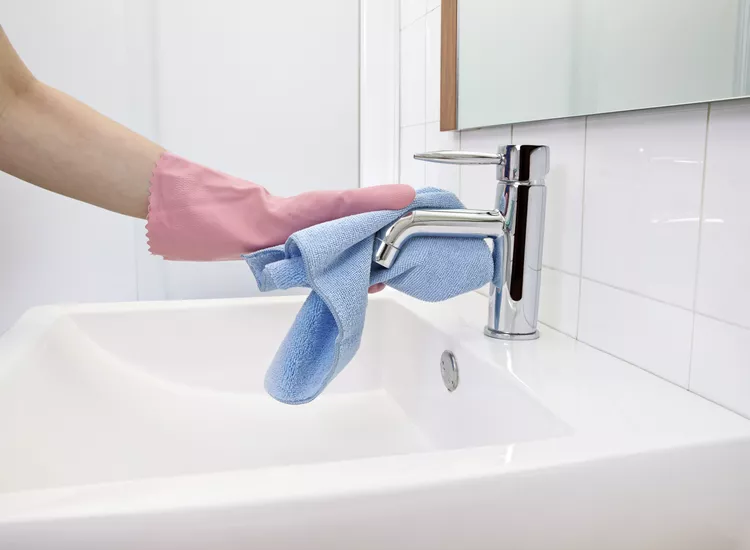

Toothpaste, soap, food splatters, and dirt can dull your faucets and make them look grimy. If a crusty white buildup remains after cleaning your faucet, that’s calcium buildup. Hard water causes these mineral deposits, also called limescale. As water left on a faucet after use evaporates, calcium and other minerals are left behind. Over time these minerals accumulate and appear as a chalky coating that can be tough to remove. Bringing the shine back to your faucets isn’t impossible though, so learn how to clean calcium buildup without damaging your faucets and how you can keep it from happening again.
How Often To Clean To Prevent Buildup
Clean your faucets every one or two months to keep them clean and prevent tough buildup. If you have hard water, you may want to lean toward monthly cleanings. Clean more often if you notice weaker water flow, since this can be a sign of buildup.
Considerations Before Getting Started
Calcium buildup that’s not tended to can eventually clog the aerator that helps water flow smoothly from the faucet, reducing water pressure and flow. Besides affecting the performance of your faucet, it can also damage your faucet’s finish if it’s left to sit for extended periods. Vinegar is the best way to dissolve calcium buildup, but it’s not safe for every faucet. Its acidity can damage finishes like gold, polished or lacquered brass, matte black, and oil-rubbed bronze.
What You Need
- Dish soap
- Sponge
- White vinegar
- Small resealable plastic bag
- Rubber bands
- Scrub brush or old toothbrush
- Microfiber cloth
- Paper towels (optional)
- Baking soda (optional)
- Small bowl (optional)
- Hydrogen peroxide (optional)
How To Clean Calcium Buildup With Vinegar
- First, clean the body of the faucet with warm soapy water and rinse.
- Partially fill a resealable plastic bag with a mixture of equal parts vinegar and water.
- Submerge the faucet head and nozzles into the solution in the bag and secure it with rubber bands.
- Let sit for 30 minutes to a few hours, depending on how much buildup has accumulated.
- Remove the bag and scrub any remaining residue with a scrub brush or toothbrush.
- Rinse the faucet head with water and wipe it dry with a clean microfiber cloth.
- Alternatively, you can wet a cloth or paper towel with the solution and secure it to the faucet head with rubber bands. Let it sit for at least 30 minutes, scrub if needed, rinse, and dry.
How To Clean With Baking Soda And Peroxide
- First, clean the body of the faucet with warm soapy water and rinse.
- Remove the aerator and soak it in a bowl of white vinegar while you clean the rest of the faucet.
- In a small bowl, make a thick, spreadable paste with three parts baking soda and one part water, or combine the baking soda with hydrogen peroxide for more powerful cleaning.
- Spread the paste on the faucet and let it sit for 30 minutes.
- Scrub any buildup with a toothbrush, then rinse with water and dry with a clean cloth.
- Use the toothbrush to scrub the aerator to unclog any holes if needed. Screw the aerator back onto the faucet head, then run the water to flush out any debris.
Tips For Keeping Calcium Buildup Away Longer
A few simple habits can keep calcium from accumulating too much and make your cleaning routine easier. Wipe your faucets down with a rag or cloth after each use to keep water from leaving a chalky residue as it dries. You can tuck this cloth inside the cabinet and replace it with a fresh one as needed. Soak the faucet in vinegar and water each month to keep mineral deposits in check. Using aerators that filter water can also help since it can reduce minerals from the water as it flows from the faucet.