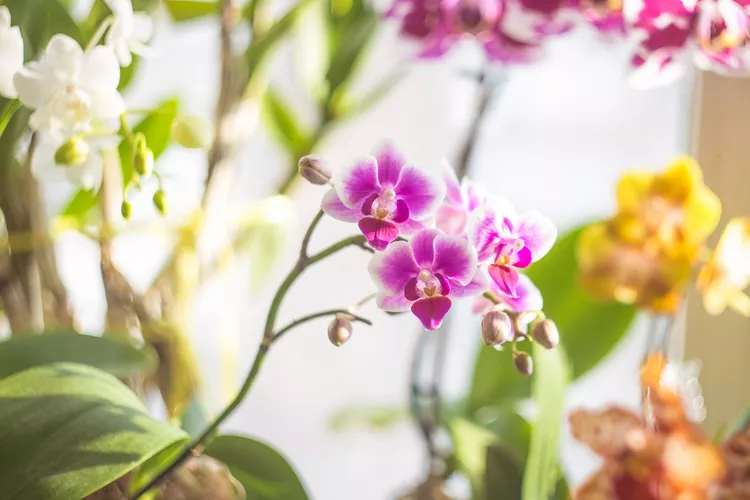

For those who do not have a green thumb or want something with zero maintenance, there are lots of amazingly realistic fake plants out there. However, if you have an interest in gardening, there’s a whole array of indoor flowering plants—some relatively low-maintenance—that can add a little color to any corner of your house.
You don’t have to be a gardening expert to keep these blossoming plants happy, according to Bloomscape’s “plant mom,” horticulturist Joyce Mast. “Caring for these plants is generally the same as for other indoor plants,” she says. “Most indoor flowering plants are able to reside in various lighting situations in your home, even in the direct sunlight.”
First off, maintain your plant by removing spent blooms or yellowing foliage. This makes sure the energy is directed toward producing new blooms. Mast also recommends keeping the soil somewhat moist while avoiding standing water at the bottom of the pot—which can cause issues for the plant’s root system.
If you’re ready to be a budding horticulturist, here are some flowering plants you can easily grow indoors and proudly display on plant stands.
- Joyce Mast: Horticulturalist and “plant mom” for Plant Retailer Bloomscape
29 Low-Maintenance Houseplants Most Likely to Survive All Year Long
01of 20
Orchids
:max_bytes(150000):strip_icc():format(webp)/indoor-flowering-plants-2000-8c6b1b408784453da9a5150cbef569eb.jpg)
- Water: Twice weekly (when planting mix is dry) during the warmer months, once weekly during the winter
- Soil: Needs orchid-specific soil mixes
- Light: Bright indirect light
Orchids are probably what come to mind when you think of indoor flowering plants, and they have a finicky reputation. But they’re actually not too difficult to grow with the right orchid care tips. The main tricks? Use the right soil, and make sure to water the plant just as its soil runs dry.
02of 20
Kalanchoe
:max_bytes(150000):strip_icc():format(webp)/how-to-care-for-kalanchoe-2000-4301abb111884e54b092e565f16c44fc.jpg)
- Water: Allow soil to dry out before watering
- Soil: Succulent potting mix
- Light: Bright, indirect light
The brightly colored blooms make kalanchoe an indoor plant standout. “It does well in bright sun, so placing it on a windowsill facing southwest should not be a problem,” Mast says. “This is a succulent-like plant, so it does not need much water.”
03of 20
Hydrangeas
:max_bytes(150000):strip_icc():format(webp)/hydrangea-arranging-ideas-copy-2000-a7f884e983054d808f8746deaaf5e472.jpg)
- Water: Water when soil is almost dry to the touch three inches below the surface
- Soil: Well-draining, slightly acidic soil
- Light: Direct sun
Hydrangea varieties are a summer garden staple, but these shrubs can also brighten up a corner of your house if they’re potted. They thrive best in direct sun, with moist soil.
“If you see the bloom sagging a bit, place the pot in a sink or bucket with approximately two to three inches of water so the soil can soak up the moisture through the drainage hole for about 45 minutes,” Mast says. “Allow the water to drain and set back on the saucer in the sunlight.”
04of 20
Bromeliads
:max_bytes(150000):strip_icc():format(webp)/bromeliad-aechmea-pink-c26dc22f4bdb45b7b99135102d33836c.jpg)
- Water: Once every week or two weeks during the warm months, every two to three weeks during cooler months
- Soil: Potting mix specifically for bromeliads
- Light: Bright indirect or direct light
“Bromeliads come in a variety of vibrant colors and are easy to care for,” says Mast. “They don’t require much water-most likely every two weeks or so, and the blooms can last up to two to three months.” She recommends two in particular-the Aechmea Fasciata Pink and the Bromeliad Tillandsia Summer.
05of 20
Chrysanthemums
:max_bytes(150000):strip_icc():format(webp)/chrysanthemums-GettyImages-578209215-cc6e46834a8447fdac186e92178c0cf4.jpg)
- Water: Thorough watering to keep soil moist
- Soil: Well-draining, slightly acidic potting mix
- Light: Bright, indirect light
Chrysanthemums might be right up your alley if you’re looking for an easy indoor flowering plant. “They require very little extra care other than keeping the soil moist and making sure the pot has good drainage,” says Mast.
How to Grow and Care for Mums—a Fall Classic
06of 20
Cyclamen
:max_bytes(150000):strip_icc():format(webp)/GettyImages-533804193-358764099f8f449e994f89185c8e9d02.jpg)
- Water: Keep the soil moist, but allow water to drain
- Soil: Loamy potting mix
- Light: Bright, indirect light
If you’re looking for a plant to brighten up your fall and winter, cyclamen might be the perfect fit. “The gorgeous, bright heart-shaped blooms will likely last around eight weeks given the right growing conditions,” Mast says. “Keep the soil moist and make sure there is no standing water in the pot.”
07of 20
Anthurium
:max_bytes(150000):strip_icc():format(webp)/GettyImages-595905167-388e340a7be8457eb74b3945ac6c5946.jpg)
- Water: Let the soil dry out halfway before watering
- Soil: Use orchid potting mix, or a coarse, well-draining potting mix
- Light: Bright, indirect light is best, but can tolerate low light
“The anthurium symbolizes hospitality with its open heart-shaped flower and inspires happiness and abundance,” Mast says. They come in shades of red, pink, white, and purple, and need a warm, bright, and humid spot in your home.
08of 20
Zygo Cactus
:max_bytes(150000):strip_icc():format(webp)/christmas-cactus-7d122509407541cca503c04f98dd8d7f.jpg)
- Water: Let soil dry completely before watering
- Soil: Loamy potting mix or cactus mix
- Light: Indirect, diffused light
Sometimes known as the Christmas cactus, this indoor blooming plant features brightly-colored blooms and a succulent vibe. “The Zygos are unique cacti that feature long segmented vines that will spill over the pot, making this a great option to place in a plant hanger or on a shelf,” Mast says. “They can take the full sunlight and do not require much water.”
09of 20
Gloxinias
:max_bytes(150000):strip_icc():format(webp)/GettyImages-1267339071-6cbb25a0c696436281bc1e34560efd36.jpg)
- Water: Keep soil moist
- Soil: A peaty potting mix
- Light: Bright sunlight
These easy-to-care-for indoor flowering plants are relatives of the African violet, Mast says. The blooms last about two months, and the plants prefer bright, filtered sunlight and moderately moist soil.
10of 20
Poinsettia
:max_bytes(150000):strip_icc():format(webp)/poinsettia-care-GettyImages-637106292-3854a0d2a0a54a86af7e07790e2f74c8.jpg)
- Water: Water when soil is dry to the touch
- Soil: Peaty potting mix
- Light: Bright, indirect light
Fun fact: The actual flowers on the poinsettia are the tiny yellow blooms in the middle. The red “petals” are actually called bracts. Poinsettias are a holiday-season staple, but can add color to your home long after the New Year.
11of 20
Paperwhites
:max_bytes(150000):strip_icc():format(webp)/paperwhites-indoor-floweorsGettyImages-1912180565-42f852d8d2a6499e902108285d7ee652.jpg)
- Water: Keep soil slightly moist, or provide access to water
- Soil: Potting soil or pebbles with water
- Light: Bright sunlight
Another forced bulb favorite for the winter, paperwhites feature delicate white blooms with a beautiful fragrance. You can grow paperwhites in potting mix, or plant the bulbs in with pebbles, so the roots can access water beneath.
12of 20
Crown of Thorns
:max_bytes(150000):strip_icc():format(webp)/GettyImages-1132370368-0bdd88311b1542168b3e9e23d65fc527.jpg)
- Water: Water when the top inch of soil is dry
- Soil: Cactus potting mix
- Light: Bright, direct sunlight preferred
This pretty plant comes from the same flower genus, Euphorbia, as poinsettia. It’s a succulent that can bloom throughout the year, as long as its growing conditions are met.
13of 20
Peace Lily
:max_bytes(150000):strip_icc():format(webp)/humidity-plants-peace-lily-154a011e714e4f2d92222411a19a9be9.jpg)
- Water: Water when soil is slightly dry
- Soil: Rich, well-draining soil
- Light: Indirect light
The peace lily is a popular houseplant pick, and features long-lasting white blooms that’ll thrive for weeks. Just keep in mind that this plant can be particularly toxic to pets, so keep your peace lily out of reach of your dogs and cats.
14of 20
African Violets
:max_bytes(150000):strip_icc():format(webp)/GettyImages-168249853-d62f753130bd42f8ab23074075eef20c.jpg)
- Water: Soil should stay moist, while avoiding overwatering
- Soil: Light, well draining potting mix—like an African violet mix
- Light: Bright, indirect light
If you’re looking for flowers you can grow indoors and enjoy year-round blooms, the old-fashioned (and lovely) African violet may be just your cup of tea. One little quirk of African violets—they should be watered from the bottom, by placing the pot with a drainage hole in a saucer of water for up to a half hour to let the soil absorb water. Watering the plant from above could lead to crown rot.
15of 20
Gardenia
:max_bytes(150000):strip_icc():format(webp)/GettyImages-1281645358-6c8a8e50f6d547e98f4e35ed7cc6522a.jpg)
- Water: Soil should stay moist, while avoiding overwatering
- Soil: An acidic, peaty potting mix
- Light: Bright, indirect light
This dramatic plant features big, rose-like blooms set against vivid green foliage for a pretty addition to your indoor plant collection. Despite its reputation as a high-maintenance plant, you can help your gardenia thrive by following the care instructions fully.
16of 20
Jasmine
:max_bytes(150000):strip_icc():format(webp)/GettyImages-492629029-1c39831f29744c46b3633936da4fa358.jpg)
- Water: Water when top half inch of soil is dry.
- Soil: A soil mix that includes bark, peat, or perlite.
- Light: Bright indirect.
This beautifully fragrant plant is a favorite houseplant and yard plant. To get jasmine to bloom indoors, make sure you provide a period of dormancy—you can do this in the fall by making sure the plant gets cool, sunny days, and cool dark nights.
17of 20
Geraniums
:max_bytes(150000):strip_icc():format(webp)/GettyImages-1393678020-a6b9022ac8d649349595130b7ffa97e3.jpg)
- Water: Moist but not over-saturated
- Soil: Mulch/peat works well
- Light: Bright, direct light
While they may be seen as “common,” these charming plants are exceptionally easy to care for, thrive in containers, and come in a tonnnn of varieties. Check out specialty growers on Etsy to get inexpensive rooted cuttings of special variegated varieties.
18of 20
Wax Begonia
:max_bytes(150000):strip_icc():format(webp)/GettyImages-1222811134-b35b8d6298ec40a0bc35e44977e0000e.jpg)
- Water: Keep soil moist but don’t overwater
- Soil: A type that is high in organic matter
- Light: Bright, indirect light. Too much direct light can cause the leaves to scortch
Begonias have lots of gorgeous flowering varieties (and plenty with leaves that are just as stunning), including the wax Begonia. These never go dormant, as long as you properly take care of them, and are summer bloomers. Make sure if they’re outside during the warmer months that you bring them in when it starts to get chilly out!
19of 20
Pansies
:max_bytes(150000):strip_icc():format(webp)/GettyImages-523683260-31c53490f94e4ae985d5d9a9e3c0d48c.jpg)
- Water: They appreciate consistently moist soil without over-watering
- Soil: Slightly acidic to neutral with lots of nutrients
- Light: Indirect
Pansies can be grown as perennials but often don’t do well after the first year unless the conditions are justtttt right. They look pretty in containers, and aside from the basic varieties you see in every window box, there are plenty of more unique types, like these pretty red and yellow ones.
20of 20
Amaryllis
:max_bytes(150000):strip_icc():format(webp)/amaryllis-7f6ec49ef97648eda5484c62119da0d2.jpg)
- Water: Keep soil moist, without overwatering
- Soil: Sandy, loamy potting mix
- Light: Direct morning sun, and bright, indirect light
These forced bulbs are popular in winter—especially around the holidays. To encourage the bloom, place them in a sunny, southern-facing window.
The Best Places to Buy Plants Online, Vetted and Approved by Real Simple
Frequently Asked Questions
- Are there indoor plants that flower year-round?Yes, several types of indoor plants can flower year-round. Here are three:
- Jasmine (Jasminum Polyanthum). The pink variety of Jasmine can thrive indoors all year if you keep it moist and make sure it gets a lot of sun.
- African Violets (Streptocarpus sect. Saintpaulia). This flower will produce deep purple or magenta blooms throughout the year if its needs (moderate sun and water) are met.
- Crown-of-Thorns (Euphorbia milii). This succulent will produce its colorful blooms (red, yellow, white, orange, or pink) year-round, especially if it receives at least three hours of direct sunlight every day.
- What is the longest-blooming indoor plant?Anthuriums bloom for two to three months at a time, though their blooms aren’t technically flowers; they are actually colorful, waxy leaves. You can help your anthuriums thrive by keeping them in an area with plenty of sunlight and humid conditions.
- What are some low-light indoor flowering plants?Several types of indoor flowering plants can thrive in low light. Here are three:
- Butterfly orchids (Phalaenopsis). This flower thrives in indirect light or shade. Just make sure to always keep it away from heating and air conditioning vents, water it once a week, and mist the leaves regularly.
- Gloxinia (Sinningia speciosa). This flowering plant blooms in deep colors ranging from purple to red to orange, and it needs very little light to do it. Don’t overwater it, though. Just give it enough water to moisten the soil and don’t wet the leaves.
- Clivia (Clivia miniata). This house plant will produce red, yellow, or orange blooms in the shade and doesn’t require much water.