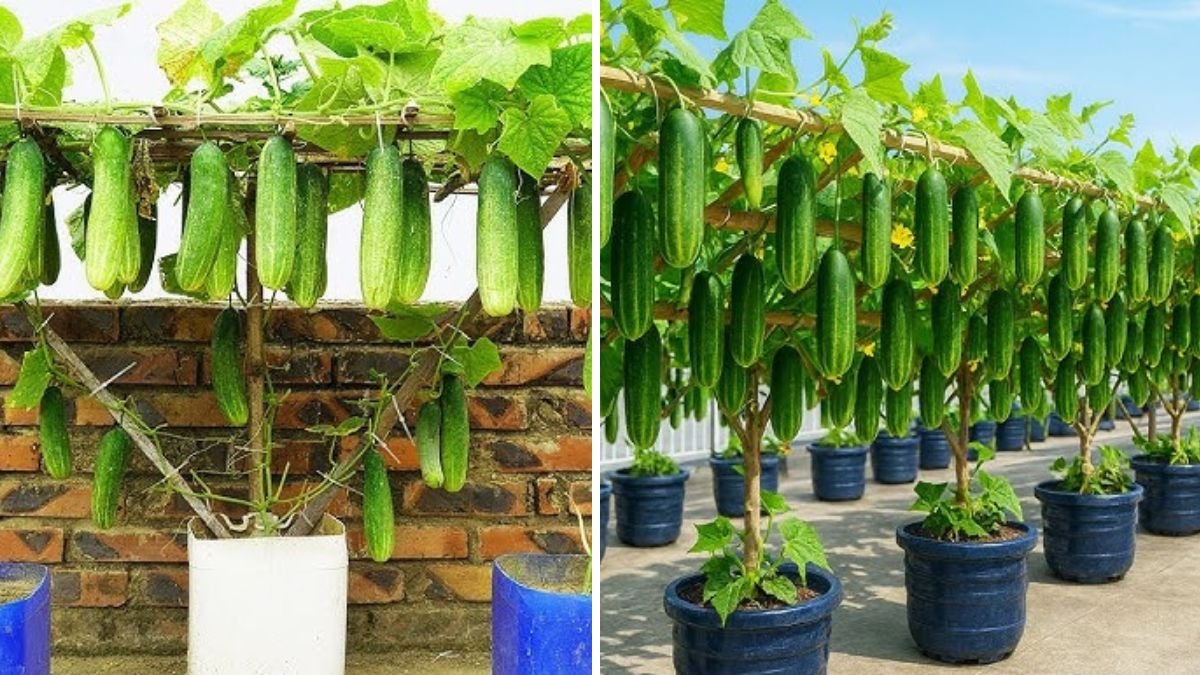

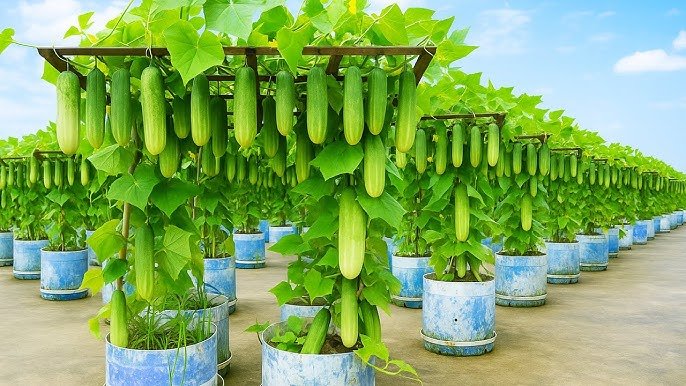
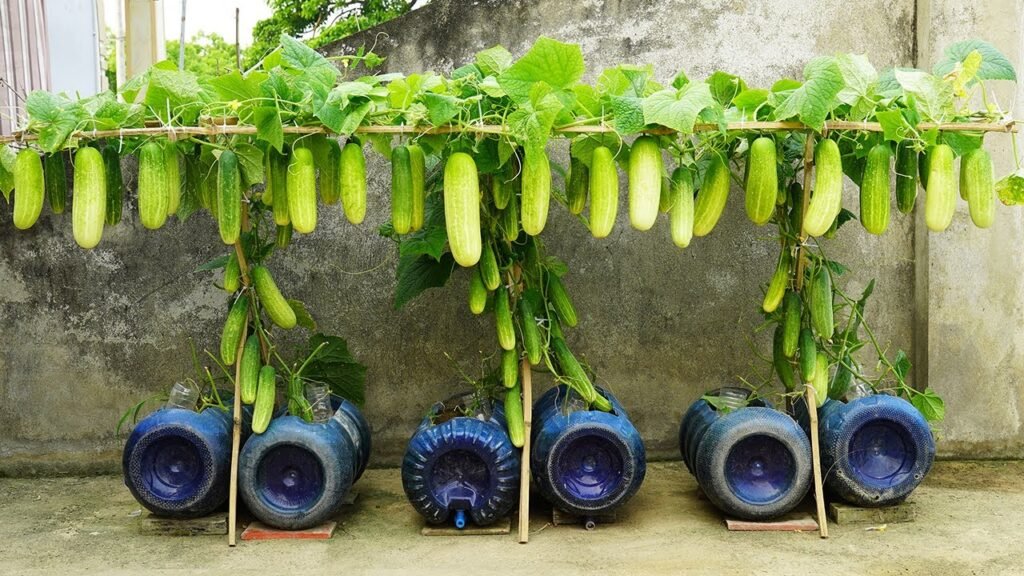
Growing cucumbers at home doesn’t require expensive pots or a large garden. In fact, one of the smartest gardening hacks is using rejected or discarded containers—old buckets, paint tubs, broken baskets, or any throwaway plastic items that would otherwise go to waste. With the right preparation, these containers can become perfect mini-gardens for fresh, juicy cucumbers.
In this 1200-word guide, you’ll learn how to grow healthy cucumbers at home using rejected containers—step-by-step, from soil preparation to harvesting. Anyone can do it, even if you have limited space or gardening experience!
🌱 Why Grow Cucumbers in Rejected Containers?
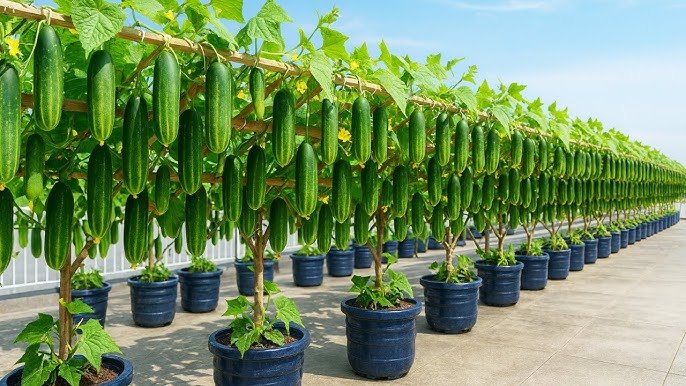
Cucumber is an extremely rewarding vegetable for home gardeners. It gives fast results, grows well in small spaces, and performs beautifully in containers. Using rejected items instead of new pots adds extra benefits:
✔ Eco-Friendly Gardening
Upcycling containers prevents plastic waste and supports sustainable gardening.
✔ Budget-Friendly
You don’t need to spend money on fancy pots—almost anything can be used.
✔ Space-Saving
Perfect for balconies, rooftops, terraces, and small home gardens.
✔ Portable
Containers can be shifted easily to sunlight or protected areas during rains.
✔ Faster Warming of Soil
Plastic maintains warm soil, helping cucumbers grow quicker.
🌿 Best Types of Rejected Containers You Can Use
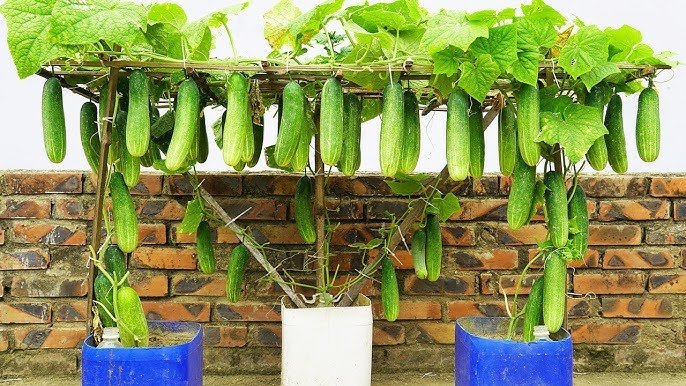
You can use almost any large container. Here are some excellent options:
- Old paint buckets (10–20L)
- Broken tubs or laundry baskets
- Rejected water cans
- Damaged plastic pots
- Large plastic bottles
- Rejected dustbins
- Waste storage containers
Container Size Requirement
Cucumber plants need deep and wide space for roots.
- Minimum depth: 12–14 inches
- Width: 10–12 inches
- Drainage holes: Must have 4–6 holes at the bottom
If the container does not have holes, drill or melt them using a hot metal rod.
🌱 The Perfect Soil Mix for Cucumber
Cucumbers grow best in soft, airy, nutrient-rich soil. To prepare ideal potting mix:
Potting Mix Recipe
Mix the following:
- 40% garden soil
- 30% compost/vermicompost
- 20% cocopeat
- 10% sand or perlite
Then add:
- 1 handful of neem cake
- 1 tablespoon bone meal (optional)
- 1 handful wood ash
This mix ensures:
✔ Good drainage
✔ Proper moisture retention
✔ High nutrition
✔ Disease-resistant soil
🥒 Choosing Your Cucumber Seeds
You may grow:
Hybrid varieties
- Fast growth
- High yield
- Disease-resistant
Desi/Local varieties
- Better taste
- Affordable seeds
- Suitable for most climates
Whichever you choose, always:
✔ Buy from a trusted shop
✔ Select disease-free seeds
🌱 How to Plant Cucumber Seeds in Rejected Containers
1. Fill the container with potting mix
Leave 2–3 inches gap from top.
2. Make small holes for seeds
- 1-inch depth
- 3 holes per container (triangular pattern)
3. Add 1 seed per hole
Don’t add multiple seeds; they compete.
4. Cover lightly with soil
Do not press hard.
5. Water gently
Keep soil moist, not soggy.
6. Place the container in full sunlight
6–7 hours of light is essential.
Within 5–7 days, tiny seedlings will appear!
🌿 Light & Temperature Requirements
Cucumber loves warm, sunny weather.
- Ideal temperature: 20–32°C
- Sunlight: 6–8 hours daily
Keep container in:
✔ Balcony
✔ Rooftop
✔ Terrace
✔ South-facing window
If sunlight is strong, provide light shade during afternoon.
💧 Watering Schedule
Cucumber needs regular moisture, especially during fruit formation.
Watering rules:
- Water daily in summer
- Every alternate day in winter
- Do not overwater
- Keep soil moist but never waterlogged
- Water at the base, not on leaves
Mulching with dry leaves or coco chips helps retain moisture.
🌿 Support / Trellis System for Better Growth
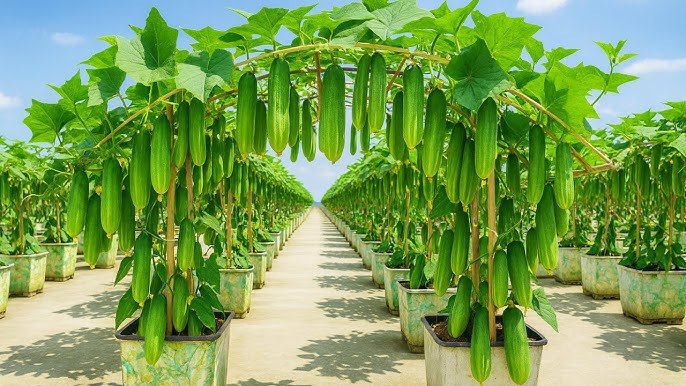
Cucumber vines need support to grow vertically. This prevents rot and increases yield.
Use:
- Bamboo sticks
- Old ropes
- Wire mesh
- Leftover iron rods
- PVC pipes
- Old grill pieces
A vertical trellis saves space and keeps fruits clean.
🌱 Fertilizer Schedule for Heavy Harvest
Cucumbers are heavy feeders. Feed them regularly:
Every 15 Days:
- 2 handfuls of compost
- 1 handful neem cake
Every 20 Days:
- Liquid fertilizer (any one)
- Jeevamrut
- Compost tea
- Mustard cake liquid
- Banana peel liquid
Once a Month:
- Add wood ash (1 handful)
This boosts flowering and fruiting.
🐛 Pest & Disease Control
Common issues:
1. Aphids / whiteflies
Solution:
- Neem oil spray 5 ml + 1 liter water
2. Powdery mildew
Solution:
- Mix 1 tsp baking soda + 1 liter water and spray
3. Yellowing leaves
Cause:
- Overwatering or nutrient deficiency
Fix: - Add compost + reduce watering
🌼 Flowering & Pollination
Cucumber plants produce:
- Male flowers (first to appear)
- Female flowers (with small cucumber at base)
Poor pollination?
Use:
✔ Hand pollination
✔ Place container near flowering plants to attract bees
🥒 Harvesting Time
You can start picking cucumbers:
- 45–55 days after planting
- Harvest when green, firm, and medium size
- Do not wait until they turn yellow
Regular picking increases new fruit production.
♻ Why Rejected Containers Work Amazingly Well
Using waste items teaches you smart, sustainable gardening:
- Converts trash into useful planters
- Saves money
- Reduces plastic pollution
- Gives new life to household waste
- Encourages innovative gardening styles
Your container garden becomes both eco-friendly and productive.
🌿 Final Thoughts: Grow Fresh Cucumbers from Waste!
Growing cucumbers at home using rejected containers is not only easy but also deeply satisfying. You create fresh, organic food while reducing waste—turning everyday junk into a productive garden.
This method is perfect for:
✔ Urban homes
✔ Small balconies
✔ Beginners
✔ Budget gardeners
✔ Eco-conscious families
With a little care and creativity, your rejected container can produce dozens of fresh, crunchy cucumbers in just a few weeks!
If you’d like, I can also create:
✅ A short YouTube script
✅ A thumbnail title suggestion
✅ A step-by-step infographic