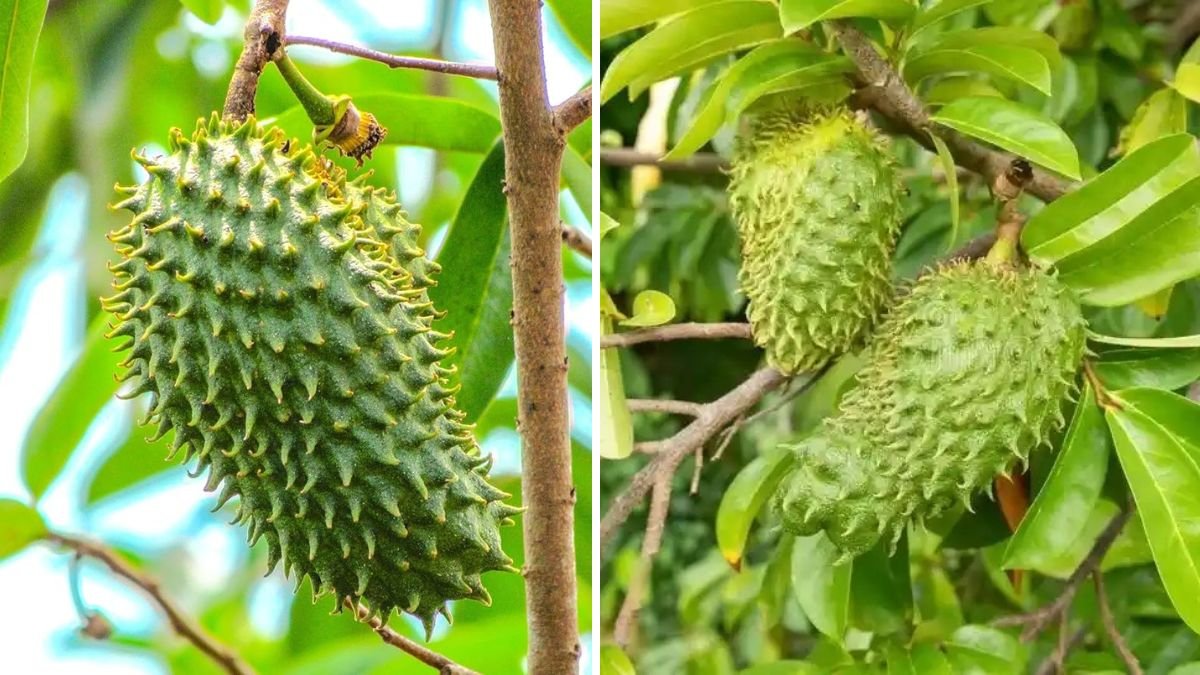

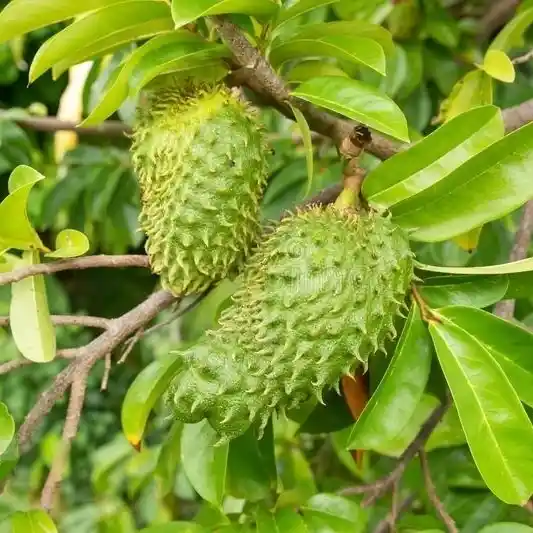
Grafting is one of the most powerful horticultural techniques ever discovered. With a simple cut and a careful match of tissues, you can completely transform the way a fruit tree grows—making it stronger, healthier, and far more productive. Among tropical fruit trees, soursop (Annona muricata) responds beautifully to grafting, allowing growers to enjoy earlier harvests, improved fruit quality, and a disease-resistant plant that thrives even in challenging conditions.
If you’ve been dreaming of harvesting large, sweet, spiky soursop fruits from your garden without waiting many years, this guide will show you exactly how to graft a soursop tree successfully. This new idea blends traditional grafting with simple, practical techniques anyone can do at home.
🌱 Why Graft a Soursop Tree?

Before diving into the step-by-step guide, it’s important to understand why grafting is so beneficial for soursop and other tropical fruit trees.
✔ 1. Faster Growth and Early Fruit Production
Seed-grown soursop trees can take 4–5 years to fruit.
A grafted soursop tree can fruit in 2 years or less.
This is because the scion (the top part) comes from a mature, fruit-bearing tree, so it carries the “memory” of maturity.
✔ 2. Better Disease Resistance
By choosing a hardy rootstock—usually a seedling soursop or a related Annona species like sugar apple—you give the new plant stronger roots and natural protection against soil problems.
✔ 3. More Reliable Fruit Quality
Seed-grown soursop trees may produce unpredictable fruit sizes, flavors, and yields.
Grafting preserves the exact genetics of the mother tree.
✔ 4. Grow in Challenging Soil
A strong rootstock adapts better to poor soil, drought, and fluctuating weather.
🌿 The Best Rootstocks for Soursop Grafting
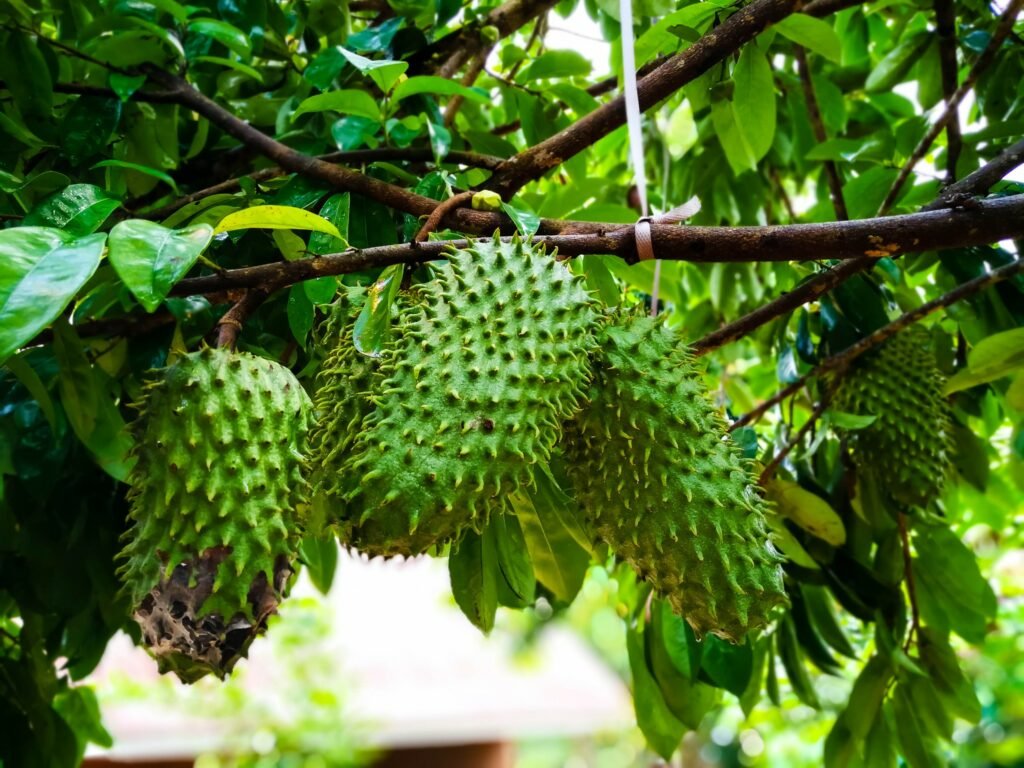
To increase your success rate, choose a compatible, strong rootstock. Here are the best options:
1. Soursop Seedling (Annona muricata)
- Highest compatibility
- Strong vigor
- Fast growth
2. Sugar Apple / Sitaphal (Annona squamosa)
- Excellent disease resistance
- Tolerates dry climates
- Creates a more compact tree
3. Cherimoya (Annona cherimola)
- Good root strength
- Cold-tolerant in mild climates
Sugar apple rootstock is often preferred because it grows well in many soil types and resists root rot.
🛠 Tools and Materials You Need
You don’t need expensive equipment. Just prepare:
- Sharp grafting knife or blade
- Sterilizer (alcohol or flame)
- Grafting tape / plastic wrap
- Fresh scion wood
- Healthy rootstock
- Pruning shears
- Optional: rooting hormone for enhanced healing
🍃 Step-by-Step Guide: How to Graft a Soursop Tree Successfully
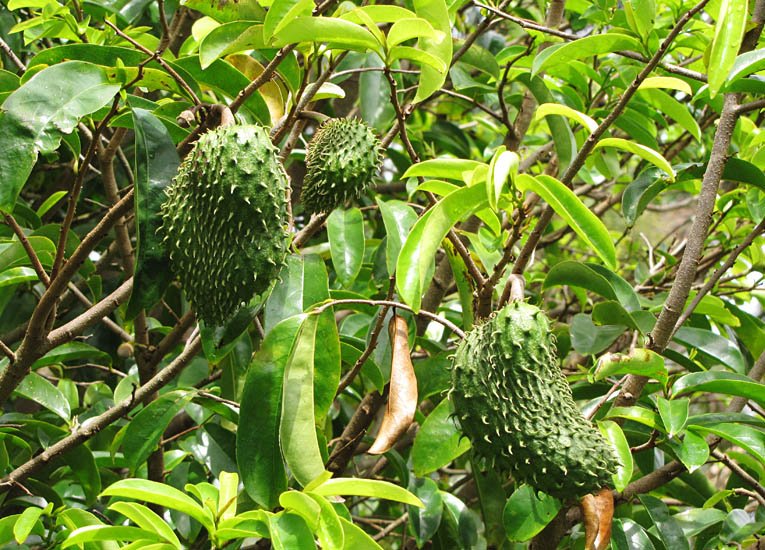
Below is the simplest and most effective method: Cleft Grafting. It works beautifully for soursop because the stems are soft and easy to cut.
Step 1: Choose the Right Scion
Pick a branch:
- 6–8 inches long
- Pencil thickness
- Taken from a healthy, fruiting soursop tree
- With 3–5 healthy buds
Cut the scion early in the morning and keep it moist until grafting.
Step 2: Prepare the Rootstock
Choose a young tree:
- About 1–1.5 years old
- Height: 2–3 feet
- Stem thickness: same as or thicker than the scion
- Disease-free and actively growing
Make a clean horizontal cut 20–30 cm from the ground.
Step 3: Make the Cleft Cut
Using a sterilized knife:
- Split the cut surface of the rootstock straight down the center.
- Create a 2–3 cm deep slit.
- Keep it clean and avoid tearing the bark.
This “cleft” will hold the scion securely.
Step 4: Shape the Scion
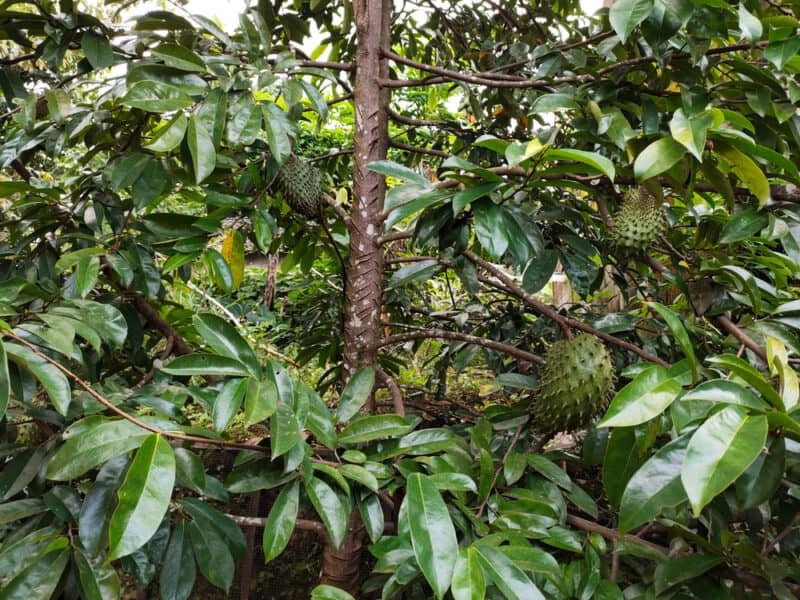
Trim the lower end of the scion into a wedge:
- Two equal, smooth sides
- 2–3 cm long
- Thin, even cuts
The wedge must fit tightly inside the rootstock slit.
Step 5: Insert the Scion
Carefully slide the wedge into the cleft:
- Ensure the cambium layers (green layer under the bark) touch on at least one side.
- Align the scion slightly toward one edge for perfect contact.
This alignment determines whether the graft takes or fails.
Step 6: Wrap and Seal
Use grafting tape to wrap the joint tightly. Seal all exposed surfaces to:
- Prevent infection
- Stop moisture loss
- Allow the tissues to fuse properly
If you live in a dry climate, lightly cover the graft with a plastic bag for 5 days to maintain humidity.
Step 7: Shade and Protect
Keep the grafted plant:
- Away from direct harsh sunlight
- Protected from strong wind
- Away from pests like ants or caterpillars
Place it in partial shade for the first 2 weeks.
Step 8: Watch for Signs of Success
After 10–20 days, you should see:
- Swelling buds
- Fresh green shoots
- The scion staying green and firm
This means the graft has taken!
If the scion dries out, becomes brown, or shrivels, you’ll need to retry.
🌳 Caring for Your Newly Grafted Soursop Tree
✔ Watering
- Keep the soil slightly moist
- Avoid waterlogging
- Water deeply twice a week until strong growth appears
✔ Remove Rootstock Shoots
Any shoots growing from the lower part of the rootstock must be removed immediately.
✔ Unwrap the Graft
After 30–45 days, slowly loosen the tape.
Do not remove it too soon—you could break the new connection.
✔ Fertilizing
After 45 days, feed with:
- Organic compost
- Liquid seaweed
- Low-nitrogen fertilizer
Avoid overfertilizing young grafts.
✔ Training the Tree
Allow only one strong central leader to grow at first.
Prune side shoots lightly to maintain shape and encourage sturdy growth.
🍈 When Will Your Grafted Soursop Tree Produce Fruits?
With proper care, a successful grafted soursop tree can:
- Flower within 18–24 months
- Produce full-size fruits by 2.5 years
- Yield larger, sweeter fruits consistently
A mature grafted tree can produce 30–80 fruits per year depending on climate and care.
🌟 Final Thoughts: A Simple Technique That Gives Powerful Results
Grafting a soursop tree is not only an innovative idea—it’s a practical, proven technique that dramatically boosts growth, fruit quality, and yield. Even beginners can succeed using the simple cleft grafting method described above.
By combining a strong rootstock with high-quality scion wood, you create a tree that:
- Grows faster
- Fruits earlier
- Resists disease
- Produces reliably and abundantly
Whether you’re a home gardener or a small-scale farmer, grafting soursop is one of the best investments you can make in your garden.