

Jackfruit—often called the king of tropical fruits—is famous for its massive size, rich sweetness, and impressive nutritional value. Whether you are a home gardener or a small farmer, growing a healthy jackfruit tree that yields large, high-quality fruits is a dream. But jackfruit trees grown from seed take many years to mature and do not always produce fruit similar to the parent plant.
That’s why growers are turning to an easy grafting technique that makes jackfruit trees fruit earlier, grow stronger, and deliver consistent, superior-quality harvests. This article explains the easiest and most effective way to graft jackfruit, step-by-step, even if you are a complete beginner.
🌳 Why Graft Jackfruit?

Before jumping into the method, it’s important to understand why grafting is so beneficial for jackfruit cultivation.
✔ Faster Fruit Production
Seed-grown jackfruit trees take 6–8 years to bear fruit.
Grafted trees can start fruiting in 3–4 years.
✔ True-to-Type Fruits
Grafted jackfruit trees produce fruits exactly like the parent tree — same taste, size, color, and quality.
✔ Higher Yield
A good graft ensures more fruits per season and a longer productive lifespan.
✔ Stronger Growth
Healthy rootstocks make the tree:
- More drought tolerant
- More disease resistant
- More adaptable to local soils
✔ Space-Saving for Home Gardens
Grafted trees remain shorter and easier to manage, making harvesting simple.
With these advantages, it’s easy to see why grafting is becoming the preferred method for jackfruit propagation.
🌱 The Easiest and Most Effective Jackfruit Grafting Method: Cleft Grafting
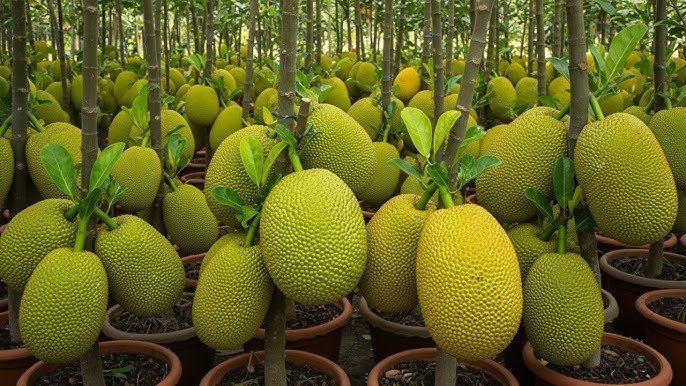
Among different grafting styles, the cleft graft is the easiest, most reliable, and most successful method for jackfruit.
It works well because:
- Jackfruit stems are thick and fibrous
- The union between scion and rootstock forms quickly
- The technique is simple even for beginners
Let’s break down the step-by-step process.
🧰 Materials Needed
To start grafting jackfruit, you will need:
- Healthy jackfruit rootstock seedling (6–12 months old)
- Mature scion from a good fruit-bearing tree
- Sharp grafting knife or blade
- Grafting tape or polythene strip
- Clean cloth
- Neem oil (optional for protection)
🌿 Step-by-Step Guide: Easy Jackfruit Cleft Grafting
1. Select a Healthy Rootstock

Choose a jackfruit seedling that is:
- 1–1.5 cm in thickness
- 30–60 cm tall
- Free of disease or insect damage
- Growing vigorously
A strong rootstock ensures a strong future tree.
2. Choose the Right Scion
Your scion should come from a healthy, high-yielding, mature jackfruit tree.
Ideal scion properties:
- 8–12 cm in length
- Pencil thickness
- Contains at least 2–3 buds
- Semi-hardwood stage
Cut the scion early in the morning for maximum moisture.
3. Prepare the Rootstock
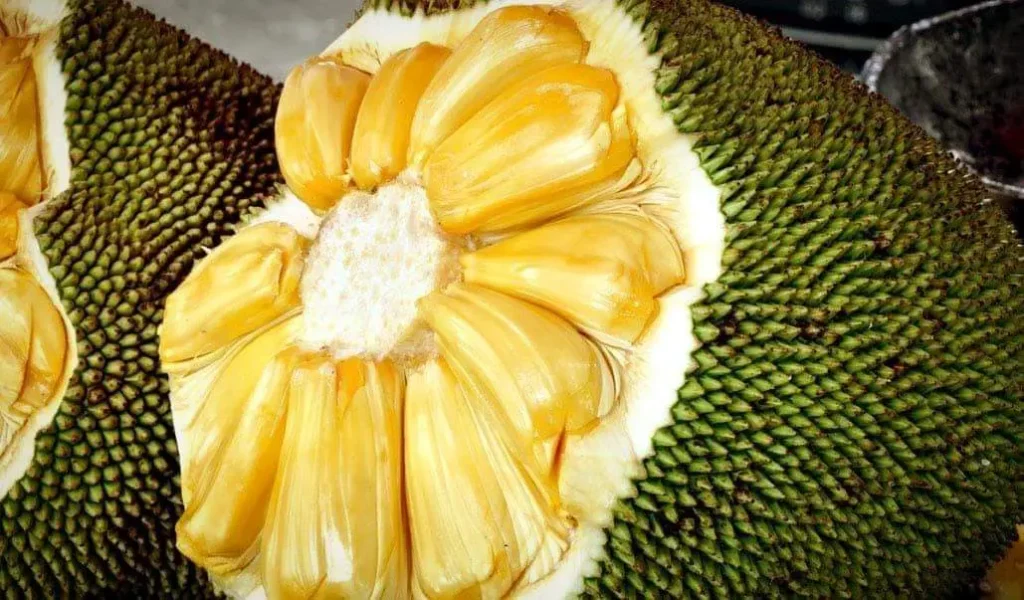
Make a straight, clean horizontal cut at about 15–20 cm above the soil.
Then create a vertical slit about:
- 2.5–3 cm deep
- Right in the center of the stem
This slit will hold the scion firmly.
4. Prepare the Scion
Cut the bottom of the scion into a sharp wedge shape.
- The wedge should be smooth
- Each side 1–1.5 cm long
- No bark should peel or tear
Good wedge shaping ensures perfect cambium contact.
5. Insert the Scion into the Rootstock
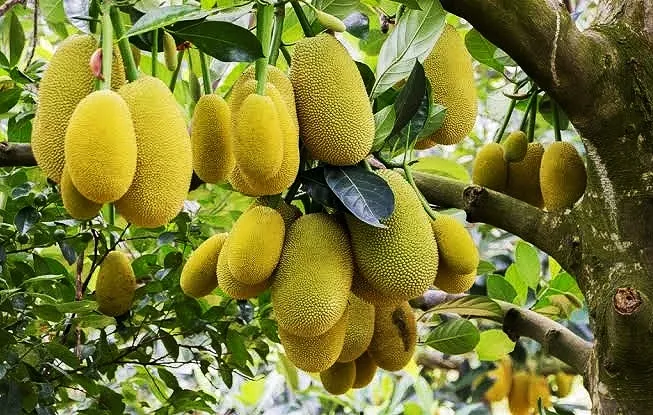
Gently push the wedge-shaped scion into the slit of the rootstock.
Make sure:
- The cambium layers of both plants align
- The scion stands straight
- The fit is tight with no air gaps
Correct alignment is essential for a strong graft union.
6. Wrap the Graft Joint
Use grafting tape or plastic strip to seal the joint securely.
Your wrapping should:
- Be tight enough to hold the scion
- Prevent water from entering
- Keep pests away
- Lock in moisture
A well-wrapped graft heals faster.
7. Place the Grafted Plant in Shade
For the first 10–15 days, keep the plant in:
- Light shade
- Away from direct afternoon sun
- Moderately moist soil
This protects the healing graft from stress.
8. Check for Growth
A successful graft will show:
- Fresh green leaves
- Bud sprouting
- Firm attachment
- No wilting
This typically happens in 3–4 weeks.
🤩 Why This Method Works So Well
Jackfruit grafting using the cleft method is popular because:
✔ Simplicity
Anyone can perform it—even first-time gardeners.
✔ High Success Rate
If done correctly, success rates are as high as 80–90%.
✔ Fast Healing
Jackfruit wood naturally seals quickly.
✔ Perfect for Different Climates
Works well in both humid and dry tropical regions.
✔ Produces High-Quality Fruits
Because scions come from known varieties, quality is guaranteed.
🌞 Best Time for Grafting Jackfruit
Timing plays a major role in grafting success.
✔ Ideal Grafting Season
- Late winter to early summer
- February to May (in tropical regions)
✔ Why This Period Is Ideal?
- Mild temperatures
- Good sap flow
- Faster healing
- Dry climate reduces infection risk
Avoid grafting during heavy monsoons and extreme heat.
🌴 Caring for Your Newly Grafted Jackfruit Tree
To help your grafted plant grow fast and strong, follow these care tips:
1. Watering
- Keep soil slightly moist
- Avoid waterlogging
- Water only at the base, not on the graft
2. Fertilizing
Feed the plant every 45–60 days with:
- Compost
- Cow dung
- Neem cake
- Bone meal
- Wood ash
These improve growth without burning the graft.
3. Sunlight
After 2–3 weeks:
- Expose to full morning sun
- Provide partial shade during harsh afternoons
4. Remove Rootstock Shoots
If the rootstock produces branches below the graft, remove them immediately.
This ensures all energy goes to the scion.
5. Pest Protection
Spray neem oil once every 15 days to deter:
- Ants
- Mealybugs
- Aphids
- Stem borers
6. Provide Support
As the plant grows, give it a small bamboo stick or support pole to keep it straight and stable.
🍈 When Will a Grafted Jackfruit Tree Fruit?
You can expect fruiting in:
✔ 3–4 years – with proper care
(faster than seed-grown trees)
Additionally:
- Fruits will be uniform
- The tree will stay manageable in height
- Yield will increase year after year
⭐ Conclusion: The Easiest Way to Transform Your Jackfruit Harvest
Grafting jackfruit is no longer a complicated task. With this simple cleft graft method, you can grow a tree that:
- Fruits earlier
- Gives consistent, delicious harvests
- Stays healthy and strong
- Resists pests and diseases
- Thrives even in less-than-perfect soil
Whether you’re a hobby gardener or a farmer looking to expand your orchard, this easy grafting technique is the perfect way to guarantee success.