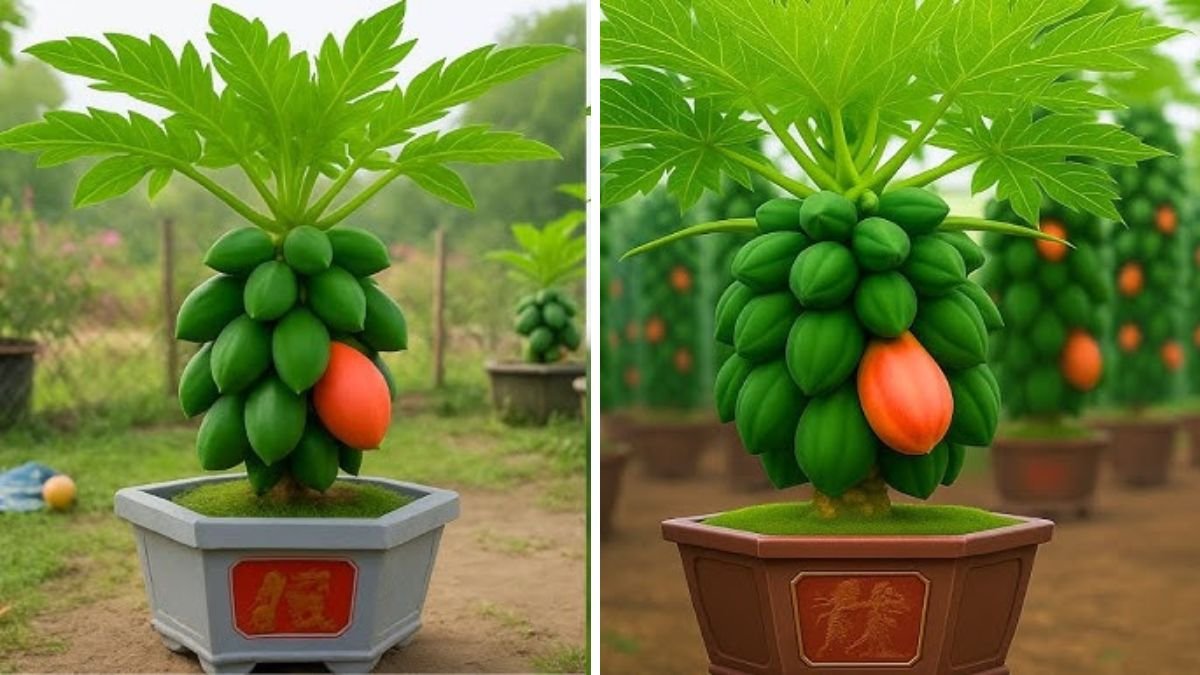

1. Introduction to Dwarf Papaya
Dwarf papaya plants are ideal for small gardens and container cultivation. Unlike regular papayas, dwarf varieties remain compact while producing high yields. They are suitable for urban gardeners and hobby farmers. Dwarf plants are easier to manage and harvest. Many gardeners prefer them for backyard cultivation. Compact growth does not compromise fruit quality. These varieties adapt well to containers and limited space. Understanding dwarfing techniques is essential for success.
2. Botanical Background
Papaya (Carica papaya) belongs to the Caricaceae family. It is a tropical fruit tree, usually fast-growing. Dwarf varieties are naturally shorter or induced through pruning. Leaves are large and lobed, providing high photosynthetic efficiency. Flowers are unisexual and may require pollination. Understanding growth habits aids in dwarfing. Proper care ensures healthy development. Botanical knowledge improves fruit production.
3. Climate Requirements
Papaya thrives in warm, frost-free climates. Temperatures between twenty-two to thirty degrees Celsius are ideal. Dwarf papayas tolerate partial shade initially. High humidity enhances growth but excessive moisture can lead to disease. Wind protection supports young plants. Consistent climate improves flowering and fruiting. Microclimate modification in containers helps optimize conditions. Climate directly influences fruit quality and yield.
4. Soil Preparation
Well-draining soil is essential. Sandy loam enriched with compost works best. Slightly acidic to neutral pH is ideal. Avoid waterlogged or clay-heavy soils. Fertility impacts fruit size and sweetness. Raised beds improve drainage and root aeration. Organic matter supports microbial activity. Healthy soil ensures compact, strong growth for dwarf varieties.
5. Seed Selection
High-quality seeds improve germination and uniform growth. Dwarf varieties may be naturally shorter or bred. Fresh seeds have higher viability. Select seeds from disease-free, high-yielding plants. Proper labeling ensures variety consistency. Germination occurs in moist, warm conditions. Early seed care sets the foundation for healthy plants. Seed quality determines future success.
6. Germination Process
Papaya seeds require moisture and warmth to sprout. Soak seeds in water for twenty-four hours before planting. Use a seed tray with well-draining soil. Maintain temperatures around twenty-five degrees Celsius. Germination takes one to two weeks. Lightly cover seeds and keep soil moist. Avoid overwatering to prevent rot. Strong seedlings develop from proper germination.
7. Nursery Stage
Seedlings grow in protected nurseries initially. Shade prevents sunburn. Regular watering supports root development. Transplant seedlings when they reach ten to fifteen centimeters. Healthy seedlings are free from pests and disease. Proper nursery care improves survival rate. Fertilize lightly with organic compost. A robust nursery stage ensures future dwarf growth.
8. Transplanting Techniques
Transplant seedlings into prepared soil or containers. Space plants adequately to prevent overcrowding. Gently handle roots to avoid shock. Water immediately after transplanting. Install support for container-grown plants. Mulching helps retain moisture. Transplanting during mild weather reduces stress. Correct technique promotes compact, healthy growth.
9. Sunlight Management
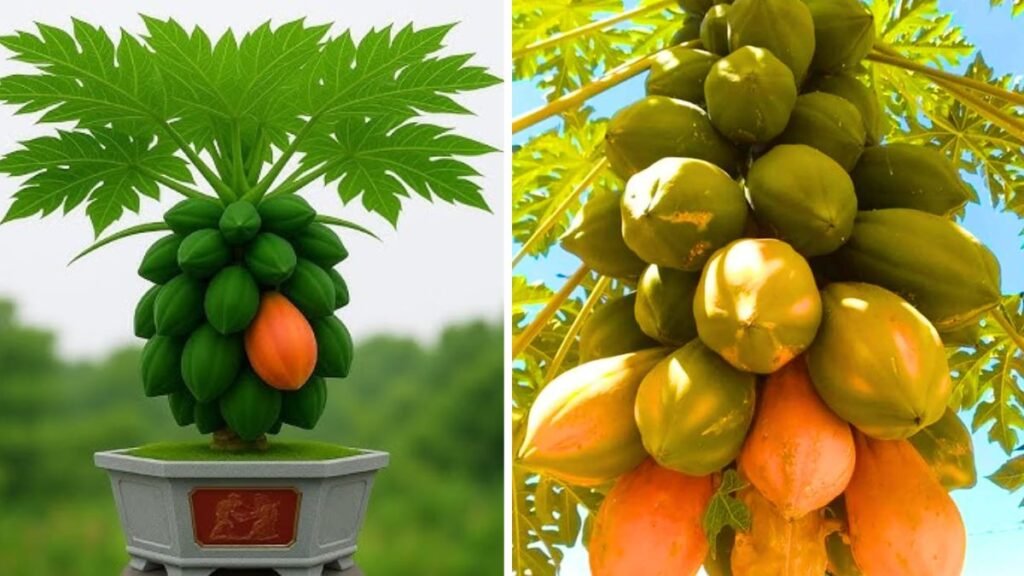
Dwarf papayas require full sunlight for optimum growth. At least six hours per day ensures flowering. Young plants tolerate partial shade initially. Sunlight influences leaf development and photosynthesis. Container plants may need movable positions to maximize light. Excessive shade reduces dwarfing effectiveness. Proper light balance ensures healthy compact plants. Sunlight exposure affects fruit sweetness and size.
10. Watering Practices
Consistent watering supports steady growth. Avoid waterlogging, which can damage roots. Drip irrigation is ideal for containers. Young plants need frequent watering, while mature plants tolerate moderate drought. Mulching conserves moisture. Adjust watering based on climate. Proper moisture promotes compact growth. Balanced watering ensures quality fruit.
11. Fertilization
Balanced nutrition supports dwarf growth. Organic compost or slow-release fertilizers work best. Nitrogen promotes foliage; potassium and phosphorus encourage flowering. Avoid excessive nitrogen, which may elongate the plant. Fertilize during active growth stages. Leaf monitoring ensures nutritional balance. Proper feeding supports dwarfing without reducing yield. Fertilization impacts fruit size and sweetness.
12. Pruning and Dwarfing Techniques
Pruning induces compact growth. Remove apical shoots to restrict height. Side branches can be trimmed to control shape. Avoid excessive pruning that may reduce fruiting. Pruning promotes bushy growth. Regular trimming helps maintain container-friendly height. Dwarfing improves ease of harvesting. Proper pruning balances plant structure and productivity.
13. Flowering Stage
Dwarf papayas flower earlier due to compact size. Flowers are unisexual and develop along the trunk. Healthy leaves and consistent watering support flowering. Pollination may be natural or assisted. Flower density affects fruit set. Monitoring flower health improves yield. Early flowering allows quicker harvest. Compact growth enhances sunlight exposure for blooms.
14. Pollination
Papaya can be male, female, or hermaphrodite. Dwarf varieties often produce hermaphrodite flowers. Bees, wind, or hand pollination improve fruit set. Flower timing is critical. Proper pollination ensures consistent fruiting. Monitoring pollinator activity supports high yield. Avoid pesticide use during flowering. Successful pollination ensures compact, productive trees.
15. Fruit Development
Fruits grow along the trunk and side branches. Dwarf plants produce smaller but sweeter fruits. Consistent watering and nutrition are crucial. Stress may cause fruit drop. Fruit clusters develop sequentially. Dwarf varieties mature faster than standard trees. Careful observation ensures optimal harvest. Compact structure facilitates uniform fruit development.
16. Pest and Disease Management
Common pests include aphids, mites, and fruit flies. Organic solutions like neem oil are effective. Proper spacing reduces disease risk. Remove infected leaves promptly. Maintain airflow around plants. Container plants require closer monitoring. Preventive care improves fruit quality. Healthy dwarf plants resist stress and infestation.
17. Harvesting Techniques
Fruits are harvested when fully colored and soft. Dwarf papayas are easy to reach without ladders. Use gentle hand-picking to avoid bruising. Regular harvesting encourages continuous fruiting. Timing affects sweetness and flavor. Container plants may have multiple small harvests. Post-harvest care preserves fruit quality. Correct harvesting maximizes yield.
18. Post-Harvest Handling
Wash fruits immediately after picking. Store in cool, ventilated spaces. Use or process promptly for maximum freshness. Fruits can be consumed raw or used for jams and juices. Avoid prolonged storage in humid conditions. Proper handling maintains flavor and texture. Packaging improves shelf life. Post-harvest care ensures marketable quality.
19. Economic and Home Garden Benefits
Dwarf papayas are ideal for urban and small-space cultivation. High yields from compact plants ensure profitability. Container cultivation enables balcony or terrace farming. Low maintenance reduces labor costs. Homegrown fruits offer nutrition and freshness. Quick flowering and fruiting increase return on investment. Dwarf plants encourage sustainable practices. Economic potential is high in local markets.
20. Conclusion
Dwarf papaya cultivation allows small-space gardening with high yield. Proper pruning, nutrition, and watering maintain compact growth. Flowering, pollination, and harvesting stages are key to productivity. Container-friendly techniques expand possibilities for urban growers. Fruits are sweet, nutritious, and marketable. Dwarf varieties combine convenience and efficiency. Knowledge and consistent care ensure success. Small gardens can produce abundant papayas.
📊 Table: Dwarf Papaya Cultivation Summary
| Aspect | Requirement | Benefit |
|---|---|---|
| Climate | Warm, frost-free | Healthy flowering and fruiting |
| Soil | Well-draining, fertile | Strong roots and compact growth |
| Sunlight | Full sun, six hours daily | Maximizes photosynthesis |
| Pruning | Regular trimming | Controls height and improves yield |