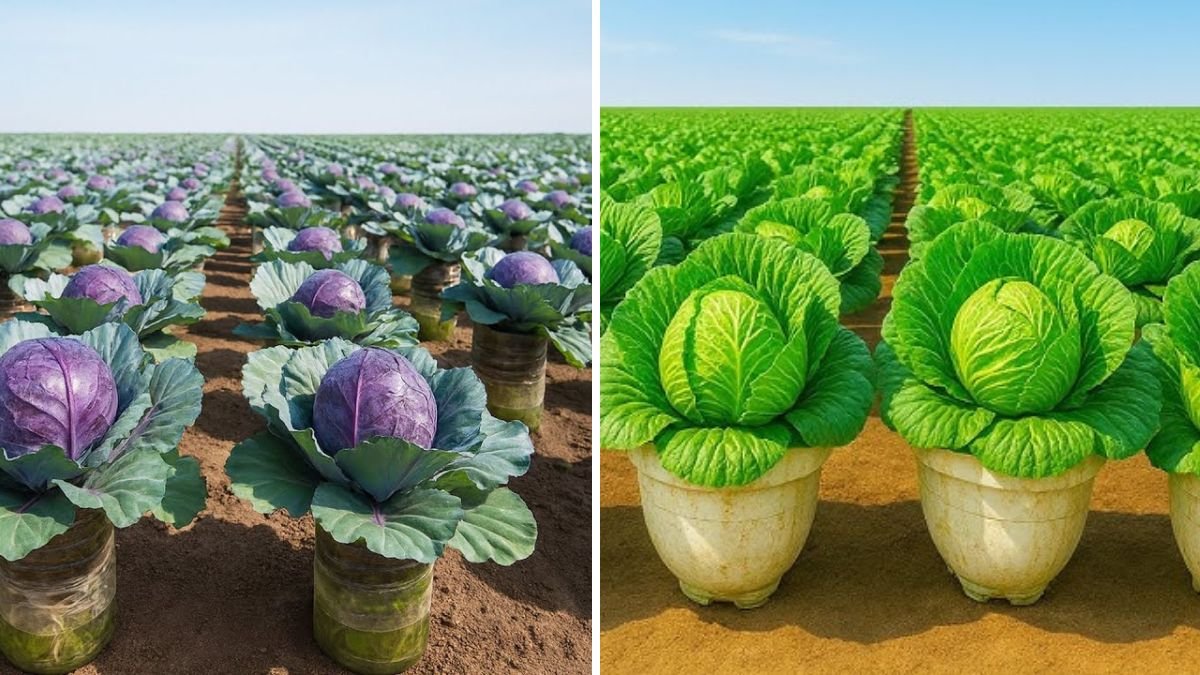

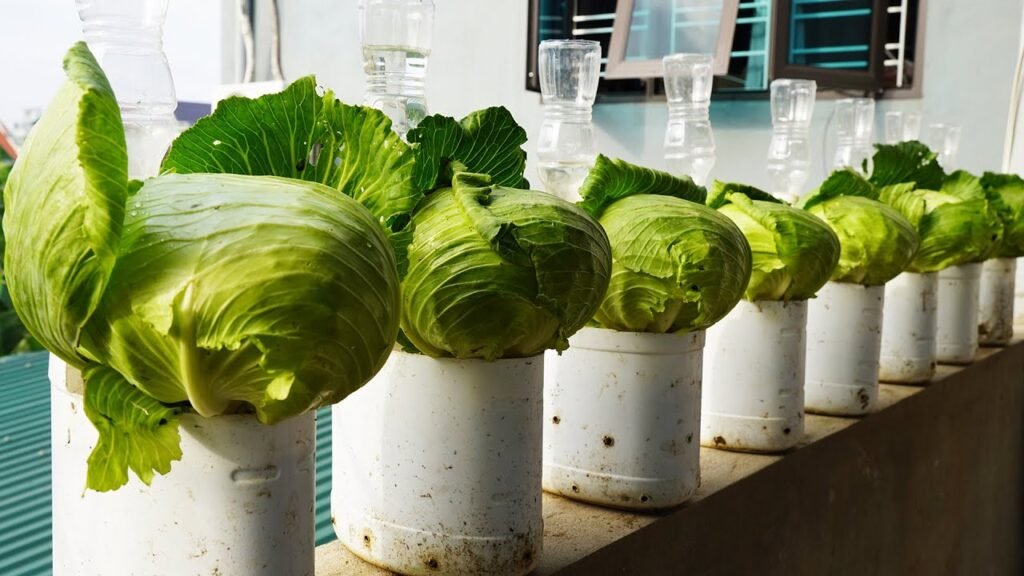
Growing cabbage at home is easier than you might think—especially if you’re working with limited space. With a simple bottle gardening hack, you can produce big, lush cabbage heads right on your balcony, terrace, or backyard. This method is cost-effective, eco-friendly, and perfect for both beginners and experienced gardeners. Even a small container can give you cabbage heads large enough for the entire family.
In this guide, we’ll show you step by step how to grow cabbage using bottles, from preparing your containers to harvesting big, healthy heads.
Why Bottle Gardening Works for Cabbage
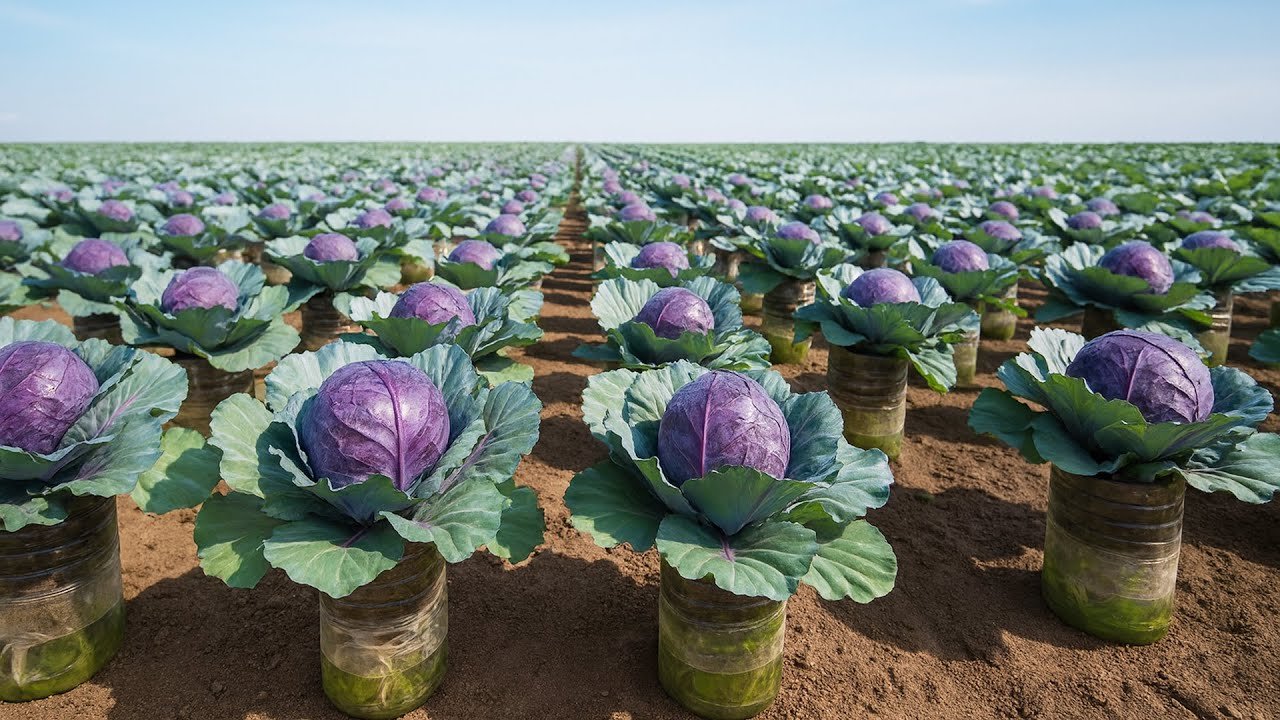
Bottle gardening is a space-saving and efficient method that allows plants to grow in controlled conditions. Cabbage, being a nutrient-hungry, water-loving vegetable, thrives in this setup because:
- Roots grow in a contained space, preventing nutrient loss
- Soil moisture is easier to control
- Pests are less likely to attack elevated or contained plants
- The method allows vertical or horizontal arrangements for small spaces
- Reusing bottles is eco-friendly and economical
This method transforms simple plastic bottles into productive mini-gardens.
Step 1: Choose the Right Bottles
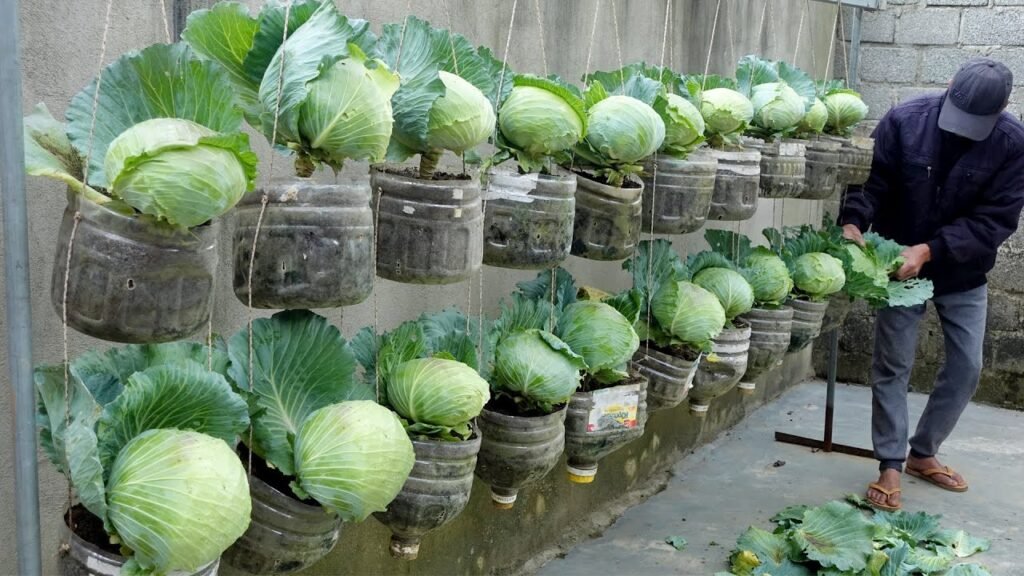
Not all bottles are ideal for growing cabbage. Here’s what to look for:
Best Bottle Types
- Large plastic bottles (2–5 liters)
- Sturdy and food-safe
- Transparent or light-colored to avoid overheating roots
Preparing the Bottle
- Wash thoroughly to remove any chemicals.
- Cut off the top portion to create a planting opening.
- Punch 4–5 drainage holes at the bottom to prevent waterlogging.
- Optional: Cut a small window on the side to monitor root growth.
Step 2: Prepare a Fertile Soil Mix
Cabbage is a heavy feeder and needs nutrient-rich soil for big heads. A good mix ensures:
- Healthy leaves
- Strong roots
- Large cabbage heads
Soil Mix Recipe
- 50% garden soil
- 30% compost or vermicompost
- 20% cocopeat or sand for drainage
Optional Additives
- Neem cake for pest protection
- Bone meal for strong root development
- Wood ash or potash for better head formation
Mix thoroughly to create light, well-draining soil that retains moisture.
Step 3: Choose the Right Cabbage Variety
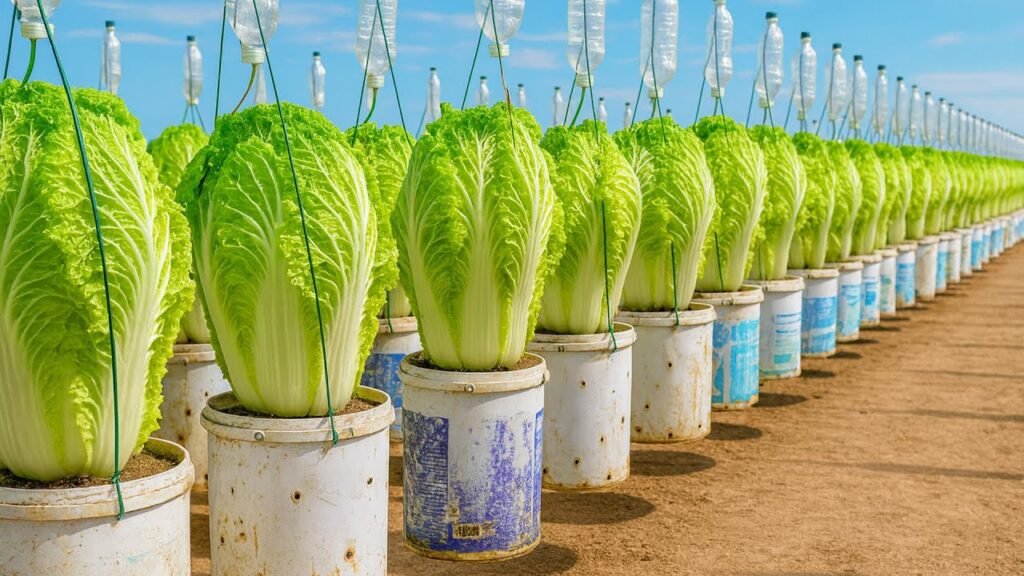
For bottle gardening, compact and fast-growing varieties work best.
Recommended Varieties
- Copenhagen Market
- Golden Acre
- F1 Hybrid cabbage (compact and high-yield)
- Small-head varieties for limited space
Choose seeds labeled container-friendly for best results.
Step 4: Planting Cabbage in Bottles
From Seeds
- Fill the bottle with soil, leaving 2 inches at the top.
- Make a small hole about 1/2 inch deep.
- Plant 2–3 seeds per hole and cover lightly with soil.
- Water gently.
From Seedlings
- Transplant seedlings with 3–4 true leaves.
- Keep them in partial shade for 1–2 days before exposing to full sunlight.
- Water gently to settle the soil around roots.
Spacing: One plant per 2–3 liter bottle ensures enough room for head formation.
Step 5: Sunlight Requirements
Cabbage needs plenty of sunlight for robust growth.
- Minimum 5–6 hours/day
- Ideal: 6–8 hours/day
- East- or south-facing spots work best
- Avoid direct afternoon sun in extremely hot climates to prevent leaf burn
Proper sunlight helps the cabbage form tight, big heads.
Step 6: Watering Your Bottle Cabbage Plants
Consistent moisture is crucial for cabbage growth, especially in containers.
Watering Tips
- Keep soil evenly moist, not soggy
- Water at the base of the plant to avoid fungal diseases
- Mulch with straw or dry leaves to retain moisture
- In hot weather, water daily; in cooler months, every 2–3 days
Pro Tip: Uneven watering can cause loose, small heads.
Step 7: Fertilizing for Big Heads
Cabbage is a heavy feeder. Regular feeding promotes healthy leaves and large heads.
Fertilizer Schedule
- Every 15 days: Add compost around the base
- Every 10 days: Use liquid fertilizer (cow dung water, compost tea, or seaweed extract)
- Every 20 days: Apply potash (banana peel, wood ash) for stronger head formation
Balanced feeding ensures maximum size and quality.
Step 8: Managing Pests and Diseases
Bottle gardening reduces many soil-borne issues, but you should still monitor for pests.
Common Problems
- Aphids
- Whiteflies
- Caterpillars
- Fungal spots
Solutions
- Spray neem oil or insecticidal soap weekly
- Remove damaged leaves
- Ensure proper airflow between bottles
- Avoid overwatering to prevent root rot
Step 9: Supporting Cabbage Growth
Though cabbage grows upright naturally, support helps in windy or high-rainfall areas.
- Insert a small bamboo stick or skewer beside the plant
- Tie loosely with soft cloth if leaves start leaning
- Ensures straight, compact head formation
Step 10: Harvesting Big Cabbage Heads
Cabbage is usually ready for harvest 70–90 days after planting, depending on variety.
Harvesting Tips
- Heads should feel firm and dense
- Cut with a sharp knife at the base, leaving outer leaves intact
- Do not pull; this can damage roots and reduce regrowth
Proper harvesting encourages a second growth in some varieties.
Benefits of Bottle Gardening for Cabbage
- Perfect for small spaces and urban homes
- Eco-friendly: Reuses plastic bottles
- Allows control over soil, water, and nutrients
- Reduces pest problems
- Produces big, healthy cabbage heads consistently
- Can grow multiple plants in a small area using vertical arrangements
Even a balcony or small patio can yield enough cabbage for family meals with just a few bottles.
Final Thoughts: Big Cabbage Without a Garden
Bottle gardening is a simple, cost-effective way to grow large, healthy cabbage heads at home. With proper sunlight, watering, and nutrient management, even a small number of bottles can provide a continuous harvest.
This method transforms ordinary plastic bottles into productive mini-gardens, giving you fresh, organic cabbage year-round. Perfect for urban gardeners, beginners, or anyone who wants big yields without a traditional garden.