

Introduction to Mango Multiple Grafting
Mango multiple grafting is an advanced horticultural technique where more than one mango variety is grafted onto a single rootstock. This method is gaining popularity among farmers and home gardeners because it maximizes space, improves pollination, and provides multiple flavors from one tree. A 4-in-1 mango grafted tree can produce four different mango varieties, making it ideal for small farms and kitchen gardens. The technique also improves orchard diversity and reduces the risk of total crop failure. In tropical countries like India, mango multiple grafting is becoming a profitable innovation. With proper care, such trees can remain productive for many years. This guide explains the complete process step by step. Beginners and professionals can both benefit from this technique.
What Is 4-in-1 Mango Grafting?
4-in-1 grafting means combining four scion varieties on a single healthy mango rootstock. Each grafted branch grows independently while sharing the same root system. This allows the tree to produce fruits of different shapes, colors, tastes, and maturity periods. Farmers use this method to extend the harvesting season. It also reduces land usage while increasing economic returns. The rootstock provides strong nutrient absorption, supporting all grafts equally. Proper balance and pruning are essential to ensure uniform growth. This technique is ideal for demonstration orchards and home gardens. It also attracts high market value.
Benefits of Mango Multiple Grafting
Multiple grafting offers numerous advantages over single-variety trees. It saves space and reduces the number of trees required. Farmers can grow commercial and local varieties together. Pest and disease resistance improves due to genetic diversity. Pollination becomes more effective because different varieties flower together. Harvesting is spread over weeks or months. This ensures continuous income instead of a single harvest period. The technique is eco-friendly and resource-efficient. With good management, fruit quality remains high.
Best Mango Varieties for 4-in-1 Grafting
Selecting compatible mango varieties is crucial for success. Varieties should have similar growth habits and vigor. Early, mid, and late-season varieties are ideal combinations. Popular choices include Alphonso, Kesar, Dasheri, Langra, Totapuri, and Banganapalli. Local climate and market demand should guide selection. Avoid mixing dwarf and extremely vigorous varieties. Compatibility ensures balanced canopy development. Healthy scion wood is essential for successful grafting. Disease-free mother plants must be used.
Ideal Rootstock Selection
Rootstock forms the foundation of a multi-grafted mango tree. It should be strong, disease-resistant, and well-adapted to local soil conditions. Seedlings grown from local mango varieties perform best. The rootstock age should be 8 to 12 months. A straight stem with good girth is preferred. Strong roots help support multiple grafts. Proper nutrition before grafting increases success rates. Avoid weak or diseased seedlings. Rootstock health directly impacts tree longevity.
Best Season for Mango Multiple Grafting
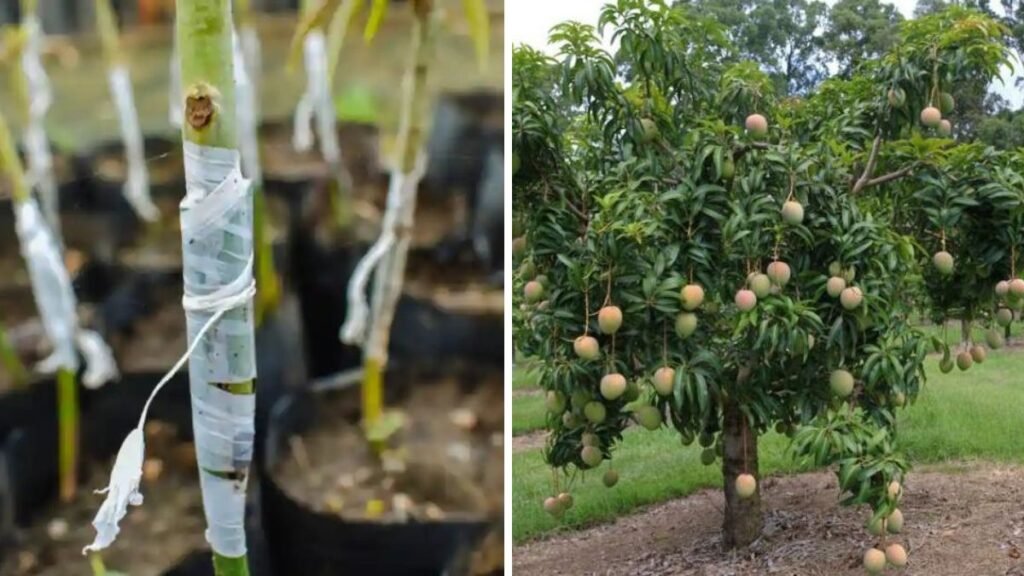
The ideal time for mango grafting is during active sap flow. In India, February to March and July to August are best. Moderate temperature and humidity improve graft union success. Avoid extreme heat or heavy rainfall periods. Morning hours are preferred for grafting. Proper aftercare during the first month is critical. Seasonal timing affects healing speed. Choosing the right season can increase success above 80 percent. Climate plays a major role.
Tools Required for 4-in-1 Grafting
Sharp and clean tools ensure precise cuts and reduce infection risk. A grafting knife, pruning shears, plastic grafting tape, and disinfectant are essential. Polythene strips are commonly used for wrapping. Fungicide solution helps prevent fungal attack. Labels should be used to mark each variety. Clean tools must be sterilized before every graft. Proper equipment ensures neat graft unions. Poor tools lead to failure.
Step-by-Step Mango Multiple Grafting Process
First, select a healthy rootstock and prune the top. Prepare four scions of similar thickness. Make clean wedge cuts on scions. Create matching slits on the rootstock at different directions. Insert scions carefully ensuring cambium contact. Secure tightly with grafting tape. Cover grafts to prevent moisture loss. Keep the plant in partial shade. Regularly monitor for success signs.
Post-Grafting Care and Management
After grafting, protect the plant from direct sunlight. Water regularly but avoid waterlogging. Remove unwanted shoots from the rootstock. Apply fungicide spray after 10 days. Gradually expose the plant to sunlight. Support grafts with sticks if needed. Balanced nutrition helps faster healing. Proper care ensures all grafts survive equally. Neglect can cause graft failure.
Training and Pruning of 4-in-1 Mango Tree
Training is essential to maintain balance among grafts. Each graft should get equal space and sunlight. Regular pruning prevents dominance of one variety. Remove crossing and weak branches. Shape the canopy for airflow. Annual pruning improves fruit quality. Maintain uniform height and spread. Proper training increases lifespan and yield. It also improves orchard appearance.
Nutrient Management for Multi-Grafted Mango
Multi-grafted trees require balanced nutrition. Apply organic manure twice a year. Nitrogen supports vegetative growth. Phosphorus strengthens roots and graft union. Potassium improves flowering and fruit quality. Micronutrients prevent deficiencies. Foliar sprays are effective. Avoid excessive nitrogen. Balanced fertilization ensures equal growth of all varieties.
Flowering and Fruiting Behavior
Different varieties flower at different times. This extends the fruiting season. Pollination improves due to overlapping blooms. Fruit load must be regulated. Excess fruiting weakens the tree. Thinning improves size and quality. Proper irrigation during flowering is crucial. Climate affects fruit set. Multi-grafted trees often produce higher total yield.
Common Problems and Solutions
Uneven growth is a common issue. Regular pruning solves this problem. Graft failure occurs due to poor alignment. Pest attacks can damage tender grafts. Use protective sprays when required. Nutrient deficiency causes yellowing. Apply corrective fertilizers. Water stress affects fruiting. Timely care prevents most issues.
Economic Advantages for Farmers
4-in-1 mango trees provide multiple income streams. Farmers can supply diverse varieties to markets. Harvest duration increases profits. Nursery owners earn higher margins. Home gardeners enjoy variety without extra space. Maintenance costs are lower. Long-term productivity is higher. This method is ideal for high-value farming.
Suitability for Home Gardens
Urban gardeners prefer multi-grafted trees. Space saving is a major benefit. One tree fulfills multiple taste preferences. Maintenance is manageable. Aesthetic appeal is high. It becomes a learning model for kids. Suitable for terrace and backyard gardens. With pots, dwarf rootstocks can be used.
Comparison: Single vs Multiple Grafted Mango Tree
| Aspect | Single Grafted Mango | 4-in-1 Mango Grafted |
|---|---|---|
| Varieties | One | Four |
| Space Usage | High | Low |
| Harvest Period | Short | Extended |
| Income Potential | Limited | High |
| Maintenance | Simple | Moderate |
Long-Term Care and Lifespan
With proper care, multi-grafted mango trees live long. Regular pruning maintains structure. Soil health must be preserved. Avoid overloading fruits. Replace weak grafts if needed. Pest management is crucial. Consistent care ensures productivity. Lifespan can exceed 20 years. Good management makes it sustainable.
Environmental and Biodiversity Benefits
Multiple grafting promotes genetic diversity. It reduces monoculture risks. Pollinators benefit from extended flowering. Fewer trees mean less resource usage. Soil health improves with less disturbance. Sustainable farming practices are supported. It aligns with eco-friendly agriculture. Biodiversity enhances resilience.
Future Scope of Mango Multiple Grafting
Demand for multi-variety plants is increasing. Nurseries are adopting this technique widely. Research is improving success rates. Export potential is high. Farmers can innovate with new combinations. Urban farming boosts popularity. Training programs are expanding. The future of multiple grafting is bright.
Conclusion
Mango multiple grafting is a smart and profitable technique. It maximizes yield, diversity, and space efficiency. With correct methods and care, success rates are high. Farmers, gardeners, and nursery owners can all benefit. The 4-in-1 mango tree is both practical and innovative. It represents the future of intensive horticulture. Adopting this method can transform mango cultivation. Proper planning ensures long-term success.