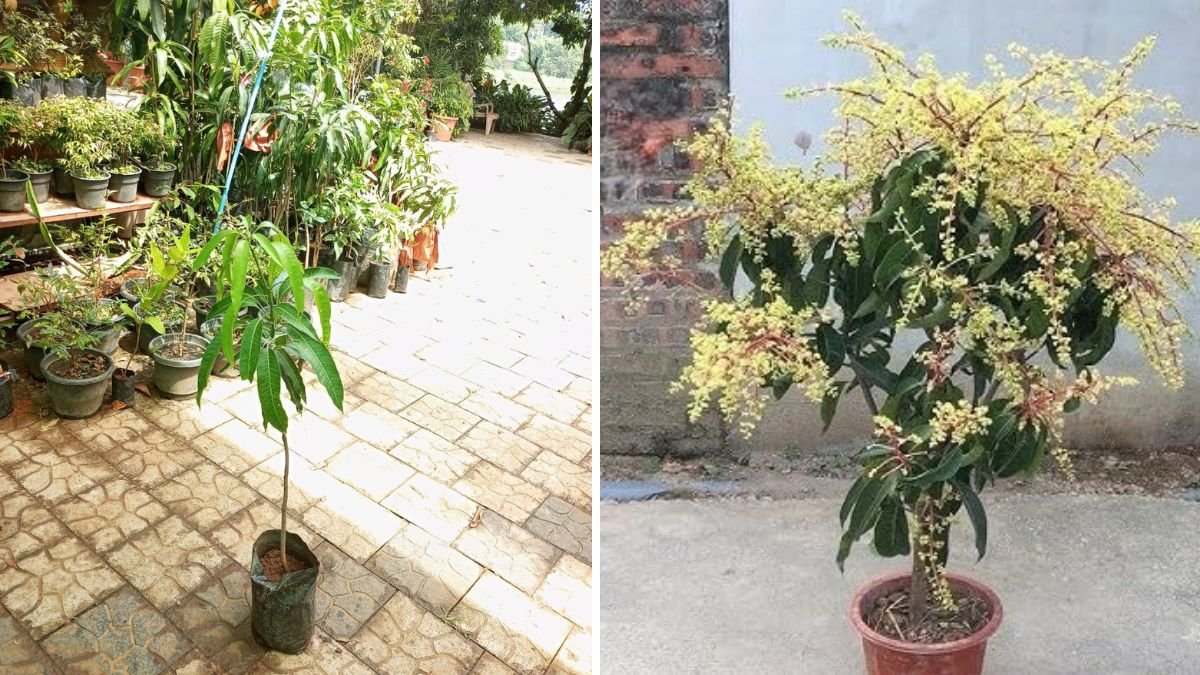

Growing a mango tree from seed can take 5–8 years before it bears fruit. But with mango grafting, you can cut that waiting time dramatically—sometimes to just 2–3 years! This is why home gardeners, farmers, and fruit enthusiasts swear by grafting as the best way to grow reliable, tasty, and early-fruiting mango trees.
In this full 1200-word guide, you’ll learn why grafting works, the best methods, step-by-step instructions, common mistakes, after-care tips, and how to ensure your graft successfully grows into a strong, productive tree.
⭐ Why Grafting Is the Best Way to Grow Mango Trees
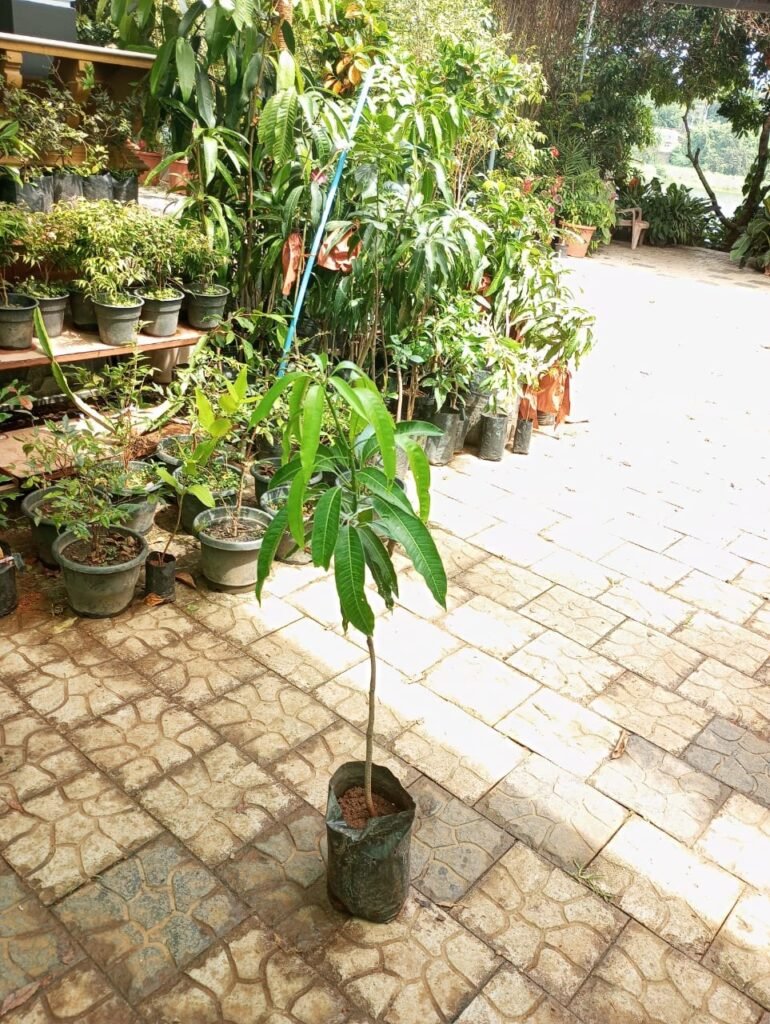
Mango grafting is a technique that merges two different mango plants:
- Rootstock → The bottom part (root system), known for hardiness and disease resistance
- Scion → A branch with desirable fruit qualities (taste, color, yield, size)
When joined correctly, they grow as one plant, giving you a tree that is:
✔ Stronger
The rootstock provides strength, pest resistance, and adaptability to local soil.
✔ Faster fruiting
Because the scion comes from a mature fruiting tree, it retains its “age,” giving fruits quickly.
✔ True-to-type fruit
Seeds may not produce the exact variety you want.
But grafting guarantees the same fruit as the parent tree—same sweetness, aroma, and texture.
🌱 What You Need for Mango Grafting
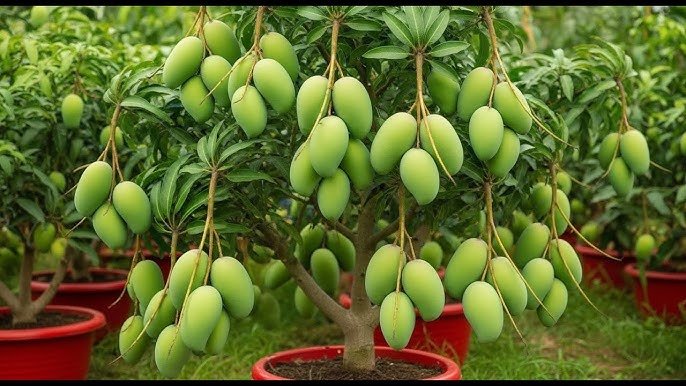
Before you start, gather these essentials:
1. Healthy Rootstock
- Should be 1 year old
- Approximately 1–1.5 cm thick
- Disease-free and growing vigorously
- Grown from a regular mango seed
2. Mature Scion (Budwood)
- Select a healthy branch from a tree that is already fruiting
- Pencil thickness
- Contains 3–4 buds
- Should be green but slightly hardened (not very soft or too woody)
3. Tools
- Sharp grafting knife or blade
- Sterilizer (alcohol or hot water)
- Grafting tape or poly tape
- Clean cloth
- Labels (optional)
🌿 Best Time for Mango Grafting
Mango trees graft well when sap flow is active.
Ideal Season:
- Late winter to early summer
- February to June in most warm climates
- Avoid monsoon and peak winter
This ensures healing is fast, and chances of success are high.
🔧 Top 3 Mango Grafting Methods
There are several grafting styles, but these three are the easiest and most successful.
1. Cleft Grafting (Most Beginner-Friendly)
This is popular because it requires minimal skill and works with different-sized scions and rootstocks.
How to Do It
Step 1: Prepare the Rootstock
- Cut the rootstock 20–25 cm above the ground
- Make a clean, straight cut
- Use a knife to split the stem down the middle (2–3 cm deep)
Step 2: Prepare the Scion
- Make a wedge shape at the bottom (like a sharp V)
- Ensure 2–3 active buds are on the scion
Step 3: Join Both
- Insert the V-shaped scion into the rootstock’s split
- Ensure cambium layers match (very important for success)
Step 4: Wrap
- Wrap tightly using grafting tape
- Seal all open areas to avoid drying
Step 5: Shade
- Cover with a perforated bag or provide shade from strong sun
Success Rating: ⭐⭐⭐⭐⭐
Great for beginners with 85–95% success.
2. Veneer Grafting (Perfect for Potted Mango Seedlings)
This is ideal when scion and rootstock diameter match.
How to Do It
- Make a slanted cut on the rootstock
- Make a matching cut on the scion
- Place the scion flush over the cut surface
- Tie firmly with tape
Success Rating: ⭐⭐⭐⭐
Gives clean, professional results.
3. Side Grafting (Useful When You Don’t Want to Cut the Rootstock Top)
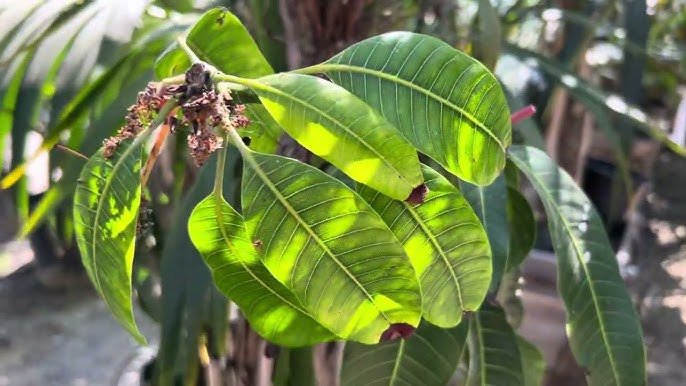
Here, the scion is attached to the side of the rootstock.
How to Do It
- Make a small T-shaped slit on the rootstock
- Prepare the scion with a long slanting cut
- Insert into the slit
- Wrap firmly
Success Rating: ⭐⭐⭐⭐
Ideal if you want the rootstock to remain for backup.
🌞 Aftercare: The Secret to Successful Mango Grafting
Even a perfectly grafted mango will fail if after-care is ignored. These steps ensure maximum survival.
1. Provide Shade
Grafted plants are sensitive.
Use a shade net or keep them under partial sunlight.
2. Remove New Shoots from Rootstock
If new branches appear below the graft point, remove them immediately.
They steal nutrients from the scion.
3. Water Carefully
- Keep soil moist, not soggy
- Avoid watering directly on the graft joint
4. Check the Graft After 15–20 Days
If the scion remains green and buds swell—SUCCESS!
If it dries or turns brown, try again.
5. Remove Grafting Tape (After 30–40 Days)
Once the graft heals and bonds, gently remove or loosen the tape to avoid girdling.
🌳 When Will the Grafted Mango Tree Bear Fruit?
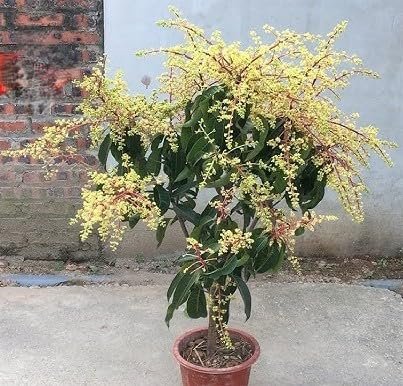
A well-grafted mango tree usually fruits in:
⏳ 2–3 Years
Compared to
⏳ 5–8 Years from Seed
This is the biggest advantage of grafting—fast, reliable harvests.
🍋 Common Mistakes That Cause Graft Failure
Avoid these to ensure success:
❌ Using a dull blade
This crushes tissues instead of making a clean cut.
❌ Not matching cambium layers
This is the #1 reason grafts fail.
❌ Grafting during heavy rains
Moisture causes fungal infections.
❌ Using diseased scion wood
Always select from a healthy, fruiting tree.
❌ Overwatering
Roots may rot, and scion will die.
🌱 How to Choose the Best Rootstock for Maximum Yield
A strong rootstock determines how well your mango tree survives.
Look for these traits:
- Grown from a seed
- Thick, green stem
- No black spots or fungal growth
- Leaves should be shiny
- Strong central leader (main stem)
🍃 Choosing the Best Scion: The Heart of Mango Grafting
The scion decides the fruit quality.
Select from:
- High-producing trees
- Sweet, fiberless varieties
- Strong disease-free branches
- Half-hardwood growth
- Pencil-thick stems
🌟 Tips to Boost Mango Graft Success Rate
Here are expert-level tricks:
✔ Warm temperature speeds healing
Around 25–32°C is perfect.
✔ Use grafting tape, not rope
Tape prevents drying.
✔ Don’t touch cut surfaces
Even slight contamination can kill the graft.
✔ Dip tools in alcohol before use
Sterilization is crucial.
🍈 Best Mango Varieties for Home Grafting
Based on your climate, these varieties graft extremely well:
- Alphonso
- Kesar
- Dasheri
- Langra
- Amrapali
- Mallika
- Banganapalli
- Totapuri
Choose according to taste preference and availability.
🌻 When to Transplant Your Grafted Mango Plant
Transplant only when:
- The graft has fully healed
- New leaves appear
- Stem is strong and woody
- Roots are well-developed
Usually after 2–4 months.
Plant in a sunny area with good drainage.
🥭 Conclusion: Start Your Mango Grafting Journey Today!
Mango grafting is the smartest, fastest, and most reliable way to grow mango trees that produce delicious fruits early. Whether you’re a beginner or an experienced gardener, this technique gives incredible results with a little practice.
By choosing the right rootstock, selecting healthy scion wood, using proper methods, and following after-care, you can grow mango trees that: