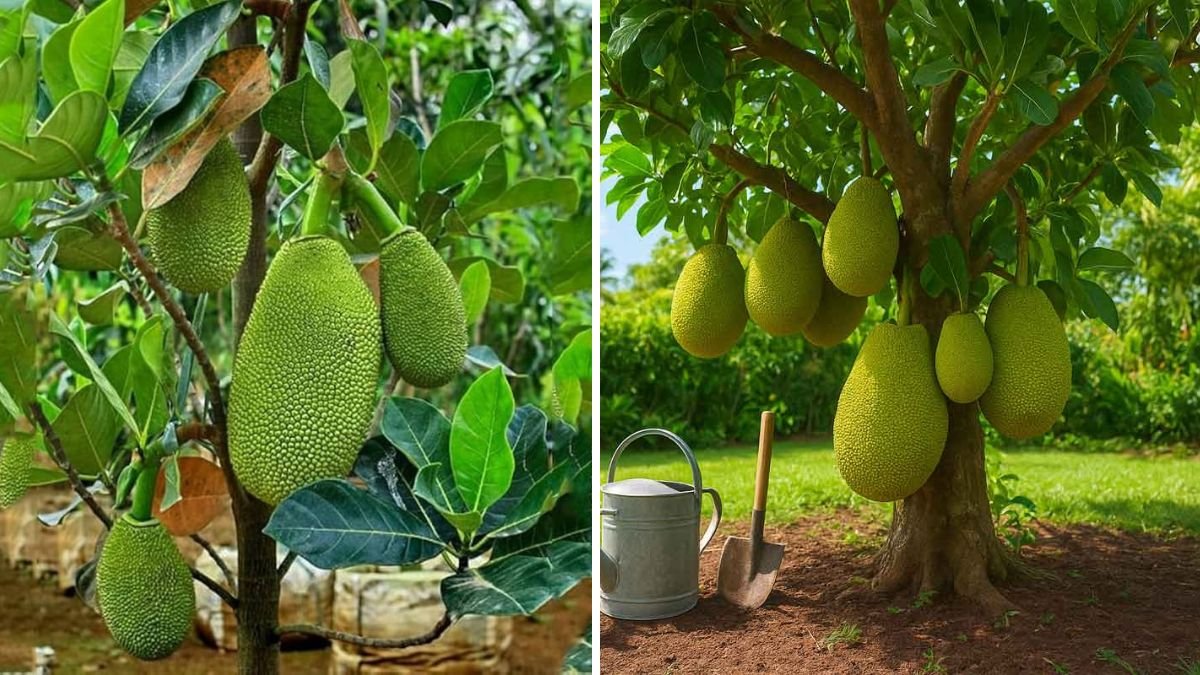

Jackfruit is one of the most rewarding tropical fruit trees you can grow—massive fruits, incredible sweetness, and a tree that can last for decades. But there’s one challenge: if you grow jackfruit from seeds, you might wait 5–7 years or more before seeing your first fruit. Even then, the tree might not produce the variety or quality you hoped for.
That’s where grafting comes in.
Grafting allows you to combine the strength of a vigorous rootstock with the fruit-producing power of an elite scion, giving you a fast-growing tree that produces early, reliably, and abundantly. Even better—jackfruit grafting is easy, and anyone can do it with the right technique.
In this article, you’ll learn the fastest and simplest jackfruit grafting method, the tools you need, best scion selection, aftercare tips, and how to ensure a healthy, productive tree for years to come.
🌱 Why Graft a Jackfruit Tree?
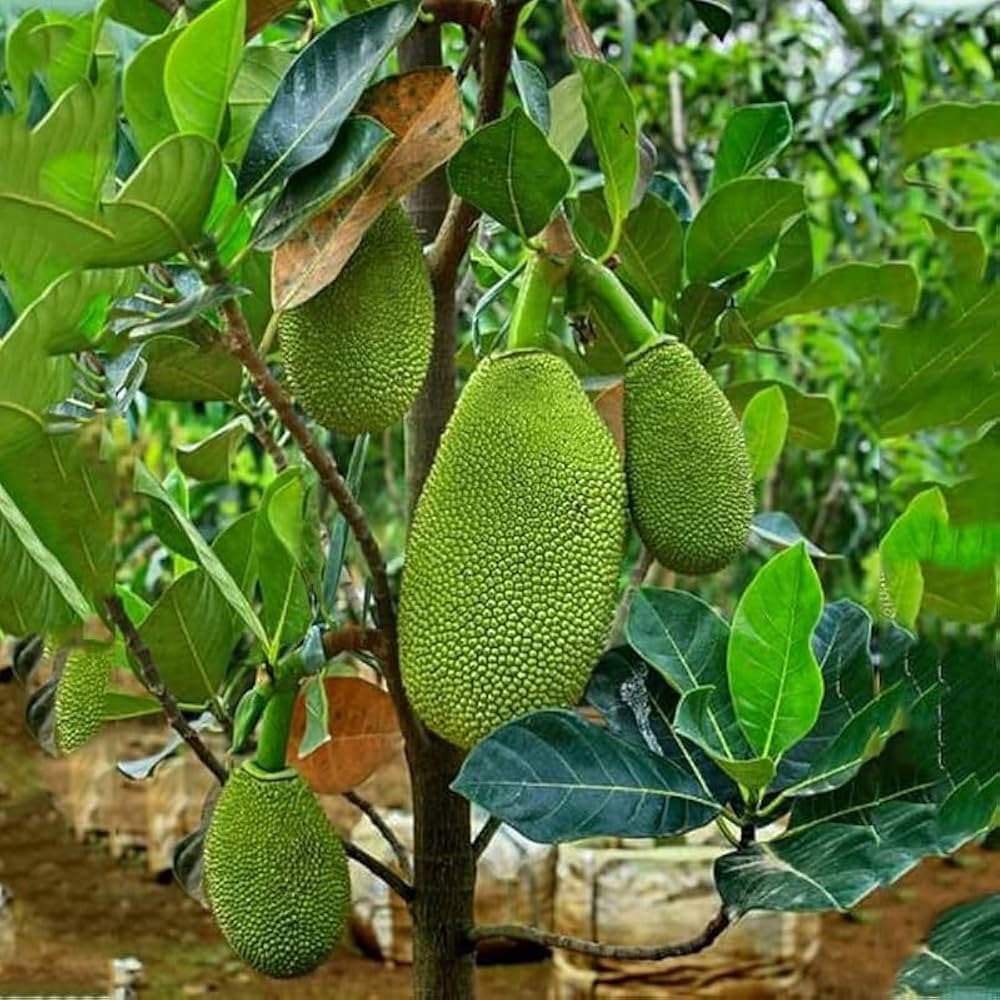
Before diving into the method, let’s understand why grafting is preferred over seed-grown trees:
✔ 1. Faster fruiting
Grafted jackfruit trees can bear fruit in 2–3 years, compared to seed-grown trees which take much longer.
✔ 2. True-to-type fruit
Seeds often produce unpredictable fruit. A grafted scion guarantees the same sweetness, size, and texture as the parent tree.
✔ 3. Disease resistance
Rootstocks selected from hardy seedlings improve overall tolerance to pests, soil issues, and climatic fluctuations.
✔ 4. Controlled tree size
Grafted trees are easier to manage, prune, and harvest.
✔ 5. Higher success rate for home gardeners
With a simple cleft graft, even beginners can achieve 80–90% success.
🍃 Best Time for Grafting Jackfruit
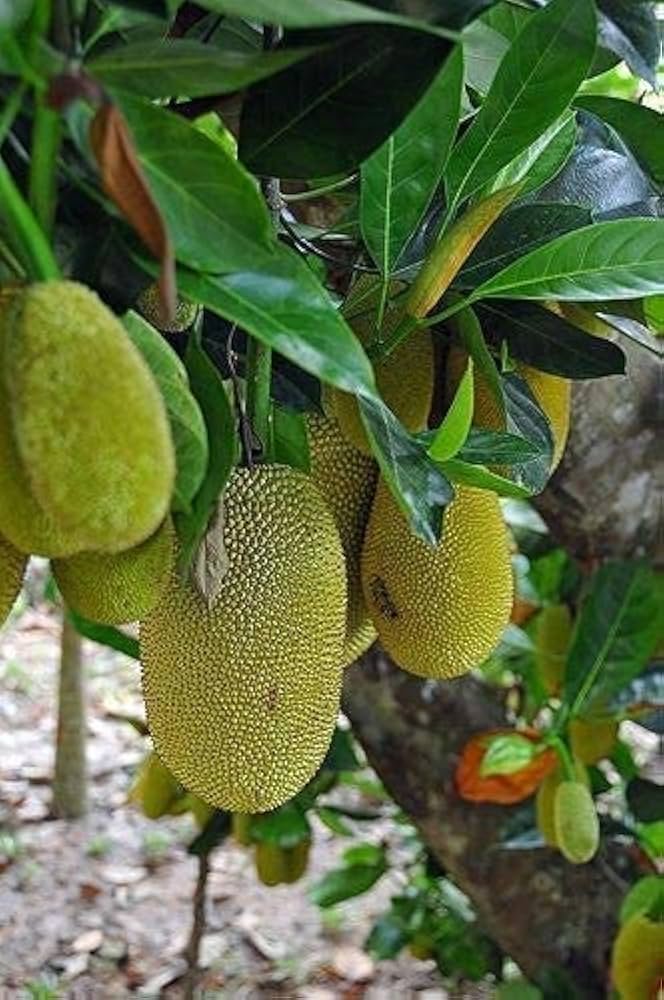
The ideal season matters for success.
📌 Best time:
- Late winter to early spring (before active growth begins)
- Or early monsoon when humidity is high and temperatures are stable
Warm conditions promote quick callus formation and rapid bonding between scion and rootstock.
🔧 Tools & Materials You Need
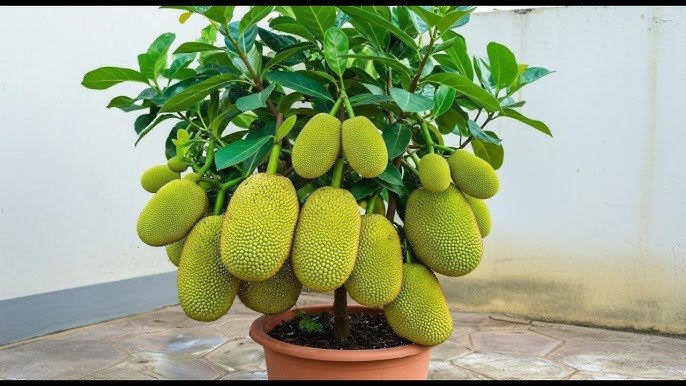
Simple tools ensure clean cuts and successful grafting.
- Sharp grafting knife or pruning blade
- Healthy rootstock plant (1–2 years old, pencil-thick stem)
- Mature scion wood (from a fruiting jackfruit tree)
- Grafting tape or polythene strip
- Garden gloves
- Label tags
- Fungicide or honey (optional for wound protection)
🌿 Choosing the Perfect Rootstock
Healthy rootstock is the foundation of your grafted jackfruit tree.
✔ Age:
1–2 years old sapling
✔ Stem size:
1–1.5 cm thick (pencil thickness)
✔ Characteristics:
- Disease-free
- Strong central stem
- Deep green leaves
- Well-developed root system
Avoid weak, yellowing, or stunted plants—these lead to poor graft success.
✂️ Selecting the Right Scion
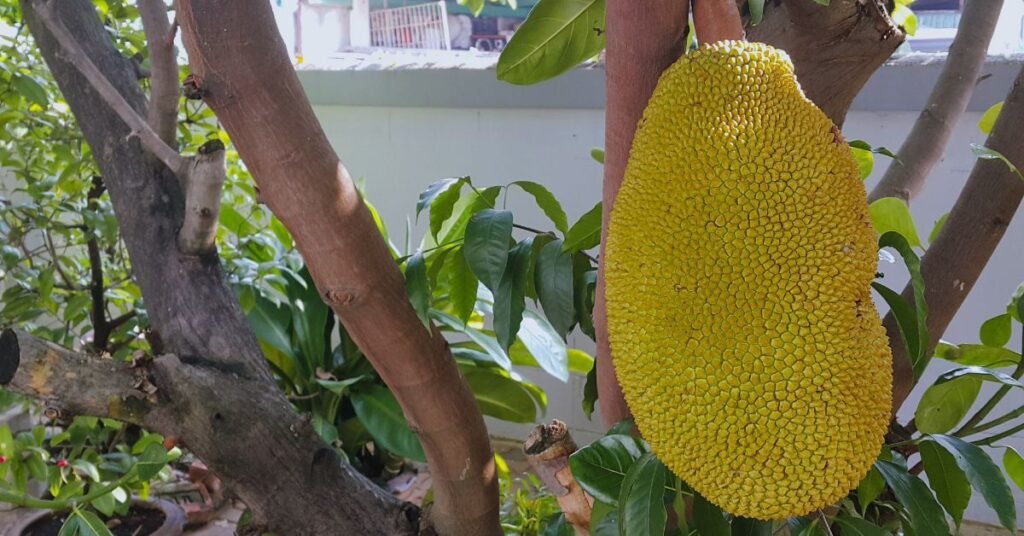
The scion determines the fruit quality—so choose carefully.
✔ Scion should be:
- Taken from a mature, productive tree
- 3–6 months old wood
- 8–12 cm long
- Contain 2–3 healthy buds
- Disease-free, no cracks or fungal spots
Keep scions moist by wrapping them in a damp cloth until use.
🌳 Fast & Easy Jackfruit Grafting Method: The Cleft Graft
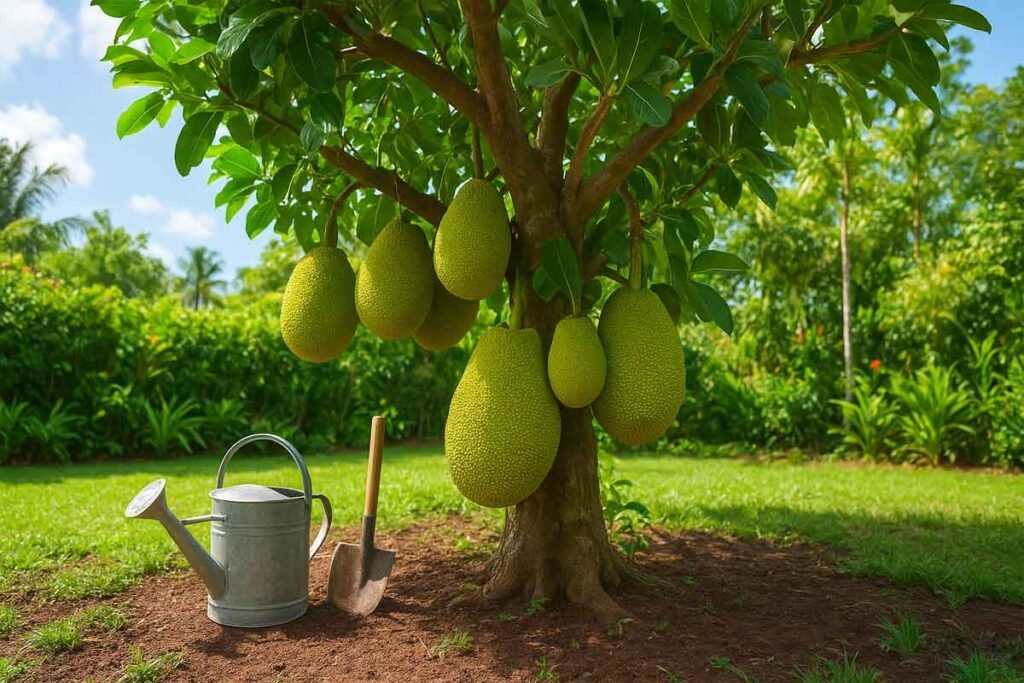
The cleft graft is the most reliable technique for jackfruit trees. Here’s a simple, step-by-step guide.
⭐ STEP 1: Prepare the Rootstock
- Cut the rootstock 10–15 cm above the soil.
- Make a clean, straight cut using a sharp knife.
- Split the stem vertically in the center, creating a 2–3 cm deep cleft.
This “V” opening is where the scion will fit snugly.
⭐ STEP 2: Prepare the Scion
- Cut the bottom of the scion into a wedge shape (like a sharpened pencil).
- Each side should taper smoothly to form two flat faces.
- Ensure the wedge is 2–3 cm long.
This increases the surface area for cambium contact.
⭐ STEP 3: Insert the Scion
- Carefully open the rootstock cleft.
- Insert the scion wedge into the split.
- Ensure the cambium layers align on at least one side.
Cambium alignment = successful graft.
⭐ STEP 4: Tie the Graft Firmly
- Use grafting tape or polythene strips to tightly seal the joint.
- Wrap from bottom to top—keep it airtight.
- Ensure no water enters the graft union.
This prevents infection and preserves moisture.
⭐ STEP 5: Protect the Scion
- Cover the entire scion with a small polybag or grafting sleeve (optional).
- This creates a humid micro-environment.
- Keep out of direct sunlight for 7–10 days.
🌞 Post-Grafting Care: Make Your Graft Thrive
Proper aftercare determines the final success.
✔ 1. Keep the plant in indirect light
For the first 10 days, avoid harsh sunlight. Grafts dry out easily.
✔ 2. Light watering
Do not overwater; keep soil slightly moist.
✔ 3. Remove new shoots from rootstock
These can steal energy from the graft.
Pinch off suckers immediately.
✔ 4. Check for bud swelling
Healthy grafts begin showing new growth within 3–4 weeks.
✔ 5. Remove the tape after 30–45 days
Once the graft union has healed, gently cut and remove the tape.
✔ 6. Gradual sunlight exposure
Move the plant into full sun slowly over 5–7 days.
🍈 Common Mistakes to Avoid
Avoid these mistakes to ensure high grafting success:
❌ Using dry or immature scions
❌ Poor cambium alignment
❌ Using dull knives
❌ Grafting in very hot or windy weather
❌ Overwatering after grafting
❌ Not securing the graft tightly
🌟 How Long Before Your Grafted Jackfruit Tree Fruits?
A successfully grafted jackfruit tree can start producing fruit in:
⏳ 2–3 years
This is significantly faster than seed-grown trees, which may take 6–8 years.
🎉 Benefits You’ll See Within Months
✔ Faster vertical growth
✔ Healthier canopy
✔ More branches
✔ Early bud formation
✔ Stronger disease resistance
Grafted jackfruit trees simply perform better in home gardens.
🏡 Final Thoughts
Grafting a jackfruit tree may look complicated, but with the simple cleft technique, even beginners can achieve impressive results. By choosing the right scion, preparing a strong rootstock, and giving proper aftercare, you’ll soon have a thriving jackfruit tree that promises bigger, sweeter, and earlier harvests.
If you’re trying to speed up your home garden’s productivity, grafting is one of the most powerful techniques you can learn—and jackfruit responds especially well to it.