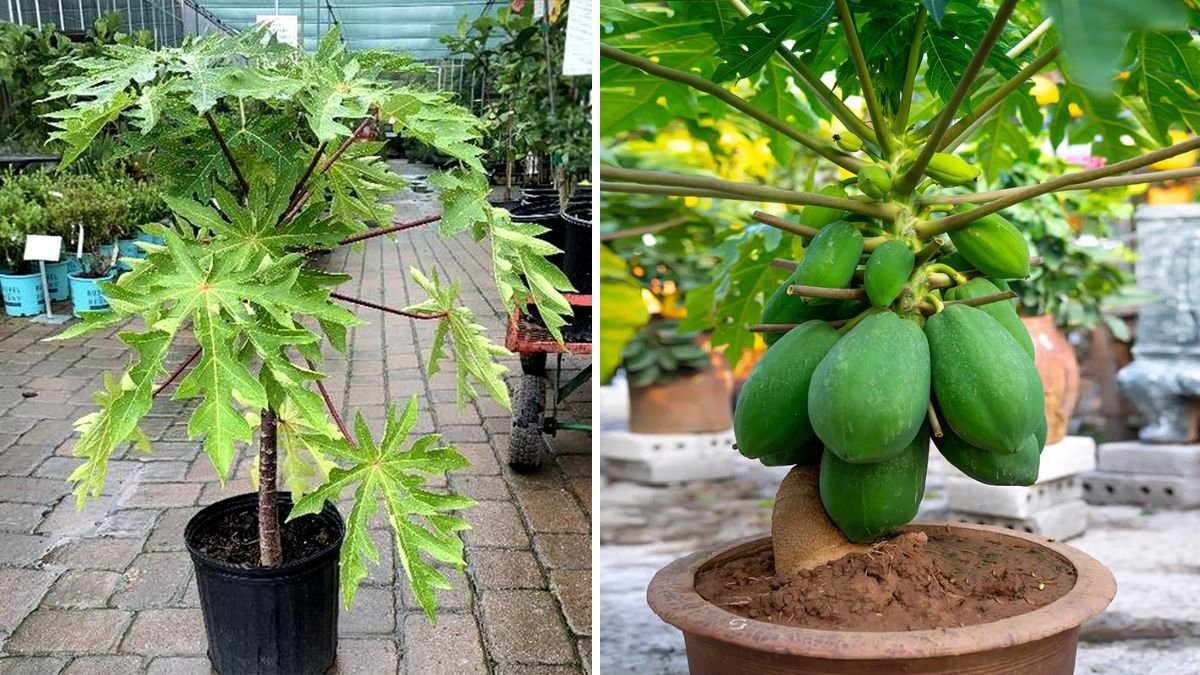

Most people believe papaya trees can grow only in warm, tropical gardens. They imagine tall plants swaying in the sunlight, rooted deep in soft outdoor soil. But what if you could grow a papaya tree inside your home—in a pot, in a corner, or even next to your window?
Well, that’s exactly what I did. I grew a papaya tree inside my house, and the experience was not just rewarding—it was magical.
In this article, I’ll share exactly how it happened, the steps I followed, the challenges I faced, and a complete guide so you can grow your own indoor papaya tree too. Whether you’re a beginner gardener or someone who loves trying unique plant projects, you’ll find this guide inspiring and practical.
🌱 Why Grow Papaya Indoors?
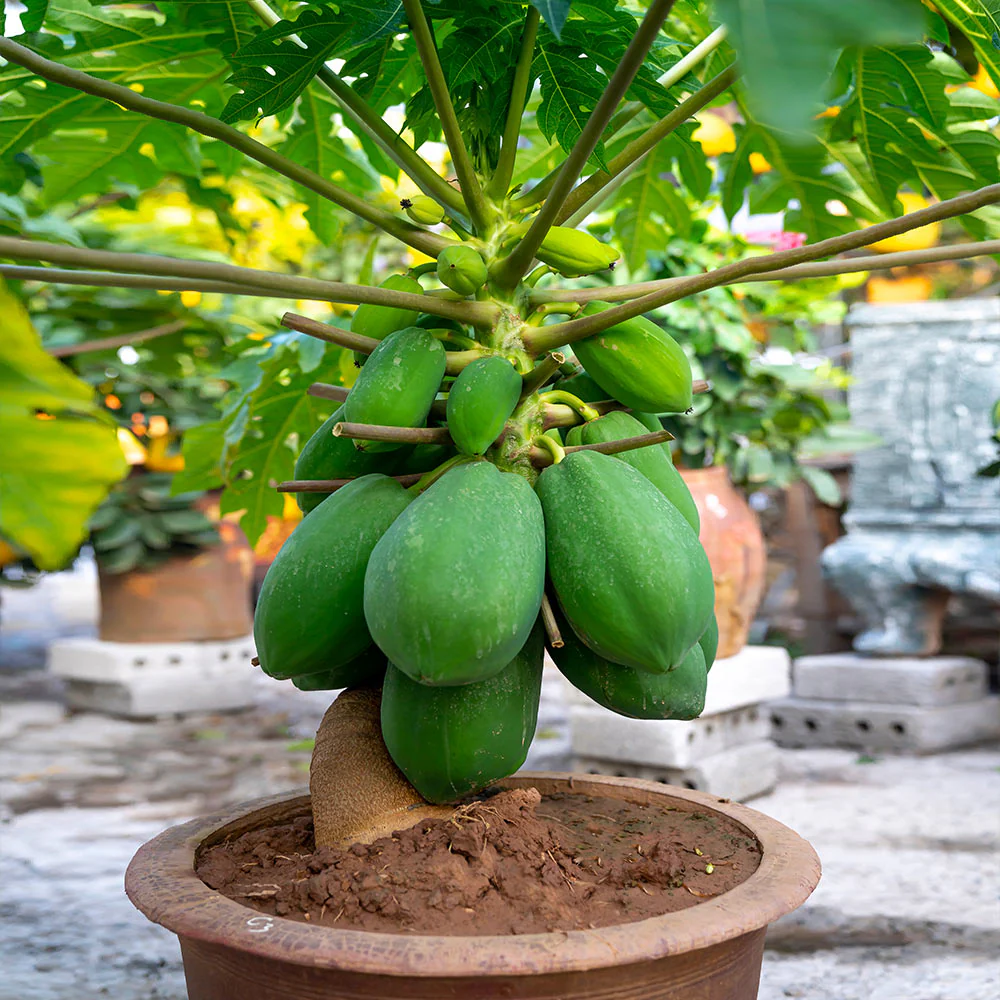
Growing a papaya tree inside your home may sound unusual, but it makes perfect sense for several reasons:
1. You Don’t Need a Big Outdoor Garden
If you live in an apartment or a small house, indoor gardening allows you to grow fruit-bearing plants you never thought possible.
2. It’s Faster Than You Think
Papaya is one of the fastest fruiting trees. With good care, it can start flowering in as little as 6–12 months.
3. It Looks Stunning
A papaya tree with its large umbrella-like leaves adds a tropical feel to any living space.
4. You Control Temperature & Pests
Even if you don’t live in a warm region, you can maintain the right conditions indoors.
🍈 Choosing the Right Variety for Indoor Growing
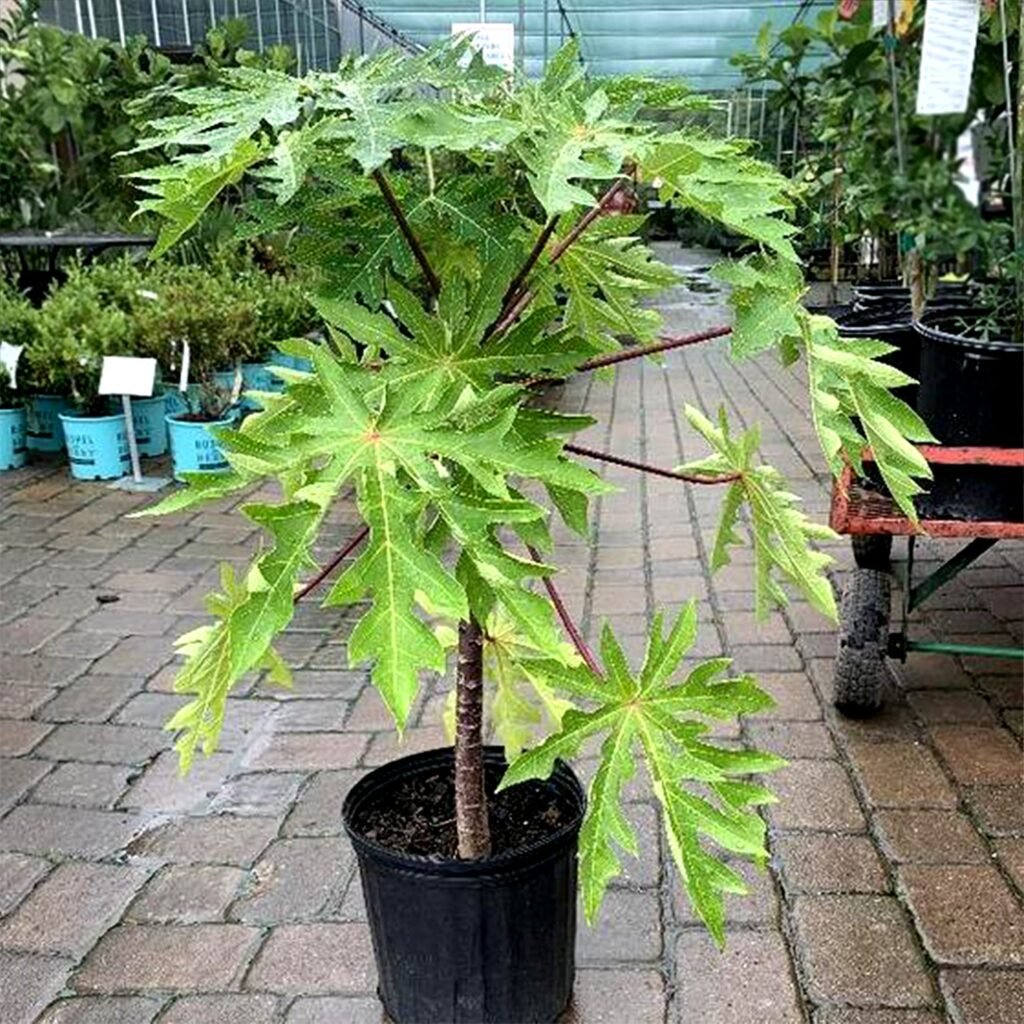
Not all papaya varieties are suitable for indoor growth. The best ones are dwarf or hybrid types that grow compact and fruit early.
Here are the best varieties for indoor cultivation:
✔️ Pusa Nanha (Dwarf variety)
✔️ Red Lady (High-yielding hybrid)
✔️ Taiwan Red
✔️ Solo Papaya
✔️ Arka Prabhath
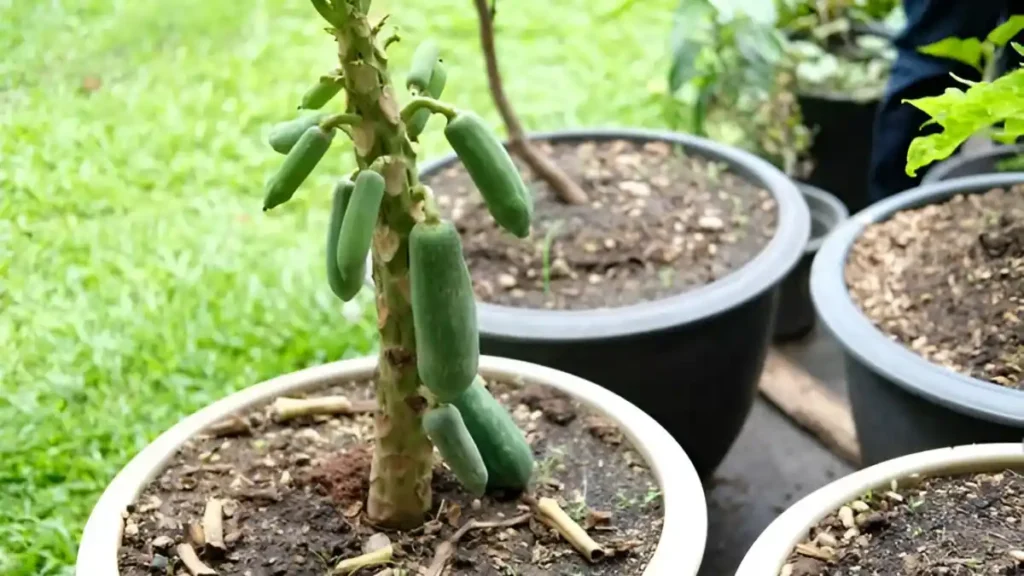
These varieties can produce fruit even when grown in pots.
🪴 Step 1: Germinating Papaya Seeds at Home
Growing papaya indoors begins with seed preparation. Here’s how I started mine:
How to Prepare Seeds
- Scoop fresh seeds from a ripe papaya.
- Wash them thoroughly to remove the gelatinous coating.
- Dry them for 24 hours.
- Place them between damp tissue paper inside an airtight box.
- Leave the box in a warm area (like near a window or on top of a refrigerator).
✔️ Seeds germinate in 4–10 days.
Once they sprout, transfer each seedling to a small pot.
🌿 Step 2: Preparing the Perfect Soil Mix
Indoor papaya plants thrive in loose, airy, nutrient-rich soil.
Ideal Soil Mix
- 40% garden soil
- 30% compost (vermicompost or cow dung)
- 20% cocopeat
- 10% sand or perlite
Add a handful of neem cake for pest protection.
The soil must drain well—papayas hate wet feet!
🌞 Step 3: Giving Your Papaya the Right Amount of Light
Papaya trees need plenty of sunlight, even indoors.
Place Your Plant:
✔️ Near a south- or west-facing window
✔️ On a balcony or indoor sunlit corner
✔️ Under a grow light if natural sunlight is weak
Papayas need 6–8 hours of bright light daily.
If your home doesn’t get enough light, consider using LED grow lights—they work wonders.
💧 Step 4: Watering Your Indoor Papaya Tree
Papaya roots are sensitive. Overwatering is the biggest reason indoor papaya plants die.
Follow These Rules:
- Water only when the top 2 inches of soil feel dry.
- Always use a pot with good drainage.
- Reduce watering during winter.
- Never leave water in the bottom tray.
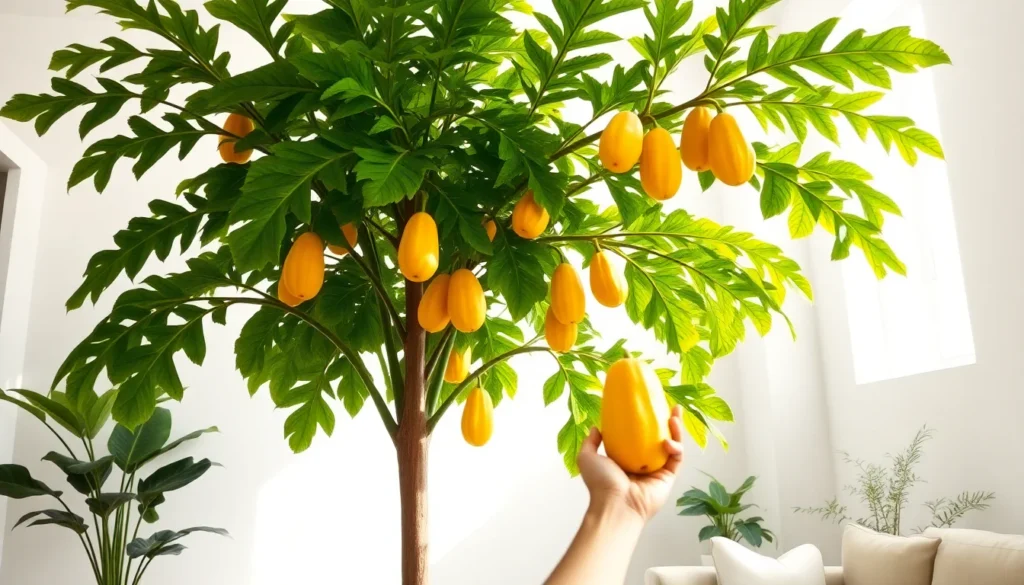
A healthy papaya plant has upright leaves, fresh green color, and steady growth.
🪴 Step 5: Choosing the Right Pot Size
Start small but upgrade responsibly.
Potting Guide
- Seedlings: 6-inch pot
- Growing stage: 12-inch pot
- Final pot: 18–24 inches (minimum)
Use a deep container because papayas develop long taproots.
🌱 Step 6: Feeding Your Indoor Papaya Tree
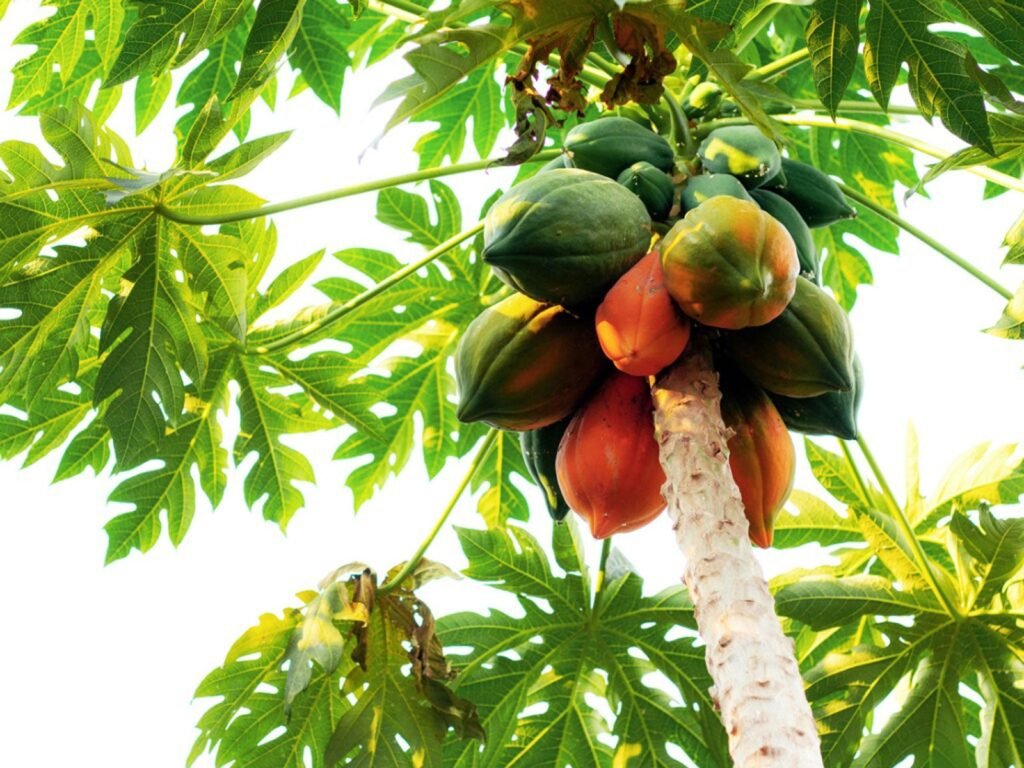
Papayas grow fast and need regular nutrition.
Fertilizer Routine
Every 15 days → Liquid fertilizer
(Seaweed extract, compost tea, banana peel tea)
Every month → 2–3 handfuls of compost
Every 2 months → Potash-rich fertilizer
(Wood ash, banana peel powder)
Avoid chemical fertilizers indoors—they create strong smells and can harm indoor air quality.
🌸 Step 7: Encouraging Flowering Indoors
Papayas can produce flowers indoors if they get:
✔️ Enough sunlight
✔️ Proper nutrition
✔️ Warm temperatures (20–30°C)
Once your plant reaches 3–4 feet, you may see the first buds.
Male vs Female Plants
Papayas can be:
- Male – Only flowers, no fruit
- Female – Fruits after pollination
- Hermaphrodite – Best type; self-pollinating
Most hybrids (like Red Lady) are hermaphrodite.
🍈 Step 8: Hand Pollination Indoors
If your plant produces flowers indoors, you may need to assist in pollination.
Here’s how:
- Take a soft brush or cotton bud.
- Lightly touch the pollen area of a male flower.
- Transfer it into the center of a female flower.
You’ll know pollination was successful if the base of the female flower begins to swell within a few days.
🍃 Challenges I Faced Growing Papaya Indoors
Growing a papaya tree inside your home is exciting but comes with some challenges.
1. Limited Sunlight
Solution: Installed a grow light.
2. Space Issue
Solution: Regular pruning of older leaves.
3. Overwatering Risk
Solution: Switched to a moisture meter for accuracy.
4. Cold Winter Nights
Solution: Moved the plant away from windows and used a room heater.
Once I learned how to handle these issues, the plant flourished beautifully.
🍈 How Long Until You Get Fruit Indoors?
With good care:
✔️ Papayas can start fruiting in 8–14 months indoors.
✔️ Smaller varieties fruit faster.
Even if they don’t fruit, the plant looks stunning and brings tropical energy to your home.
🌿 Benefits of Growing Papaya Inside Your House
- Cleaner air
- A beautiful green indoor centerpiece
- A fun gardening project
- Fresh papayas in your living room
- A deeper connection with nature
And there’s nothing more satisfying than eating fruit you grew inside your own home.
🌟 Final Thoughts: Yes, You Can Grow Papaya Indoors!
Growing a papaya tree inside your house is not just possible—it’s surprisingly easy and incredibly rewarding. With the right variety, good sunlight, proper soil, and regular care, your indoor papaya tree will thrive and may even reward you with sweet, home-grown papayas.
If I can grow a papaya plant inside my home, you can definitely do it too.