
Introduction: Why Propagating Rosemary Is a Smart Gardening Choice
Propagating rosemary at home is one of the easiest and most rewarding ways to enjoy a constant supply of fresh herbs without spending money on new plants. Rosemary is a hardy perennial herb that thrives in containers, raised beds, and garden borders, making it ideal for home gardeners. By learning simple propagation methods, you can multiply one healthy plant into many. This technique is especially helpful for small gardens and balconies. Propagation also ensures the new plants maintain the same aroma and flavor as the parent plant. Whether you cook often or enjoy herbal gardening, rosemary propagation saves time and money. It is also a sustainable way to grow herbs naturally. With basic tools and patience, anyone can succeed.
Understanding Rosemary Growth and Propagation Basics
Rosemary grows best from cuttings rather than seeds because seeds germinate slowly and inconsistently. When propagated from cuttings, rosemary develops faster and remains genetically identical to the parent plant. This ensures consistent fragrance, leaf texture, and growth habits. The plant prefers warm temperatures, good airflow, and excellent drainage. Knowing how rosemary naturally grows helps you choose the right propagation technique. Softwood and semi-hardwood stems are ideal for propagation. Healthy growth indicates strong rooting potential. Understanding these basics increases success rates significantly. It also prevents common mistakes beginners make.
Best Time of Year to Propagate Rosemary
Timing plays a major role in successful rosemary propagation. The best time to propagate rosemary is during spring and early summer when the plant is actively growing. During this period, stems root faster due to higher energy levels in the plant. Mild temperatures and longer daylight hours also encourage root formation. Avoid propagating during extreme heat or cold. Indoor propagation can be done year-round if temperature and light are controlled. Choosing the right season reduces stress on the cutting. Proper timing improves survival rates. It also shortens the rooting period.
Choosing the Right Parent Plant
Selecting a healthy parent plant is essential for successful propagation. Choose a rosemary plant that is disease-free, pest-free, and growing vigorously. Avoid woody, old, or flowering stems as they root slowly. New green growth with flexible stems works best. The parent plant should have strong aroma and healthy leaves. This ensures the propagated plant inherits good qualities. Water the parent plant a day before taking cuttings. Hydrated plants produce stronger cuttings. This step improves rooting success.
How to Take Rosemary Cuttings Correctly
Cuttings should be taken using clean, sharp scissors or pruning shears. Cut a four to six inch stem just below a leaf node. Remove leaves from the lower half of the cutting to prevent rot. Keep the top leaves intact to support photosynthesis. Avoid crushing the stem while cutting. Immediately place cuttings in water or prepare them for soil. Proper cutting technique prevents infection. It also improves root development. Clean tools are essential for plant health.
Propagating Rosemary in Water
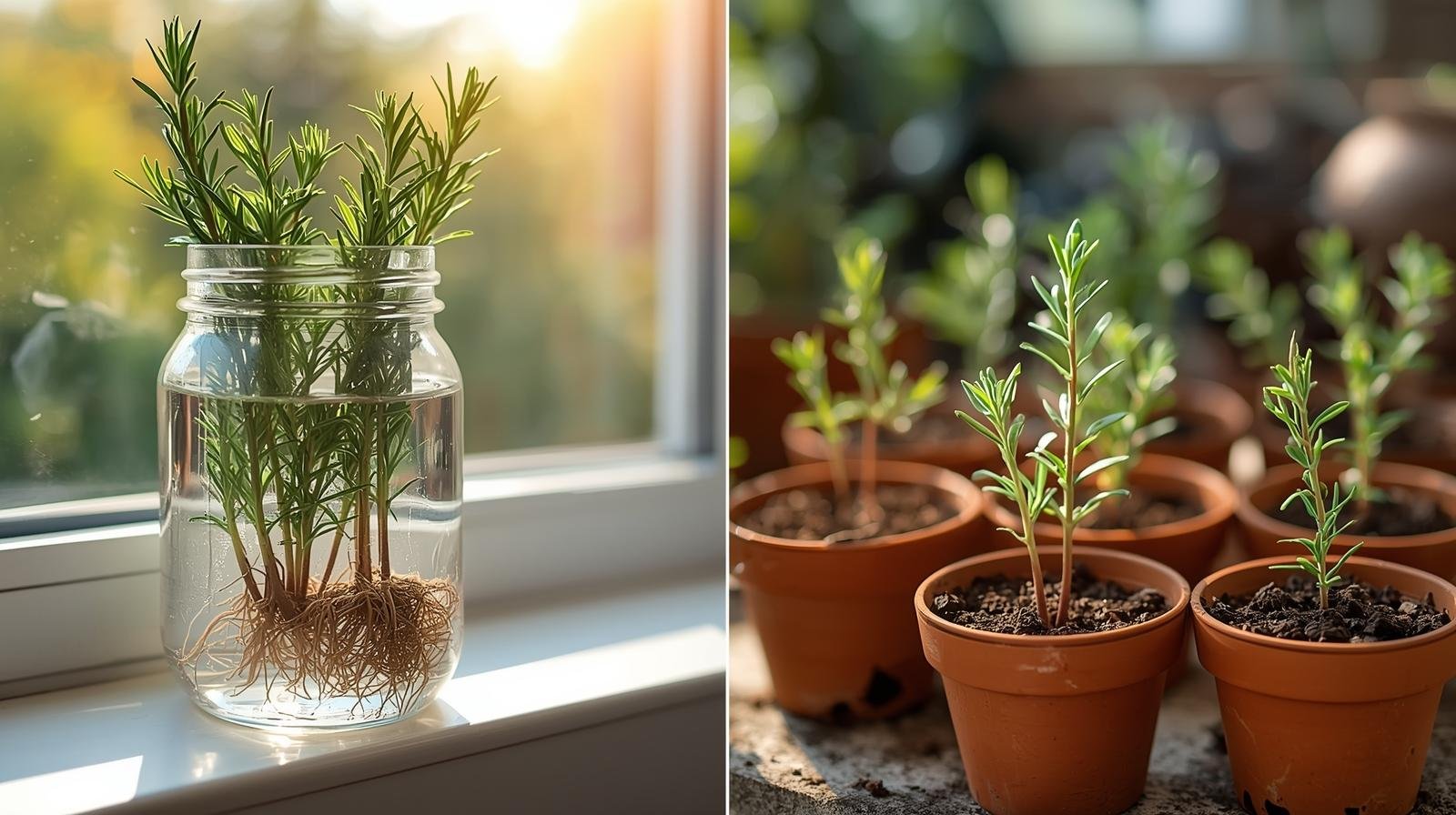
Water propagation is beginner-friendly and visually rewarding. Place rosemary cuttings in a glass jar filled with clean water. Ensure the stripped portion of the stem is submerged. Change the water every two to three days to prevent bacteria buildup. Keep the jar in bright, indirect sunlight. Roots usually appear within two to four weeks. Once roots are about one inch long, transplant into soil. This method allows easy monitoring. It is ideal for indoor gardeners.
Propagating Rosemary in Soil
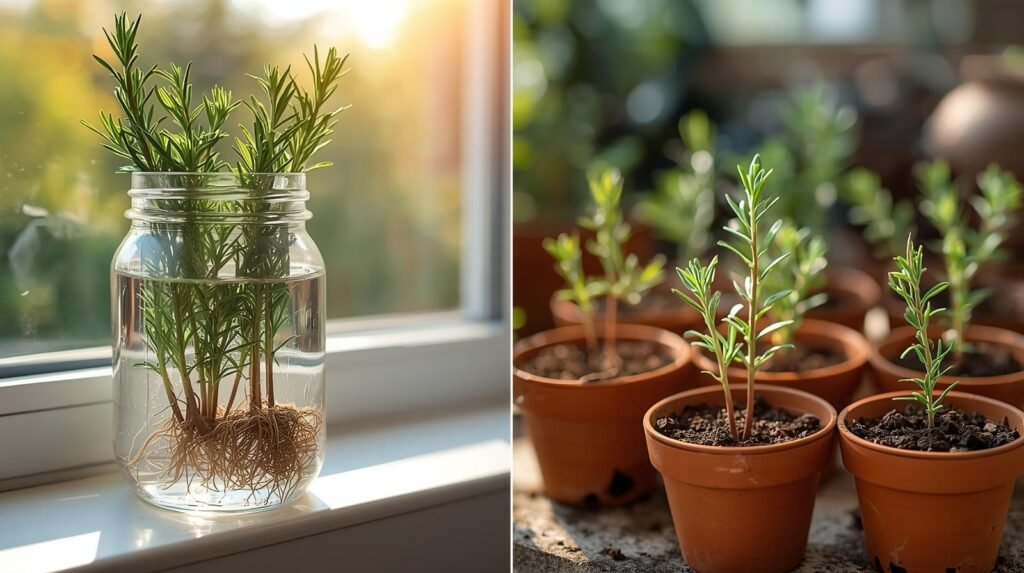
Soil propagation produces stronger root systems long term. Use a well-draining potting mix combined with sand or perlite. Insert cuttings into moist soil, burying the stripped portion. Firm the soil gently around the stem. Place the pot in a warm, bright area away from direct sunlight. Maintain consistent moisture without overwatering. Roots develop within three to five weeks. Soil propagation reduces transplant shock. It is ideal for outdoor planting.
Using Rooting Hormone for Faster Results
Rooting hormone is optional but highly effective for rosemary propagation. It encourages faster root growth and increases success rates. Dip the cut end of the stem into rooting hormone powder or gel. Shake off excess before planting. This step is especially useful for woody cuttings. Rooting hormone reduces the risk of rot. It also strengthens early root development. Gardeners with limited cuttings benefit most. This simple step saves time.
Ideal Soil Conditions for Root Development
Rosemary requires excellent drainage to prevent root rot. A mix of garden soil, sand, and compost works well. The soil should remain lightly moist but never soggy. Poor drainage leads to fungal problems. Pots must have drainage holes. Avoid heavy clay soil during propagation. Loose soil allows oxygen to reach developing roots. Healthy soil promotes strong growth. Proper soil selection ensures long-term success.
Light and Temperature Requirements
Light plays a critical role in rosemary propagation. Bright indirect sunlight is ideal during the rooting phase. Direct sunlight may stress cuttings. Temperatures between sixty-five and seventy-five degrees Fahrenheit work best. Avoid cold drafts and excessive heat. Indoor propagation should be placed near sunny windows. Outdoor propagation should be shaded lightly. Stable temperature encourages consistent growth. Light balance prevents leaf drop.
Watering Practices During Propagation
Overwatering is a common mistake when propagating rosemary. Keep soil slightly moist, not wet. Allow the top layer of soil to dry slightly between watering. Waterlogged soil suffocates roots. Use a spray bottle for gentle moisture. For water propagation, refresh water regularly. Proper watering encourages healthy roots. Consistent care prevents rot. Balanced moisture is key.
Transplanting Rooted Cuttings
Once roots are established, transplant cuttings carefully. Choose small pots with drainage holes. Handle roots gently to avoid damage. Plant at the same depth as before. Water lightly after transplanting. Allow the plant to adjust before moving outdoors. Gradual exposure to sunlight prevents shock. Transplanting at the right time ensures survival. Healthy roots lead to fast growth.
Hardening Off Young Rosemary Plants
Hardening off prepares young plants for outdoor conditions. Gradually expose them to sunlight and wind over one week. Start with one hour outdoors daily. Increase exposure slowly. This process strengthens stems and leaves. Sudden outdoor placement causes stress. Hardening off improves long-term health. It prevents leaf burn. Strong plants grow faster.
Common Problems and How to Fix Them
Yellow leaves often indicate overwatering. Slow rooting may result from cold temperatures. Mold growth signals poor airflow. Leggy growth means insufficient light. Addressing problems early prevents plant loss. Adjust watering and lighting as needed. Remove affected cuttings promptly. Proper care solves most issues. Monitoring daily helps.
Benefits of Growing Rosemary from Cuttings
Propagation saves money and ensures plant quality. Cuttings mature faster than seed-grown plants. You can grow unlimited rosemary from one plant. It is ideal for cooking, medicinal use, and landscaping. Propagated plants adapt better to local conditions. This method supports sustainable gardening. Fresh herbs improve cooking flavor. Rosemary also attracts beneficial insects.
Indoor vs Outdoor Rosemary Propagation
Indoor propagation offers better control over conditions. Outdoor propagation benefits from natural airflow and light. Indoor methods suit colder climates. Outdoor methods work well in warm seasons. Choose based on your environment. Both methods are effective. Understanding conditions improves success. Flexibility is key.
Long-Term Care for Propagated Rosemary
Once established, rosemary requires minimal care. Water only when soil dries. Prune regularly to maintain shape. Provide full sunlight for best flavor. Fertilize lightly if needed. Avoid excessive moisture. Long-term care ensures continuous harvest. Healthy plants last for years. Proper pruning increases yield.
Harvesting Rosemary Without Damaging Plants
Harvest rosemary by cutting sprigs from the top. Never remove more than one third of the plant. Regular harvesting encourages bushy growth. Use clean scissors. Harvest in the morning for best flavor. Avoid cutting woody stems excessively. Proper harvesting maintains plant health. This ensures endless supply.
Table: Rosemary Propagation Methods Explained
Method Name
Water propagation involves rooting cuttings in water and transplanting later
Best Season
Spring and early summer offer fastest results
Rooting Time
Two to five weeks depending on conditions
Skill Level
Beginner friendly with minimal tools