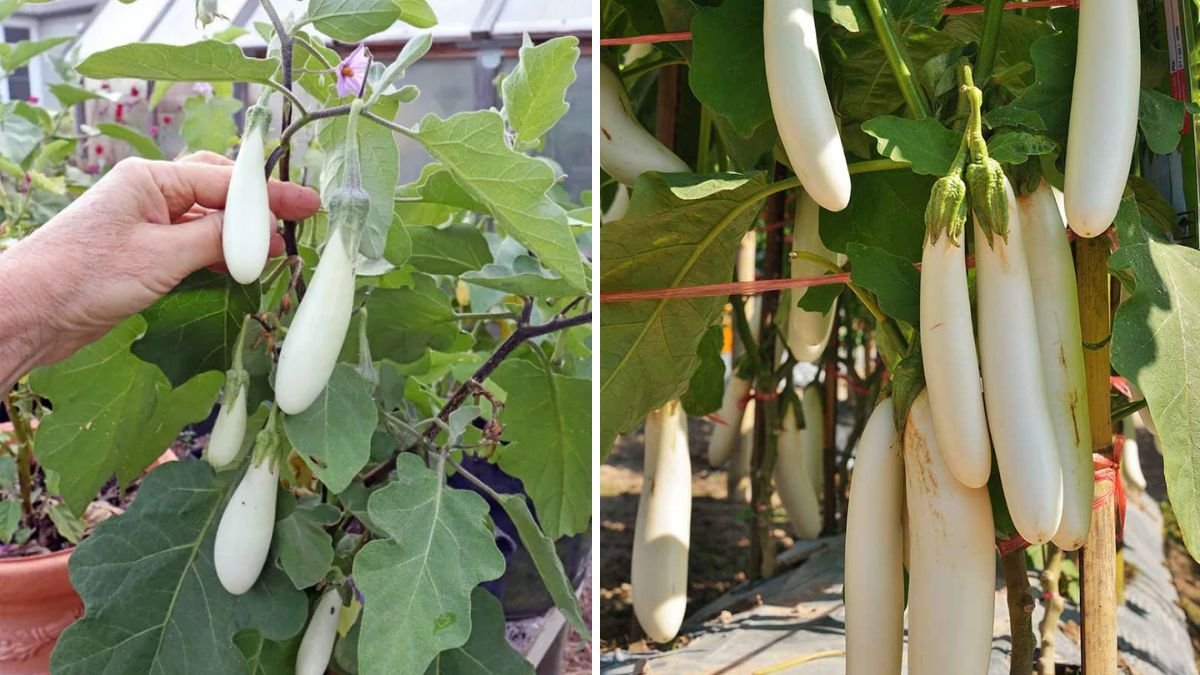

White eggplants are a striking and delicious addition to any garden or kitchen. With their smooth, glossy white skin and unique flavor, they’re perfect for curries, grills, and salads. The good news is that growing white eggplants at home is easier than most people think. Even small spaces, terraces, and balcony gardens can yield round, high-quality fruits if proper techniques are followed.
This comprehensive guide will take you through every step—from choosing the right seeds and containers to harvesting big, healthy white eggplants—ensuring maximum yield and excellent fruit quality.
Why Grow White Eggplants?
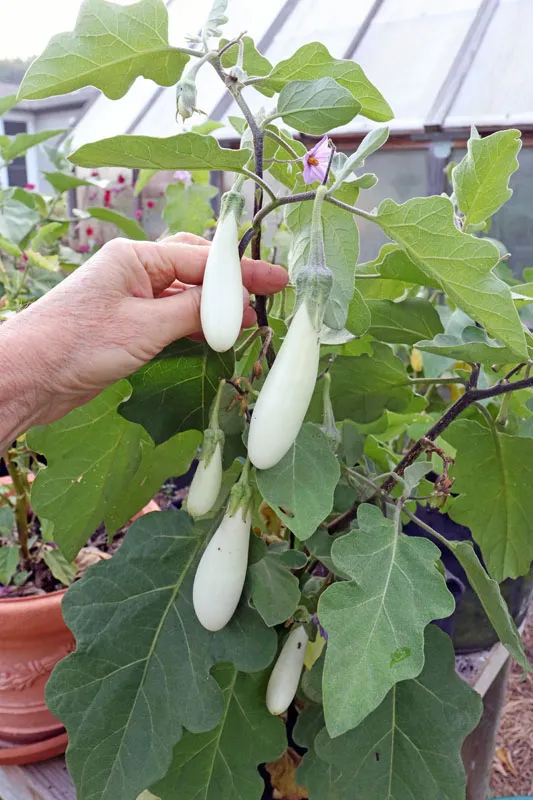
White eggplants aren’t just beautiful—they offer several advantages for home gardeners:
- Unique flavor and texture: Slightly sweeter and less bitter than purple varieties.
- High market value: Great for selling if you’re a small-scale urban farmer.
- Space-efficient: Can grow in containers, tubs, or small garden beds.
- Nutrient-rich: Packed with fiber, vitamins, and antioxidants.
- High-yielding: With proper care, one plant can produce 8–12 fruits per season.
Even if you’ve never grown eggplants before, following this guide will help you harvest round, glossy fruits consistently.
Step 1: Choosing the Right White Eggplant Variety
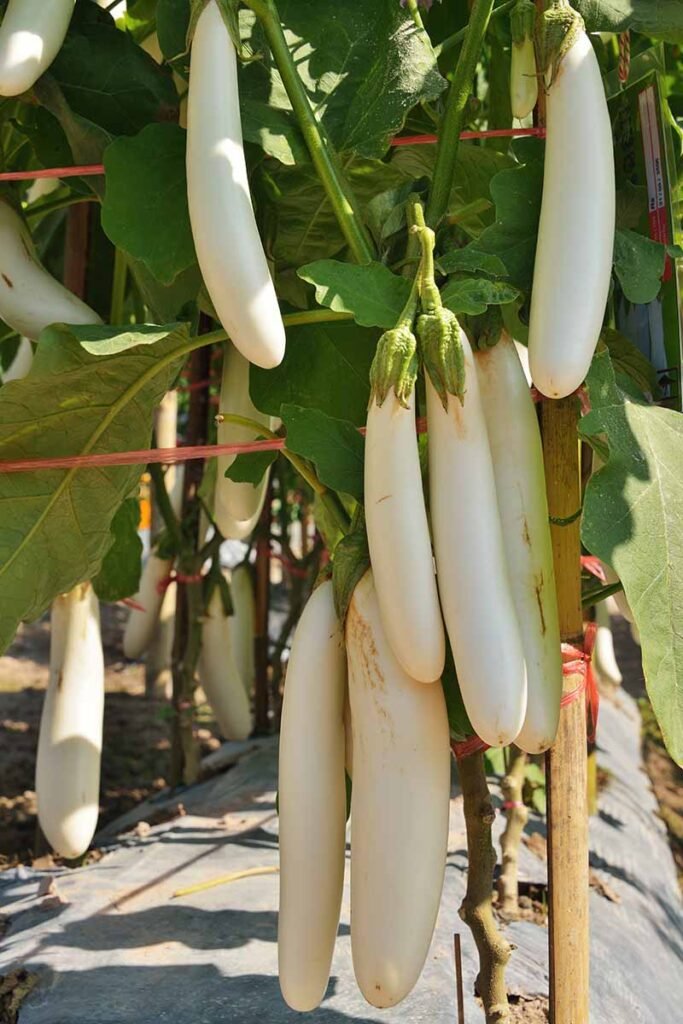
Not all eggplants grow well in containers or small gardens. For home growers, pick compact, high-yielding varieties.
Recommended White Eggplant Varieties
- White Beauty – Round, glossy fruits, very productive
- Casper – Compact plant, ideal for pots
- Snowball – Small to medium round fruits, prolific
- White Star – Resistant to pests and diseases
Look for disease-resistant, container-friendly varieties for best results.
Step 2: Selecting the Right Container
White eggplants grow best in deep containers that allow proper root development.
Container Guidelines
- Size: Minimum 20–25 liters per plant
- Depth: At least 12 inches for roots to expand
- Material: Plastic tubs, pots, or grow bags
- Drainage: 4–6 holes at the bottom to prevent waterlogging
Pro Tip: Place saucers under containers to catch excess water and prevent mess on terraces or balconies.
Step 3: Prepare the Soil
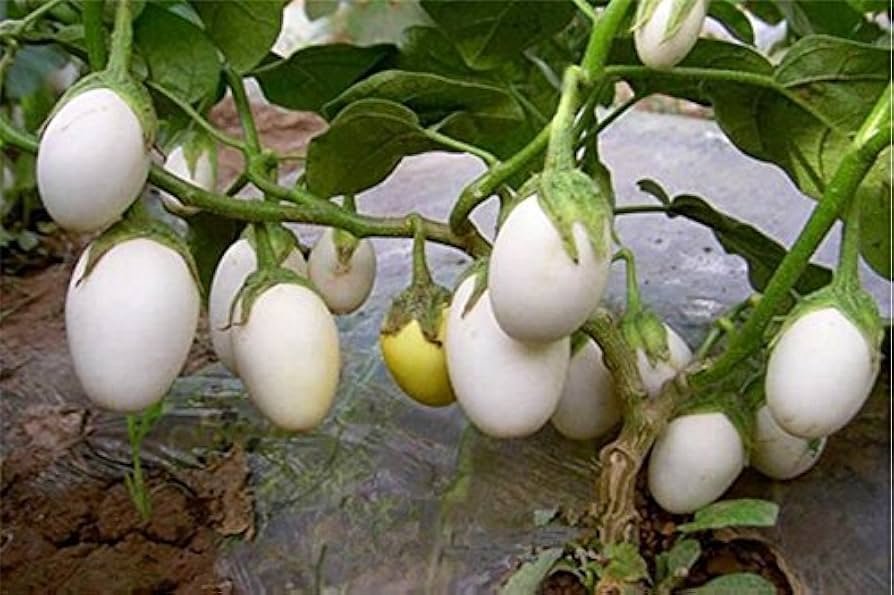
Eggplants are heavy feeders and need nutrient-rich, well-draining soil for big, round fruits.
Ideal Soil Mix
- 50% garden soil
- 30% compost or vermicompost
- 20% cocopeat or sand for drainage
Optional Additions
- Bone meal for strong roots
- Neem cake to prevent pests
- Wood ash or potash to support fruiting
Mix the soil thoroughly to create a loose, airy, fertile environment for healthy plant growth.
Step 4: Sowing Seeds or Transplanting Seedlings
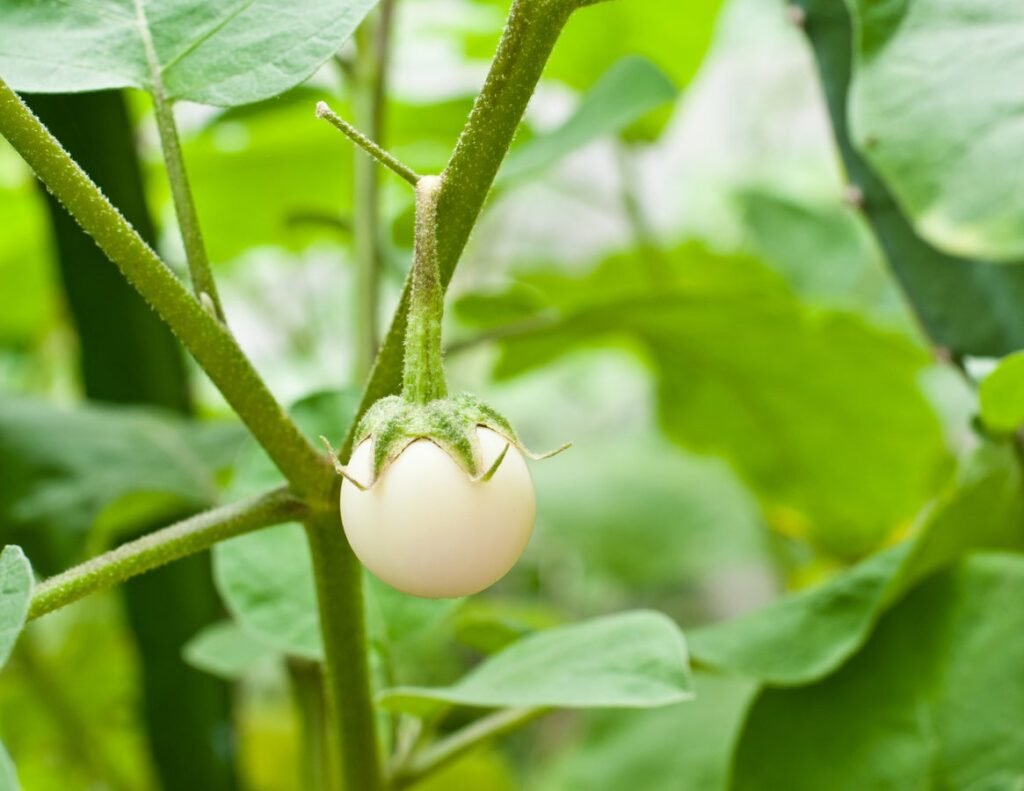
White eggplants can be grown from seeds or seedlings.
From Seeds
- Start seeds indoors in small trays or pots.
- Sow 1–2 seeds per cell, about 1/2 inch deep.
- Water lightly and cover with a plastic sheet for germination.
- Germination occurs in 7–10 days.
From Seedlings
- Choose seedlings with 4–6 true leaves.
- Transplant into prepared containers.
- Water immediately to help roots settle.
- Keep in partial shade for 1–2 days before full sun exposure.
Spacing: One plant per 20–25 liter container works best to allow proper fruit growth.
Step 5: Sunlight Requirements
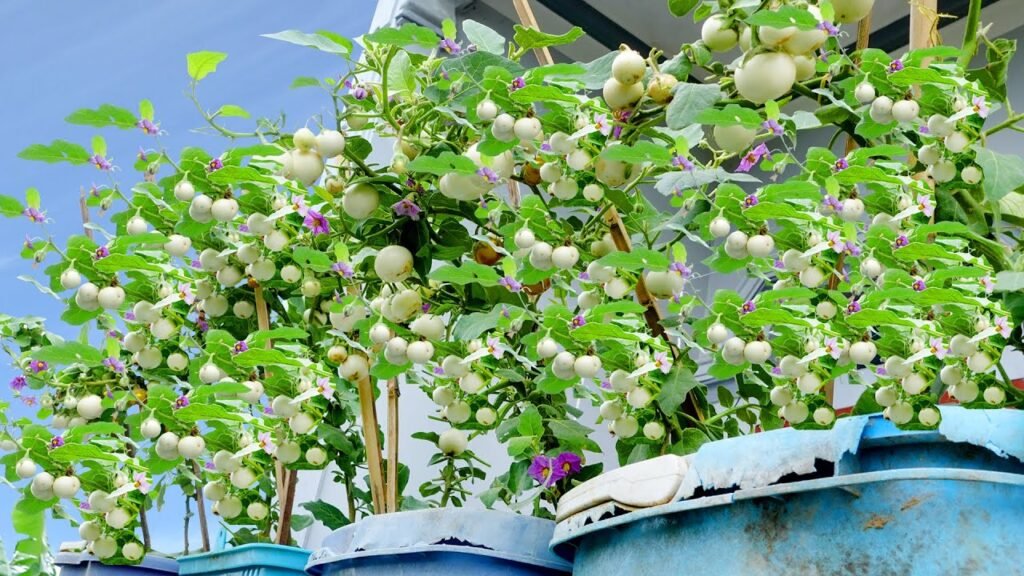
White eggplants need full sunlight for optimal growth.
- Minimum 6 hours of sunlight per day
- Ideal: 7–8 hours for maximum flowering and fruiting
- East- or south-facing balconies are perfect
- Provide light shade during extreme heat to prevent leaf scorching
Good sunlight ensures strong stems, lush leaves, and round, firm fruits.
Step 6: Watering Your White Eggplants
Consistent moisture is crucial for high yields, but overwatering can lead to root rot.
Watering Tips
- Keep the soil evenly moist at all times
- Water at the base to avoid wetting leaves
- Summer: water daily or every other day
- Cooler months: water every 2–3 days
- Mulch with straw or dried leaves to retain moisture
Pro Tip: Uneven watering can cause misshapen or bitter fruits.
Step 7: Fertilizing for High Yield
Eggplants are heavy feeders, and proper fertilization is critical for big, round fruits.
Fertilizer Schedule
- Every 15 days: Add compost or vermicompost around the base
- Every 10 days: Use liquid fertilizers (cow dung water, compost tea, or seaweed extract)
- Every 20 days: Add potash booster (banana peel, wood ash) to improve fruit size
Balanced feeding ensures lush green leaves and abundant fruiting.
Step 8: Providing Support
White eggplants produce heavy fruits and tall vines. Supporting plants prevents damage and promotes high yield.
Support Methods
- Insert bamboo stakes or wooden sticks near the stem
- Tie the main stem loosely with soft cloth
- Use trellis nets for multiple plants in a row
Support ensures upright growth, prevents stem breakage, and improves air circulation.
Step 9: Pollination and Flower Management
Eggplant flowers are self-pollinating, but proper care ensures more fruit set.
- Remove damaged or yellow leaves to improve airflow
- Gently shake flowers to help pollen transfer
- Avoid overhead watering to prevent fungal diseases
Proper pollination ensures round, uniform fruits.
Step 10: Pest and Disease Management
White eggplants can be affected by pests and diseases, but container growing reduces risks.
Common Issues
- Aphids and whiteflies
- Caterpillars
- Fungal leaf spots
Easy Solutions
- Spray neem oil or organic insecticides weekly
- Remove infected leaves immediately
- Maintain spacing for air circulation
- Avoid waterlogging
Healthy plants produce high-quality, disease-free fruits.
Step 11: Harvesting White Eggplants
White eggplants are ready to harvest when the fruits are firm, glossy, and fully sized.
Harvesting Tips
- Check fruits regularly to prevent overripening
- Use a sharp knife to cut the fruit, leaving a small stem attached
- Harvest every 2–3 days for continuous production
Expected Yield: Each plant can produce 8–12 large, round fruits per season with proper care.
Advantages of Growing White Eggplants at Home
- High yield in small spaces
- Perfect for balconies, terraces, and container gardens
- Reuses containers and reduces gardening costs
- Allows control over soil, water, and nutrients
- Easy pest management
- Produces fresh, organic, and visually striking fruits
Even a few containers can provide enough eggplants for family meals or small-scale selling.
Final Thoughts: Your High-Yield White Eggplant Garden
Growing white eggplants at home is rewarding, space-efficient, and cost-effective. With the right seeds, containers, soil, sunlight, and care, you can harvest round, juicy, and high-yield fruits even without a traditional garden.
This method transforms balconies, terraces, or small outdoor spaces into productive home farms, giving you fresh, organic white eggplants season after season. Whether you’re a beginner or an experienced gardener, this simple approach ensures maximum yield and beautiful fruits every time.