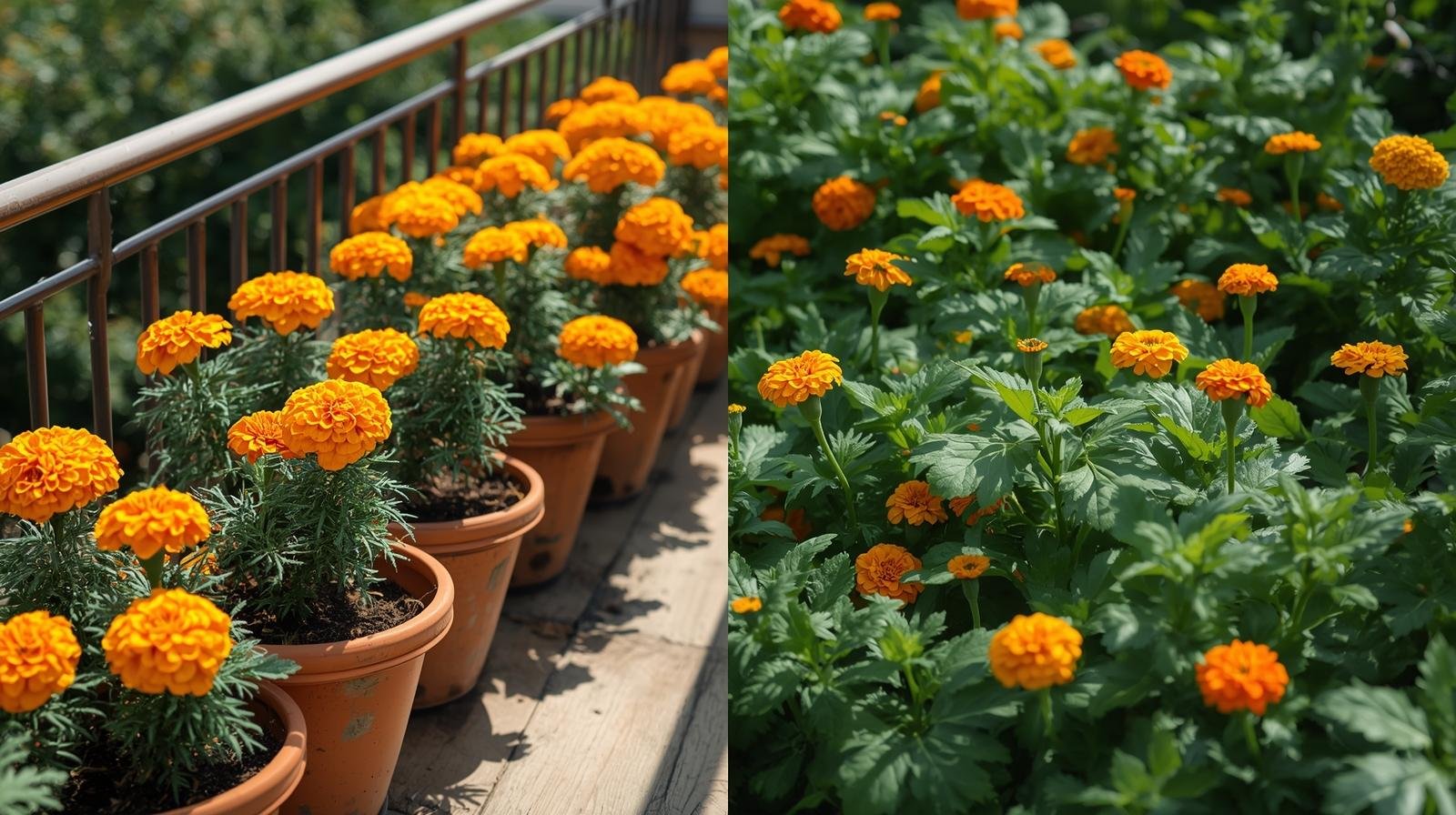

Introduction: Why Marigolds Are Perfect for Container Gardening
Marigolds are one of the most popular flowers among home gardeners because they are beautiful, hardy, and incredibly useful. Growing marigolds in pots is an excellent solution for gardeners with limited space, balconies, patios, or small yards. These vibrant flowers are known for their ability to repel common garden pests naturally. Their strong scent confuses insects and reduces pest pressure on nearby plants. Marigolds also bloom quickly and continue flowering for months. Container gardening allows better control over soil quality and drainage. With minimal care, marigolds thrive and reward gardeners generously. This guide explains how to grow marigolds in pots for healthy, pest-free gardens.
Understanding the Natural Pest-Repelling Power of Marigolds
Marigolds release natural compounds from their roots and flowers that deter insects and soil pests. Nematodes, aphids, whiteflies, and mosquitoes are particularly affected by marigold scent. When grown in pots, marigolds still provide this protective benefit. Placing containers near vegetables or entryways helps reduce pest problems. Their effectiveness comes from a combination of fragrance and root secretions. This makes marigolds a natural alternative to chemical pesticides. Gardeners appreciate this eco-friendly approach. Understanding this benefit helps you position marigold pots strategically.
Choosing the Right Marigold Variety for Pots
Not all marigolds grow the same, so choosing the right variety is essential. French marigolds are compact and ideal for containers. African marigolds grow taller and need larger pots. Signet marigolds have delicate foliage and edible flowers. For small spaces, dwarf varieties work best. Always check the plant label for size information. Selecting the right type ensures healthy growth and abundant blooms. Proper variety selection reduces maintenance challenges.
Preparing the Perfect Pot for Marigolds
The right container plays a major role in successful marigold growth. Pots should have drainage holes to prevent waterlogging. Terracotta, plastic, or ceramic pots all work well. A pot that is at least eight to ten inches deep is ideal. Larger pots support bigger plants and more blooms. Clean containers reduce disease risk. Choosing appropriate pot size allows roots to grow freely and stay healthy.
Best Soil Mix for Potted Marigolds
Marigolds prefer loose, well-draining soil that does not retain excess moisture. A quality potting mix combined with compost works well. Avoid heavy garden soil that compacts easily. Adding sand or coco peat improves drainage. Healthy soil supports strong roots and vibrant flowers. Soil quality directly affects bloom production. Refreshing soil each season keeps plants productive.
Planting Marigold Seeds or Seedlings in Pots
Marigolds can be grown easily from seeds or nursery seedlings. Seeds should be planted shallowly and lightly covered with soil. Seedlings should be planted at the same depth as in their original container. Water gently after planting to settle the soil. Space plants properly to allow airflow. Overcrowding leads to weak growth. Proper planting ensures a strong start.
Sunlight Requirements for Healthy Marigolds
Marigolds thrive in full sunlight and require at least six hours of direct sun daily. Sunlight encourages abundant flowering and compact growth. In partial shade, plants may grow leggy and bloom less. Place pots in bright, open locations. Rotate containers if sunlight is uneven. Adequate light also strengthens pest-repelling properties. Sun exposure is a key factor in success.
Watering Marigolds in Containers Correctly
Watering potted marigolds requires balance. Soil should be kept slightly moist but never soggy. Overwatering leads to root rot and fungal diseases. Water when the topsoil feels dry. Morning watering is ideal. Avoid wetting leaves frequently. Consistent watering supports continuous blooms.
Fertilizing Marigolds for Continuous Blooms
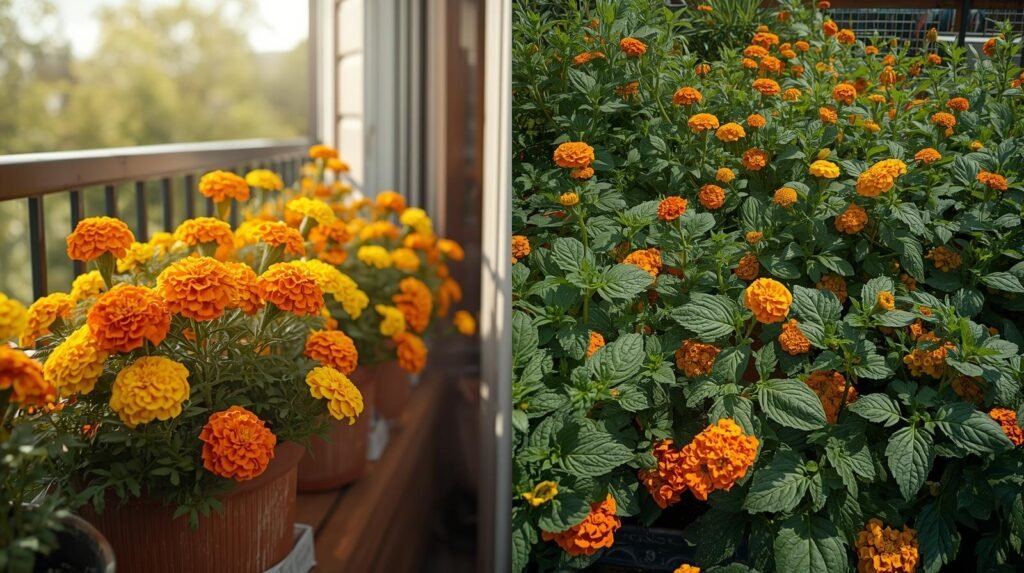
Marigolds do not require heavy feeding. Too much fertilizer encourages leaves instead of flowers. A light application of balanced fertilizer every few weeks is sufficient. Organic compost or liquid feed works well. Fertilizing during active growth boosts bloom production. Always follow recommended doses. Proper feeding keeps plants healthy.
Deadheading and Pruning for Better Growth
Removing spent flowers encourages new blooms. Deadheading keeps plants looking neat and productive. Light pruning improves airflow and shape. Regular maintenance prevents disease buildup. Healthy plants flower more consistently. This simple practice makes a noticeable difference. Pruning is easy and rewarding.
Using Marigold Pots for Pest Control
Strategic placement enhances pest-repelling benefits. Place pots near vegetable beds, doors, or windows. Marigolds protect tomatoes, peppers, and herbs. Their scent deters insects from entering homes. Grouping several pots increases effectiveness. This natural method reduces chemical dependence. Marigolds work as living pest barriers.
Common Problems and How to Fix Them
Marigolds are hardy but may face issues like yellowing leaves or poor blooms. Overwatering is the most common problem. Poor drainage causes root stress. Pests like spider mites may appear in dry conditions. Proper care prevents most issues. Early intervention keeps plants thriving. Observation is key.
Seasonal Care for Potted Marigolds
Marigolds grow best in warm seasons. Protect pots from frost in cooler climates. In extreme heat, provide light afternoon shade. Refresh soil and prune at season’s end. Seasonal care extends plant life. Adjust watering based on weather. Seasonal awareness ensures success.
Benefits of Growing Marigolds in Pots
Potted marigolds offer flexibility and convenience. They are easy to move and rearrange. Containers prevent soil-borne diseases. Pest control is localized and effective. Marigolds add color and function. They suit all gardening levels. Their versatility makes them invaluable.
Table: Marigold Growing Requirements in Pots
Category
Best Practice
Container Size
Eight to twelve inches deep
Sunlight
Full sun daily
Watering
Moderate well-drained
Soil Type
Loose potting mix
Fertilizer
Light balanced feed
Final Thoughts on Growing Marigolds in Pots
Growing marigolds in pots is simple, rewarding, and highly beneficial. These cheerful flowers protect gardens naturally. With minimal care, they bloom continuously. Their adaptability suits any space. Container gardening makes pest control easy. Marigolds combine beauty with purpose. They are perfect for every gardener.