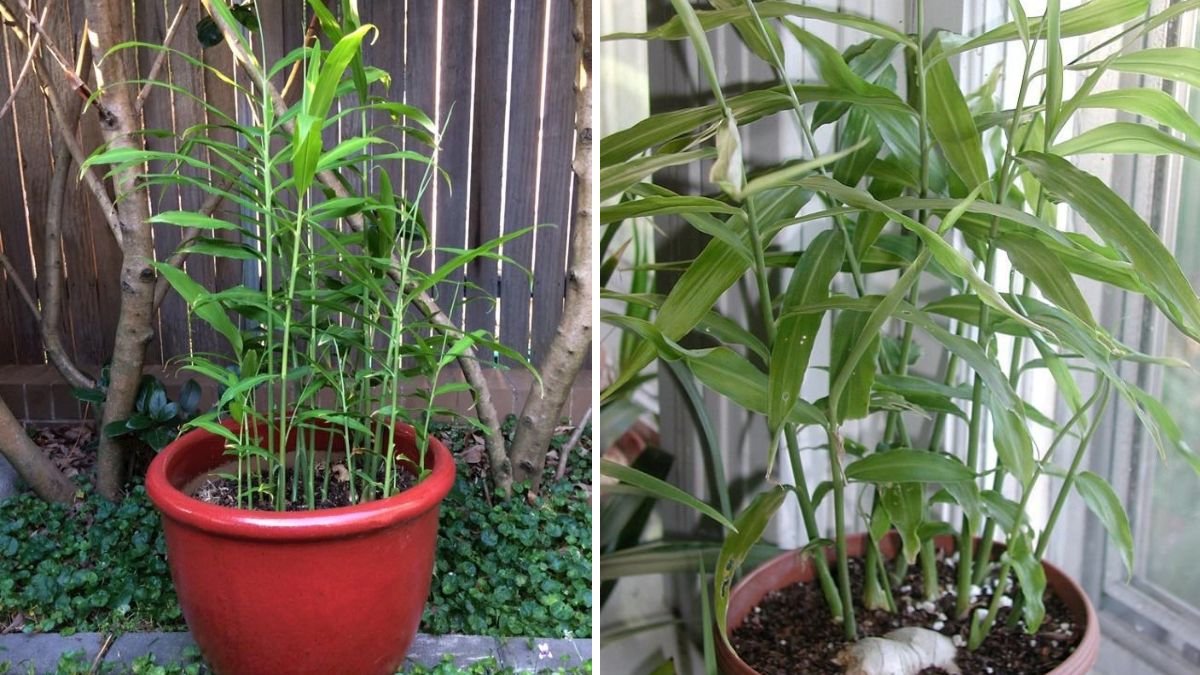

Ginger is a remarkable plant, known not only for its distinctive flavor but also for its wide-ranging health benefits. From culinary delights to natural remedies, ginger has been valued for centuries. The good news is that ginger is surprisingly easy to grow at home, whether in a garden bed, pots, or containers. With the right techniques, you can cultivate fresh, organic ginger, enjoy its medicinal properties, and use it in a variety of ways right from your kitchen.
Why Grow Ginger at Home?
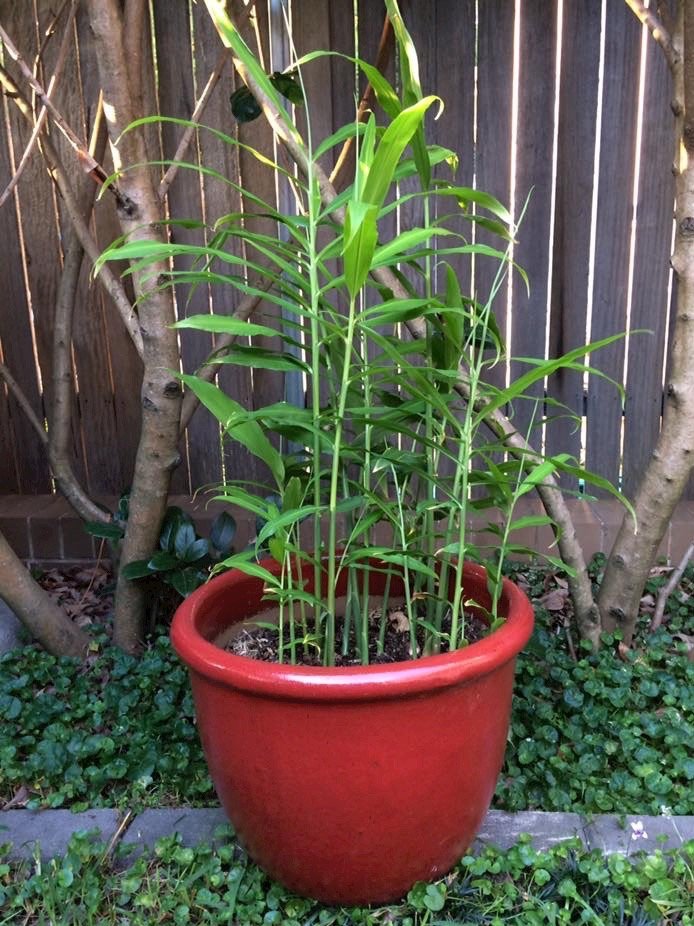
Growing ginger at home offers several advantages:
- Freshness and Quality: Homegrown ginger is free from chemicals and preservatives.
- Cost-Effective: Saves money compared to buying organic ginger from stores.
- Health Benefits: Fresh ginger has higher potency than store-bought roots.
- Convenience: Always have ginger available for cooking or remedies.
- Aesthetic Value: The lush, green foliage adds beauty to your garden or balcony.
By growing your own ginger, you gain control over quality, cultivation methods, and harvesting times, ensuring maximum flavor and health benefits.
Health Properties and Uses of Ginger
Ginger is more than a flavorful spice; it is a powerhouse of medicinal properties:
- Anti-Inflammatory: Reduces inflammation and helps with conditions like arthritis.
- Digestive Aid: Promotes digestion, reduces bloating, and relieves nausea.
- Immune Booster: Contains antioxidants that strengthen immunity.
- Pain Relief: Can alleviate headaches, menstrual discomfort, and muscle pain.
- Culinary Uses: Enhances soups, teas, curries, juices, and baked goods.
- Preservative and Flavoring Agent: Used in sauces, pickles, and preserves.
Having fresh ginger at home allows you to incorporate it into daily routines for both culinary and health purposes.
Choosing the Right Ginger Rhizome
To grow ginger successfully, start with high-quality planting material:
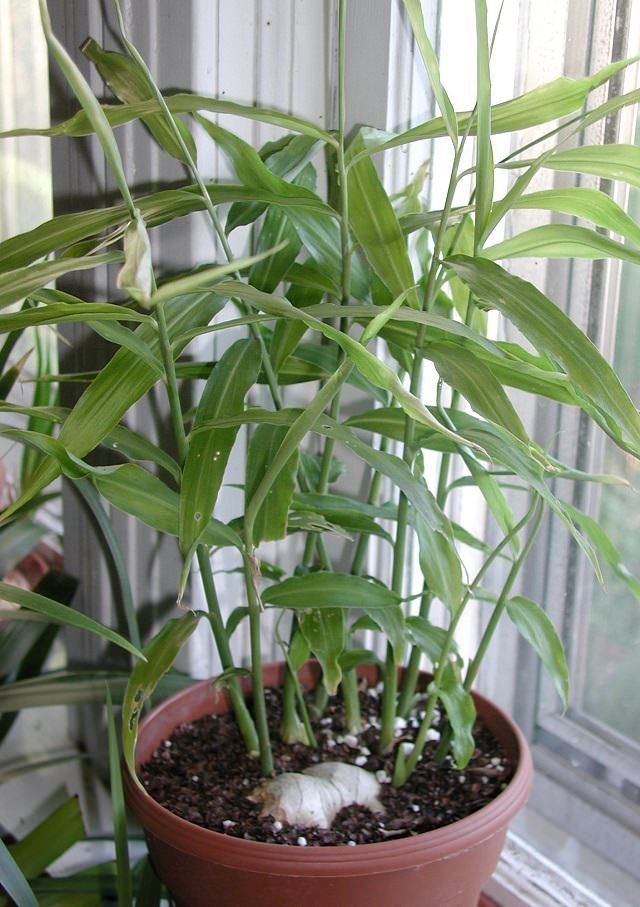
- Fresh Rhizomes: Choose plump, firm ginger pieces with visible growth buds (small nodules or “eyes”).
- Organic Options: Organic ginger is free from chemicals, increasing the likelihood of successful growth.
- Healthy Appearance: Avoid shriveled, soft, or moldy rhizomes.
Selecting the right ginger rhizome sets the foundation for strong growth and abundant harvest.
Preparing Ginger for Planting
Before planting, ginger rhizomes require some preparation:
- Soak the Rhizomes: Soak in warm water for 12–24 hours to encourage sprouting.
- Cut Large Pieces: If the rhizome is large, divide it into smaller sections with at least 2–3 buds each.
- Healing Time: Allow cut pieces to dry for a few hours to form a protective layer, reducing the risk of rot.
Proper preparation enhances the chances of quick sprouting and healthy plant development.
Choosing the Right Container and Soil
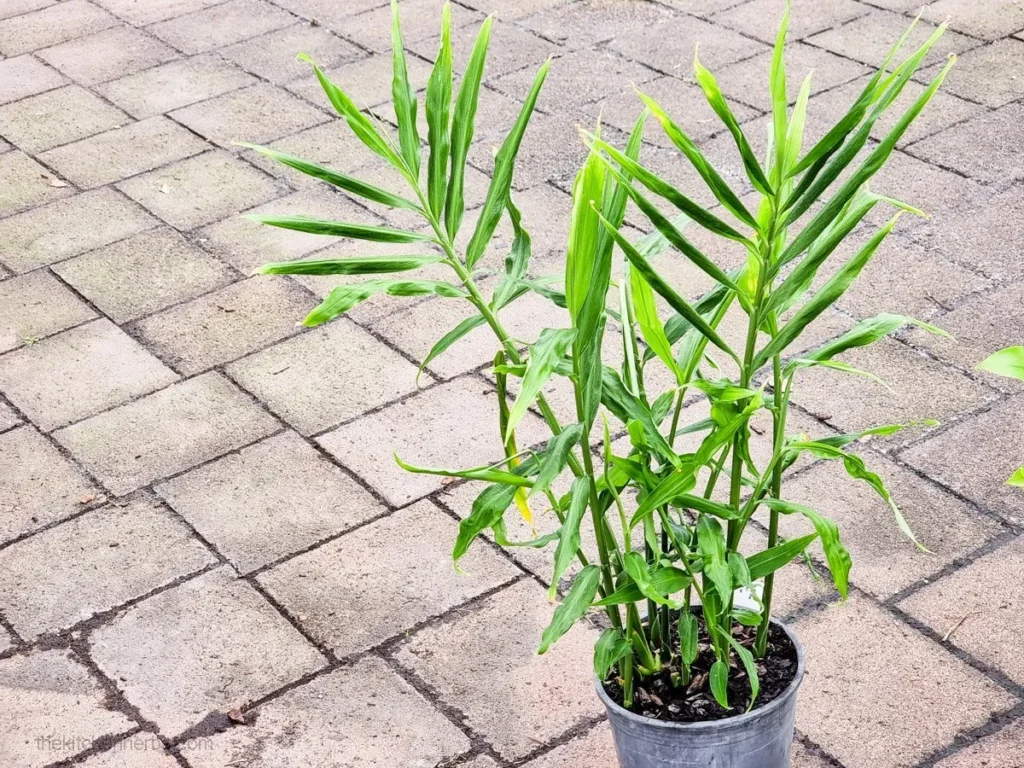
Ginger grows well in containers, making it ideal for home cultivation:
- Container: Choose a wide, shallow pot or raised bed with good drainage. Depth of 8–12 inches is sufficient.
- Soil: Use loose, fertile, well-draining soil rich in organic matter. Mix garden soil with compost or cocopeat for best results.
- pH Level: Slightly acidic to neutral soil (pH 6–6.5) promotes optimal growth.
Well-prepared soil and proper container size allow ginger rhizomes to expand horizontally, producing healthy roots.
Planting Ginger
Planting ginger is simple but requires attention to detail:
- Orientation: Place the rhizome horizontally with buds facing upwards.
- Depth: Cover with 1–2 inches of soil.
- Spacing: If planting multiple rhizomes, maintain 6–8 inches between them.
- Watering: Water lightly to keep the soil moist but not soggy.
- Light Requirements: Ginger prefers partial shade, avoiding direct harsh sunlight.
With proper planting, ginger will begin to sprout in 2–3 weeks under ideal conditions.
Caring for Ginger Plants
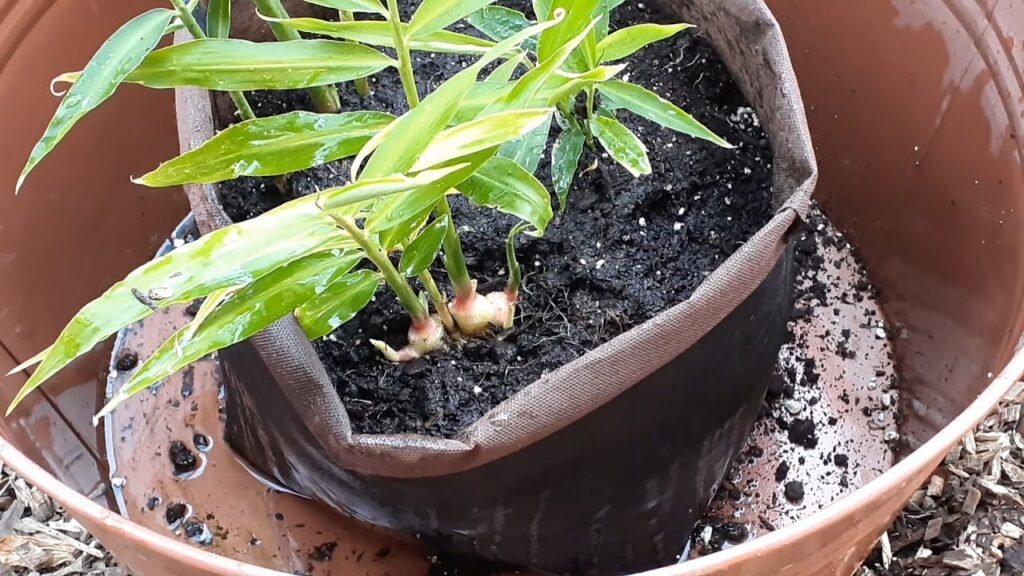
Caring for ginger ensures strong growth and abundant harvests:
- Watering: Keep soil consistently moist, especially during hot weather. Avoid waterlogging, which can cause rhizome rot.
- Fertilization: Feed with organic compost, well-rotted manure, or balanced liquid fertilizers every 4–6 weeks.
- Mulching: Apply straw, dried leaves, or coconut husk to retain soil moisture and regulate temperature.
- Pest Control: Watch for aphids, spider mites, and root rot. Use organic pesticides or neem oil when necessary.
- Temperature: Ginger thrives in warm, humid conditions (20–30°C / 68–86°F). Protect from frost.
Consistent care ensures that ginger plants remain vigorous and productive throughout the growing season.
Harvesting Ginger
Ginger can be harvested at different stages, depending on your intended use:
- Young Ginger (Green Ginger): Harvest after 3–4 months for tender, milder roots ideal for pickles and teas.
- Mature Ginger: Harvest after 8–10 months when the leaves start turning yellow and dry. Mature ginger has a stronger flavor and aroma.
- Method: Carefully dig around the plant, lift the rhizomes, and separate the portions needed. Replant a few rhizomes to continue growing.
Homegrown ginger provides a steady supply of fresh roots for cooking, medicinal uses, and storage.
Uses of Homegrown Ginger
Having fresh ginger at home allows versatile applications:
- Culinary Uses:
- Add grated ginger to curries, soups, sauces, and baked goods.
- Prepare ginger tea to soothe sore throats or improve digestion.
- Use in marinades and salad dressings for flavor enhancement.
- Medicinal Uses:
- Fresh ginger can be juiced or added to smoothies for immune support.
- Ginger infusion or tea can relieve nausea, motion sickness, and menstrual cramps.
- Ginger poultices can help reduce inflammation and pain.
- Preservation:
- Store in the refrigerator for up to a month or freeze for longer shelf life.
- Pickled ginger or ginger candies are popular ways to enjoy ginger year-round.
Tips for Maximizing Ginger Yield
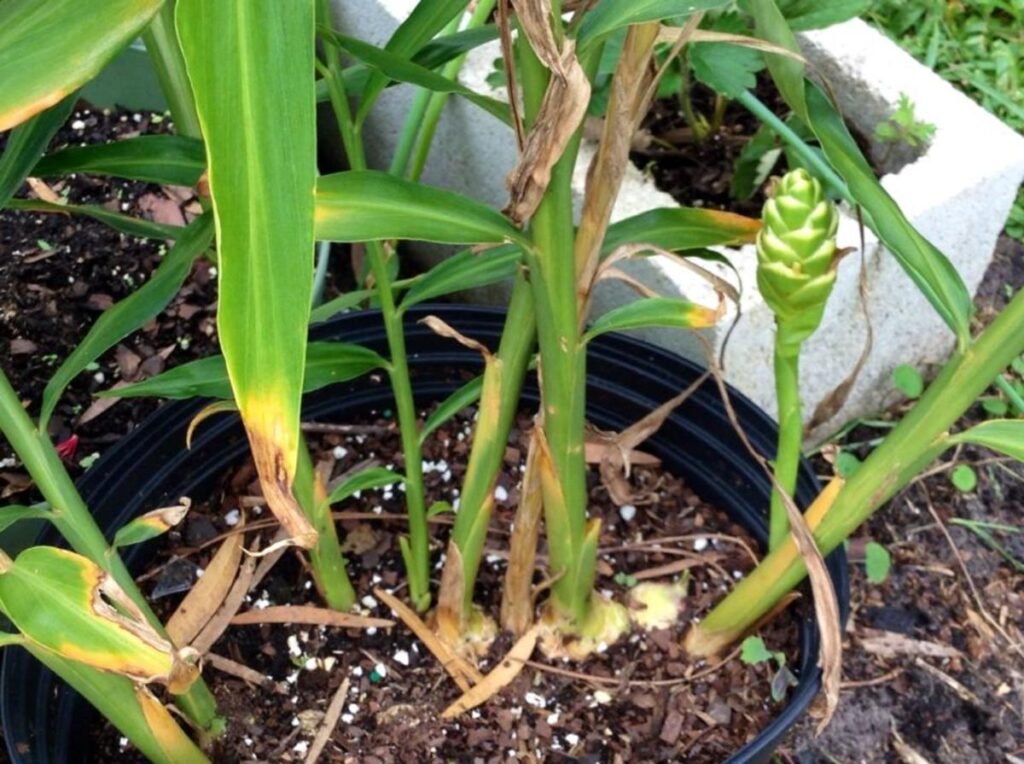
- Start Early Indoors: Plant ginger indoors during cooler months to extend the growing season.
- Avoid Overcrowding: Give rhizomes enough space to spread horizontally.
- Maintain Humidity: Ginger thrives in humid environments. Mist leaves or use a humidity tray indoors.
- Regular Feeding: Nutrient-rich soil promotes thicker, more flavorful rhizomes.
- Replanting: Keep a portion of harvested rhizomes for the next crop.
By following these tips, you can enjoy a consistent supply of homegrown ginger for multiple years.
Final Thoughts
Growing ginger at home is a simple, rewarding way to enjoy fresh, nutritious roots with remarkable health benefits. From selecting healthy rhizomes and preparing soil to planting, caring, and harvesting, homegrown ginger is both a culinary delight and a natural remedy. Whether you want to brew healing teas, enhance your dishes, or explore its medicinal properties, cultivating ginger at home provides endless possibilities.
With a little attention, patience, and care, anyone can transform a small pot or garden space into a thriving ginger plantation, ensuring a supply of fresh, organic ginger all year round.