
Introduction to Chayote Growing
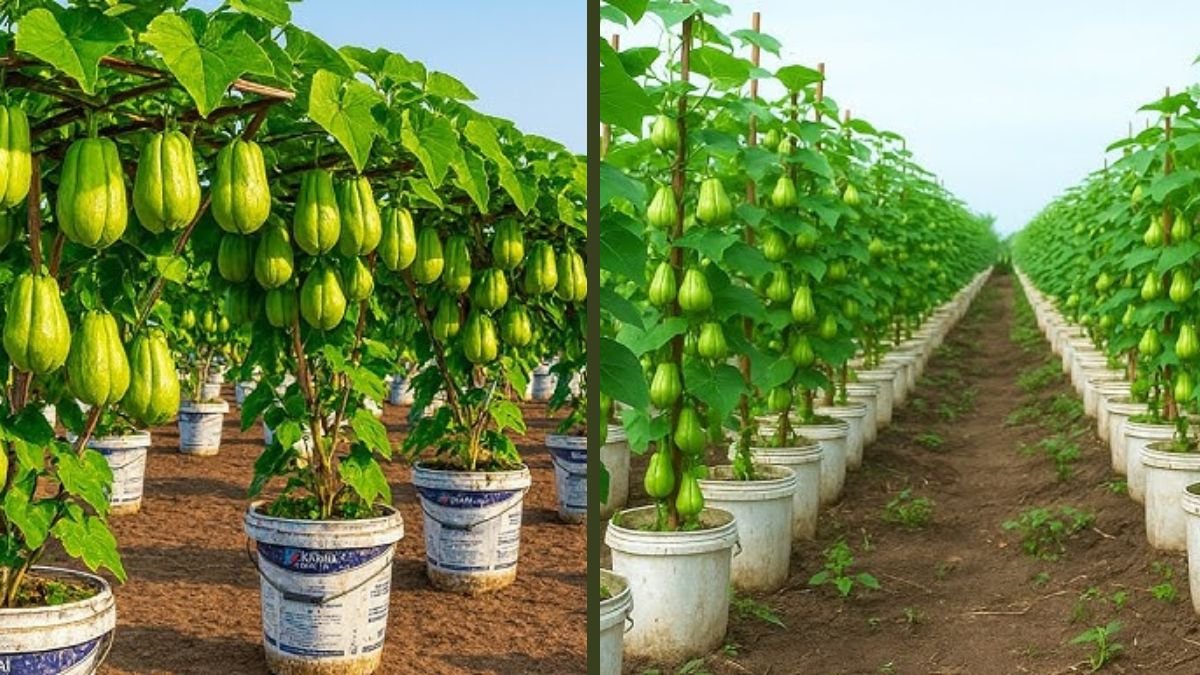
Chayote is a fast-growing, nutritious vegetable loved in many kitchens. Many gardeners believe it needs large land. In reality, chayote grows well in containers. A simple paint bucket works perfectly. This method is ideal for small gardens. Chayote vines grow vigorously with proper support. Container growing makes management easy. This guide explains the process step by step.
Why Paint Buckets Are Perfect Containers
Paint buckets are strong and reusable. They provide enough depth for roots. Buckets are easily available. Proper drainage can be added easily. They are movable and space-saving. Reusing buckets reduces waste. This makes gardening economical and sustainable.
Understanding Chayote Plant Growth
Chayote grows from the whole fruit. The seed sprouts inside the fruit. It produces long climbing vines. Strong support is essential. Growth is rapid in warm climate. Understanding its nature ensures success. Chayote is highly productive.
Selecting the Right Chayote Fruit
Choose mature, healthy chayote. Avoid damaged or rotten fruits. The fruit should be firm. Natural sprouting is a good sign. Local varieties perform better. Proper selection improves yield. One fruit produces many vegetables.
Preparing the Paint Bucket
Clean bucket thoroughly. Make drainage holes at the bottom. Ensure excess water can escape. Place small stones at the base. This improves drainage. Clean containers reduce disease. Proper preparation is important.
Preparing Soil Mix for Chayote
Use loose and fertile soil. Mix garden soil, compost, and sand. Avoid compact soil. Chayote needs rich nutrition. Compost improves growth. Balanced soil supports heavy fruiting. Soil quality matters greatly.
Planting Chayote in Bucket
Place fruit sideways with sprout facing up. Cover half of the fruit with soil. Do not bury fully. Water gently after planting. Proper positioning helps sprouting. Avoid deep planting.
Positioning the Bucket
Place bucket in sunny location. Six to eight hours sunlight is ideal. Avoid waterlogged areas. Good air circulation helps. Proper placement boosts growth. Sunlight is essential.
Providing Support for Vines
Chayote vines climb aggressively. Use bamboo poles or trellis. Tie vines gently. Strong support prevents breakage. Vertical growth saves space. Support setup ensures healthy vines.
Watering Schedule
Water regularly but moderately. Keep soil moist, not wet. Overwatering causes root rot. Check soil before watering. Consistent moisture supports growth. Balance is key.
Fertilizing Chayote Plants
Use compost or cow dung manure. Feed once every two weeks. Wood ash adds potassium. Avoid excess nitrogen. Organic feeding improves fruit quality. Healthy feeding increases yield.
Flowering and Pollination
Chayote produces male and female flowers. Natural pollinators help. Hand pollination can increase yield. Healthy plants flower abundantly. Pollination leads to fruit set. Proper care improves flowering.
Pest and Disease Management
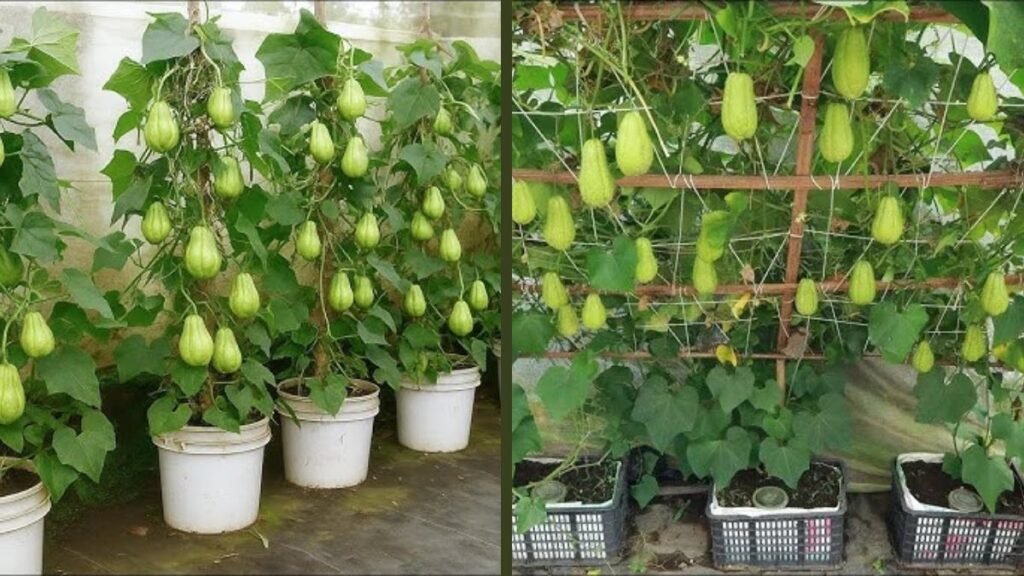
Chayote is generally pest resistant. Aphids may appear occasionally. Neem spray controls pests. Remove infected leaves early. Good airflow prevents disease. Clean environment helps.
Growth Timeline and Harvest
Fruits appear within three months. Harvest when tender. Regular harvesting encourages more fruits. Mature fruits become hard. Timely harvest improves taste. Continuous production is possible.
Harvesting Chayote Correctly
Use knife to cut fruits. Avoid pulling vines. Harvest gently. Handle fruits carefully. Proper harvesting prevents plant damage. Frequent harvesting improves yield.
Cooking and Using Chayote
Chayote is versatile in cooking. Used in curries, stir-fries, soups. Leaves and shoots are edible. Fresh homegrown chayote tastes better. Nutritious and low calorie vegetable.
Comparison Table: Ground vs Bucket Grown Chayote
| Aspect | Ground Growing | Bucket Growing |
|---|---|---|
| Space Required | Large | Small |
| Mobility | Fixed | Movable |
| Soil Control | Limited | Full Control |
| Ease of Care | Moderate | Easy |
| Urban Friendly | No | Yes |
Economic Benefits of Bucket Growing
Low cost setup. Reusable containers. High yield per plant. Suitable for beginners. Reduces vegetable expenses. Practical home method.
Sustainability and Eco Benefits
Recycling buckets reduces waste. Organic soil improves environment. Saves water with controlled irrigation. Encourages home food production. Eco-friendly gardening.
Conclusion
Growing chayote in a paint bucket is simple, productive, and perfect for small spaces. With minimal materials and care, one plant can provide abundant harvest. This method proves that smart container gardening can deliver big results.