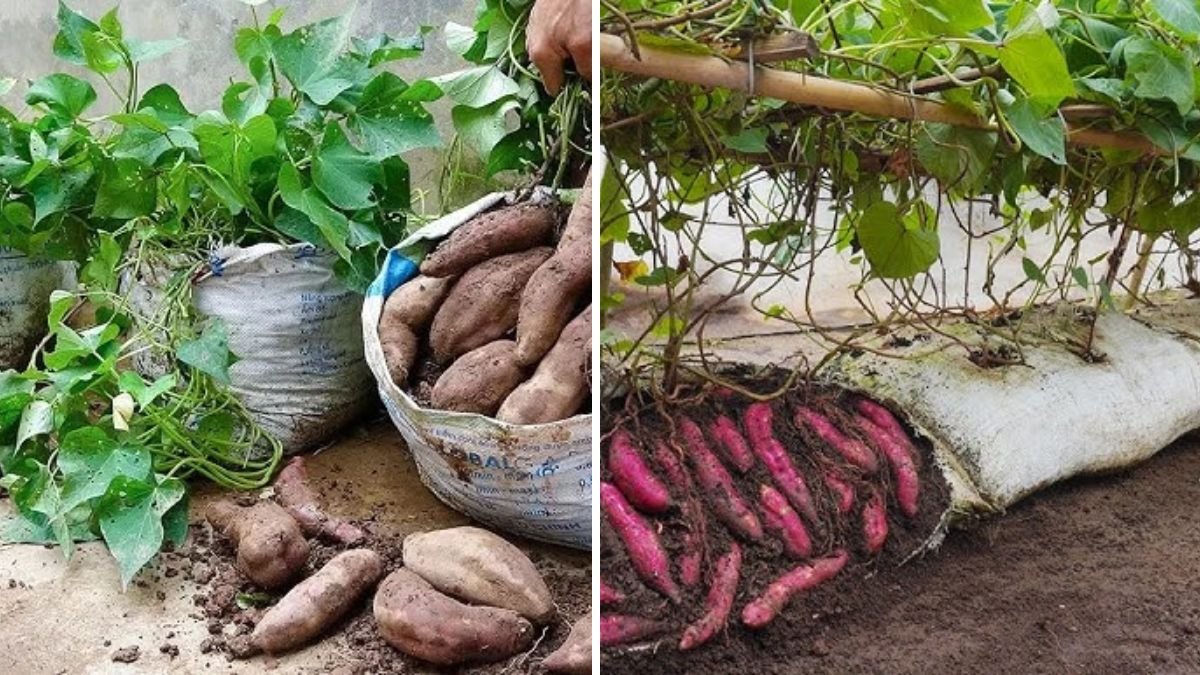

Growing sweet potatoes is usually associated with large garden beds, sprawling vines, and lots of ground space. But what if you could grow them in the air—literally hanging—and still get a surprisingly big harvest? That’s exactly what innovative gardeners around the world are discovering through experimental hanging sweet-potato planting. This simple, low-cost method not only saves space but also produces clean, healthy, pest-free tubers. It’s perfect for rooftops, balconies, small yards, and even indoor growing spaces.
In this article, you’ll learn the complete step-by-step method, the science behind why it works, the advantages of this technique, and tips to maximize your yield. Let’s dive in!
Why Try Hanging Sweet Potatoes?
Sweet potatoes typically need loose, well-drained soil and room for roots to expand. However, in traditional gardening, the soil can become compacted, and pests like grubs, nematodes, and rats may attack the tubers underground.
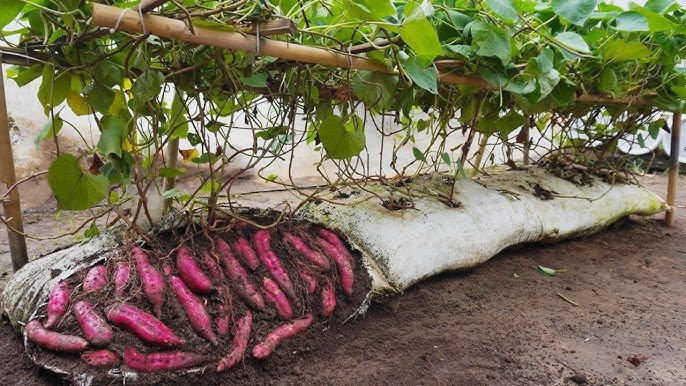
A hanging setup eliminates most of those problems. When sweet potatoes grow in suspended containers—bags, baskets, or buckets—the roots stay aerated and loose, encouraging larger tubers. Plus, they are easier to maintain and harvest.
✔ Benefits of hanging sweet-potato growing
- Space-saving – ideal for urban homes.
- Better aeration – promotes faster root development.
- Fewer pests and soil diseases.
- Cleaner, smoother tubers since they grow in loose mix.
- Ease of harvest – just lift the bag and dump it.
- Great for those without ground soil.
What You Need to Start
You don’t need fancy supplies; simple household items work perfectly.
Materials
- Sweet potato slips or sprouted sweet potatoes
- A large hanging grow bag, laundry bag, or woven basket
- Lightweight potting mix (cocopeat + compost + sand recommended)
- Rope or sturdy hooks
- Organic fertilizer (vermicompost, bone meal, or banana peel water)
- Watering can or drip bottle
Step-by-Step: How to Grow Sweet Potatoes in a Hanging Setup
1. Prepare the Sweet Potato Slips
You can buy slips or make your own at home.
To make slips:
- Place half a sweet potato in a jar of water.
- Allow sprouts to grow 10–15 cm.
- Gently twist off the sprouts and place them in water until roots appear.
These rooted slips are ready to plant.
2. Prepare Your Hanging Container
Choose a breathable bag instead of a plastic bucket for best aeration.
Important features:
- Drainage holes
- Ability to hold at least 10–15 kg of mix
- Strong handles or rope attachment
Hang it on a balcony grille, rooftop railing, or a wall hook that can handle weight.
3. Mix the Perfect Growing Medium
Sweet potatoes love loose, airy soil.
Ideal Mix:
- 40% cocopeat
- 40% compost
- 20% sand or perlite
Add a handful of bone meal or wood ash for potassium, which boosts tuber formation.
Fill the bag about two-thirds full.
4. Plant the Slips
Plant 2–3 slips per bag.
- Make small holes 10 cm deep.
- Insert slips and lightly cover with soil.
- Press gently for soil contact.
Ensure the vines hang out freely from the edges.
5. Water Properly
Hanging bags dry faster, so consistent watering is important.
Watering tips:
- Keep the mix slightly moist, not soggy.
- Use a drip bottle to control moisture.
- Water early in the morning for best absorption.
6. Provide Support for the Vines
Though sweet potato vines trail beautifully, they may benefit from light support.
You can:
- Let vines hang down naturally
- Tie them loosely to a balcony railing
- Create a simple trellis
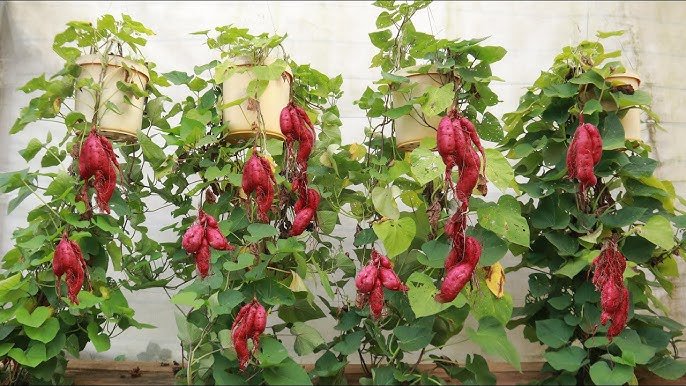
The foliage itself becomes a beautiful hanging display.
7. Feed the Plants
Every 2–3 weeks, feed your plants with:
- Vermicompost tea
- Banana peel fertilizer (potassium-rich)
- Diluted seaweed extract
Avoid too much nitrogen; it will create lush leaves but fewer tubers.
8. Watch for Signs of Tuber Formation
After 40–50 days, you will notice:
- Vines thickening
- Leaves becoming deeper green
- Roots filling the bag
This means tuber growth has started!
9. Harvesting – The Most Exciting Part
Sweet potatoes are usually ready in 90–120 days.
To harvest:
- Remove the bag from the hook
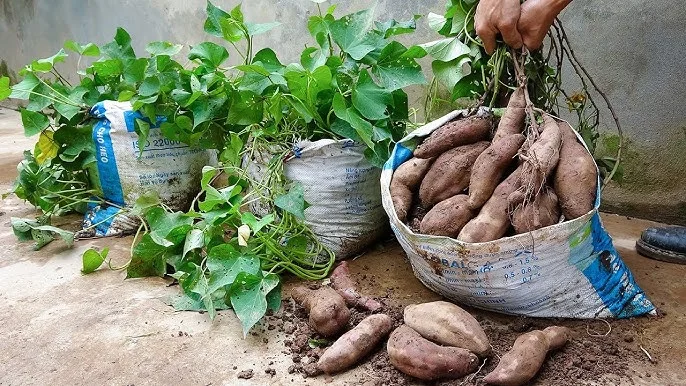
- Cut it open or gently empty it
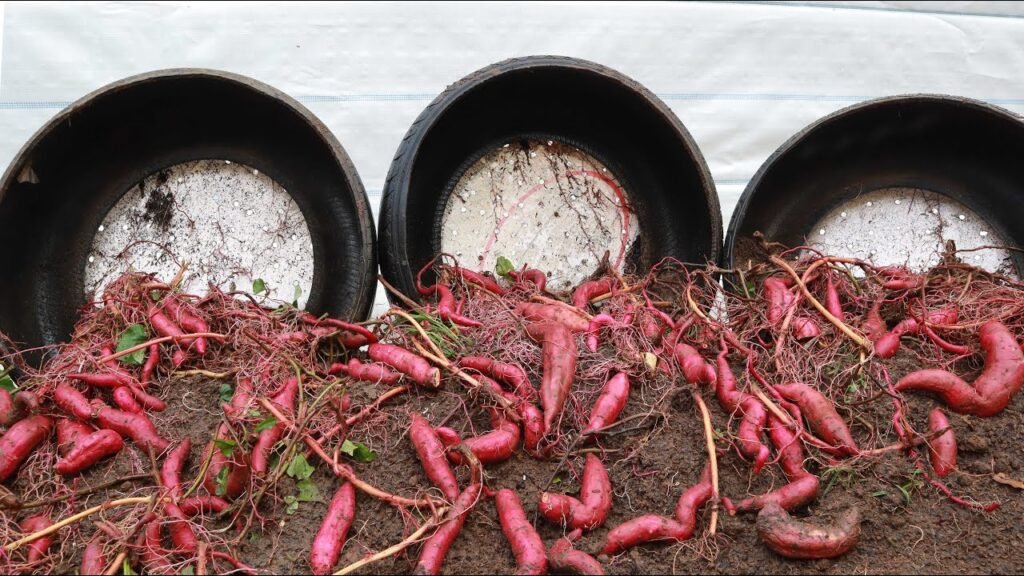
- Pull out large, clean, beautifully formed tubers
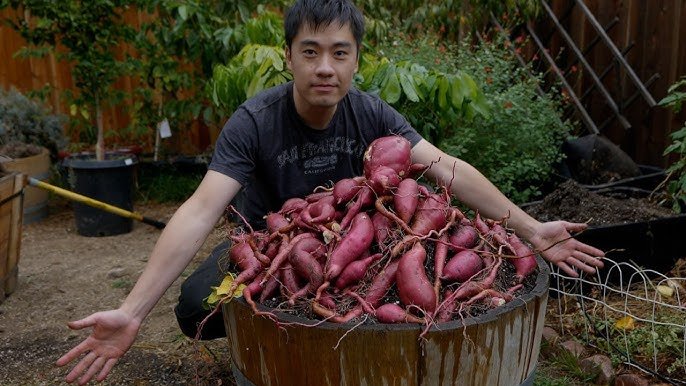
Most gardeners are shocked at how big the tubers get in such a small hanging container!
Why This Method Works So Surprisingly Well
Here’s the science behind the success:
1. Excellent Aeration
Loose, suspended soil has more oxygen, making roots expand faster.
2. Reduced Soil Pressure
Hanging bags prevent compaction, allowing tubers to enlarge freely.
3. Warmer, Controlled Environment
Sweet potatoes thrive in warm root zones. Hanging setups heat up slightly faster.
4. No Soil Pests
Grubs, worms, nematodes, and rodents cannot attack hanging crops easily.
5. Constant Moisture Control
Excess water drains instantly, preventing rot.
These combined factors produce a surprisingly large and healthy harvest.
Top Tips to Maximize Your Harvest
🌱 Tip 1: Use a Lightweight, Loose Mix
Dense soil reduces tuber size.
🌞 Tip 2: Keep Them in Full Sun
Sweet potatoes need at least 6–7 hours of sunlight daily.
💧 Tip 3: Don’t Overwater
Waterlogged roots stop growing. Moist but airy is the goal.
🔥 Tip 4: Add Potassium
Bone meal, wood ash, banana water—these make tubers bigger and sweeter.
🌿 Tip 5: Prune Excess Vines
Too many vines steal energy from tubers. Trim lightly.
🌡 Tip 6: Warm Temperatures Boost Growth
Ideal temperature: 22°C–32°C.
Is Hanging Sweet-Potato Growing Worth It?
Absolutely! This method is:
- Easy
- Affordable
- Suitable for small spaces
- Surprisingly productive
Gardeners report bigger, cleaner, and sweeter tubers than traditional ground planting.
For urban gardeners or beginners, it’s a perfect way to grow a root crop without needing a large garden.
Final Thoughts
The idea of growing sweet potatoes in hanging containers may seem strange at first, but the results speak for themselves. With the right soil mix, proper watering, and a sunny spot, you can enjoy a plentiful harvest from a simple suspended grow bag.
Whether you live in a high-rise apartment, a small home, or simply want a creative planting experiment, try this method. You might be shocked by how well it works—just like thousands of gardeners who’ve already discovered this exciting technique.