

Sweet potatoes are one of the most versatile and nutritious vegetables you can grow at home. With high vitamin content, a naturally sweet flavor, and multiple culinary uses, they are a gardener’s favorite. But what if you don’t have a backyard or a large garden? No problem! By using simple plastic tubs, you can grow big, healthy sweet potato roots even on a balcony, terrace, or small patio.
This guide shows you how to grow sweet potatoes in plastic tubs efficiently, step by step, ensuring large yields and abundant roots—even with minimal space. From selecting the right tub to proper watering, soil, and harvesting, everything you need is right here.
Why Plastic Tubs Work So Well for Sweet Potatoes
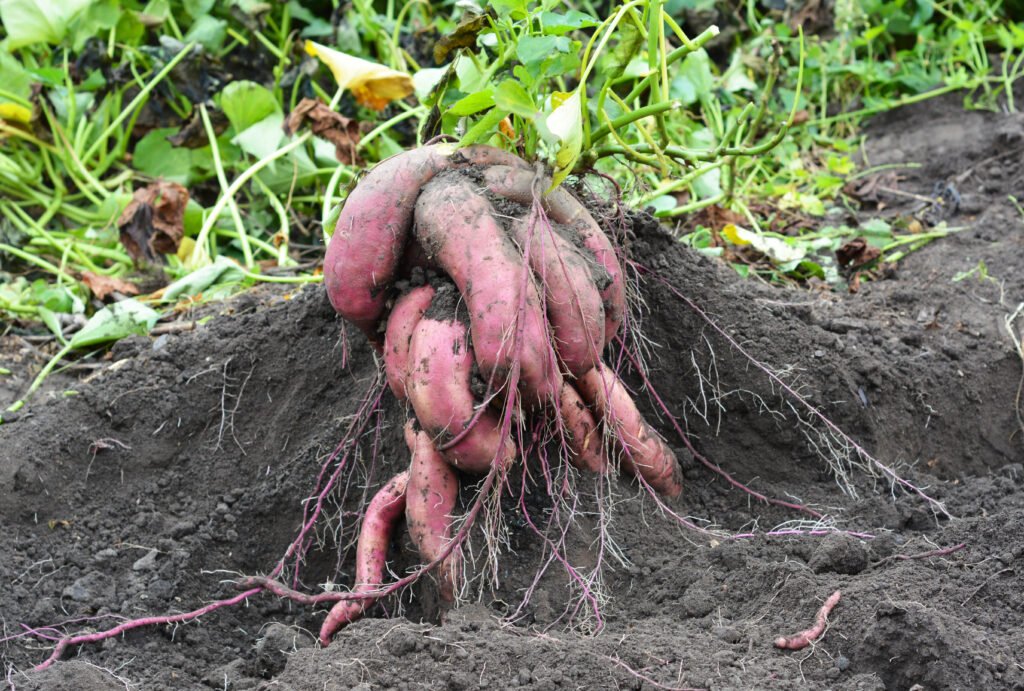
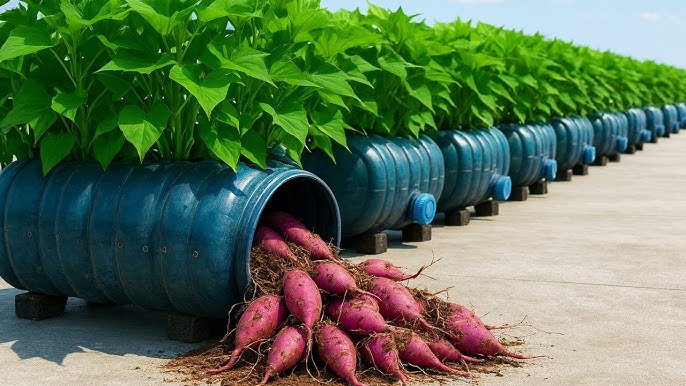
Sweet potatoes are root vegetables that need deep, loose soil for their tubers to grow. Plastic tubs offer several advantages:
- Deep Space: Allows tubers to expand naturally
- Portability: Move tubs to follow sunlight or protect from heavy rain
- Moisture Control: Retains soil moisture while allowing drainage
- Pest Reduction: Keeps roots off the ground and away from soil pests
- Space-Saving: Perfect for terraces, balconies, or urban gardening
Even a single tub can produce multiple large roots if managed properly.
Step 1: Selecting the Right Plastic Tub

The tub size and shape are critical for healthy sweet potato growth.
Ideal Tub Characteristics:
- Depth: 12–18 inches minimum
- Width: 15–20 inches
- Material: Food-grade plastic, sturdy enough to hold soil
- Drainage: Must have 4–6 drainage holes at the bottom
Wide tubs allow multiple plants per container, maximizing your harvest.
Pro Tip:
If your tub has no drainage, drill holes or line it with mesh to prevent waterlogging.
Step 2: Prepare the Tub for Planting
- Clean the tub thoroughly to remove dust and residues.
- Add a drainage layer using small stones or broken pottery.
- Position the tub in a sunny location—sweet potatoes need 6–8 hours of sunlight daily.
Step 3: Prepare the Soil
Sweet potatoes thrive in loose, well-draining soil rich in organic matter. The soil mix is the secret to producing big roots.
Best Soil Mix for Plastic Tubs:
- 50% garden soil
- 30% compost or vermicompost
- 20% sand or cocopeat
Optional Additions:
- A handful of wood ash for potassium (helps root growth)
- 1 teaspoon bone meal per tub for stronger tubers
- A handful of neem cake to prevent pests
Mix everything thoroughly to make a soft, airy soil that allows tubers to grow large.
Step 4: Choose the Right Sweet Potato Slips or Tubers
Sweet potatoes are usually grown from slips (sprouted shoots from a tuber).
Steps to Prepare Slips:
- Take a healthy sweet potato tuber
- Place it in water, partially submerged
- Wait for shoots to grow 4–6 inches
- Detach shoots gently for planting
You can also plant small tubers directly in the soil, but slips generally produce bigger roots faster.
Step 5: Planting in Plastic Tubs
- Fill the tub with the prepared soil, leaving 2 inches from the top.
- Make holes 4–6 inches apart.
- Place each slip vertically in the hole, burying the base and roots in soil.
- Water gently to settle the soil around the slips.
Tip:
If planting multiple slips, stagger them to allow tubers enough room to grow.
Step 6: Sunlight Requirements
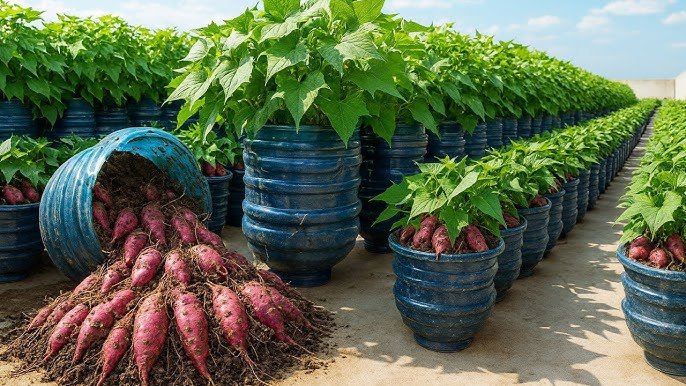
Sweet potatoes are sun-loving plants.
- Provide 6–8 hours of direct sunlight daily
- South- or east-facing balconies are ideal
- In extreme heat, provide partial afternoon shade to prevent leaf burn
Proper sunlight ensures strong vines and healthy tuber development.
Step 7: Watering Sweet Potatoes in Tubs
Sweet potatoes prefer consistent moisture, but overwatering can cause rot.
Watering Schedule:
- Keep soil evenly moist for the first 3–4 weeks
- Reduce watering slightly after vines establish
- Water deeply 1–2 times per week (adjust for climate)
- Avoid wetting leaves excessively
Mulching with dry leaves or straw helps retain moisture and prevent weeds.
Step 8: Fertilizing for Big and Many Roots
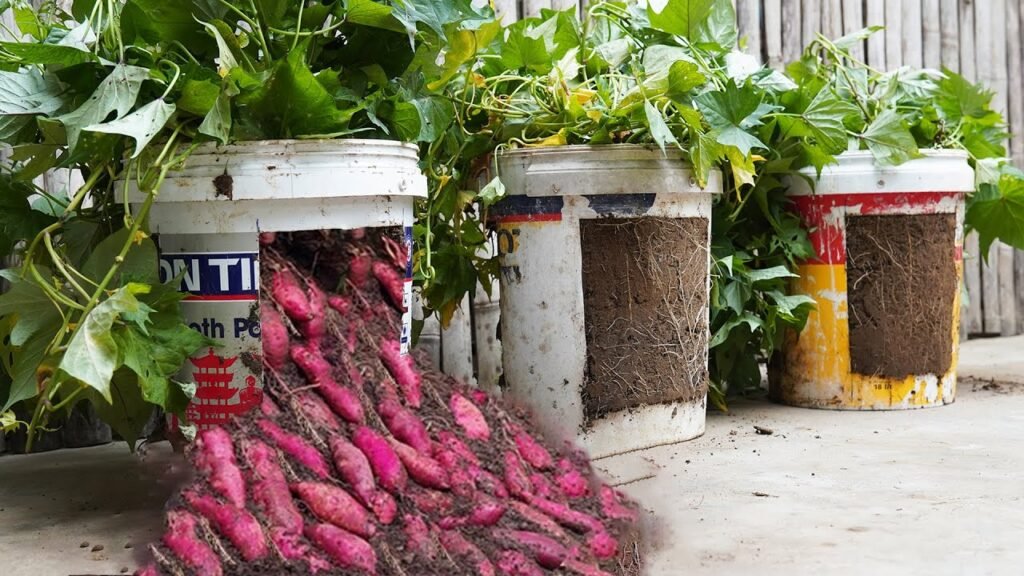
Sweet potatoes are heavy feeders. Proper nutrition is key for large, abundant roots.
Fertilizer Schedule:
- Every 15 days: Add compost or vermicompost
- Every 20 days: Apply potash-rich fertilizer (banana peel or wood ash)
- Optional: Small doses of nitrogen early in growth for lush vine development
Avoid over-fertilizing with nitrogen later in growth—it encourages leaves but reduces tuber size.
Step 9: Supporting Vine Growth
Sweet potato vines can grow long and spread out. Supporting them keeps the tubers safe and allows more space in your tub.
- Allow vines to cascade over the sides of the tub
- Provide a trellis or net if vertical growth is desired
- Keep vines off the soil surface to prevent disease
Step 10: Common Problems and Solutions
1. Yellow Leaves
Cause: Overwatering or nutrient deficiency
Fix: Reduce water, add compost or potash
2. Poor Root Growth
Cause: Compact soil or small tuber spacing
Fix: Ensure loose, airy soil and adequate space between slips
3. Pest Attacks
Common pests: Whiteflies, aphids, and caterpillars
Fix: Spray neem oil or remove pests manually
4. Vine Wilting
Cause: Heat stress or underwatering
Fix: Mulch, water adequately, and provide partial shade in hot afternoons
Step 11: Harvesting Sweet Potatoes
Sweet potatoes take 90–120 days to mature, depending on variety and climate.
Harvesting Tips:
- Look for yellowing leaves as a sign of maturity
- Carefully lift tubers from soil to avoid damage
- Separate tubers gently and let them cure in a shaded, ventilated area for 1–2 weeks
- Cure improves sweetness and storage life
A single tub can produce 3–6 large roots, depending on spacing and care.
Advantages of Plastic Tub Sweet Potato Gardening
- No garden required: Grow on balconies, terraces, or patios
- Reusable tubs: Cost-effective and eco-friendly
- Space-efficient: Even a single tub produces multiple tubers
- Pest management: Elevated roots reduce soil pests
- Easy maintenance: Watering, fertilizing, and harvesting are simple
With consistent care, your plastic tub can provide a steady supply of sweet potatoes for months.
Final Thoughts: Big Sweet Potato Harvests Without a Garden
Growing sweet potatoes in plastic tubs is perfect for urban gardeners and small-space growers. With a deep tub, nutrient-rich soil, proper sunlight, and consistent care, you can enjoy big, healthy, and plentiful roots without needing a traditional garden.
Turn those simple plastic tubs into mini sweet potato farms and enjoy a continuous supply of fresh, homegrown vegetables—perfect for healthy meals and a sustainable lifestyle.